
What routine servicing covers
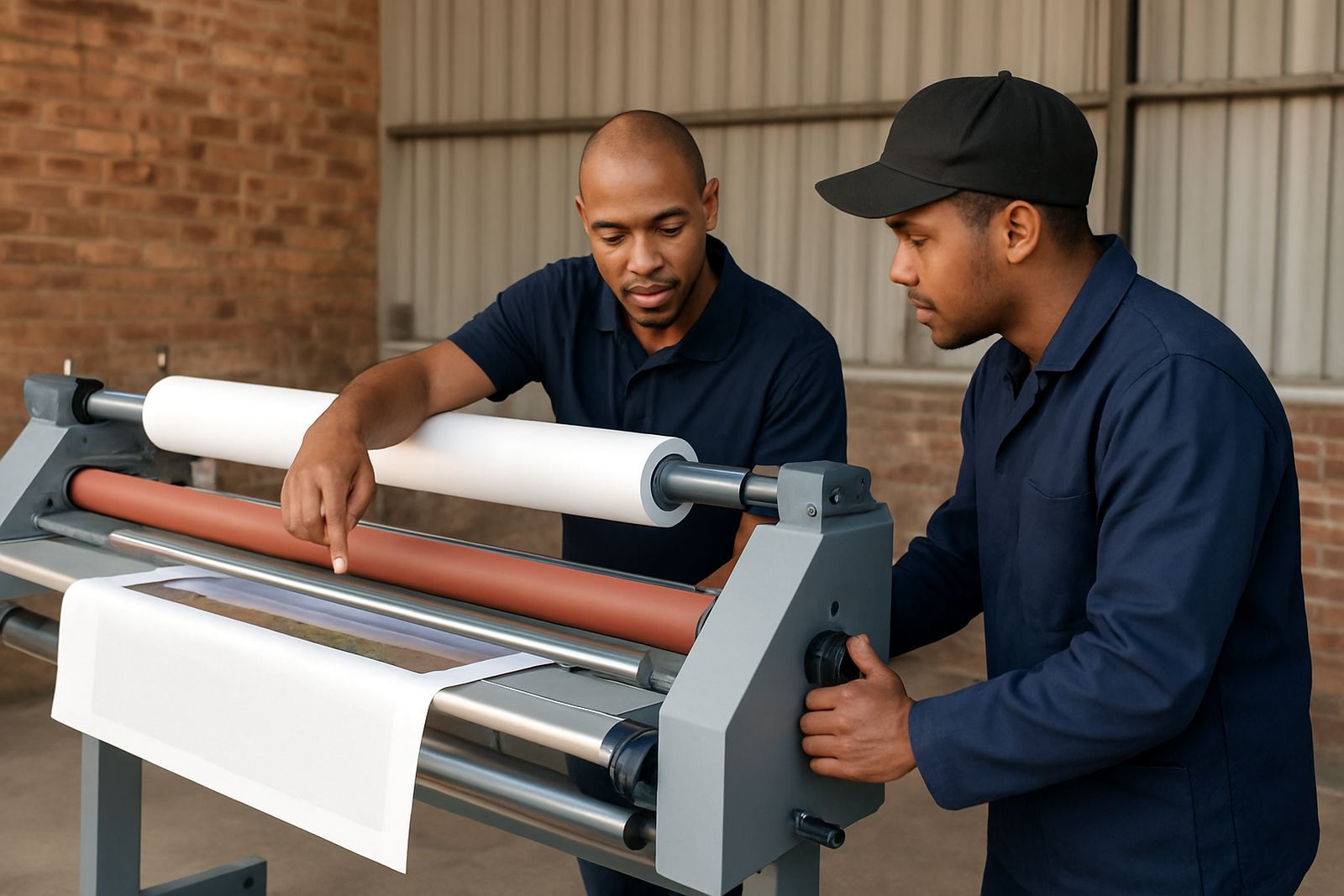
Routine servicing is planned maintenance for the parts that do the real work every day. That includes the rollers, drive system, heat controls, pressure settings and the electrical components that keep the machine stable under load. On a busy floor in Johannesburg or Pretoria, a laminator can run for hours at a time, so grime, adhesive build-up and small alignment changes can show up quickly if they are not checked.
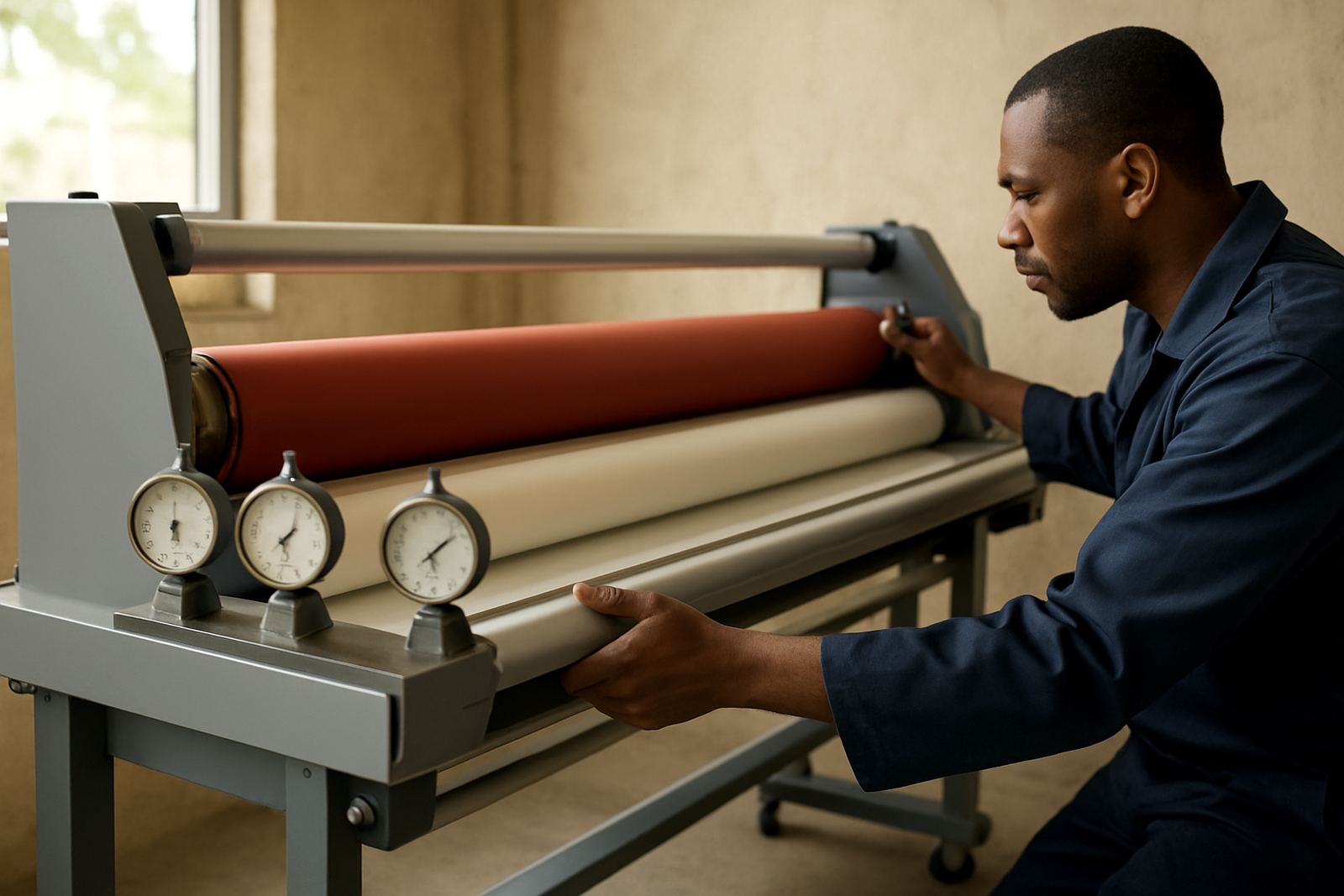
Our servicing is suited to wide-format laminators used for posters, signage, mounting and print finishing. We clean and inspect the rollers, check pressure across the width of the machine, test heat response on hot units, and make sure the feed path stays even. If your team is changing jobs often, working with heavier media, or dealing with coastal humidity in places like Durban and Gqeberha, regular service becomes even more important.
- Roller cleaning and surface inspection
- Pressure calibration across the full working width
- Heat system checks on hot roll machines
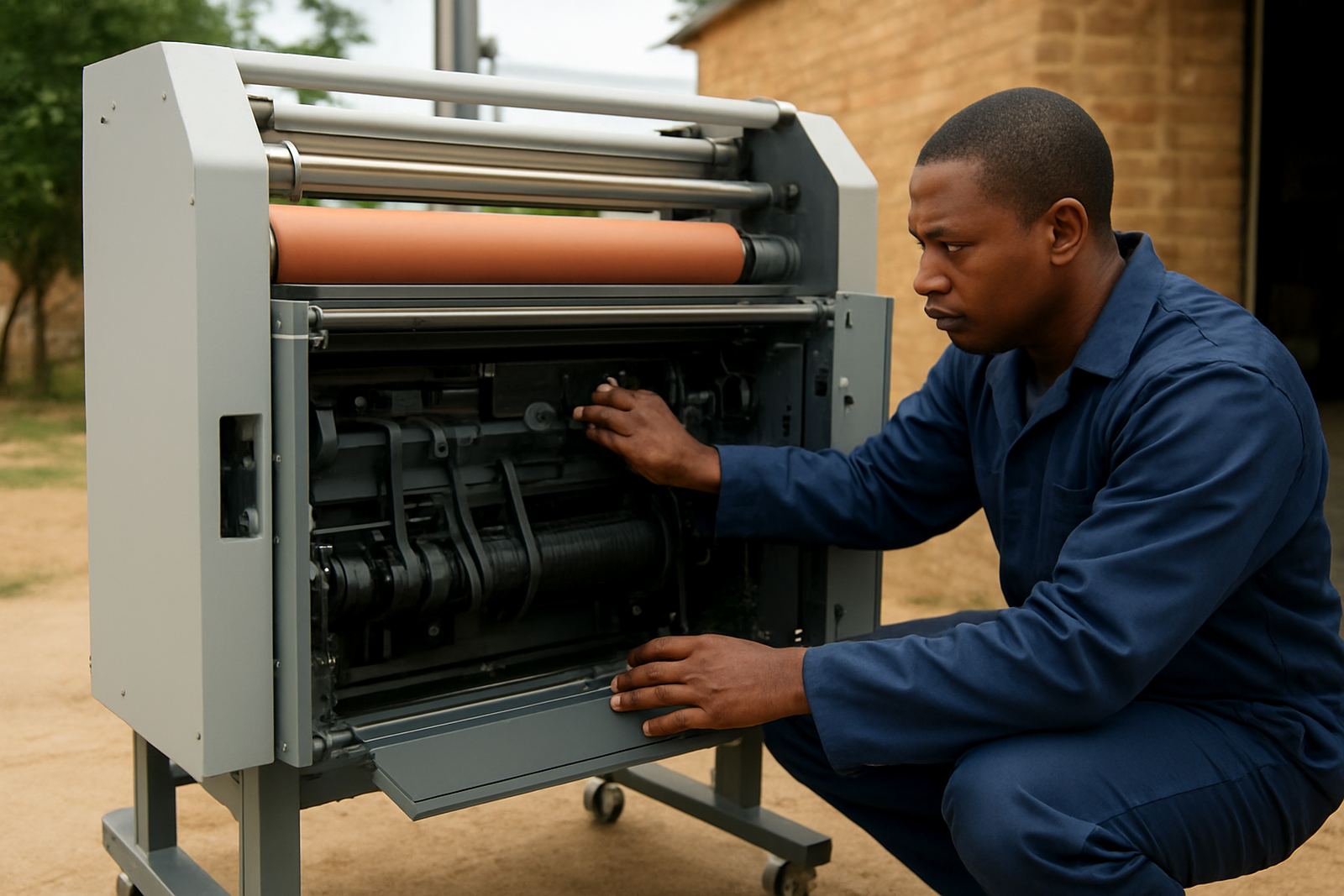
- Drive and feed system inspection
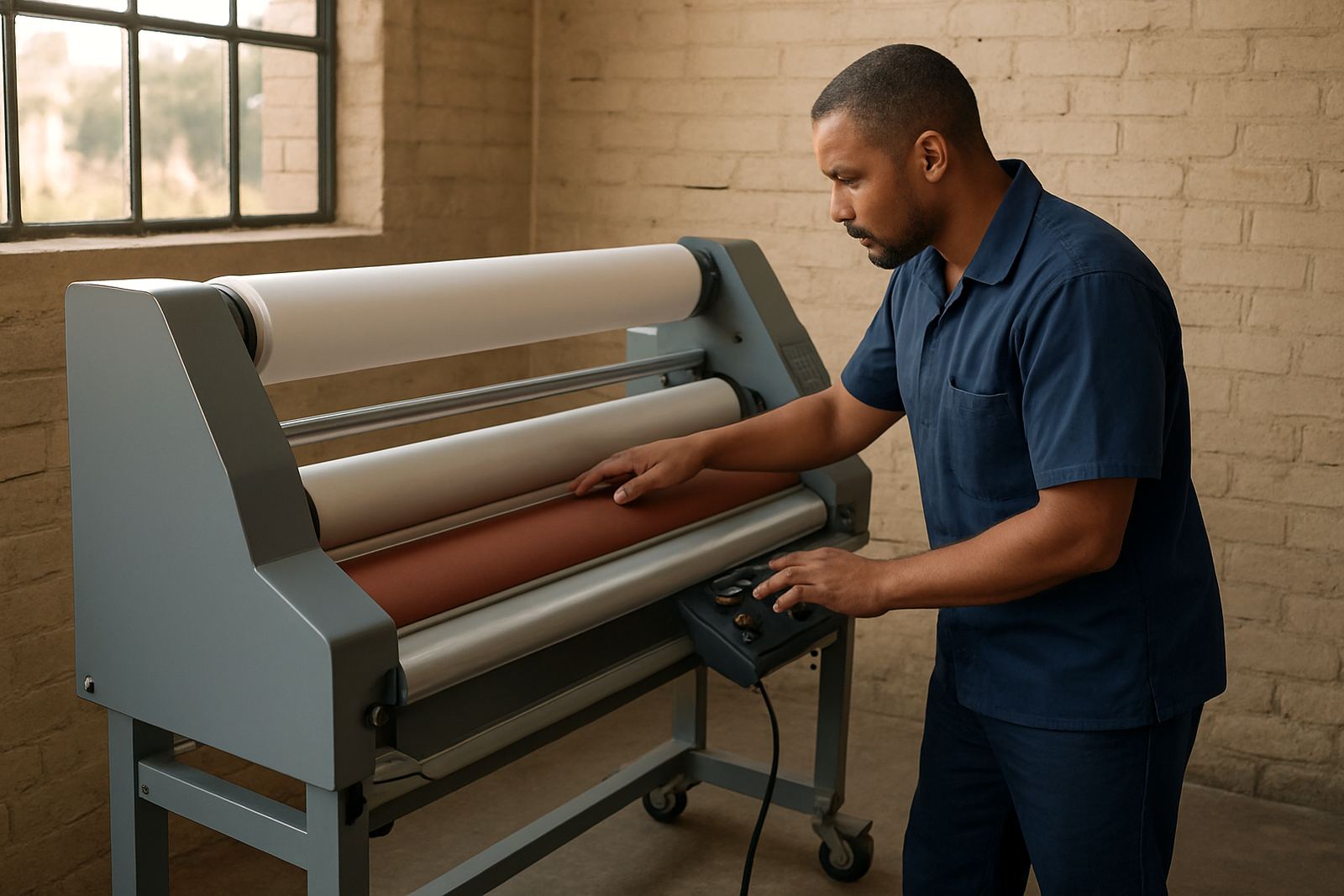
- Electrical safety and function checks
How we service your machine
We start with a condition check so we know how the laminator has been behaving in daily use. If a machine has slow warm-up, uneven nip pressure, wrinkling, or feed drift, we look at those signs first. Then we move through the machine in a fixed order so nothing gets missed and your team has a clear record of what was done.
The usual process is practical and straightforward. We isolate the machine, clean the rollers and key contact areas, test pressure, inspect belts or drive components, confirm thermostat or sensor response, and check power connections and switches. If there are worn parts or signs of heat stress, we flag them before they become a stoppage. That saves time later, especially when you are trying to get a run out before courier collection or a client sign-off.
- Initial inspection and fault spotting
- Cleaning of rollers and working surfaces
- Calibration and operational testing
- Report on wear, faults, and parts needed
Why planned servicing matters
A laminator that is left alone for too long can start to show small faults that affect the final finish. Pressure can drift, rollers can pick up residue, and the drive system can begin to run unevenly. On hot units, temperature inconsistency can cause bubbles, silvering or poor adhesion. On cold units, dirt and pressure variation can lead to poor bonding or edge lift.
Planned maintenance helps you avoid unplanned downtime, and that is worth a lot when you are running deadlines. It also helps protect the machine itself. Replacing a worn part early is usually cheaper than repairing a bigger failure after a breakdown. For businesses in Kya Sand, Midrand or Sandton, that can mean fewer interruptions and better control over labour costs. It also keeps the machine safer for operators and easier to train on.
If your team has more than one operator, routine servicing also gives you a stable baseline. The machine behaves the same way from week to week, so the person on shift does not have to guess whether a poor result is the machine or the setup.
Service intervals that make sense
The right interval depends on usage, media type and the environment. A laminator in light weekly use will not need the same attention as a machine running every day in a print shop. As a general guide, a busy production unit should be checked every 3 to 6 months, while lighter-use equipment can often be serviced every 6 to 12 months.
There are also signs that you should not wait. If the rollers leave marks, the temperature takes too long to settle, the machine makes unusual noise, or the laminate starts to wander, book a service sooner. Coastal humidity, dust from industrial areas, and repeated load-shedding changeovers can all affect performance, so the service interval should be adjusted to the way the machine is actually used.
- Every 3 to 6 months for busy production use
- Every 6 to 12 months for lighter use
- Immediately after repeated faults or poor finish quality
- After a move, installation, or long idle period
Turnaround and on-site support
Most routine servicing jobs are planned around your production schedule so you do not lose a full working day unless the machine needs more attention. Small service work may be completed on-site, while more involved work can be booked back to our Kya Sand base if parts or deeper checks are needed. We support customers across Johannesburg, Randburg, Sandton, Midrand, Pretoria and the East Rand, with installs and service visits nationwide.
Turnaround depends on the machine condition and whether spare parts are required. A standard preventative service is often completed within a single visit, but if we find electrical faults, worn drives, or damaged heating components, we will advise on the next step before anything is done. That way you know what is urgent and what can wait. Communication matters, and we keep it plain so your production team can plan properly.
Pricing approach and what affects the cost
We price routine servicing according to the machine type, size, condition and the amount of work needed. A compact unit with light wear will cost less to service than a large wide-format laminator with heat issues, drive wear or pressure imbalance. If parts need replacement, those are quoted separately so you can decide how to proceed.
Before any work starts, we look at the symptoms, service history and access to the machine. If the unit is in a difficult location or needs after-hours support to avoid disruption, that can also affect the cost. Our aim is to keep pricing clear, so you know what is included and what is optional. No guesswork, and no surprises on the invoice.
- Machine size and working width
- Hot or cold roll configuration
- Wear level and fault severity
- Parts required, if any
- On-site access and travel requirements
What you get after the service
Once the service is complete, you get a machine that has been checked, cleaned and tested for reliable day-to-day use. We explain any issues we found, note anything that should be watched, and recommend the next maintenance interval based on actual condition. If your operators need a refresher on care or startup checks, we can cover that too.
Good servicing is not just about preventing breakdowns. It helps your laminator keep producing neat results, reduces waste, and gives your team confidence when the pressure is on. If you want a planned maintenance visit for one machine or a full site, send the model details and location through our contact form and we’ll set it up.
Key facts
| Service type | Planned routine maintenance for wide-format hot and cold roll laminators |
|---|---|
| Working widths supported | Commonly 650 mm to 1600 mm, with larger units on request |
| Checks included | Rollers, pressure, heat, drive system, controls and electrical condition |
| Typical service interval | Every 3 to 12 months depending on workload |
| Coverage | Kya Sand, Johannesburg and nationwide on-site support |
| Booking method | Send a message through our contact form with machine model, location and fault notes |