
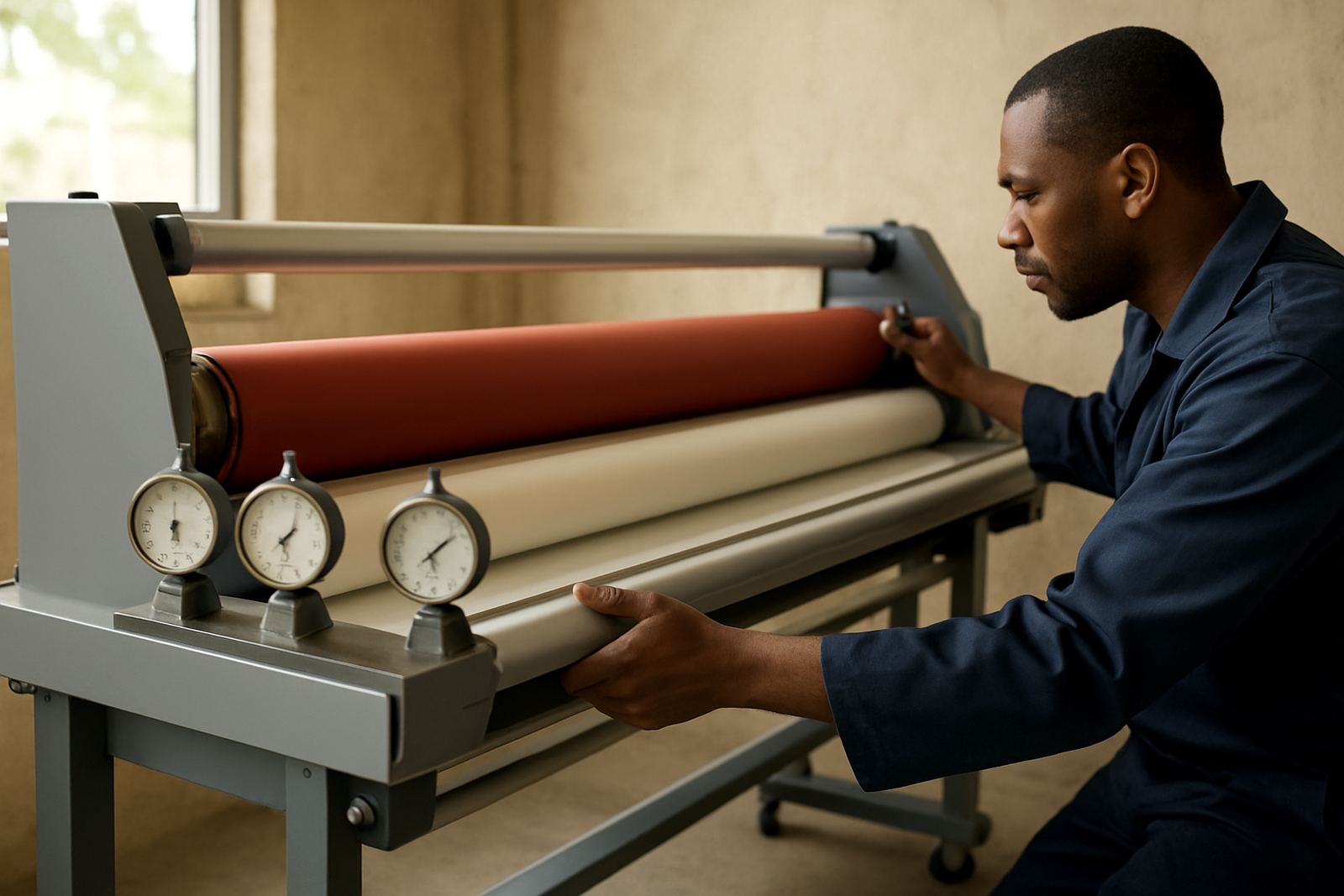
What pressure calibration covers on your laminator
Pressure calibration is the process of setting the nip pressure between the rollers so the film, board or print feeds evenly without crushing the material or leaving air pockets. On wide-format machines, even a small mismatch from side to side can show up as skew, wrinkling, silvering or a patchy finish.
We check the current roller setting, compare both sides, and adjust the machine to the right contact pressure for the work you are doing. That includes cold roll units and heated roll units used by print shops, sign makers, photographers and artists in Johannesburg, Pretoria, Sandton, Midrand, Randburg and surrounding areas. We also look at wear on the rollers and basic feeder condition, because pressure alone will not fix a tired machine.
- Side to side pressure balance check
- Nip gap inspection and adjustment
- Roller surface condition assessment
- Feed alignment check for straight entry
- Test run with your actual media where possible
Common signs the pressure is out
Most teams notice the problem before the machine stops working. The output may look fine at first glance, then you see the defects once the sheets are trimmed or mounted. In many cases the issue is not the film or the print, it is the set pressure.
If your operator keeps increasing heat or slowing the feed to compensate, the machine is probably under too much or too little pressure. That can cause extra waste, more reprints and unhappy clients, especially when jobs are running to a tight deadline in Johannesburg or on a site install in Pretoria.
- Bubbles or trapped air under the laminate
- Wrinkles, waves or a banana shaped feed path
- Edge lift after trimming
- Uneven gloss or pressure marks
- Skewing on the left or right side
- Film stretching or board crushing
Our calibration process step by step
We keep the process practical and focused on the result you need. Before adjusting anything, we confirm the machine model, roller type and what stock you run most often. A pressure setting that suits poster prints may not suit foam board, mounting film or heavier display work.
We then set the rollers, test the feed and make fine changes until the output is even across the full width. If needed, we also inspect the drive side and control side for mechanical issues that can throw pressure off. It is no use chasing a pressure fault if the roller lift is uneven or the frame has shifted slightly.
- Initial inspection and operator feedback
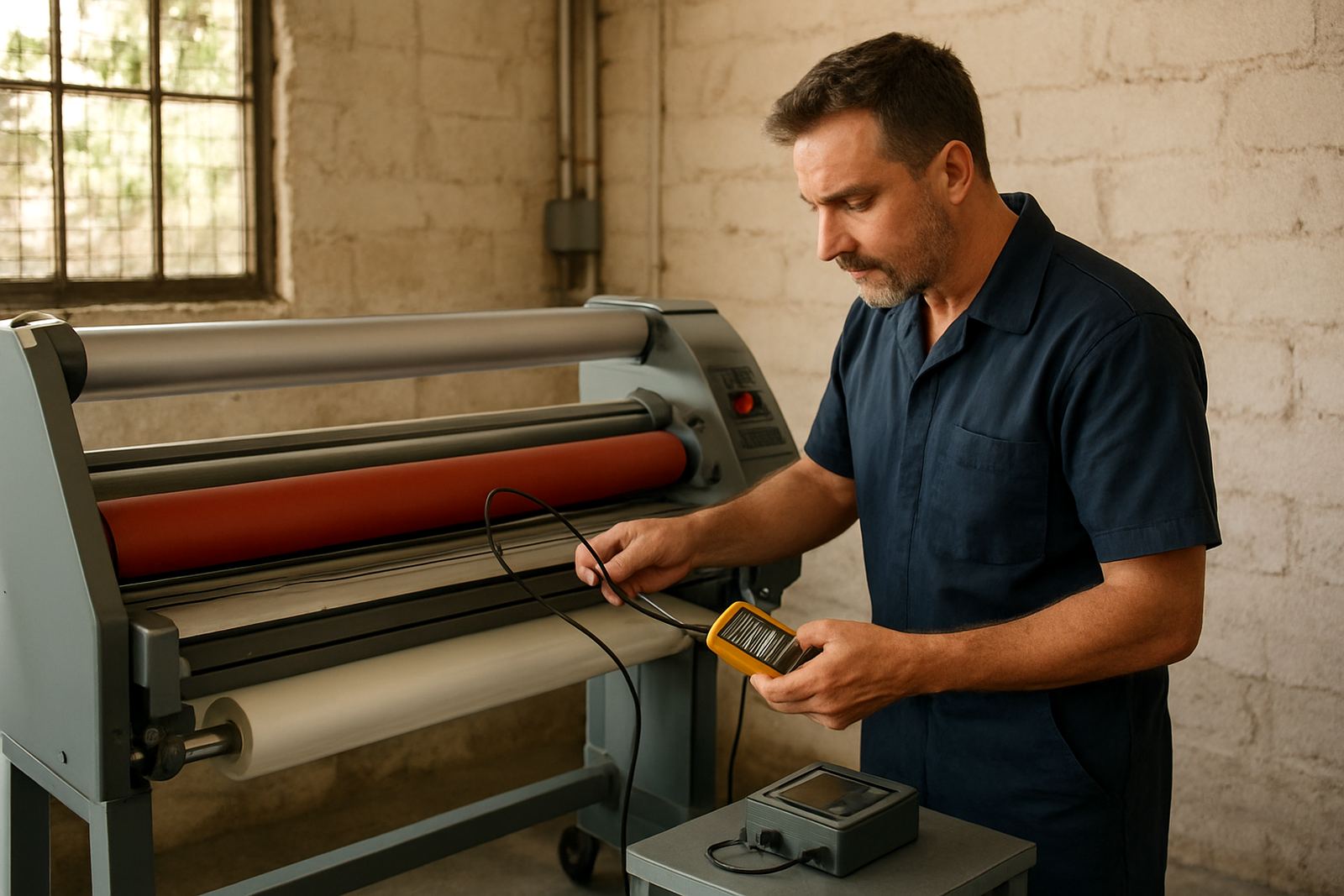
- Measurement of current pressure points
- Adjustment of both sides to equal contact
- Test lamination on suitable stock
- Final sign off with the operator
What is included in the service visit
A pressure calibration visit is more than a quick twist of the adjusters. We aim to leave the machine ready for day to day use, with settings that make sense for your work mix and the condition of the rollers. If we spot anything that may affect the set pressure later, we will tell you before it becomes a breakdown.
For businesses in Kya Sand, Randburg, Sandton, Midrand, the East Rand and Pretoria, we can often combine calibration with routine servicing or roller cleaning. That saves downtime and gives a more accurate result, because clean rollers and correct pressure go hand in hand.
- On site assessment and calibration
- Roller contact and alignment check
- Basic operator guidance on correct settings
- Condition notes for future servicing
- Optional pre-purchase check on used machines
Turnaround and pricing approach
Most calibration jobs are completed in a single site visit if the machine is mechanically sound and the rollers are in decent condition. If we find worn bearings, damaged rollers or electrical issues, we will discuss the next step and the timing before going further. We keep the process straight forward and avoid unnecessary downtime.
Pricing depends on the machine width, the condition of the unit, whether travel is local or out of Gauteng and if extra repairs are needed. We quote after understanding the machine size, access, and the issue you are seeing. For busy print shops the aim is simple, sort the pressure correctly the first time so you are not spending more on waste and rework.
- Local Kya Sand, Randburg and Sandton calls are usually quicker to schedule
- Out of area installs are arranged nationwide
- Repair work is quoted separately if faults are found
How often pressure should be checked
Pressure settings do not stay perfect forever. Rollers wear, frames settle and operators change the type of work they run. In South Africa, load-shedding, heat and coastal humidity can also affect how materials feed and finish, especially where stock is stored in mixed conditions.
As a rule, pressure should be checked whenever print quality changes, after a roller clean, after transport, or when you move from lighter prints to heavier mounting work. Many clients also book pressure calibration as part of scheduled maintenance every 6 to 12 months. If your machine runs daily, a shorter interval may be better, especially on high volume finishing lines.
- Check after any breakdown or transport
- Review settings after roller cleaning
- Inspect more often in high humidity areas
- Recheck when changing to heavier media
- Include in annual service plans
Key facts
| Service type | On-site pressure calibration for cold and hot roll laminators |
|---|---|
| Typical machine width | From 650 mm up to wide-format units above 1600 mm |
| Pressure check method | Side to side contact measurement plus test output inspection |
| Useful interval | Every 6 to 12 months, or sooner if print quality changes |
| Coverage | Kya Sand, Johannesburg and nationwide installs |
| Typical visit | Single visit where machine condition allows |