
What we check before you commit
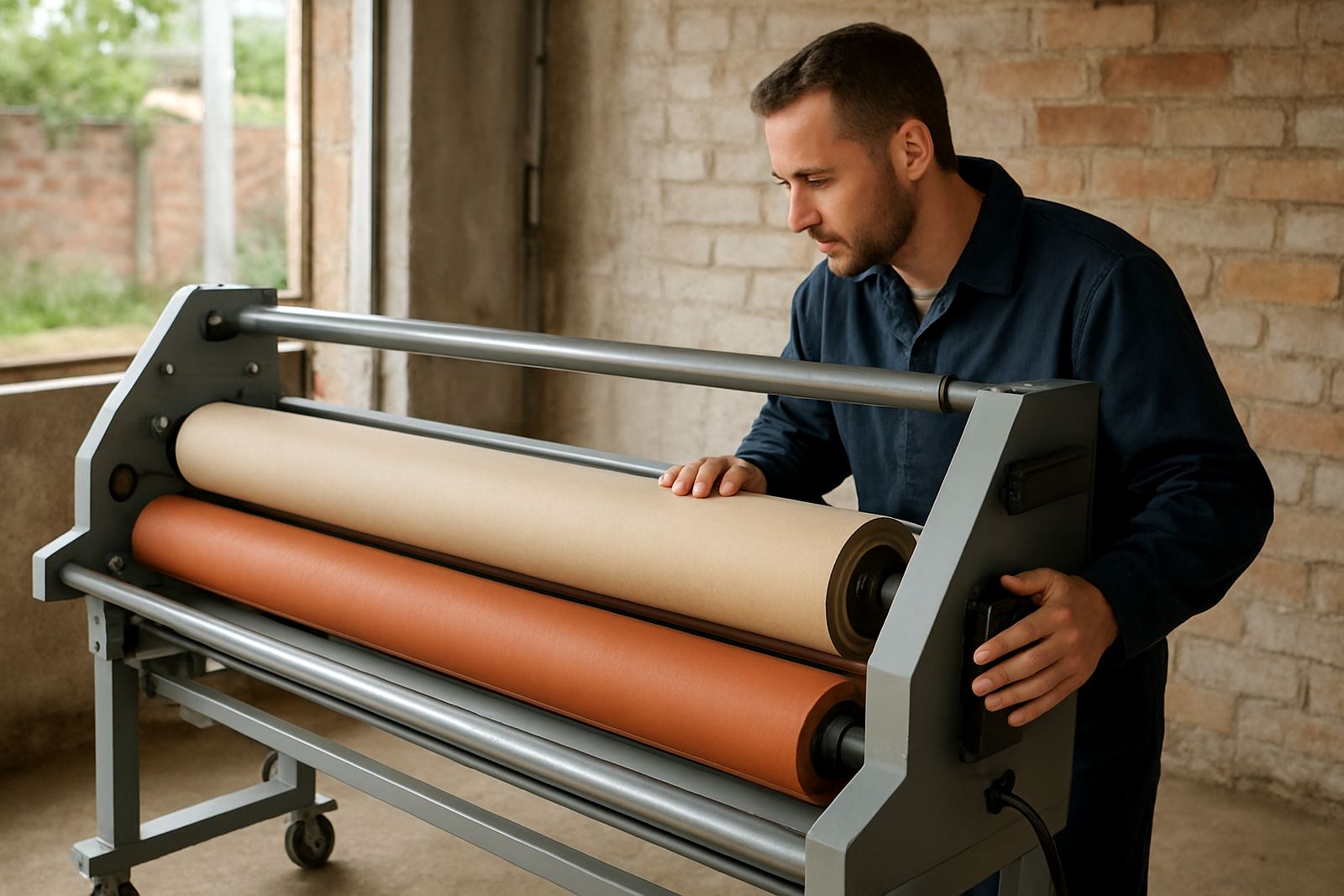
Our pre-purchase inspections are built for wide-format cold and hot roll laminators used in print shops, sign shops, framing studios and art production. We check the parts that determine day-to-day running, not just the exterior finish. That includes roller condition, nip pressure, heat stability, drive movement, controls, electrical safety and the general state of the machine. If a unit has been standing in a store room in Kya Sand or used hard on a production floor in Sandton, we look for the signs that affect future repair costs.
The aim is to help you avoid buying a machine with hidden wear, uneven pressure, damaged heaters, noisy bearings or control faults. In many cases the seller may know the machine powers up, but not whether it will hold temperature over a full shift or feed material evenly across 1 300 mm, 1 600 mm or 1 800 mm widths. That is where our inspection adds value.
- Visual condition of frame, covers, stands and guards
- Roller surface wear, glaze, flattening or contamination
- Heat system response and temperature stability
- Drive operation, alignment and speed control
- Electrical condition, wiring safety and fault indicators
Typical machine sizes and types we inspect
We inspect most roll laminators used in commercial production, from compact units for smaller studios through to larger wide-format machines for busy print rooms. Cold and hot roll units are both covered. We also inspect machines with single- and double-sided laminating capability, as well as units used for mounting, encapsulation and protective finishing. If the machine is installed in a tight Midrand workshop or in a larger East Rand factory, the inspection process is adapted to the access available.
Common working widths we see include 650 mm, 1 000 mm, 1 300 mm, 1 600 mm and 1 800 mm. Where possible, we also consider media thickness range, roller diameter, warm-up time and duty cycle so you can match the unit to your actual work. A machine that suits short runs in Pretoria may not suit back-to-back production in Randburg, so specification matching matters. We check whether the machine is suited to gloss films, matt films, mounting boards and pressure-sensitive applications, and note any limitations.
- Cold roll laminators for pressure-sensitive film
- Hot roll laminators for thermal film and heat-assisted work
- Wide-format units for posters, signage and mounted graphics
- Machines with manual, semi-automatic or powered feed functions
How the inspection process works
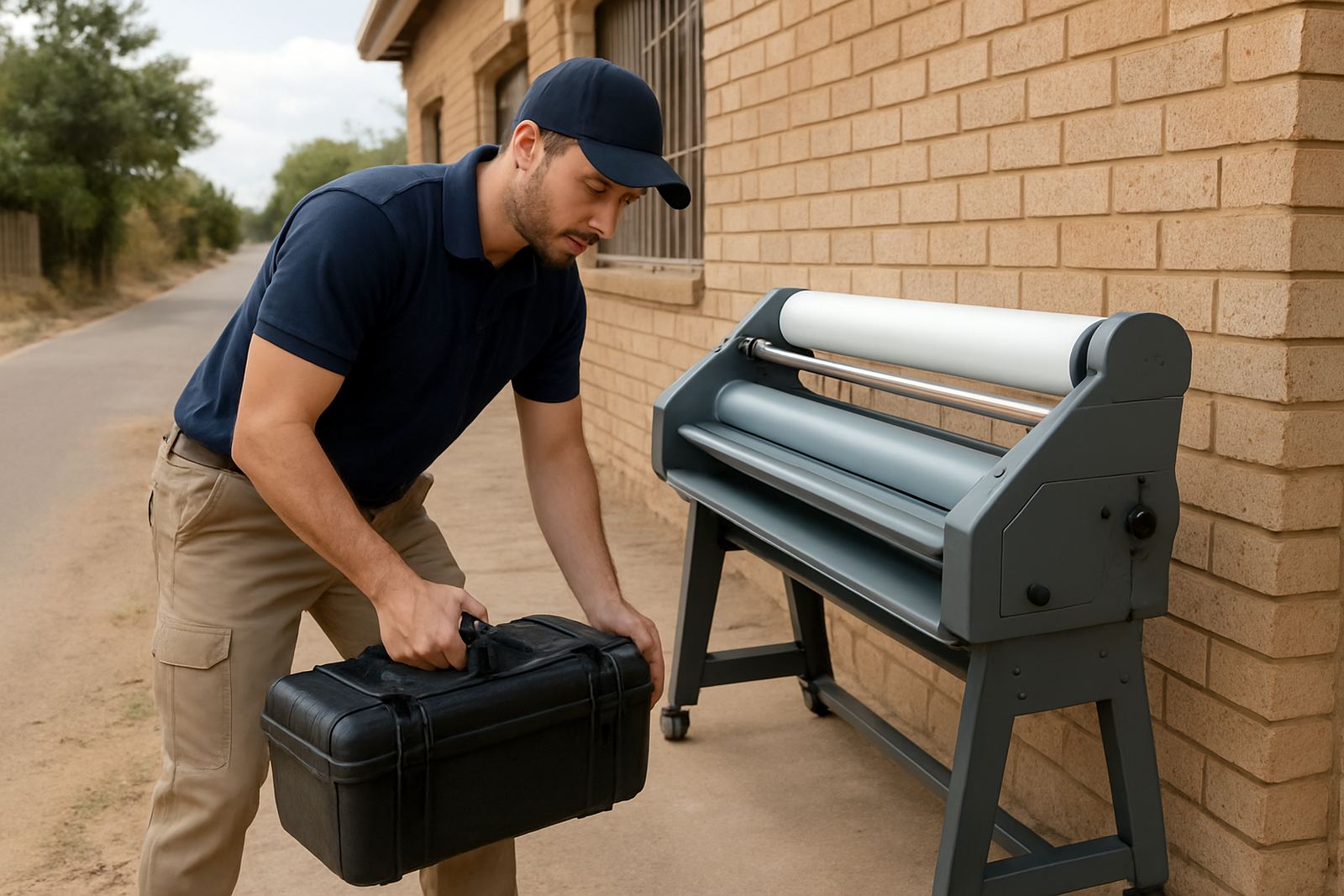
We keep the process clear and practical. First we confirm the machine details with the seller or the buyer, including make type, width, age if known, and whether the unit is still connected and operational. Then we arrange the inspection at our Kya Sand base, at the seller’s site, or on location nationwide where access and transport allow. For installations in Johannesburg, Pretoria and the surrounding areas, turnaround is usually quicker because travel is simpler and a visit can often be scheduled into the same week.
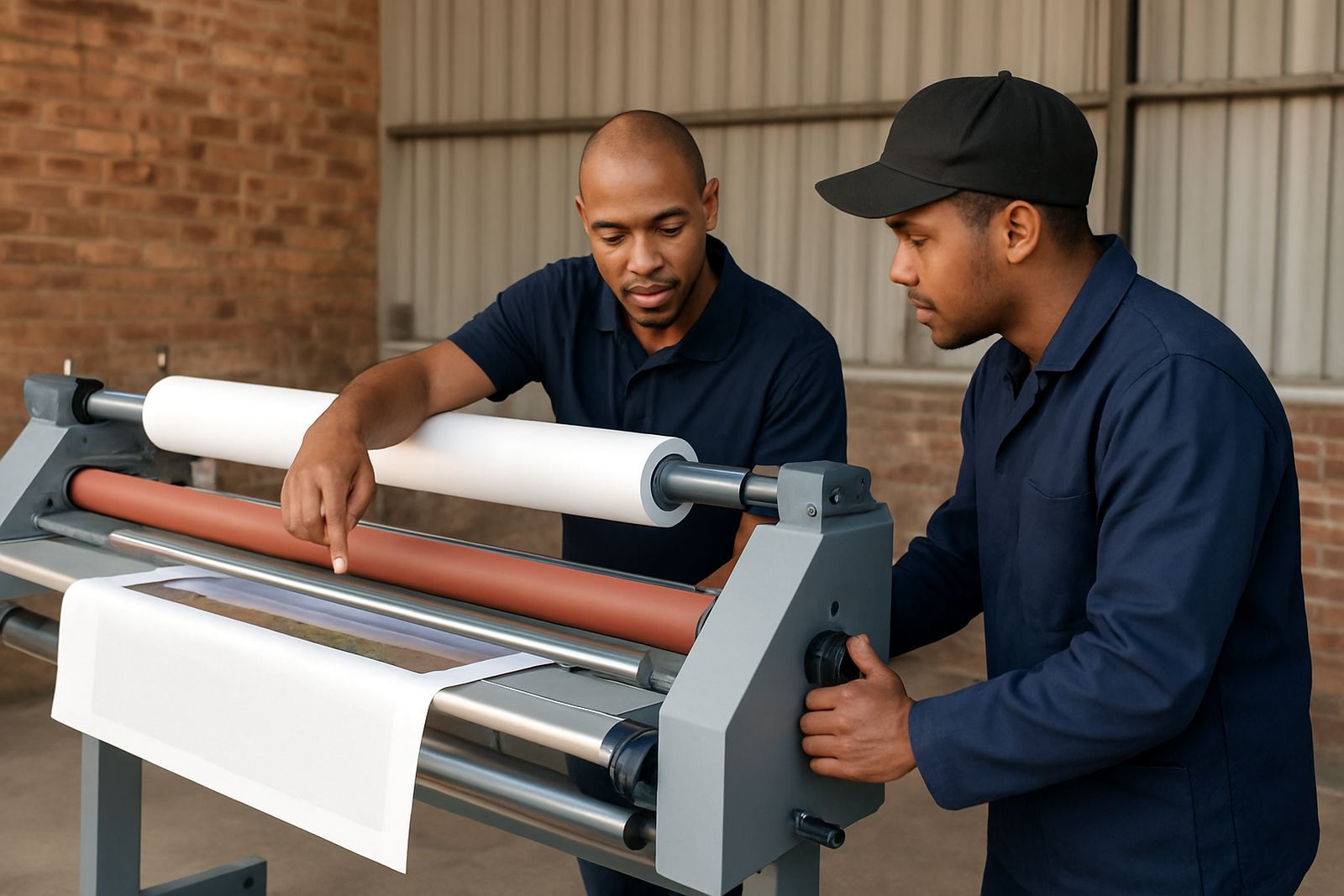
On site, our technician checks the machine cold first, then under power if it can be run safely. We test the feed path, observe roller movement, check heater rise and look for inconsistent pressure or electrical faults. If the seller has media available, we may run a practical test with it. After the inspection, you receive a clear summary of condition, likely repair needs and any immediate risk points. That helps you decide whether to proceed, negotiate or walk away.
- Step 1: confirm machine details and inspection scope
- Step 2: inspect cold, then powered where safe
- Step 3: test heat, drive, pressure and controls
- Step 4: issue findings with practical buying advice
Pricing approach and what affects the cost
We price pre-purchase inspections according to the machine size, location, access conditions and the time required to test it properly. A unit in Kya Sand with easy power access and clear space is simpler to inspect than a large laminator on a production floor with limited access, no lifting support and a seller wanting the check done after hours. If the job includes travel to a branch area such as Sandton, Randburg, Midrand, Pretoria or the East Rand, that is also taken into account.
Because every second-hand or ex-demo unit is different, we do not use a one-size-fits-all method. The point is to keep the fee fair against the value of the purchase. A small inspection fee can save you from a repair bill running into many thousands of Rand. We are upfront if an inspection should include a follow-up quote for repairs, parts or servicing after the purchase. That way there are no surprises.
- Pricing based on width, type and location
- Travel and site access factored in where needed
- Quotes available for add-on repairs or recommissioning
- Clear scope before we attend
What the report covers and how to use it
Our findings are written in plain South African business language, not technical waffle. The report explains what is sound, what is worn, what is unsafe and what may need attention soon. Where appropriate, we note if a fault is cosmetic only, or if it is likely to affect production, safety or energy use. If a machine has signs of poor storage, humidity damage near the coast, or age-related wear in the heating section, we spell that out.
The report is useful when negotiating price with the seller, because it gives you something concrete to work from. It is also useful if you are comparing two or three units and need to know which one has the lower risk profile. For businesses operating on tight budgets in Johannesburg and beyond, that can make the difference between a smart buy and a machine that sits idle. We can also advise on likely maintenance intervals once the unit is in your workshop.
- Condition summary with action points
- Safety concerns and operational risks
- Estimated maintenance needs after purchase
- Buying guidance if more than one unit is being considered
Maintenance intervals after purchase
Once you have bought the machine, sensible maintenance keeps it earning. For most roll laminators, roller cleaning should be part of the daily or weekly routine depending on output volume. Pressure calibration and general checks are often worth doing every 3 to 6 months, while heat system checks and drive inspections should be planned at least twice a year for busy sites. In high-volume print rooms, service intervals may need to be shorter, especially where the machine runs through long shifts or during load-shedding recovery periods.
If you run in dusty industrial areas or in coastal humidity, it is worth checking electrical connections, surface contamination and roller condition more often. Small issues can become bigger very quickly. We can help you set a practical maintenance rhythm after purchase, and we also support routine servicing, spare parts, fault finding and operator refresher training. That means the inspection is not just a once-off opinion, but the start of proper machine care.
- Daily or weekly roller cleaning
- 3 to 6 monthly pressure and alignment checks
- Six-monthly heat and drive reviews for active sites
- Shorter intervals for heavy use or humid conditions
Key facts
| Service area | Kya Sand, Johannesburg and nationwide installs |
|---|---|
| Machine types | Cold roll laminators and hot roll laminators |
| Typical widths | 650 mm to 1 800 mm |
| Inspection format | On-site or arranged at our Kya Sand base |
| Turnaround | Often same week in Gauteng, subject to booking |
| Support after inspection | Repairs, servicing, parts and operator training |