
Start with your widest regular job, not your biggest once-off
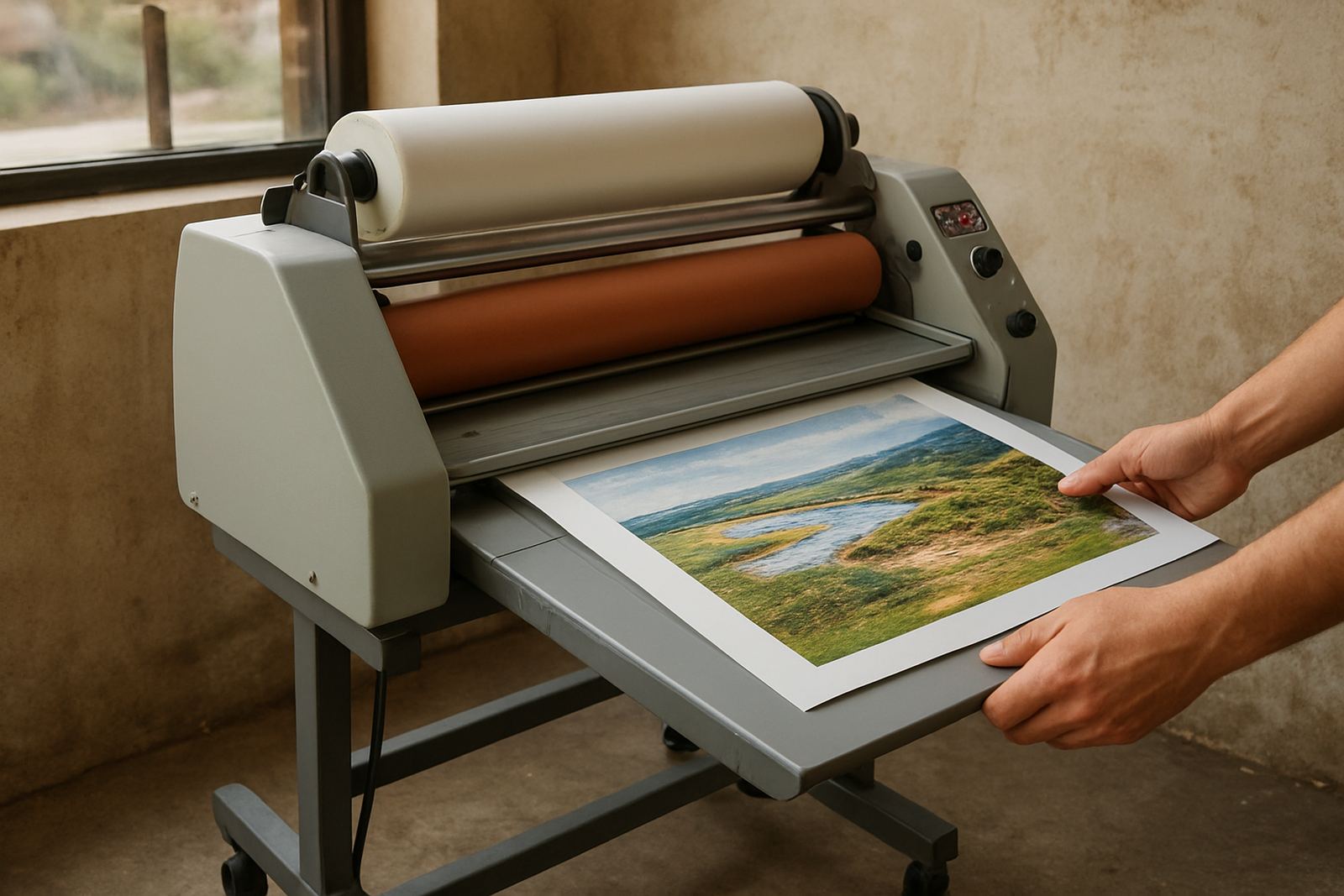
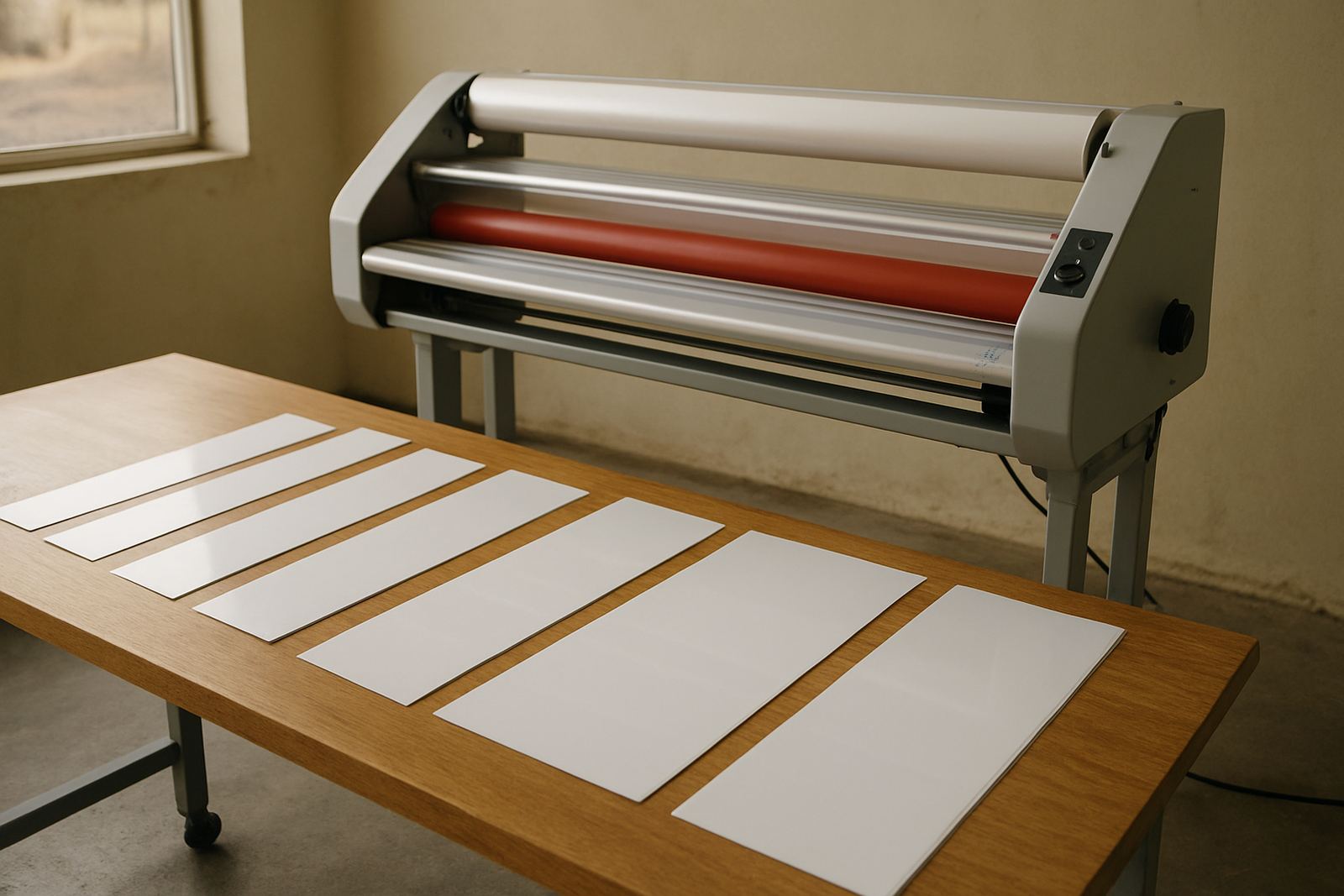
The easiest way to size a laminator is to measure the widest sheets, posters or boards you handle in a normal week. If most work is A1, A0, 900 mm posters or 1 000 mm exhibition graphics, choose a machine that comfortably covers those sizes with a little room for handling. That extra room matters when you are feeding long runs, aligning print edges and trimming after lamination.
In practice, the machine width should be wider than your media by enough margin to allow side guides, skew correction and operator movement. A print shop in Sandton doing short runs of retail graphics may manage with a smaller footprint, while a Kya Sand studio finishing mounted artwork may prefer more working width for safer handling. If your regular work is changing, think about the next 12 to 24 months, not just this month.
- Measure your most common finished sizes, not only the print file size.
- Allow extra width for trimming and edge handling.
- Check whether you laminate single sheets, panels or continuous rolls.
- Leave space for a second operator if jobs are long or delicate.
Match width to the media you buy and cut locally
Your laminator should suit the rolls, boards and printed media that are easy to source around Johannesburg and Pretoria. If your supplier stocks 610 mm, 1 070 mm or 1 370 mm rolls, choosing a machine around those widths can make day-to-day buying simpler. It also helps when you are working with local sign material, window graphics or artwork prints that are trimmed from larger parent rolls.
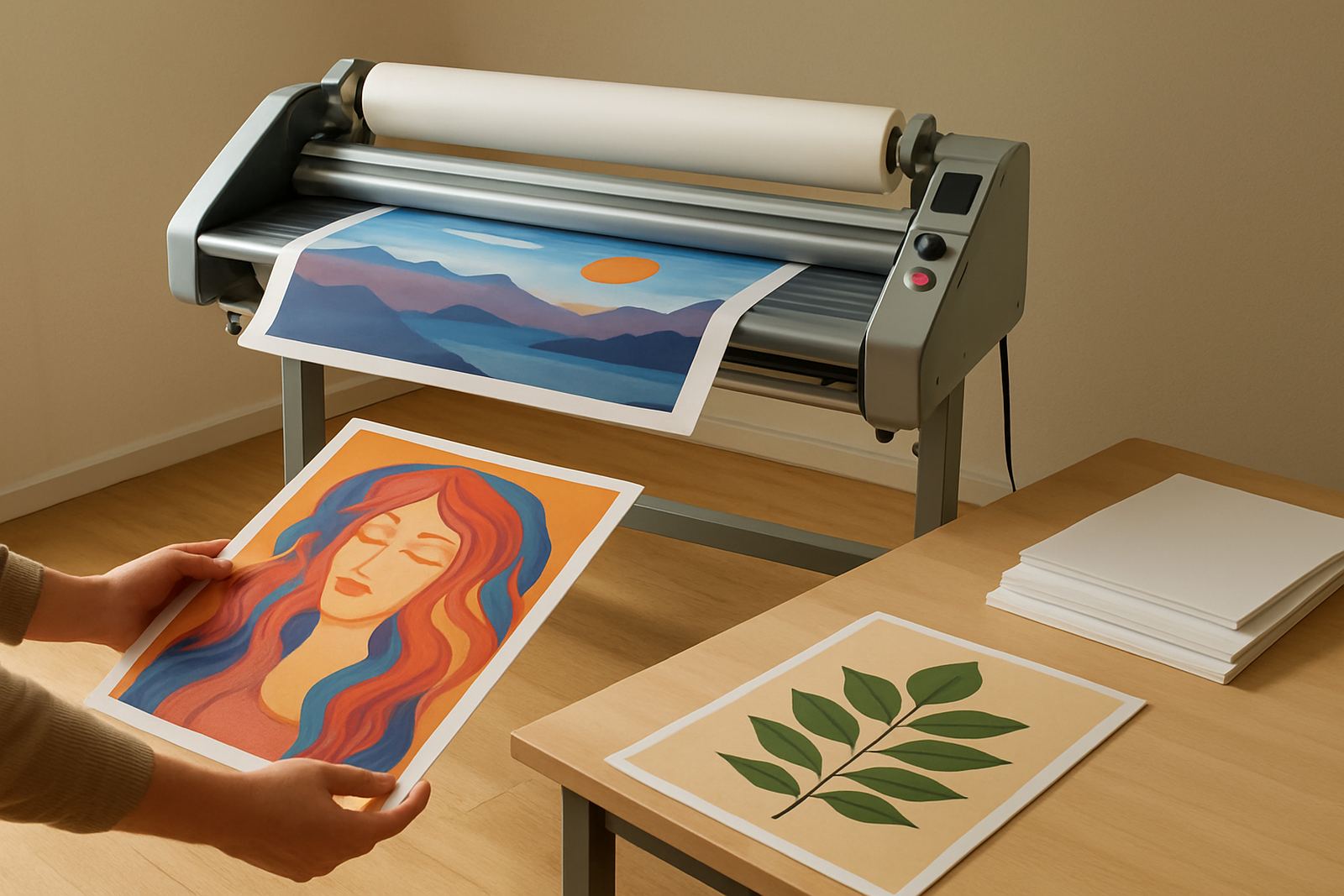
Do not forget the practical side of finishing. A wide-format machine is useful when you are covering multiple smaller prints in one pass, but only if your workflow supports that speed. For example, a team in Midrand producing exhibition boards may value a wider bed for batch work, while a smaller studio in Randburg may only need enough width for standard art prints and presentation boards. If the work is mostly narrow, a very wide machine may sit idle for much of the week.
- List the roll widths you already use for print and lamination.
- Check if the machine can handle your longest sheets without sagging.
- Think about whether you need single-sided or double-sided finishing.
- Match the machine to the stock you can buy easily in Gauteng and beyond.
Plan for volume, not just size
Two machines with the same width can suit very different operations. One shop may need a wide laminator for a few high-value pieces each week, while another needs steady output for school signage, retail campaigns and artwork protection. If your jobs are frequent, the wider bed only helps if the drive system, heat control and roller pressure can keep pace without causing wrinkles or bubbles.
Think about how many metres you process in a day. A busy print shop in East Rand handling repeat municipal work, retail updates and POP graphics needs a machine that can stay productive through longer runs. If your work is more custom and low volume, a narrower machine may give better value and use less floor space. It is better to buy for predictable production than for an occasional peak job that happens twice a year.
- Estimate average metres per day, then compare that to peak season demand.
- Consider whether one operator or two will run the machine.
- Allow time for setup, cleaning and cool-down between jobs.
- Choose width together with speed and service access, not on width alone.
Allow for trimming, mounting and finishing room
The working width of a laminator is only one part of the decision. You also need room to feed, collect, trim and inspect finished work. If a poster is 1 000 mm wide, a machine with very little extra working space can make alignment difficult and increase waste. That is especially true when the substrate is slightly skewed after printing or when a second laminate layer must be aligned by eye.
For shops in offices, retail parks or light industrial units around Kya Sand and Sandton, bench space and clear walkways matter just as much as machine size. A wider unit may also need more clear space on both sides for roll handling and maintenance access. Check access doors, ramps and turning space if the machine must move through a shared building or service corridor. Sometimes the right width is the widest machine that can still be serviced properly, not the biggest one you can fit in the room.
- Measure the full footprint, not only the roller width.
- Check side access for servicing, cleaning and roll changes.
- Leave space for trimming tables and drying or curing areas.
- Make sure the operator can work without twisting or stretching.
Choose width with South African working conditions in mind
Local conditions affect how a laminator behaves. In summer, Johannesburg heat and dust can affect workflow, while coastal humidity in places like Durban or Gqeberha can influence film handling and finishing consistency. Load-shedding also means your machine should be practical to restart, inspect and keep in line after power interruptions. A wide machine is useful only if the team can manage it consistently under real site conditions.
For businesses that install nationwide, it helps to think about after-sales support before choosing a width. A machine that is too large for the team to service safely can create delays when rollers need cleaning or electrical fault finding is required. If you are relying on a unit for daily work in Pretoria, Midrand or East Rand, make sure the chosen width fits the voltage supply, floor loading and operator skill level at your site. The right size should make work easier, not more stressful.
Quick width checklist before you order
Before you decide, run through a simple checklist against your real jobs and your production space. This avoids buying on a vague plan and helps you compare options properly.
- What is the widest item you finish every week?
- What roll widths are already in regular use?
- How many metres do you process in a normal month?
- Will one operator or a team run the machine?
- Do you need space for trimming, inspection and storage?
- Can the machine be serviced easily at your premises?
- Will the width still suit your work in two years time?
If you are between sizes, it is usually better to choose the width that supports your main line of work rather than the biggest machine available. A sensible fit saves time, reduces handling mistakes and helps keep output consistent from the first job to the last.