
Start With the Full Purchase Budget
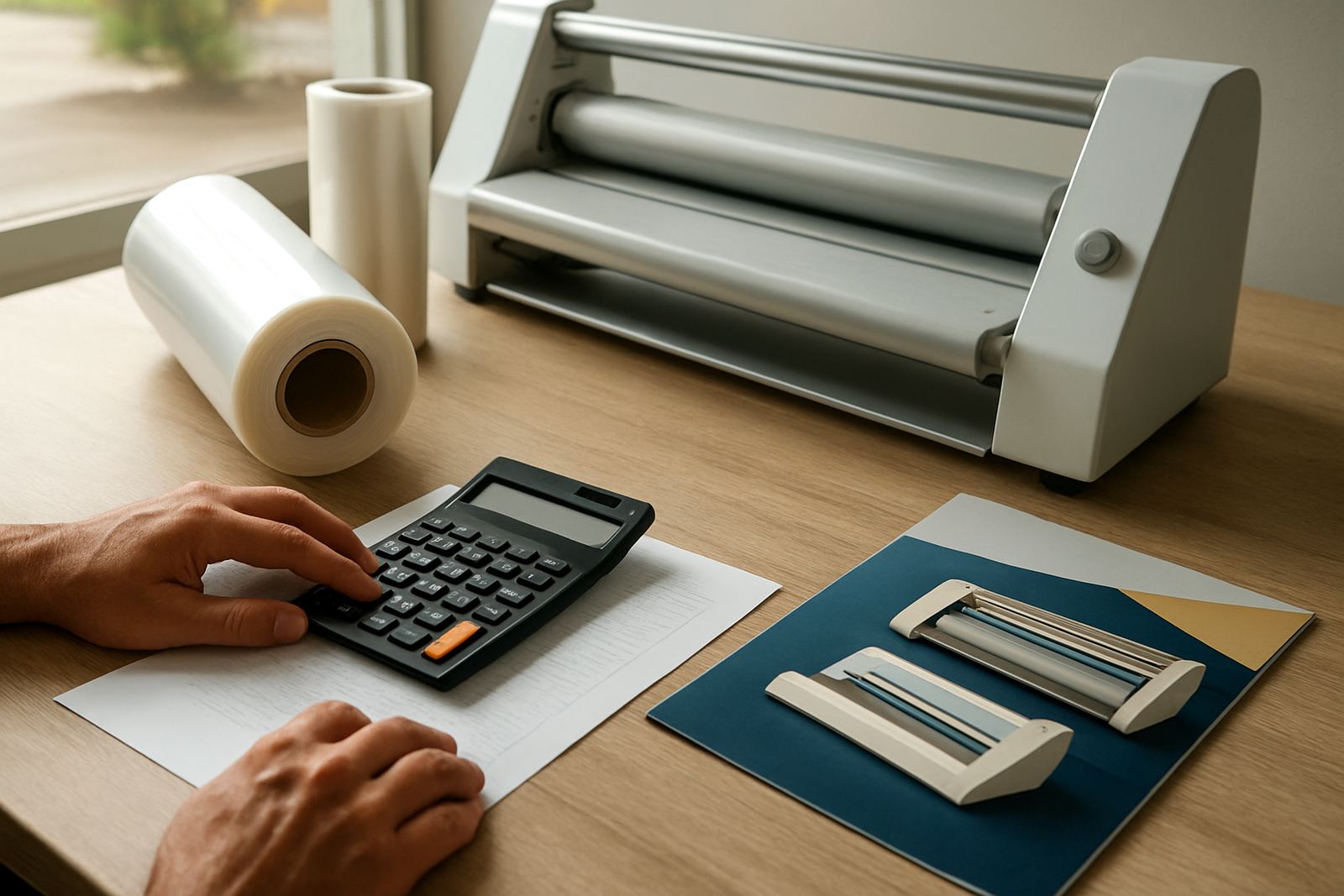
When comparing wide-format cold and hot roll laminators, begin with the full buy-in cost, not only the machine itself. A small print shop in Randburg may need a different budget to a signage workshop in Pretoria or a design studio in Sandton, but the same basic categories apply.
Set aside money for the unit, delivery, positioning, final setup and any electrical work that may be required on site. If the machine needs a stable power supply, make room for backup support during load-shedding, especially where work must keep moving after hours. For many businesses, the first budget mistake is forgetting the extras that make the machine ready for daily use.
- Machine purchase price
- Delivery and off-loading
- Installation and commissioning
- Electrical or workspace preparation
- Backup power or surge protection
Match the Machine to Your Workload
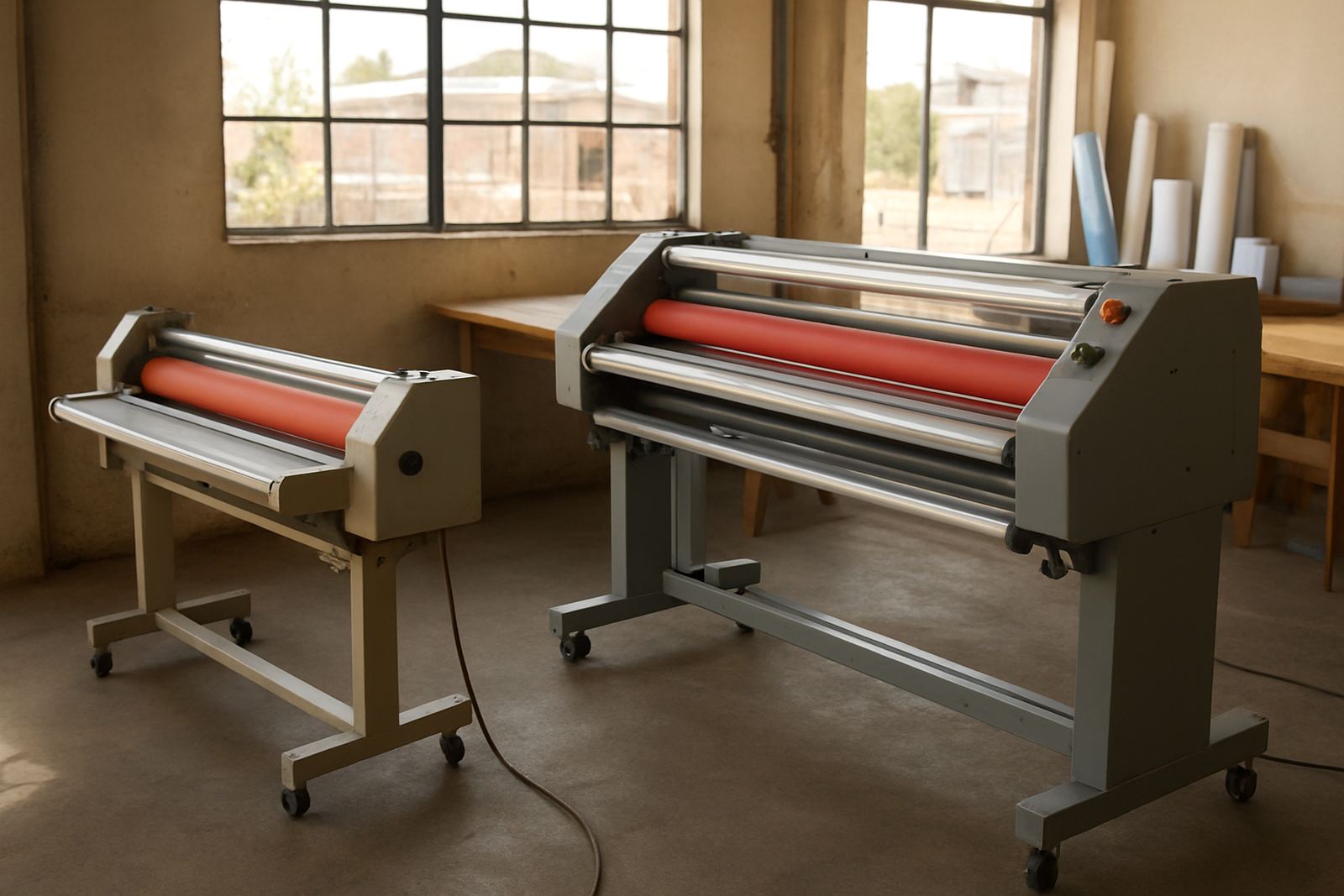
Do not budget for the biggest model if your print volumes do not justify it. A higher-capacity laminator can save time for busy production teams, but it also costs more to buy, heat and maintain. Smaller teams usually get better value from a machine that matches their daily metreage and operator skill level.
Think in practical terms. How many metres do you laminate in a week. Do you handle mounted artwork, retail graphics or school signage. Do you need cold lamination for heat-sensitive print, or a hot system for tougher finishing work. A machine that is too small creates bottlenecks, while one that is too large can tie up cash you need for consumables and servicing.
It is wise to ask for a pre-purchase inspection if you are considering a used unit or comparing models on paper. That way you can check the rollers, heat system, drive system and overall condition before money is committed.
Budget For Consumables and Working Stock
Consumables affect your monthly spend just as much as the equipment does. Film type, widths and stock levels all matter, and the right allowance keeps production moving when an urgent job lands on your floor. In humid areas, especially near the coast, you may also need to store film carefully so it stays flat and clean.
Build a small stock plan for the most used sizes and finishes. If your shop in Midrand or the East Rand works on short deadlines, running out of the right roll can delay delivery and upset a client. Keep a margin for test runs too, because the first few jobs after a setup or roller clean may need adjustment.
- Lamination film rolls in the widths you use most
- Adhesive or mounting consumables where relevant
- Cleaning materials for rollers and machine surfaces
- Protective sleeves, cutter supplies and packaging
- Sample material for test runs and setup checks
Allow For Setup, Training and First Jobs
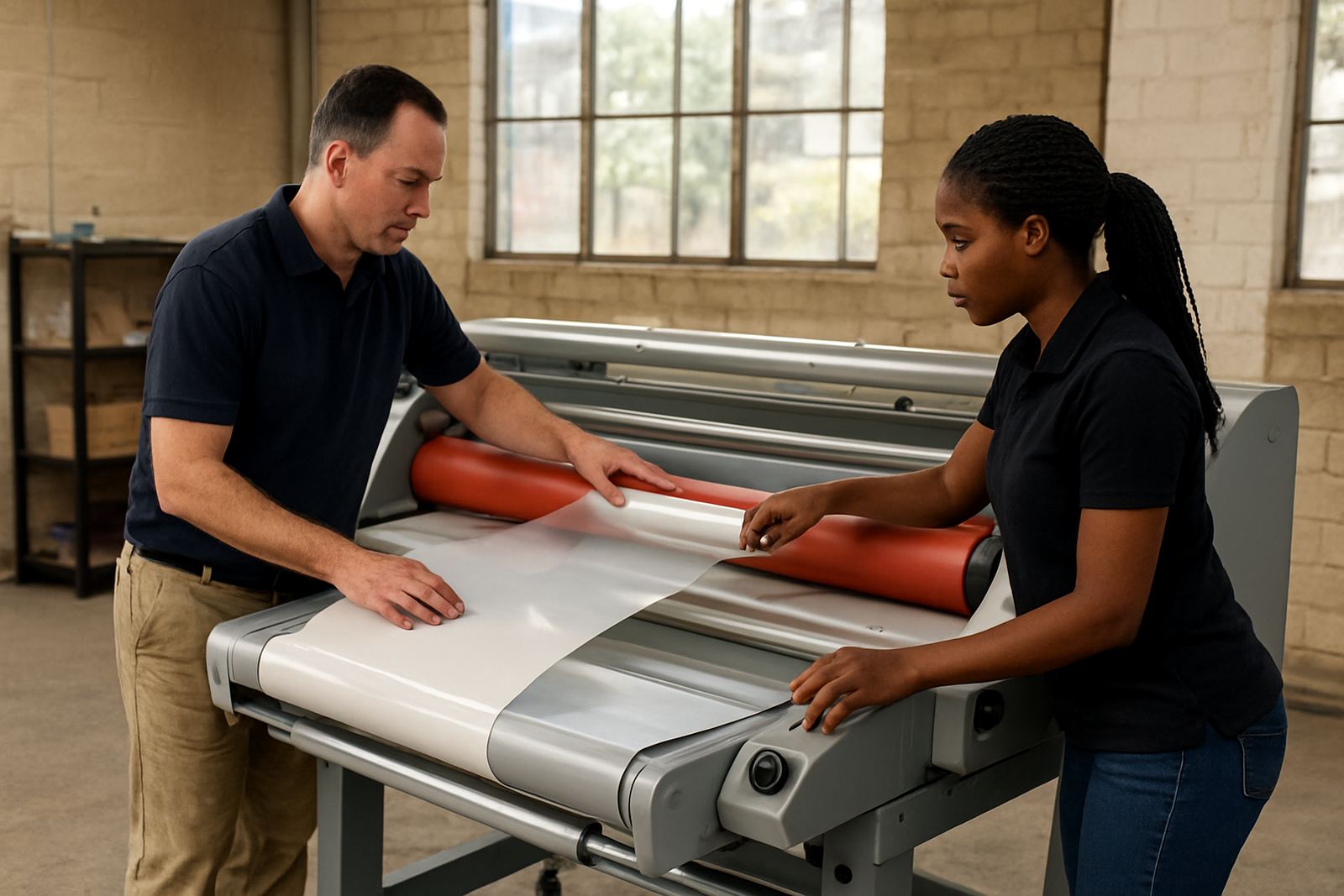
Even a straightforward installation needs time. Budget for staff to learn the controls, understand pressure settings and recognise the signs of poor alignment. If you have more than one operator, plan for refresher training as part of the annual budget, not only on day one.
Good training reduces waste. It also helps operators work safely around heat, rollers and moving parts. In a busy shop, a small setup error can waste metres of film and a valuable print run. That is why an installer should check the heat system, pressure calibration and drive operation before the first production job goes through.
If your team works across several branches, from Kya Sand to Pretoria, make sure the lead operator or supervisor understands the same setup routine at each site. Consistency saves time and keeps output neat.
Plan For Servicing Before Problems Start
Servicing is often under budgeted, but it is one of the best ways to protect the machine and avoid sudden downtime. Routine servicing should include roller cleaning, pressure calibration, heat system checks, drive system repairs and electrical fault finding when needed. Skipping these steps can cost more later in lost production and rushed callouts.
Create a yearly maintenance allowance and set a separate amount for breakdown support. A machine that runs daily in Johannesburg may need different attention to one used a few times a week in a smaller town. If your machine is part of an income-generating print room, even one day off line can affect cash flow.
- Quarterly or biannual routine servicing
- Roller cleaning and inspection
- Pressure and heat checks
- Spare parts reserve
- On-site breakdown support budget
Use a Simple Budget Checklist Before You Buy
A simple checklist makes the buying decision easier. Write down what the machine must do, what it will cost to run, and what support you need after installation. That prevents the common problem of buying on price alone and then spending more later on fixes, training or unsuitable consumables.
Before you sign off, ask whether the supplier can support installs nationwide, provide spare parts support and offer operator refresher training when needed. Also check whether your premises can handle the machine size, power needs and workflow. A well planned purchase should fit the space, the job mix and the monthly budget, not just the catalogue description.
If you want a clear view of what your total spend should look like, it helps to break the budget into once-off costs, monthly operating costs and annual servicing.