Start With The Final Display Size And Board Type
Before you choose a laminator, look at what the finished job must do. A small mounted poster for an indoor reception area needs different handling to a 1,2 metre sign board for a retail fitout in Sandton or a promotional wall panel going to a school in Midrand. Measure the print size, the board size, and the thickness of the substrate before any work starts.
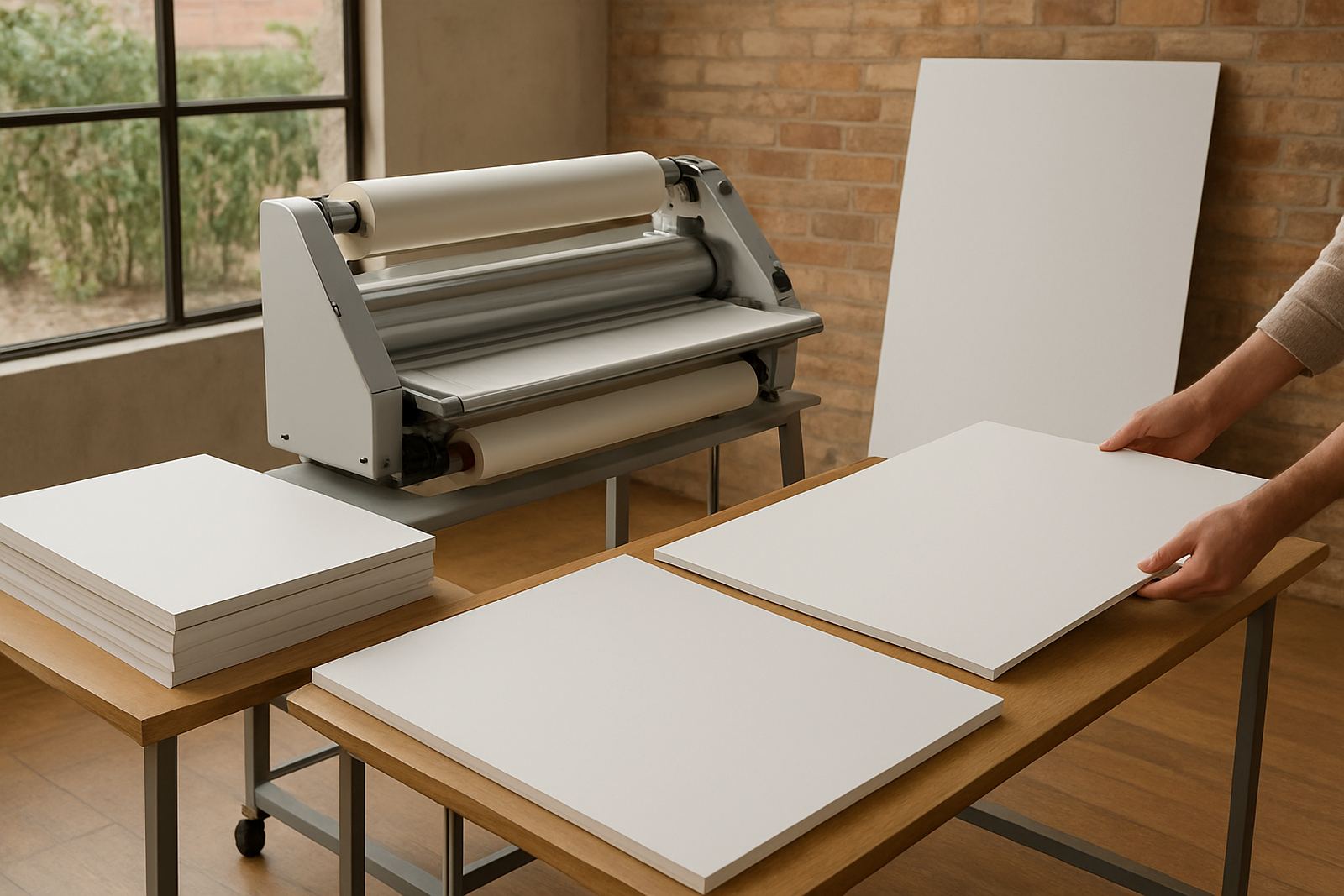
For mounted jobs, the board choice matters just as much as the laminate. Foam board is light but needs careful pressure control. Correx is quick for short-term use. Rigid display board and PVC board handle more traffic, but they can show marks if the rollers are set too tight. In humid coastal conditions, even when the work is done in Johannesburg, a print that has picked up moisture can move under heat so allow time for acclimatisation.
Choose Hot Or Cold Roll Support For The Job
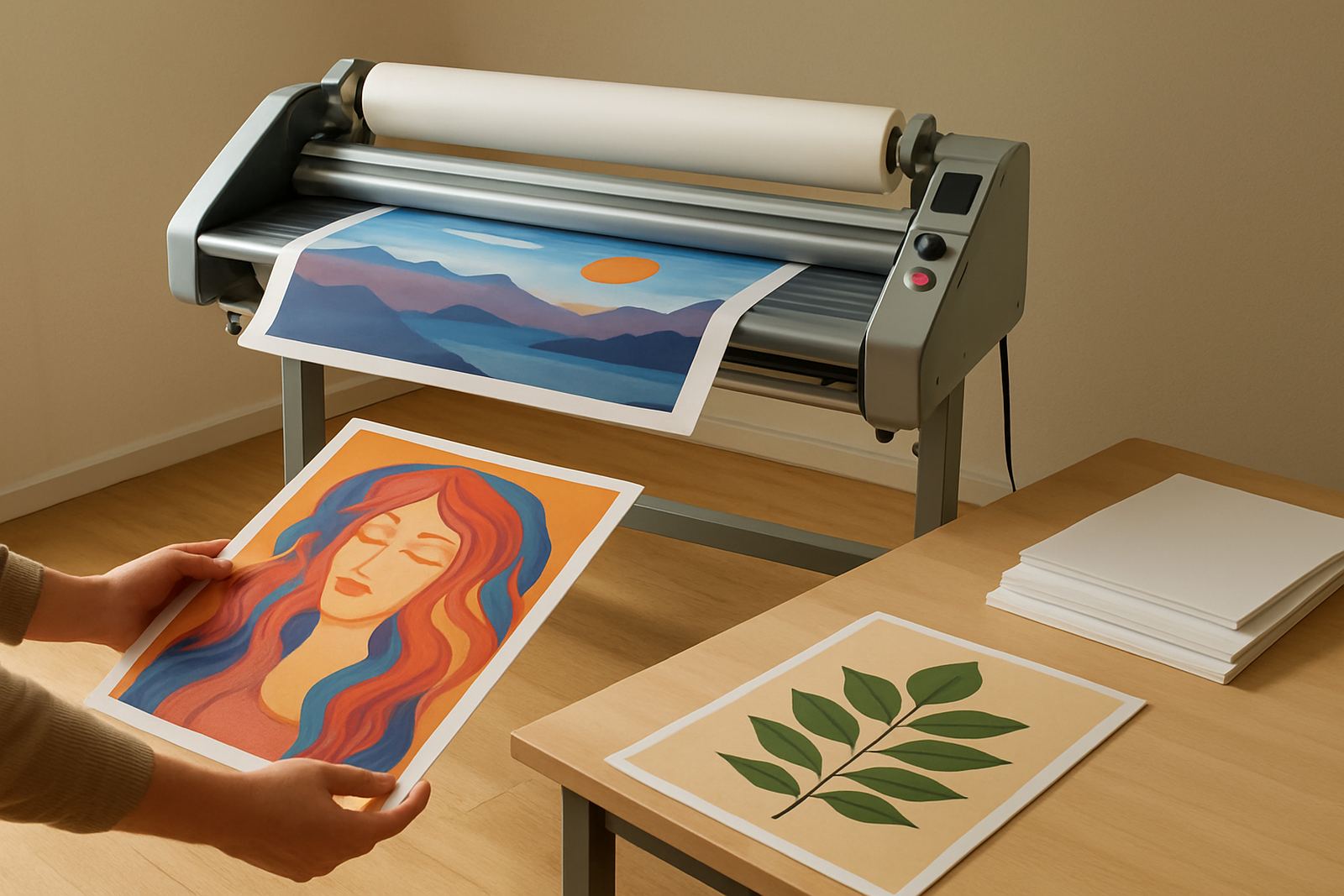
Cold roll machines suit pressure-sensitive films, mounting adhesive films, and artwork that must not see added heat. They are a practical choice for photo prints, vinyl faces, and many indoor display pieces. Hot roll units help when you need better bonding on thicker laminates, encapsulation work, or jobs that must resist handling in busy environments.
The right machine depends on volume and material range. A print shop in Kya Sand doing everyday sign work may want a unit that handles both cold and hot work, while a designer finishing limited runs may only need one method. Check the maximum width, the roller temperature range, and whether the feed system can handle board without skew. For mounting work, even pressure across the full width is more important than high speed.
- Cold roll for pressure-sensitive mounting films and delicate prints
- Hot roll for tougher bond needs and wider material compatibility
- Wide-format bed size to match your common board widths
- Slow controlled feed for less risk of trapped air or edge lift
Set The Machine Up Before The First Board Goes In
Good mounting starts with a clean machine. Dust, dried adhesive, and loose trim waste can all leave marks on the face of a board. Rollers should be clean and pressure set evenly from left to right. If one side is tighter than the other, the print can walk off line and the panel will need rework.
In South African print rooms load-shedding can interrupt a job at the worst point, so operators need a safe shut-down routine. If power cuts are common, keep the machine area clear, allow for cooling time, and avoid rushing a warm board straight into handling. A simple pre-run check saves time and material:
- Check rollers for dust, glue or old film residue
- Confirm pressure is equal on both sides
- Test heat settings on an offcut before full production
- Keep blades, alignment tools, and cleaning cloths ready
- Make sure the feed path is clear and level
Use A Clean Prep Table And Proper Alignment
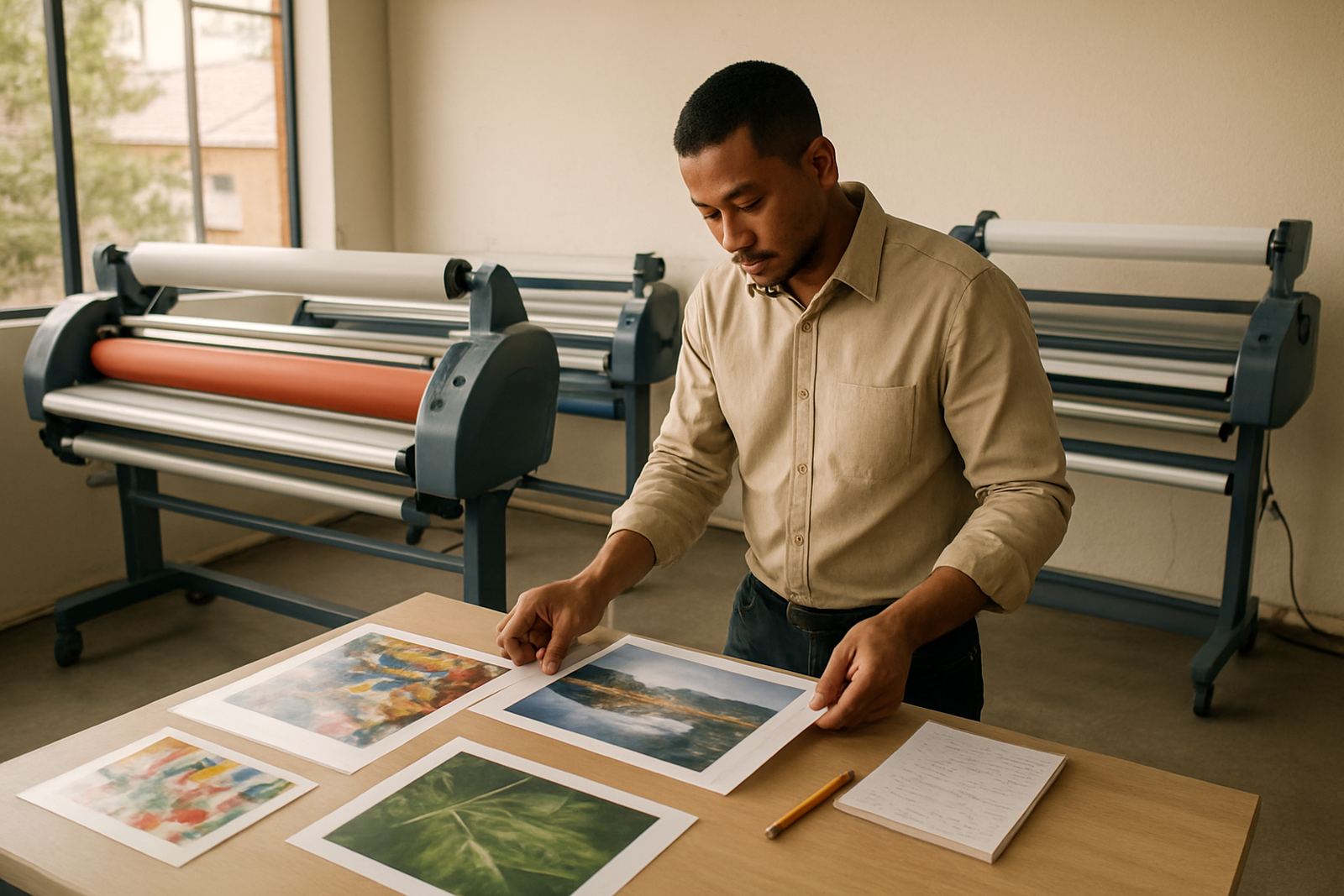
Mounting jobs fail most often during handling, not during lamination itself. A flat prep table, clean hands, and a steady alignment routine make a big difference. Lay the print and board on a dust-free surface, then mark a lead edge if the job needs repeat accuracy. For larger panels, use two people so the sheet does not bow or pick up debris mid-air.
When the adhesive face is exposed, work with short, controlled movement. Do not peel too much release liner at once. On glossy artwork, fingerprints can show through the final finish, especially under strong showroom lighting. A small misalignment of 2 mm may not matter on a quick internal notice, but it can look poor on a retail panel in a front window.
Check The Failure Points Before Delivery
Every mounted job should be inspected before it leaves the shop. Look closely at the corners, the edges, and the centre line for air pockets or lifting. Check for ripple, silvering, and any sign that the laminate has not bonded evenly. If the board will be installed with municipal or landlord fixing rules in place, make sure the finish is complete because site time is expensive and rework is hard once a panel is up.
Humidity, heat, and transport all affect the result. A panel carried in a bakkie across the East Rand in summer can shift if it was packed too soon. Give jobs enough cure time and store them flat. For larger work, wrap boards so the face cannot rub against straps or rough packing material.
- Inspect all four corners for lift or trapped air
- Check the face under angled light for marks and bubbles
- Confirm board edges are sealed and even
- Make sure the job is fully cured before dispatch
Keep The Equipment Working For Repeat Jobs
Mounted display work depends on repeatable results. Routine servicing, roller cleaning, pressure calibration, heat system checks, drive system repairs, electrical fault finding, and spare parts support all help prevent avoidable downtime. If your team is doing regular retail panels, exhibition boards, or artist editions, build a service plan around actual workload rather than waiting for a breakdown.
We support print shops, designers, and artists from Kya Sand, Randburg, Sandton, Midrand, Pretoria and the East Rand, with installs nationwide. Pre-purchase inspections are useful if you are comparing machines for a new workshop or replacing an older unit. Operator refresher training also helps new staff handle boards better and reduce waste. If you need practical advice on the right setup for your mounting work, send a message through our contact form.