Client Brief for a Busy Soweto Photo Lab
The client was a photo lab in Soweto serving walk-in customers, schools, event organisers and local businesses that needed framed prints, display boards and protected enlargements. Their main issue was inconsistent finish quality on larger pieces. Smaller items were fine, but when they moved up to A2, A1 and wider presentation work, they needed better control over pressure, alignment and heat. They also wanted a machine that would not be a headache during load-shedding or after long days of back-to-back jobs.
The brief was clear: supply a laminator that could handle photo prints, mounted artwork and presentation pieces with a clean, bubble-free finish. The team asked for a unit that was practical for a compact production area, easy to learn, and simple enough to service locally if needed. They also wanted support for operators who were already busy and could not spend hours on trial and error.
- Work type: photo enlargements, display prints and presentation boards
- Town: Soweto
- Priority: clean finish, repeatable pressure and easy daily use
- Concern: power interruptions, operator speed and consistent quality
Machine Selection and Key Specifications
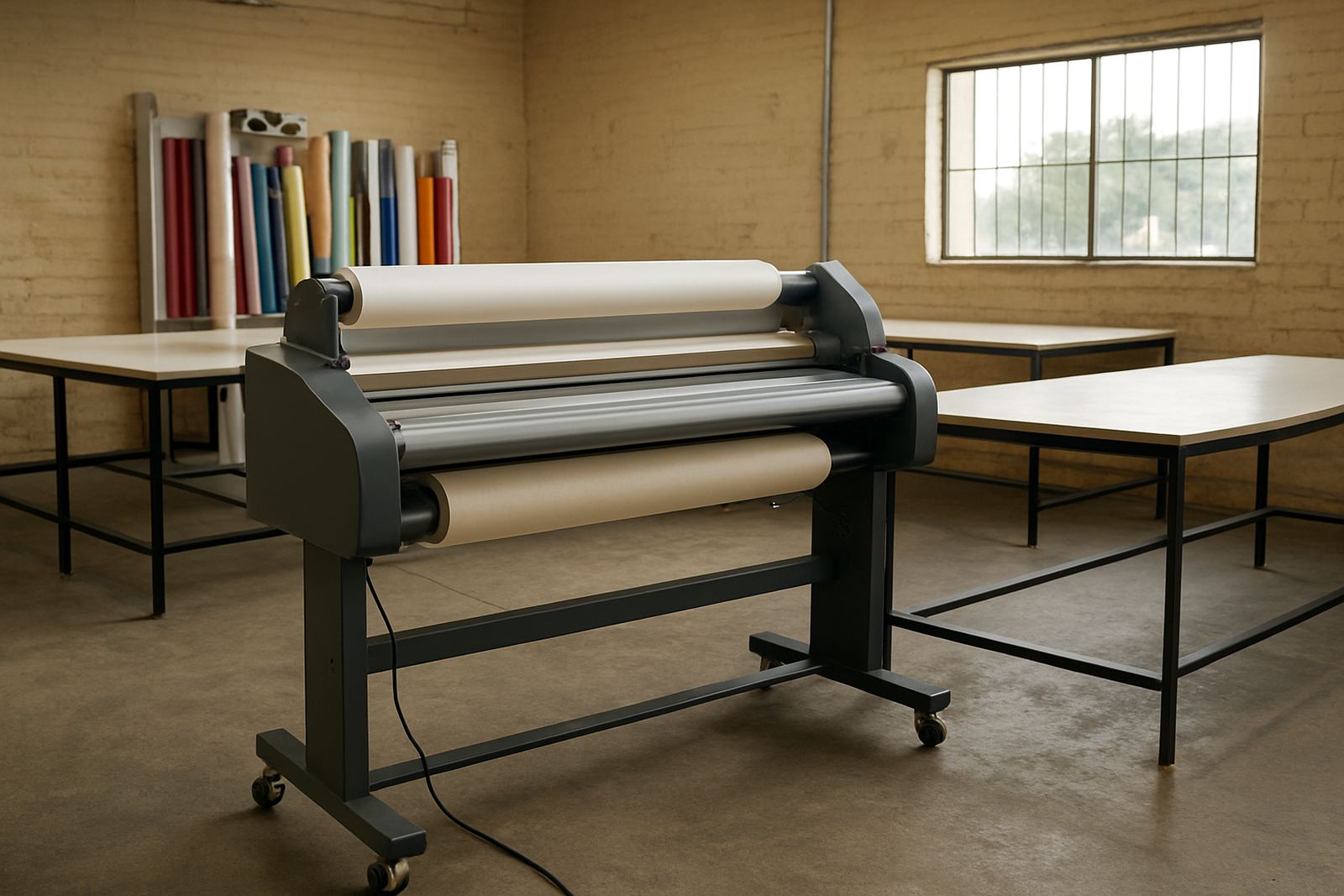
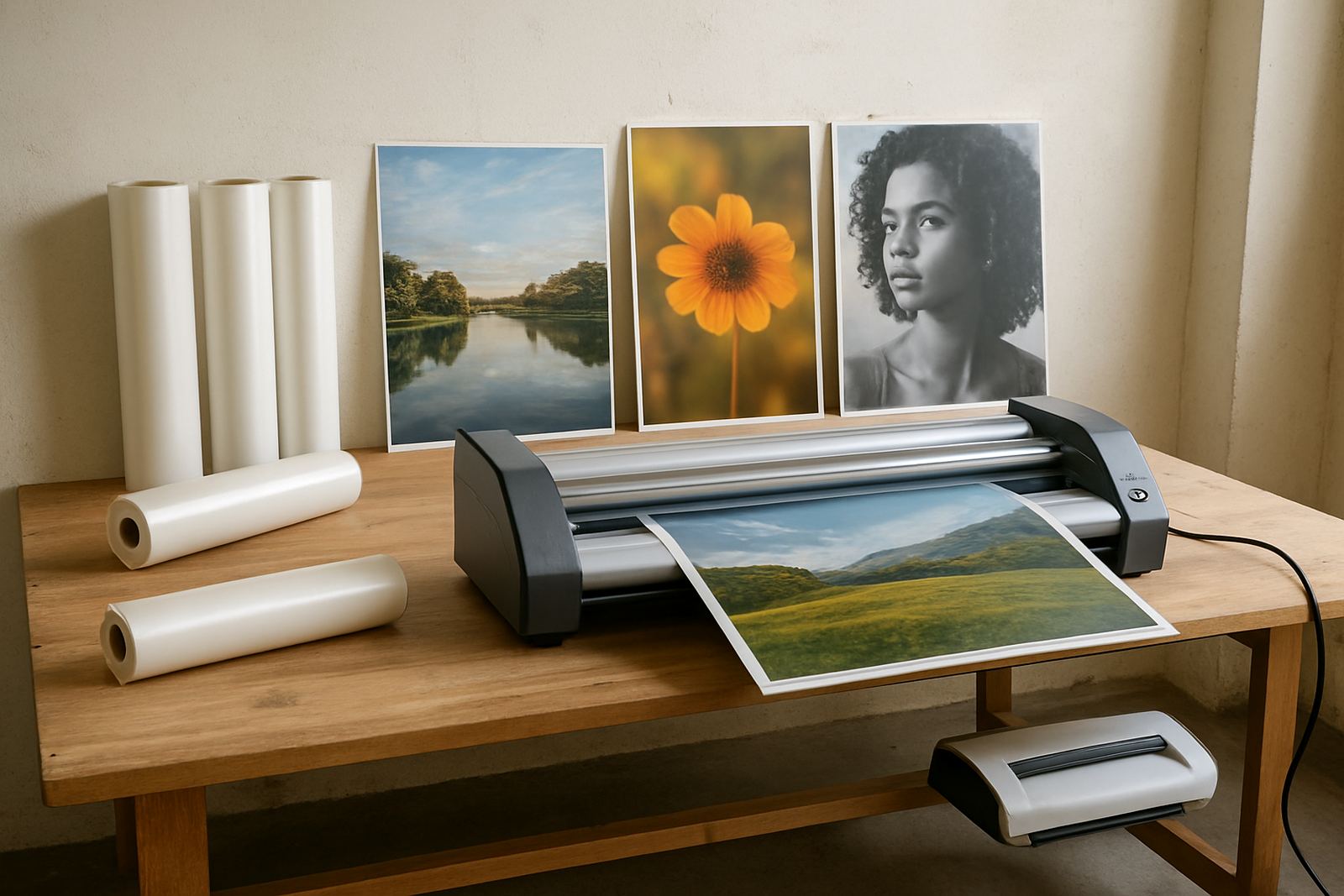
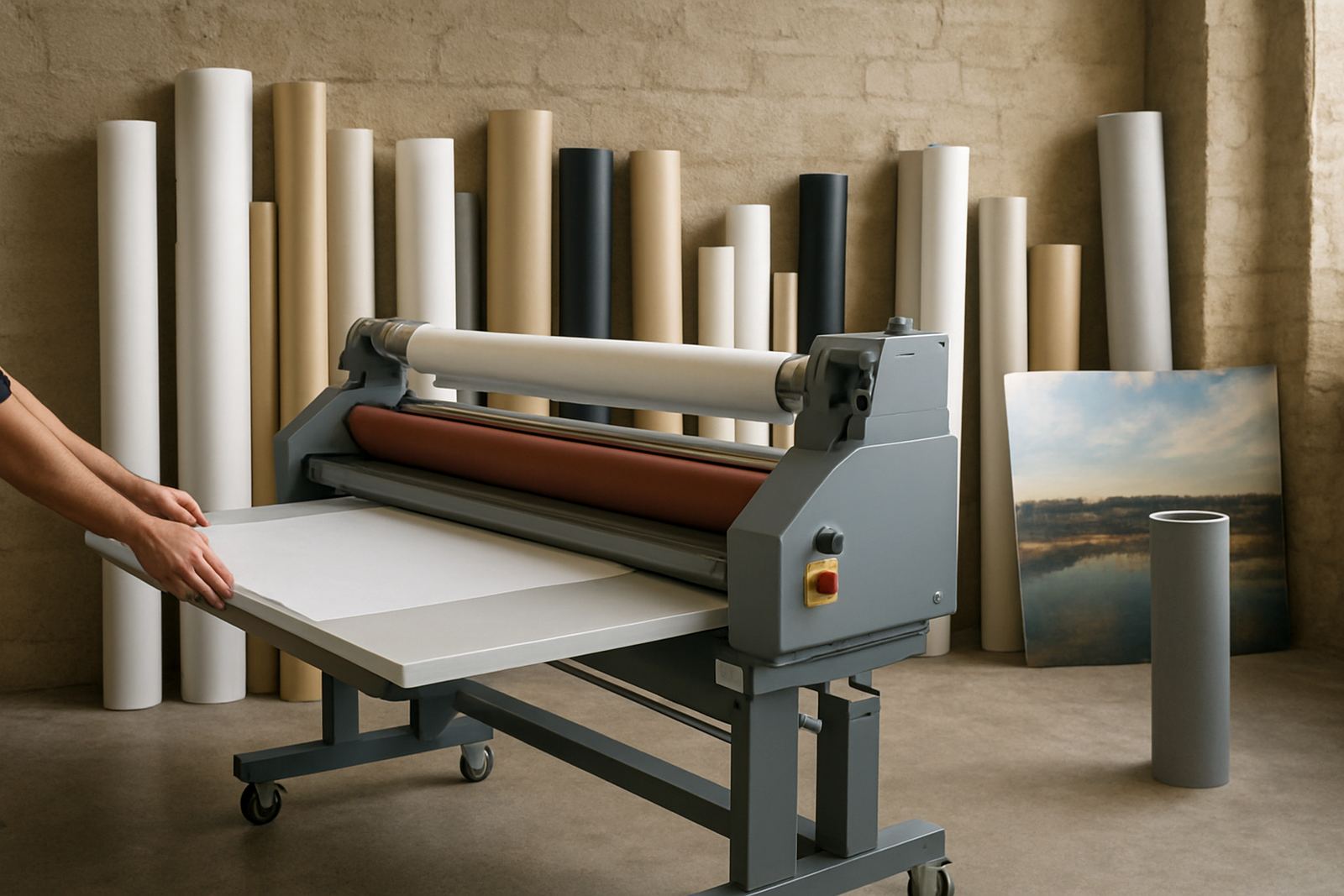
We recommended a photo-focused wide-format cold and hot roll laminator sized for the lab’s main output range. The machine was chosen for controlled heat, even roller pressure and reliable feed across common photographic sizes. It can work with standard print shop media, presentation films and protective laminating films, which made it a practical fit for the lab’s mixed job list. The frame and feed path were selected to suit a production environment where operators need quick set-up and dependable results rather than fancy extras.
The unit supplied was configured for wide-format output, with adjustable speed, temperature control and roller pressure calibration. That gave the team the right balance for gloss and matte presentation work. We also checked that the machine could be positioned for easy front access, because in a busy lab every extra step slows things down. The result was a setup that could handle short runs as well as larger batches without constant adjustment. It was a good fit for photo work, and it did not need a large footprint either.
- Wide-format roll laminator for enlargements and presentation finishes
- Cold and hot lamination support for different media types
- Adjustable roller pressure and heat control
- Suitable for photo prints, display boards and artwork protection
On-Site Installation and Operator Training
Installation took place over one working day, with the machine positioned, levelled and checked before the first production run. The site had limited floor space so we planned the placement carefully, leaving enough room for feed handling and safe operator movement. After the physical install, we checked the electrical supply, feed alignment and roller condition, then ran test pieces through the machine to confirm consistent bonding and finish quality. The lab team was keen to start quickly, so we kept the handover practical and direct.
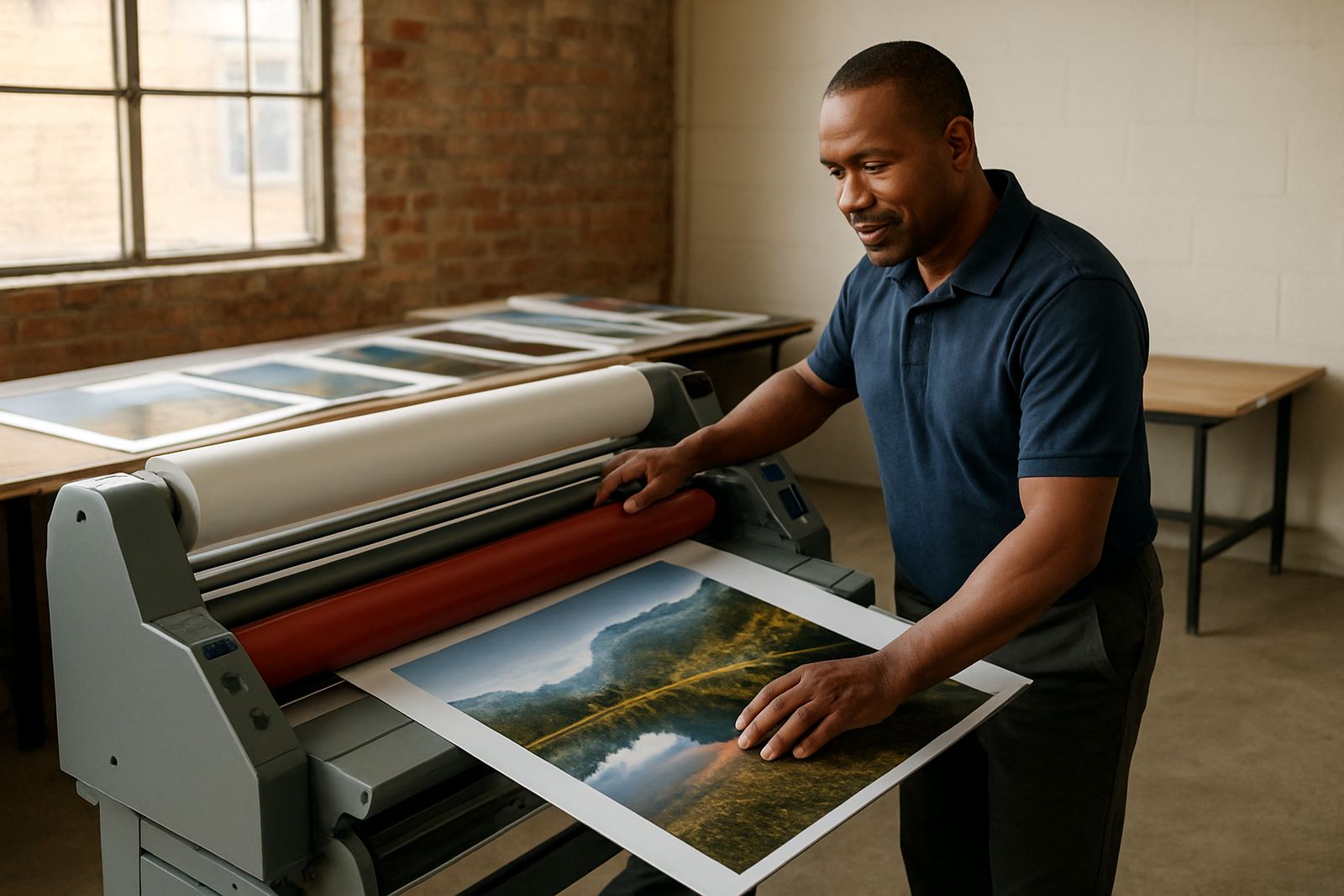
Training focused on what the operators needed immediately: film loading, start-up checks, temperature selection, pressure settings and how to avoid common issues like edge curl or trapped dust. We also covered shutdown during outages, because Soweto power interruptions can happen without much warning. The staff were shown how to pause work safely and restart without wasting material. By the end of the session, the team could run standard jobs with confidence and did not need constant supervision, which was the main goal.
- Installation time: 1 day
- Operator training: same day handover
- Checks completed: feed alignment, heat, pressure and test output
- Practical guidance for load-shedding and safe restart
Production Constraints We Planned Around
This project had a few limits that shaped the final setup. The first was workflow speed. A photo lab cannot afford long warm-up delays or repeated re-runs, because customers expect quick turnaround. The second was the nature of the work itself, where prints can show every small flaw. Dust, slight misalignment and uneven pressure are visible on finished photographic pieces, so the machine had to behave properly from the start. We also had to work around a fairly tight production area and make sure the machine was simple to move around and clean.
Humidity and heat were another factor. In Johannesburg conditions can shift quite a bit through the year, and that affects media handling and film behaviour. We advised on storage and pre-checks so the operators could keep materials in good condition before feeding them through. The team also needed a machine that could be serviced without long wait times. That mattered because if a roller, heater or drive component gives trouble, work backs up very fast. We planned for that with local support and spare parts access.
- Quick turnaround required for customer orders
- Photo-quality finish with low tolerance for defects
- Limited workspace and easy cleaning needed
- Local servicing and parts support had to be available
Results After Commissioning
Within the first week, the lab reported cleaner finishes on enlargements and more consistent results on presentation work. They were able to move from small test batches to regular production without changing the setup every few minutes. The biggest gain was repeatability. Once the operators had the right settings, they could produce the same finish across a run, which reduced waste and cut down on complaints from customers who wanted a neat, professional look.
There was also a practical benefit for the business side. Better finishing let the lab offer more presentation work in-house instead of sending jobs out, which kept more margin on local orders. Their team found the machine easy to learn and the final output suited both retail customers and business clients. A neat finish makes a strong first impression, and in photo work that matters more than people often realise. The new setup helped them deliver that consistently, without making the process complicated.
- Cleaner edge finish and fewer reprints
- More consistent output across batches
- Ability to keep more presentation work in-house
- Operators became confident quickly after training
What We Would Repeat on Another Photo Lab Project
If we were tackling the same project again, we would use the same method: begin with the finished print sizes, confirm the balance of cold and hot work, and then choose the machine for the true daily output instead of estimating. For a photo lab, that matters more than picking the biggest machine on offer. A machine sized correctly is simpler to operate, simpler to maintain, and better suited to everyday production. We would also require on-site training from the outset, because even an excellent machine needs proper handling to produce clean results.
We would repeat the same practical checks on the electrical supply, roller condition and feed path, then back that up with a simple maintenance plan. Routine servicing, roller cleaning, pressure calibration and heat system checks keep photo work consistent. If a lab has occasional breakdowns or needs a pre-purchase inspection before expanding, that is the same process we would use. For this Soweto client, that approach gave them a setup that works for their pace of work and holds up well under ordinary use, which is what they needed most.
- Start with output sizes and media types, not just machine capacity
- Train operators on the actual jobs they will run
- Build in servicing from the beginning
- Keep maintenance simple and local
Key facts
| Project | Soweto Photo Lab laminator supply and installation |
|---|---|
| Machine type | Wide-format cold and hot roll laminator |
| Primary use | Photo enlargements, presentation finishes and artwork protection |
| Installation time | 1 day on site |
| Timeline | Completed over 2 weeks from brief to handover |
| Support included | Operator training, setup checks and local after-sales support |