Kempton Park brief: one laminator for mixed media and film
The client in Kempton Park was a busy graphics operation handling printed boards, posters, mounted work and film based jobs for local corporate and retail customers. Their main need was not just another laminator, but a machine that could handle both hot and cold work without constant changeovers or waste. They wanted neater edges, fewer bubbles and less rework on jobs that had to leave the floor on the same day.
The brief was clear. Supply a wide-format unit that could run standard signage media, protect artwork and do film lamination for a cleaner finish on gloss and matte applications. The team also asked for practical support, because operators were working under time pressure and the previous process was giving mixed results on thicker stock and softer films.
- Mixed media laminating for prints, graphics and mounted pieces
- Film applications needing even pressure and stable temperature control
- Better finish quality on repeat jobs
- Simple operation for more than one shift user
Site constraints in a working print environment
The installation had to fit into a production area where space was tight and stock moved in and out all day. The machine needed a sensible footprint, enough clearance for wide rolls and a position that would not block cutting tables or packing space. Power stability was also part of the conversation, because the site had to work around load-shedding and short interruptions without losing job settings or damaging heaters.
Kempton Park can be hard on equipment because dust, heat and long production hours all take a toll. The client needed a machine with consistent roller pressure, accurate heat response and easy access for cleaning. We also checked the layout for safe operator movement, because anyone feeding board or film through a wide-format unit needs a straight working line and proper support on both sides. If that is off by even a little bit, you get skew and waste very fast.
- Limited floor space in the production area
- Need for stable output during local power interruptions
- Dust control and routine cleaning access
- Safe infeed and outfeed space for wide material
What we supplied and how the laminator was set up
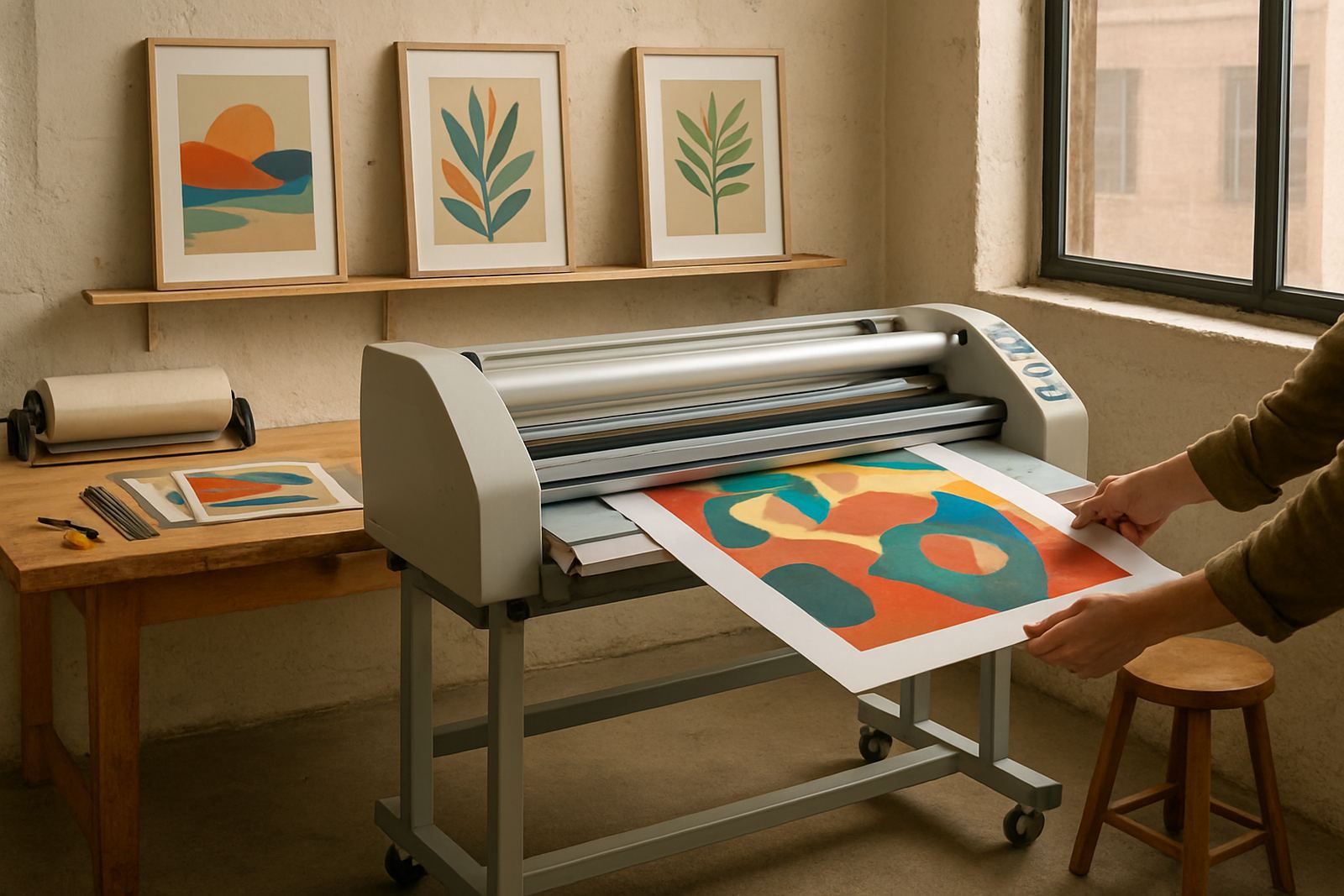
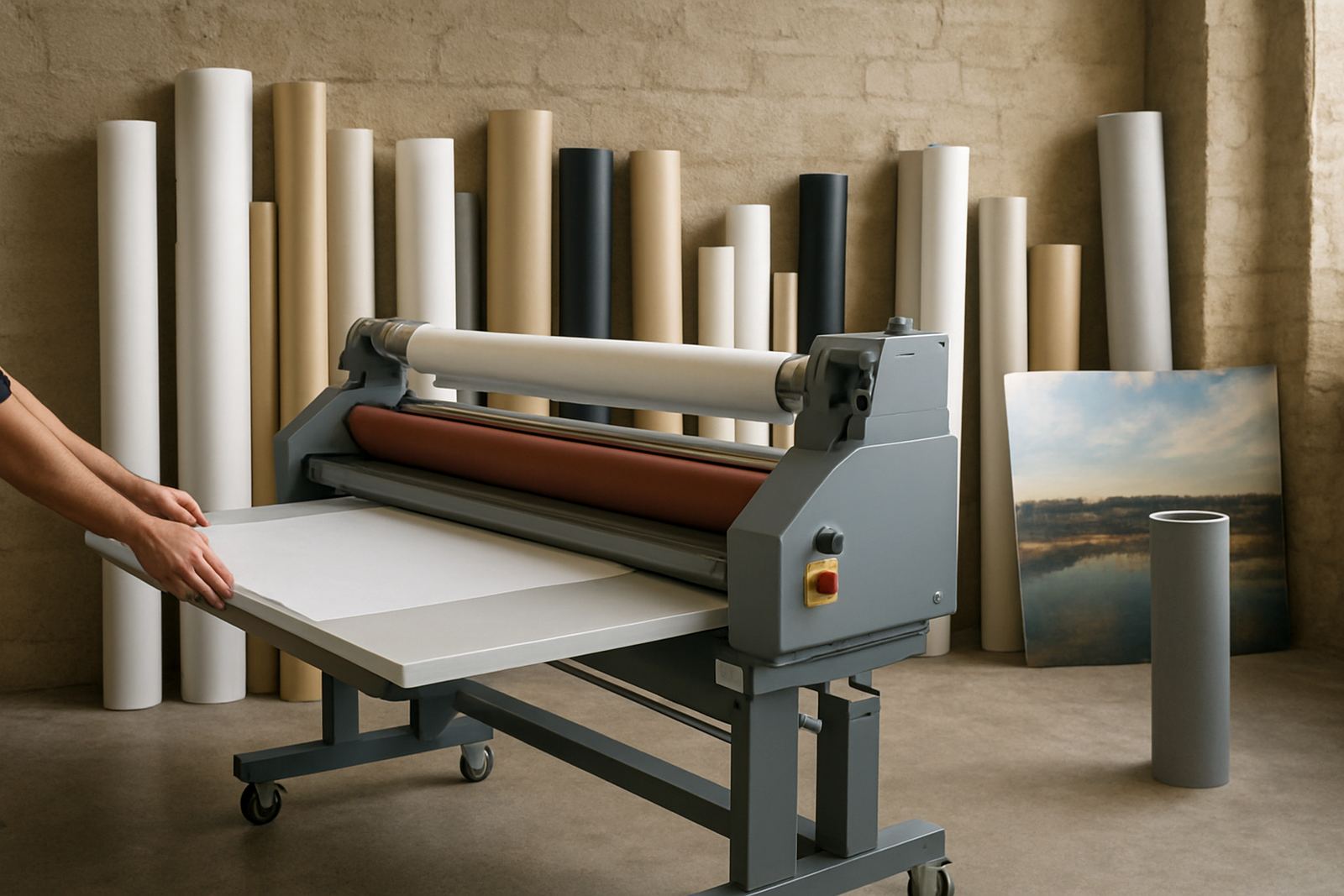
We supplied a hot and cold roll laminator suited to mixed production work, with settings that allow the operator to switch between heat assisted work and cold application as the job requires. The unit was selected for wide-format use, smooth roller action and practical control over temperature, pressure and feed speed. This gave the team one machine for several job types instead of splitting work across different pieces of equipment.
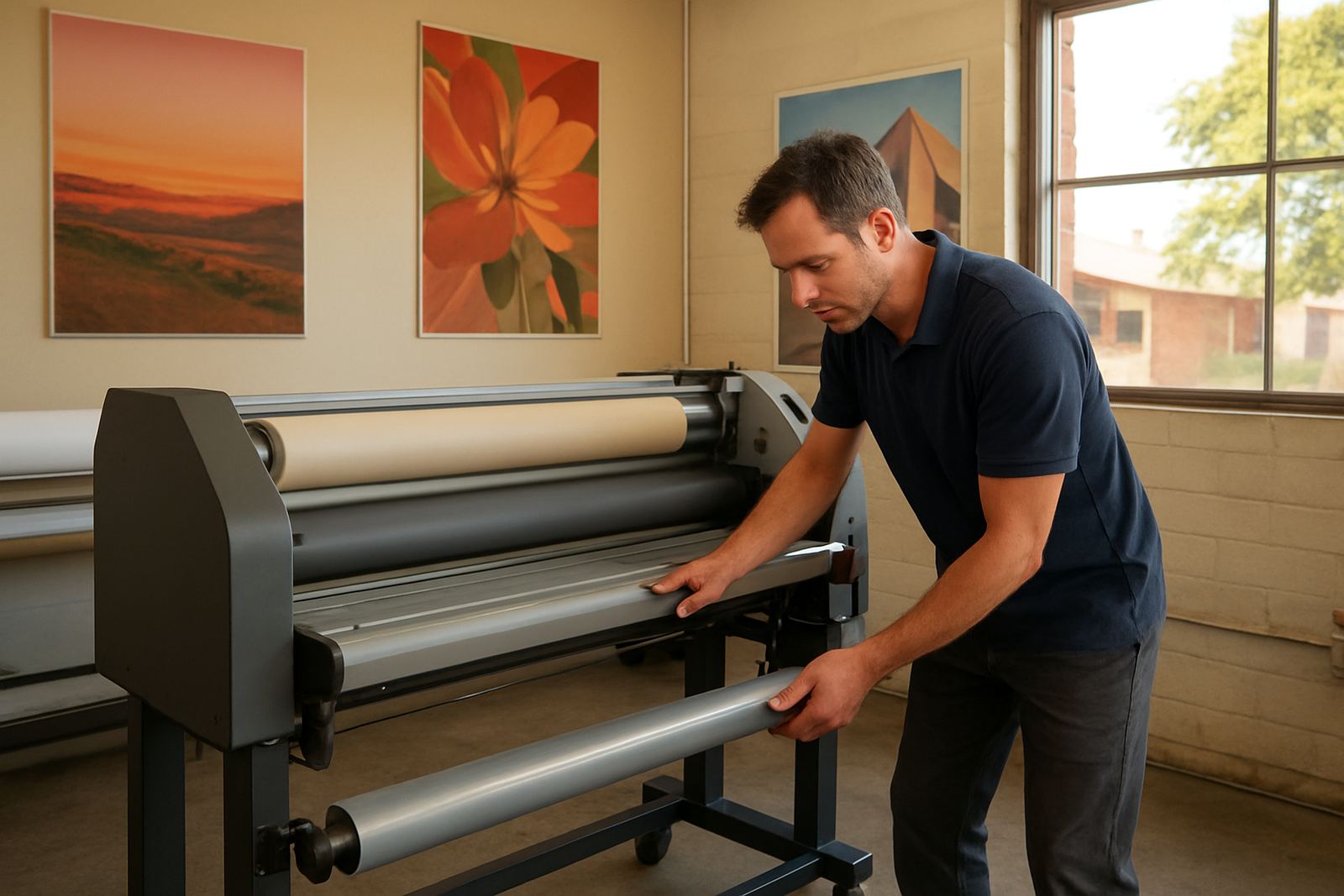
The machine was configured for regular print shop use, with attention to the jobs the client actually runs. For film work we set the pressure so the laminate lay evenly without lifting at the edges. For hot applications we checked the heat system and roller response so the finish stayed consistent across the width. We also went through the drive system, electrical connections and emergency stop functions before handover.
- Hot and cold roll laminator for mixed production
- Wide-format capacity for graphics and artwork
- Adjustable pressure and heat settings
- Roller alignment checked before release
- Electrical and drive system inspection completed on site
Installation and handover in one working week
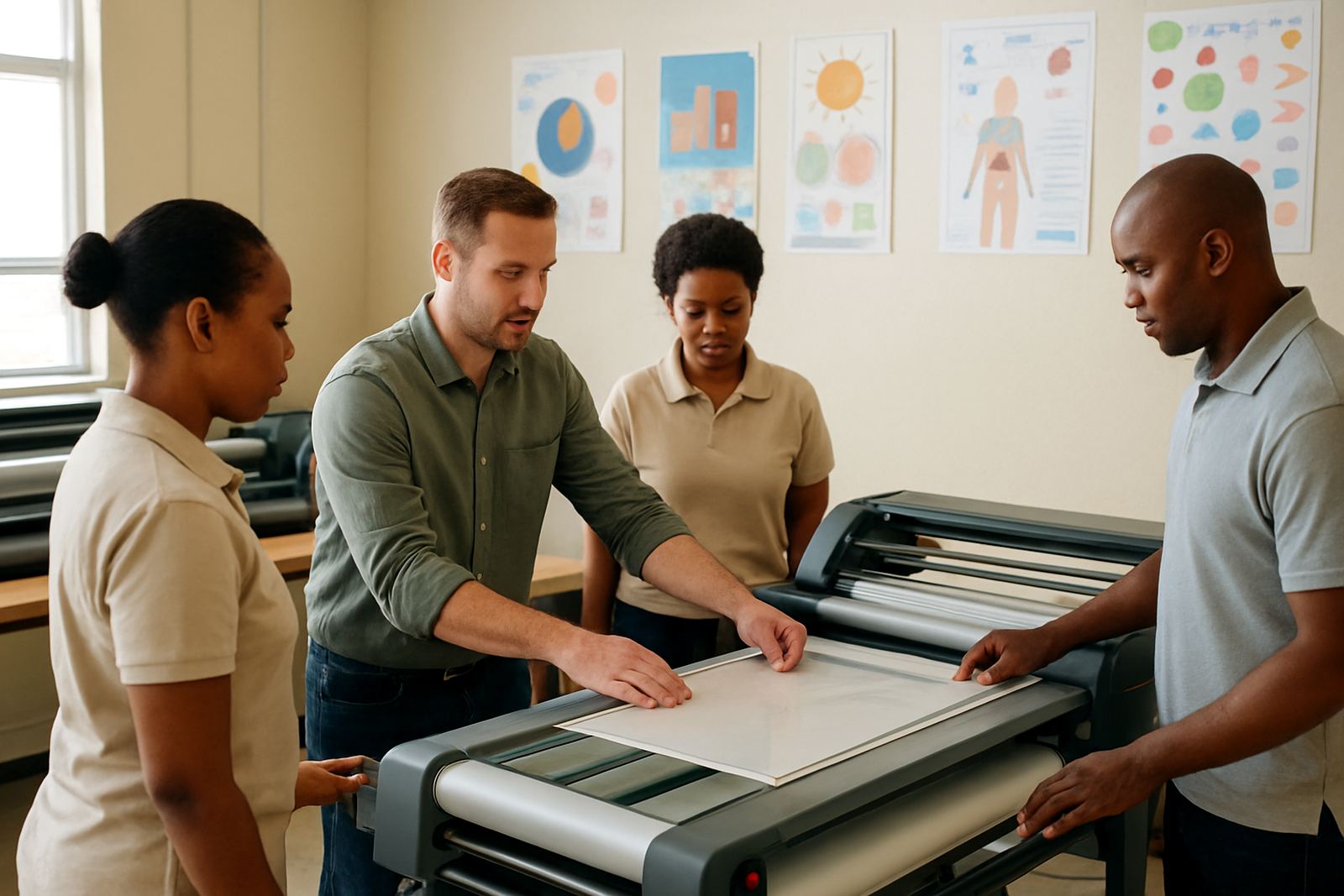
The project moved from confirmation to installation in two working weeks, which suited the client's production plan. Delivery was arranged to avoid peak dispatch hours, and the machine was placed, levelled and checked before any live job was attempted. Our technician worked through the setup with the team so they could see exactly how the controls behaved on different media types.
Commissioning included test runs on sample print stock, film, and a few heavier pieces to check feed consistency. We confirmed roller pressure, heat settings and operator handling, then showed the staff how to make small adjustments for different substrates. The client wanted to keep downtime low, so the handover focused on practical use not just a paper manual. We also left them with a simple maintenance routine they could follow daily and weekly.
- Delivery and installation arranged around production hours
- Machine levelled and tested before live use
- Sample runs completed for print, film and heavier stock
- Operator handover completed on site
Results on mixed media jobs and film work
Once the unit was in service, the client saw a quicker turnaround on repeat jobs and less time spent redoing pieces that came out with marks or uneven lamination. The mixed media jobs became easier to plan because the operators could keep one machine set up for both hot and cold work instead of stopping to reconfigure multiple times. The result was cleaner edges, better laydown and less wasted material.
On film applications, the team reported a more uniform finish across the width of the roll and better control on longer runs. That matters in a busy shop where one bad pass can set the whole job back by an hour or more. The client also said the staff felt more confident using the machine after the handover, because the controls were explained in plain terms and the settings were matched to the actual work they do. It made a proper difference, not just a small one.
- Cleaner finish on mixed media and film jobs
- Less rework and lower material waste
- Faster turnaround for regular production items
- Operators more confident on day to day settings
What suited another site like this best
For a Kempton Park graphics operation, we would make the same call again: choose one dependable wide-format hot and cold laminator, then set it up around the way the shop actually works. That means checking floor space, infeed and outfeed paths, local power conditions and the mix of jobs before installation. A machine can be a good fit on paper but if the layout is wrong, the team will fight it every day.
We would also keep the same approach to training and support. A short, practical handover works better than a long session full of theory. The team needs to know how to clean the rollers, when to check pressure and what to do if the machine starts behaving oddly after a power dip or a long run. With the right support, the unit stays reliable and the output stays consistent. That is what the client needed, and what they got.
- Site check before installation
- Practical operator training on the day
- Simple maintenance plan for routine care
- Support available for servicing and breakdowns
Key facts
| Project location | Kempton Park, Gauteng |
|---|---|
| Client type | Graphics and print production business |
| Machine type | Wide-format hot and cold roll laminator |
| Application | Mixed media lamination and film work |
| Timeline | 2 working weeks from confirmation to handover |
| Support included | Installation, commissioning, operator training and after-sales assistance |