What the Pretoria school centre needed
The client was a busy education site in Pretoria with multiple departments producing notices, learner work, wayfinding signs and display panels every week. Their print team needed a laminating setup that could handle both short runs and larger school projects, while staying simple enough for mixed staff to use safely.
The main brief was to protect prints from handling, dust and cleaning, especially for posters used in corridors, reception areas and classrooms. They also wanted a cleaner finish for presentation boards and a more consistent result across staff-made work. Because the centre runs on tight academic schedules, any new equipment had to be dependable during busy term periods and practical during load-shedding conditions.
- Client type: education centre with in-house print use
- Town: Pretoria
- Use case: educational displays, notices, charts and campus print work
- Need: durable finish, easy operation and local support
Site constraints and planning
The setup had to fit into an active production space with limited floor room and regular staff traffic. There was already a mix of print sizes coming through the department, so the laminator needed enough width for wider display sheets without being oversized for daily use. We also had to account for South African conditions such as summer heat, dust and fluctuating power supply.
Before installation, we checked the working area, access for material handling and the likely duty cycle for the machine. The team wanted a solution that would not be fussy about operator experience, because different staff members help with production when deadlines pile up. We also discussed electrical stability, warm-up time and the best way to handle rolls and finished work so the process stayed neat and predictable.
- Limited space required a compact footprint
- Wide-format jobs needed a practical working width
- Equipment had to remain usable during power interruptions
- Training needed to suit multiple operators
What we supplied and installed
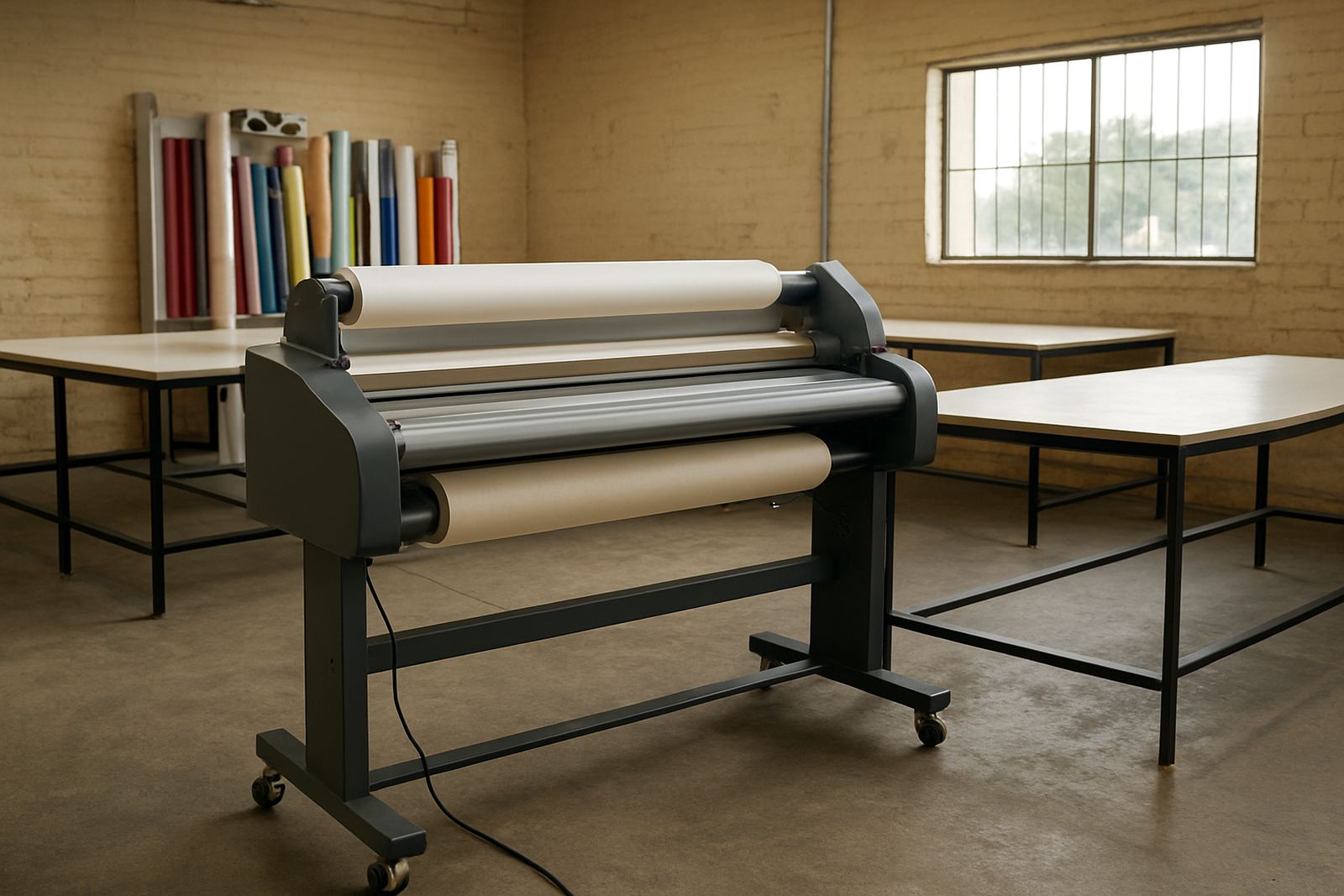
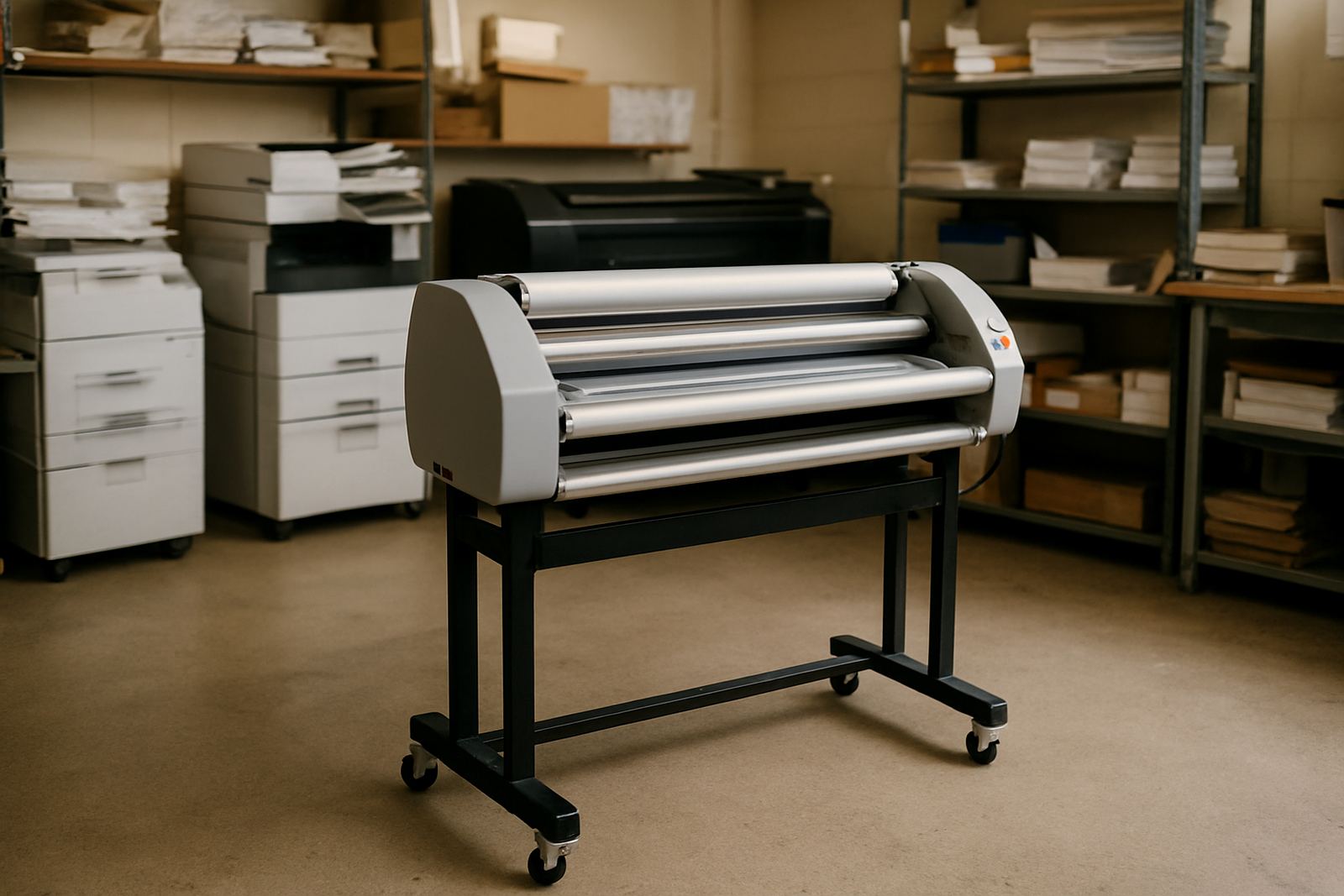
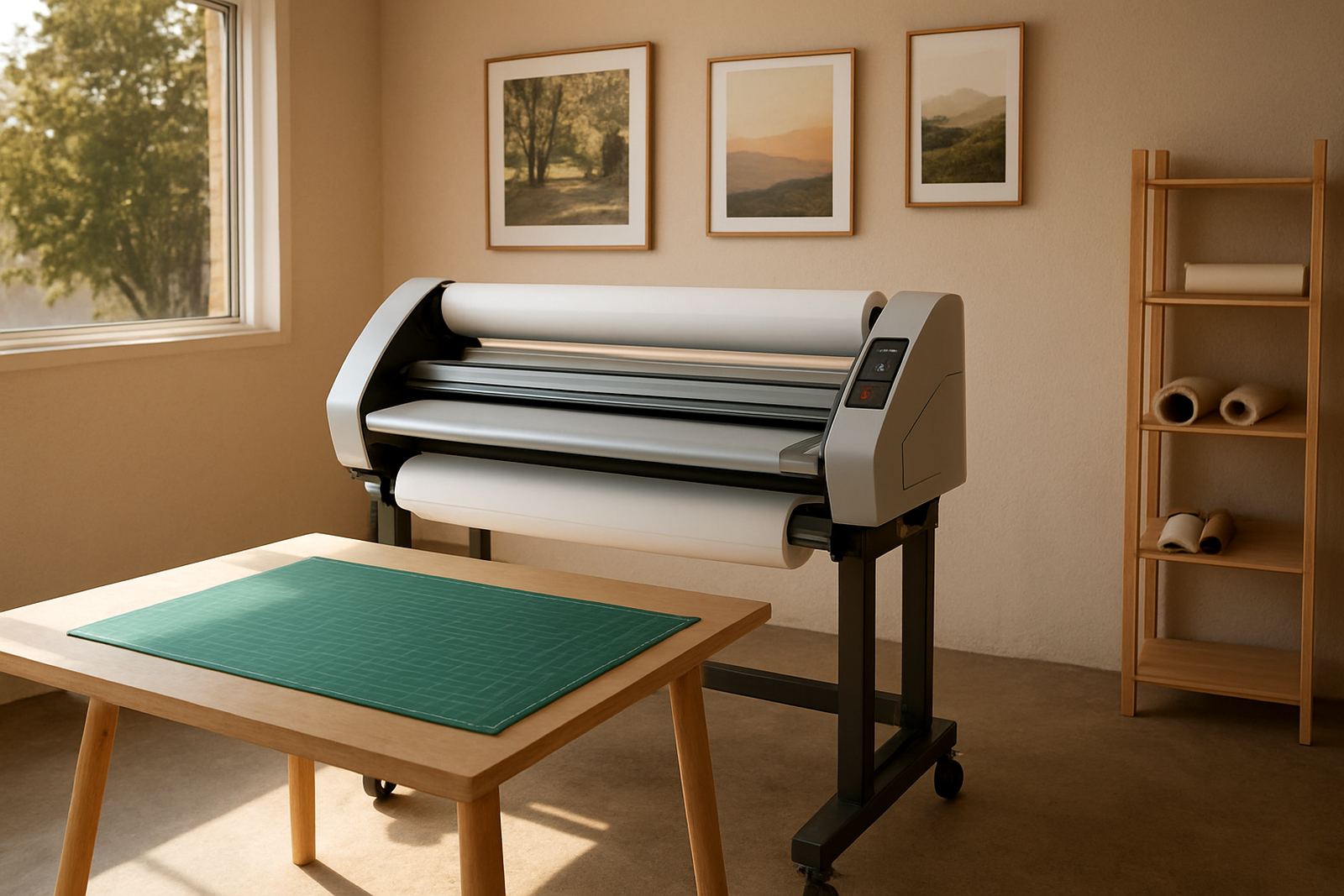
We supplied a wide-format roll laminating solution suited to school and campus printing, with both hot and cold roll capability where needed for different media. The machine was selected for steady pressure, controlled heat settings and reliable feed behaviour, so staff could laminate posters, instructional sheets and display panels with consistent results. We also set up the machine for straightforward access to rollers and controls, which makes daily use and maintenance easier.
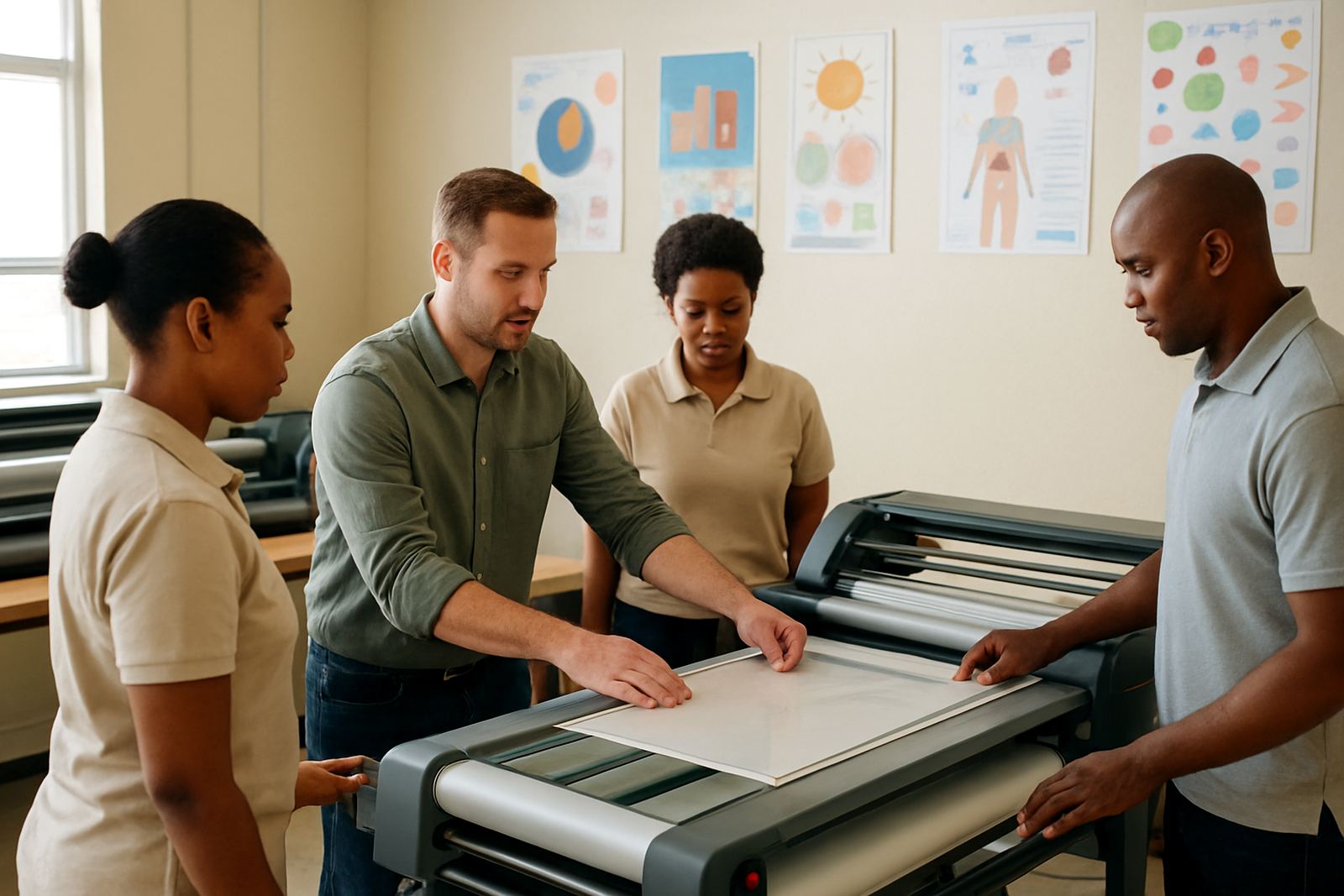
As part of the job, our technical team completed installation, tested alignment and checked the pressure calibration to make sure the laminate sat flat across the full width. We also carried out a heat system check, drive system inspection and electrical fault finding on the line feeding the equipment. The centre received operator refresher training on roll loading, material handling and basic cleaning, plus practical advice for keeping output neat in a high-use environment.
- Wide-format roll laminator for school print work
- Hot and cold lamination capability for varied media
- Pressure calibration and feed testing completed on site
- Operator refresher training included
Timeline from order to handover
The project ran over three weeks from confirmation to handover. Week one covered site review, requirements and equipment selection. Week two covered delivery coordination, installation planning and checking power access at the school centre. Week three covered installation, testing, staff training and final handover.
Because the site was still active during the process, we kept disruption low and worked around their school timetable where possible. That meant the print team could keep producing essential work while the new setup was installed and commissioned. We also made sure the operators knew who to contact for service, parts or follow-up if a question came up after the handover.
- Week 1: needs assessment and machine selection
- Week 2: delivery planning and site preparation
- Week 3: install, test, train and hand over
- Minimal interruption to daily print tasks
Results for daily school printing
The centre now has a laminating workflow that suits regular education use, not just occasional jobs. Notices come out with a cleaner finish, display boards last longer and staff spend less time reworking sheets that curl, mark or lift at the edges. The improved control over pressure and heat also helped reduce waste on repeated runs, which matters when every metre of consumable is being watched.
For the team, the biggest win was confidence. They now have a machine that behaves predictably and a support contact they can reach if something needs checking. In a school environment, that matters because production windows are short and there is no time for trial and error. It also helps that the machine is easier to keep clean, which is useful in Pretoria where dust can build up quickly if a unit is left unchecked.
- Cleaner finish on notices and display material
- Better durability for high-touch school print work
- Less wasted material during repeat jobs
- Clearer support path for staff
What counted on another education-site install
On a similar education site, we would follow the same approach: check the space properly, match the machine to the real workload and train more than one operator. That combination gives the client flexibility when one team member is off site or when term-time pressure builds. We would also keep the maintenance plan simple, with regular roller cleaning, pressure checks and basic servicing scheduled around the school calendar.
For Pretoria and other inland centres, we would still pay close attention to heat, dust and power stability. Small checks at installation stage save time later, and they help avoid avoidable breakdowns. If the client plans to expand into larger campus printing later on, we would also review spare parts support and service access so the machine stays productive year-round.
- Repeat the site check before final selection
- Train at least two operators from the start
- Plan servicing around term dates and exam periods
- Keep spare parts support easy to access
Support after installation
Laminator continues to support the Pretoria school centre with routine servicing, roller cleaning, pressure calibration, heat system checks and spare parts support. If anything needs attention, our team can assist with on-site breakdowns, electrical fault finding and practical advice over the phone or through our contact form. The centre also has access to operator refresher training when new staff take over the machine.
For education sites, the aim is not just to sell a machine and walk away. It is to keep the laminator working properly through the year, from first-term notices to year-end display boards. That is the part that keeps the production room calm, even when the print queue is not.
Key facts
| Project | Pretoria School Centre |
|---|---|
| Client type | Education centre with in-house print needs |
| Town | Pretoria |
| Equipment | Wide-format hot and cold roll laminator |
| Install timeline | 3 weeks |
| Services used | Installation, calibration, training and support |