What the Midrand workshop needed
The client was a busy sign production workshop in Midrand handling vehicle graphics, retail branding, wall panels and oversized print runs for local installers and corporate rollouts. Their older laminator had become the bottleneck. It was too narrow for some work, needed too much manual feeding and left the team lifting sheets more than they should on a normal shift.
The brief was simple: install a wider electric cold laminator that could take larger media in one pass, handle steady day-to-day use and give a cleaner finish on pressure-sensitive films and printed graphics. They also wanted better control on pressure, less waste on reworks and a machine that their operators could pick up quickly after training.
Constraints we worked around
The workshop had limited floor space, a busy dispatch area and a production schedule that could not stop for long. Load-shedding was another factor, so the team needed a machine that would come back into service cleanly after interruptions without taking hours to reset. The site also had a mix of dust from board cutting and adhesive work, which meant roller care and housekeeping had to be part of the handover.
- Space had to suit a wider machine without blocking pack-out movement
- The laminator needed stable electrical supply and simple restart procedures after outages
- Operators needed a setup that reduced edge curl, bubbles and wasted film
- The workshop wanted a unit that would work well for indoor signs and longer print lengths
What we supplied and installed
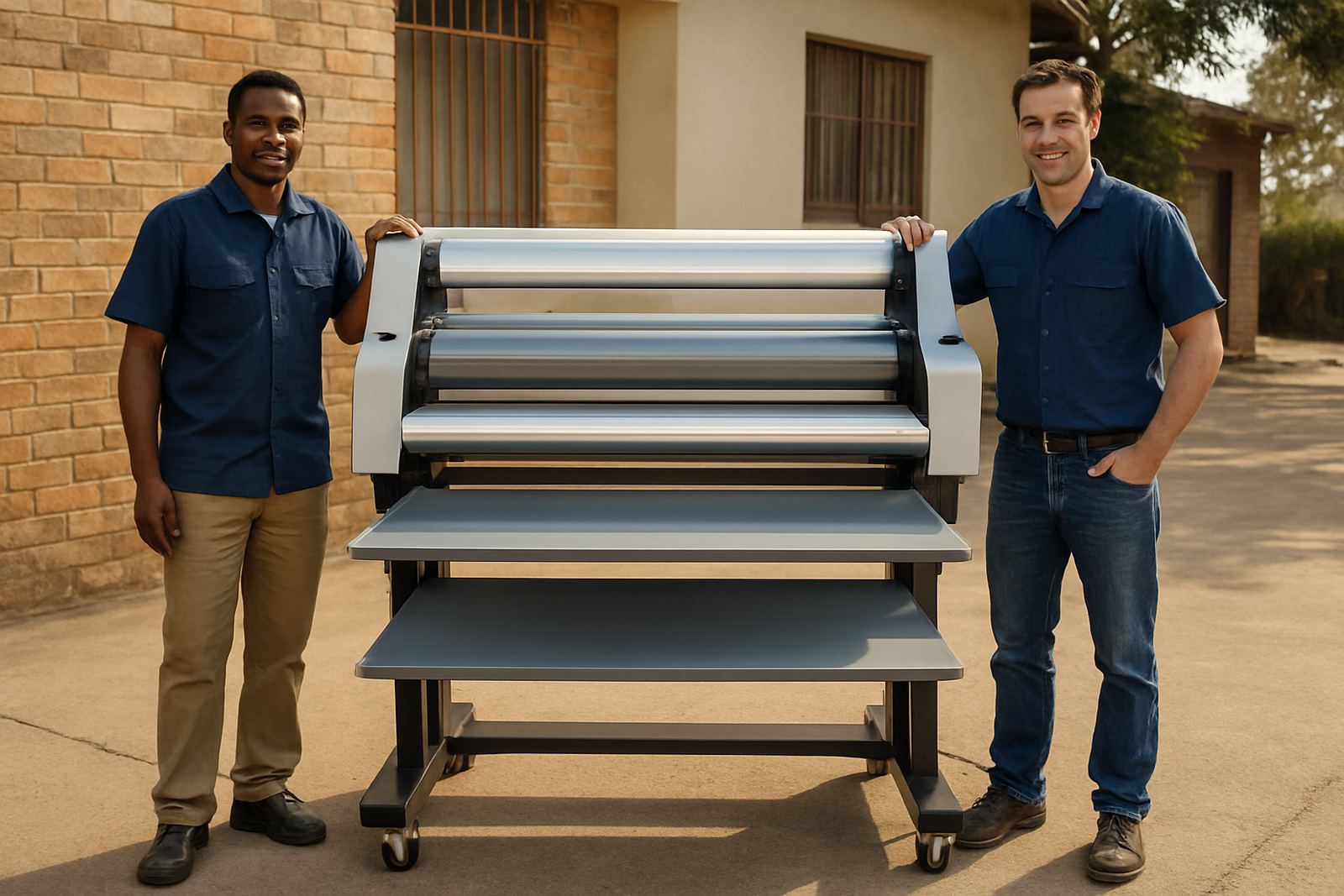
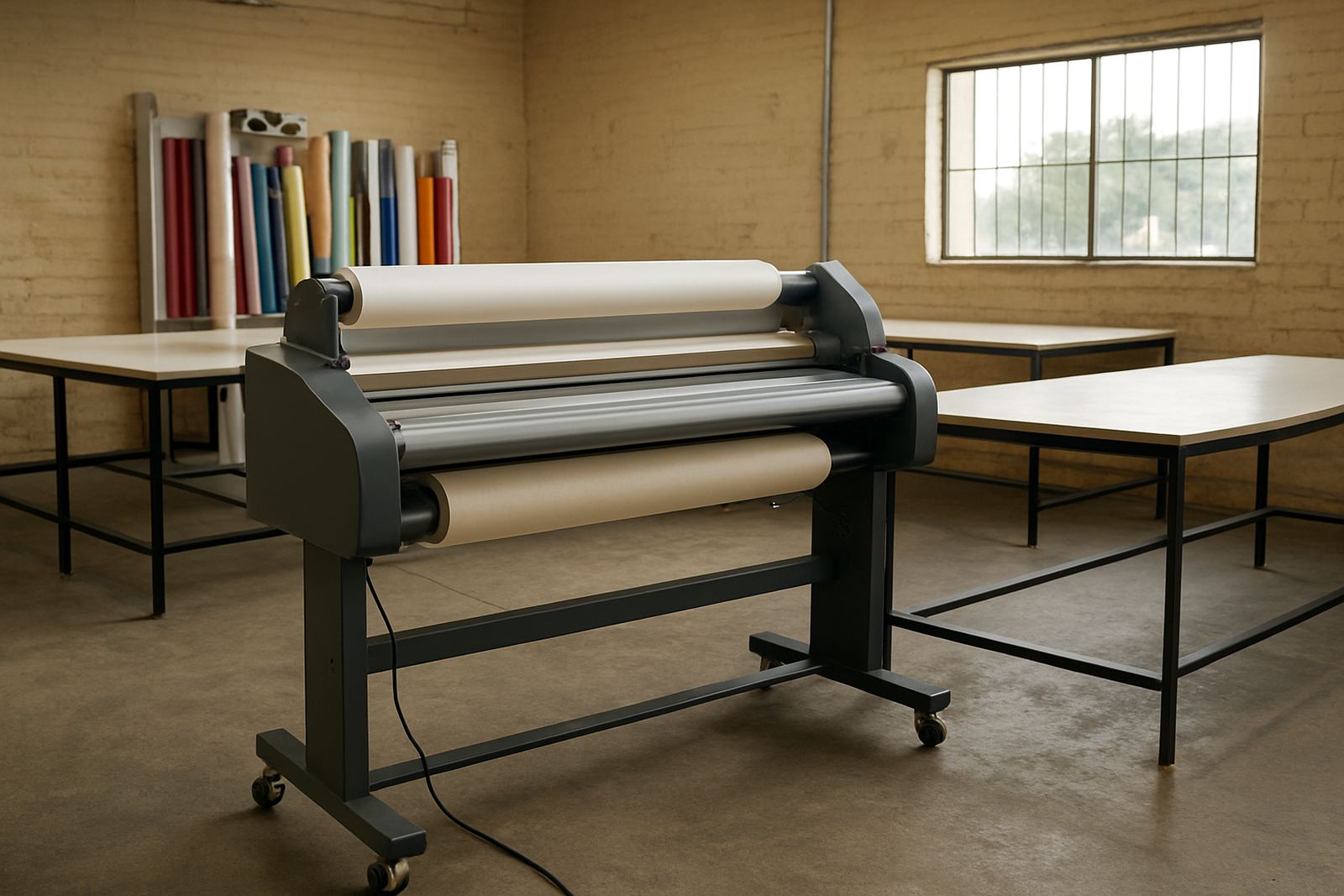
We supplied a wider electric cold roll laminator sized for the workshop’s larger sign panels and repetitive production work. The unit included adjustable pressure control, forward and reverse feed, foot control operation and rollers suited to consistent film application on printed graphics. For a sign shop working with mixed substrates, that combination made the difference between forced handling and a proper production rhythm.
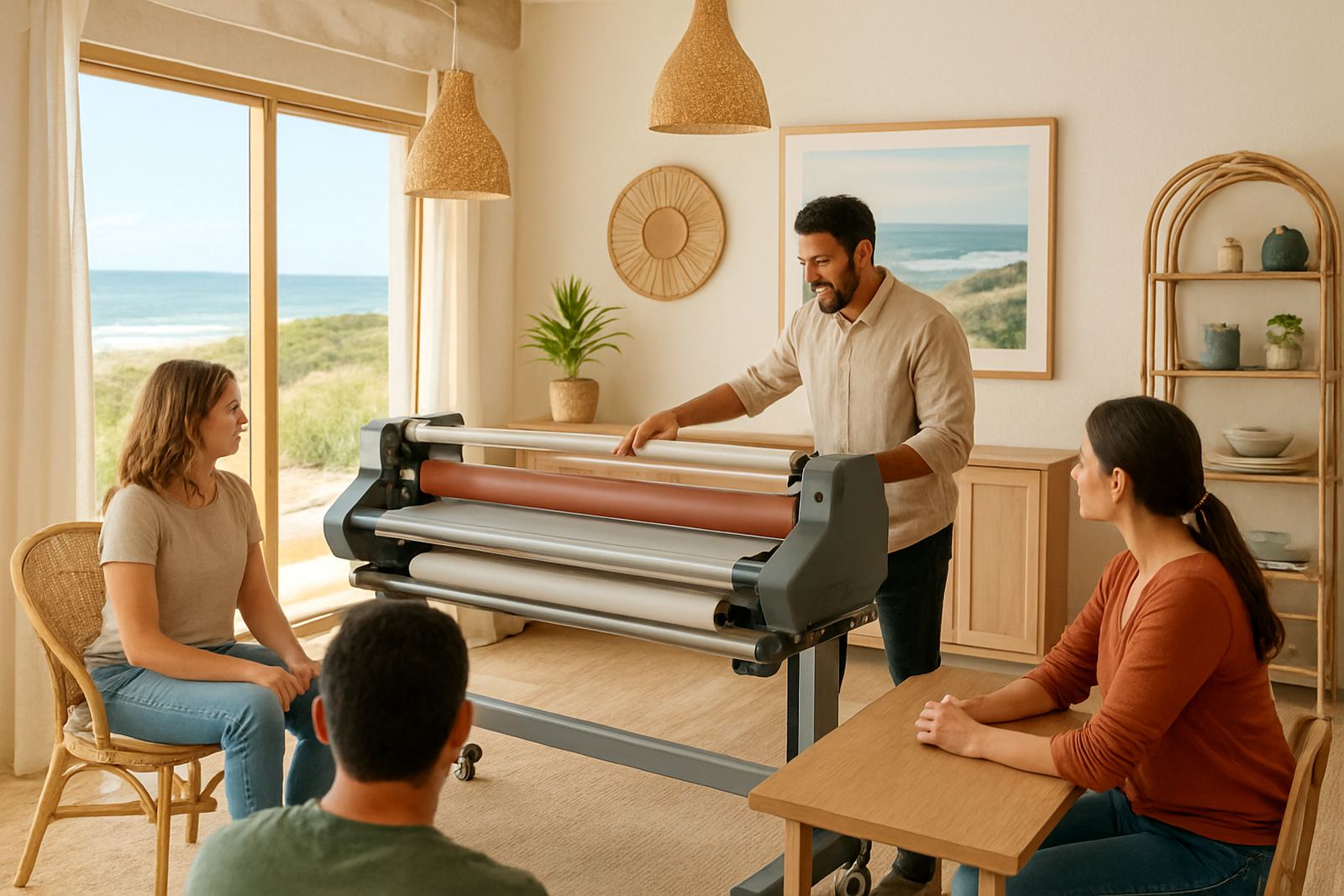
Our installation team set the machine in place, checked alignment, tested the feed path and confirmed pressure across the full working width. We also checked the electrical connection, showed the operators how to clean the rollers correctly and walked the team through routine start-up checks. It was a practical handover, not a long lecture, and the staff were up and running the same day with only a short pause in the line.
- Wider electric cold laminator for large-format sign work
- Adjustable roller pressure for different films and board thicknesses
- Forward and reverse feed for safer positioning and correction
- On-site setup, testing and operator refresher training
Timeline from order to production
The project ran over three weeks from first site discussion to signed-off operation. In week one we confirmed the application types, checked the available space and matched the machine width to the workshop’s common print sizes. Week two covered supply, transport planning and installation preparation. In week three we completed delivery, final setup and operator training at the Midrand site.
Because the client was already under production pressure, we kept the process tight and practical. That meant confirming the access route, making sure the machine could be positioned without moving major equipment and leaving the team with clear maintenance steps from day one. The result was minimal downtime and no disruption to their scheduled installs.
Results in daily production
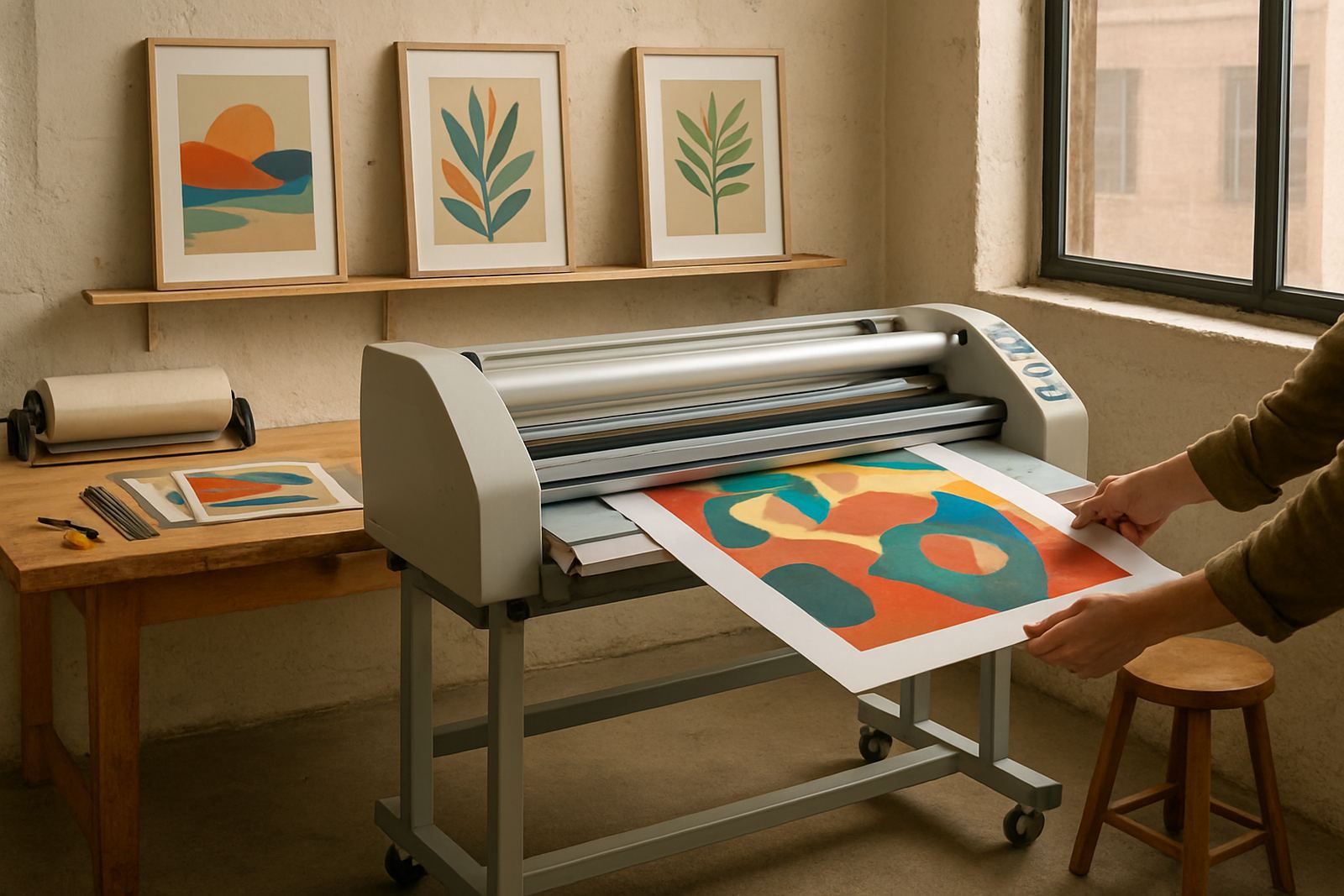
Once the new laminator was in place, the workshop could process wider graphics in fewer passes and with less manual handling. That reduced labour strain on the team and cut down on damaged edges during feeding. Their finish quality improved as well, especially on longer runs where consistent pressure matters most. Prints came out flatter, cleaner and easier to trim after lamination.
For a sign workshop, the value is not only speed. It is consistency across every job, from short-run retail boards to longer campaign work. The team reported better control on pressure-sensitive films, fewer reworks and a smoother workflow when jobs moved from print to finishing to dispatch. Small gains in each stage added up quickly.
- Cleaner finish on laminated signage and graphics
- Less handling of large sheets during feed and exit
- Fewer reworks caused by pressure or alignment issues
- Better workflow between print, lamination and trimming
What we would do again
If we were repeating this project, we would make the same call on early width confirmation and operator training. That avoided the usual mistake of fitting a machine that works on paper but does not suit the real jobs a workshop runs every week. We would also keep the same approach to roller care, because dusty shop floors and heavy production use can shorten service life if the team is not shown the right cleaning routine.
For Midrand and the wider Gauteng market, this is the kind of install that makes sense: a machine matched to the actual work, with local support from Kya Sand when servicing or parts are needed. The workshop now has a laminator that suits sign production, handles larger formats and gives them more control during busy periods, even when the load-shedding schedule does not play along.
Key facts
| Project type | Wide-format laminator upgrade for a sign workshop |
|---|---|
| Location | Midrand, Gauteng |
| Machine supplied | Electric cold roll laminator |
| Working width | Wider format for large sign panels and print runs |
| Key functions | Adjustable pressure, forward and reverse feed, foot control operation |
| Timeline | 3 weeks from site discussion to sign-off |