What the Krugersdorp team needed from the machine
The client is a poster finishing shop in Krugersdorp serving retail outlets, local events, schools, and small agencies around the West Rand. Their team was handling more wide-format work, but the existing laminating setup was slowing them down on larger poster runs and on urgent same-day jobs. The brief was simple: increase finishing speed, keep the print surface clean, and reduce rework on long sheets that needed a professional edge.
They also needed a machine that could cope with regular daily use, not just the odd busy week. On poster work, delays of even 10 minutes can stack up quickly when several jobs land at once. The team wanted better control on pressure and heat, plus a setup that would be practical in a real production space with dust, moving staff, and load-shedding interruptions to plan around.
Site limits and production pressure
The workshop had limited floor space and a fixed workflow around cutting, trimming, and packing. The laminator had to fit into that line without forcing a full rearrangement of the room. Power supply was another factor. As with many businesses in Gauteng, they needed equipment that could handle start-stop conditions and still keep repeat jobs consistent after an outage or restart.
Humidity and dust were also part of the conversation. Even inland towns like Krugersdorp can see dust move through open roller areas, especially when doors stay open for deliveries. That means roller cleaning, tension checks, and heat stability matter just as much as speed. We planned the installation so the operators could keep moving from print to finish with minimal handling, and less risk of marks on larger posters.
- Limited floor space in the finishing area
- Frequent short-run poster jobs and urgent reprints
- Need for stable pressure and heat on wide sheets
- Practical planning for load-shedding and recovery after power loss
The laminator we supplied and why it suited the job
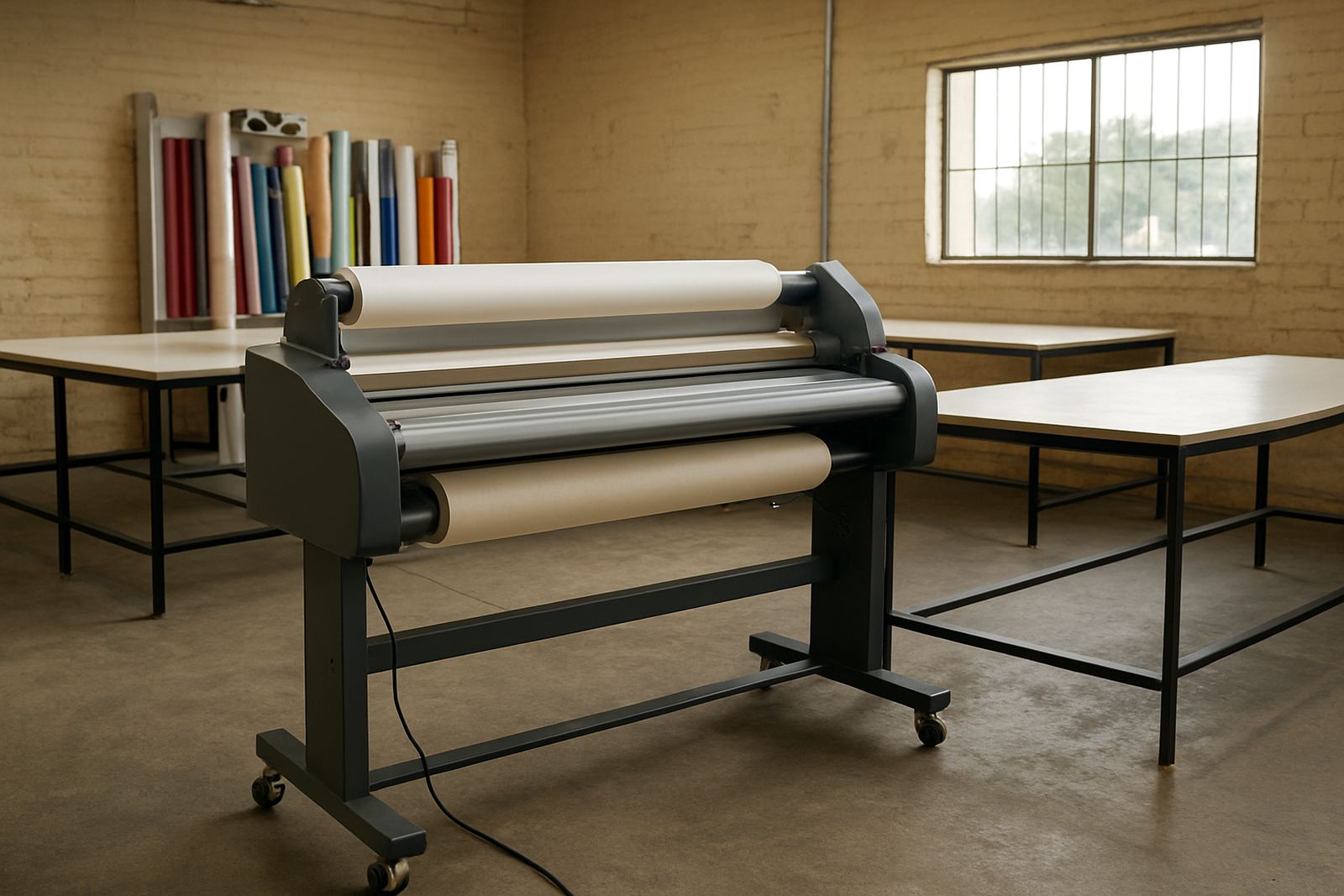
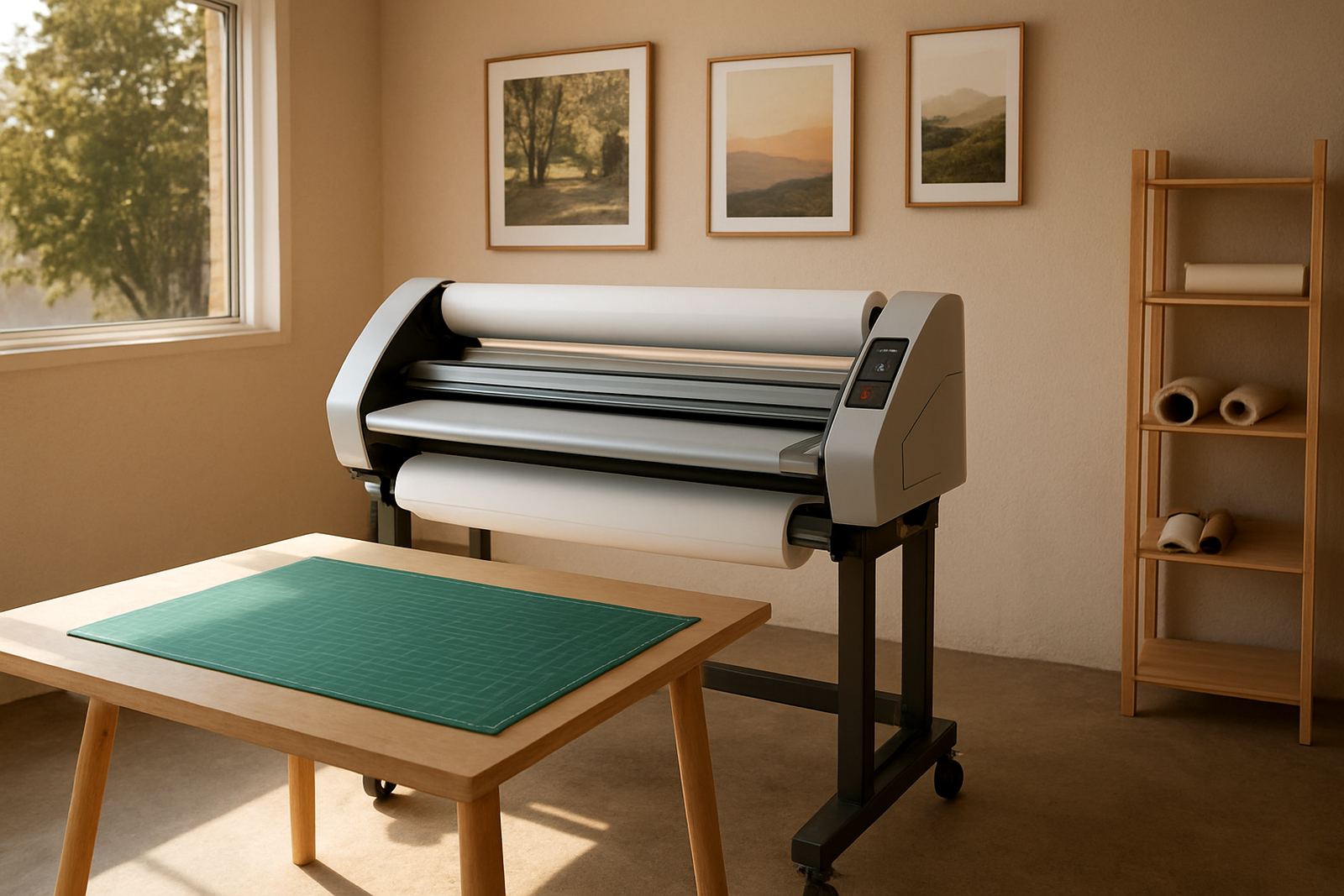
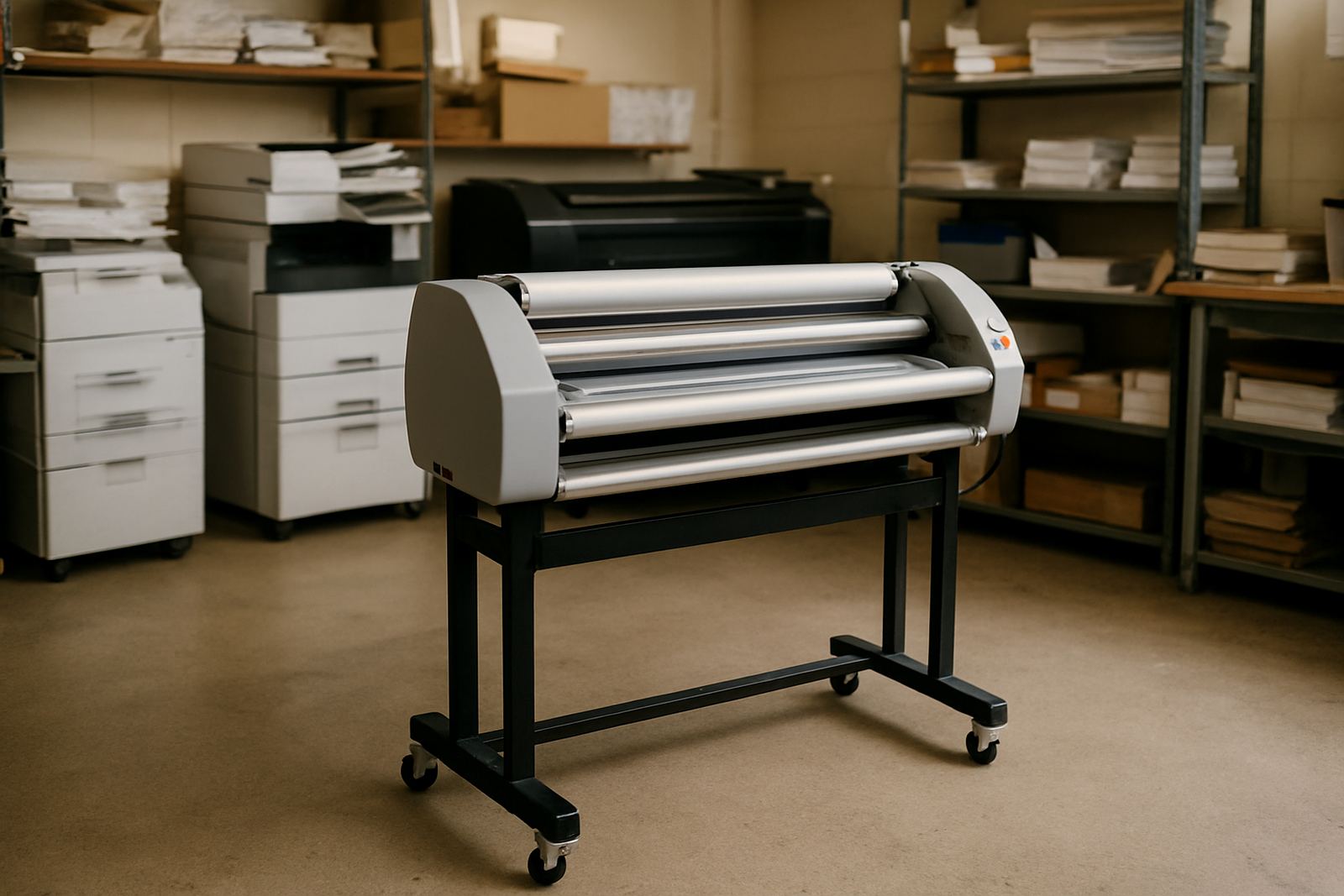
We supplied a larger electric roll laminator suited to wide-format poster finishing, with hot and cold capability for different print types. The machine was specified for more consistent throughput, wider media handling, and smoother feeding on longer runs. It was a better fit for the client than a smaller manual unit, especially where repeat work and speed were both important.
Key features included adjustable roller pressure, controlled heat settings, forward and reverse feed, and a sturdy stand for safer day-to-day use. The width capacity allowed the team to handle common poster sizes without splitting jobs or running extra passes. We also checked that the electrical setup in the building could support the machine properly, because a neat install only helps if the power side is sorted as well.
- Wide-format roll laminator with electric drive
- Hot and cold operation for different media
- Adjustable pressure for even finish quality
- Forward and reverse feed for easier threading
- Suitable for poster runs, artwork, and display graphics
Installation and operator handover
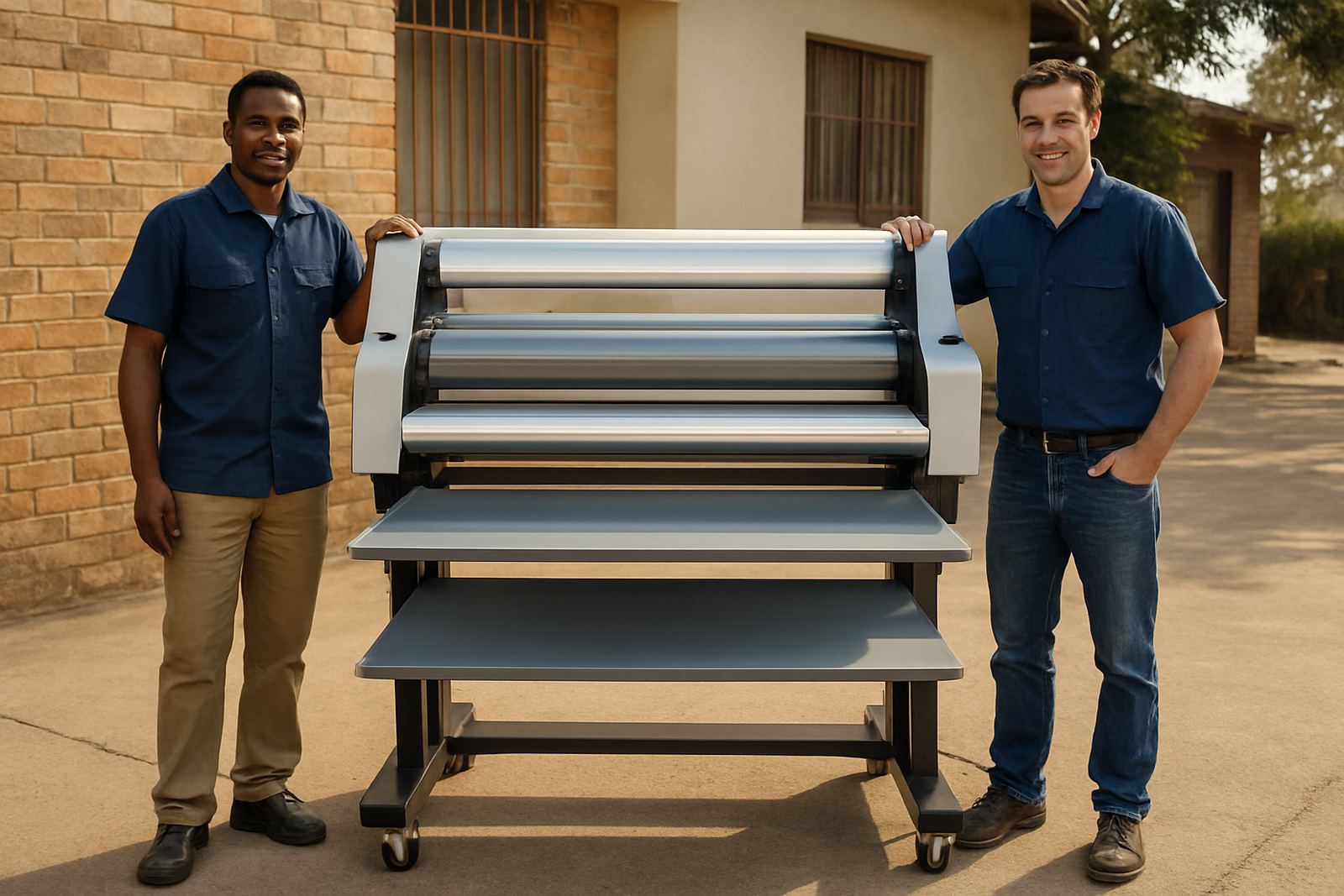
The installation was completed over one working day, with the full setup and operator familiarisation handled within week one. Our technician positioned the unit, checked alignment, confirmed heat-up performance, and tested the rollers under load with sample material. We then walked the team through safe threading, temperature changes, and the most practical cleaning routine for daily use.
Because the shop needed to stay productive, we kept the handover focused on the jobs they run most often. That included poster finishing, protecting printed artwork, and avoiding waste when a sheet starts slightly off centre. We also explained how to do a quick check before starting a run, which helps catch dust, tension issues, or edge curl before they become a problem. A small missed step here can cost a whole sheet, so the training was kept hands-on and direct.
Early changes at Krugersdorp Poster House after installation
Within the first three weeks, the client saw a clear improvement in finishing speed and job flow. The team could process larger poster batches with fewer interruptions, and the wider feed reduced the need to split work across multiple passes. That saved time on busy days and gave the finishing room a better rhythm overall.
Quality improved too. The pressure settings held well across the width of the media, which helped reduce bubbles, uneven edges, and rework. Operators reported that the machine was easier to keep clean and easier to set up for repeat jobs. In plain terms, the shop could get through more work before lunch, and the output looked more consistent for walk-in clients and trade customers alike. That made a real difference when they had multiple orders going out same day.
- Faster poster finishing on larger runs
- Less rework from uneven pressure or feed issues
- Cleaner edge quality on wide sheets
- Better daily handling of urgent same-day jobs
- Improved workflow between print, laminate, trim, and pack
What proved useful on another poster-shop install
If we were doing this type of install again, we would follow the same approach: measure the room first, check the electrical supply carefully, and train the operators on the jobs they do most. That order matters. A larger laminator can be the right answer, but only when it fits the workflow, the available space, and the actual mix of work that comes through the door.
For a poster house in Krugersdorp, the best results came from keeping the setup practical and the handover clear. The team did not need fancy talk, only a machine that could run day after day, plus proper support when it was needed. That is still the aim on every install we do across Gauteng and beyond. Good equipment, proper setup, and a team that knows how to keep it going, that is what holds up in the long run.
Key facts
| Client type | Poster finishing business |
|---|---|
| Town | Krugersdorp |
| Machine type | Large electric roll laminator |
| Operation | Hot and cold lamination |
| Install timeline | Completed in 1 day, with handover in week 1 |
| Main outcome | Faster poster finishing with cleaner, more consistent output |