A studio brief built around finish quality
The client is a busy photo studio in Fourways, Johannesburg that produces framed prints, exhibition pieces, client presentation boards and short-run retail display work. Their team wanted more control over the final look of each job, especially where reflections, surface texture and handling durability matter. They asked for a setup that could apply gloss for richer colour depth and matte for a softer, low-glare finish.
The brief was straightforward: improve presentation quality without slowing the workflow. They also needed a machine that could cope with mixed media, from photographic paper to mounted artwork, and one that would not become a service problem during busy periods. In a studio environment, even a small fault can back up a whole day’s work.
- Client type: photo studio and print finishing workshop
- Town: Fourways, Johannesburg
- Finish requirement: gloss and matte lamination
- Output priority: cleaner presentation and better handling durability
Space, power and day-to-day constraints
The site had limited floor space and the laminator had to sit in a practical position near the print finishing area without crowding the cutting and packing flow. Because the studio works through load-shedding schedules and power interruptions are part of life in Gauteng, the client wanted a machine that would recover quickly after a shutdown and not need constant adjustment. We also had to factor in stable temperature control for the hot roll work, plus a clean feed path for delicate prints.
Fourways can be dusty in the dry season and the studio also sees regular foot traffic, so roller care and dust management were part of the plan. The client asked for simple operator controls, easy pressure setting and a solution that could be maintained locally. They did not want a machine that needed special treatment every time a new job came in.
- Limited back-of-house space for equipment placement
- Load-shedding tolerance and restart consistency
- Clean feed path for photographic and artwork media
- Simple controls for day staff, no fuss
What we supplied and set up
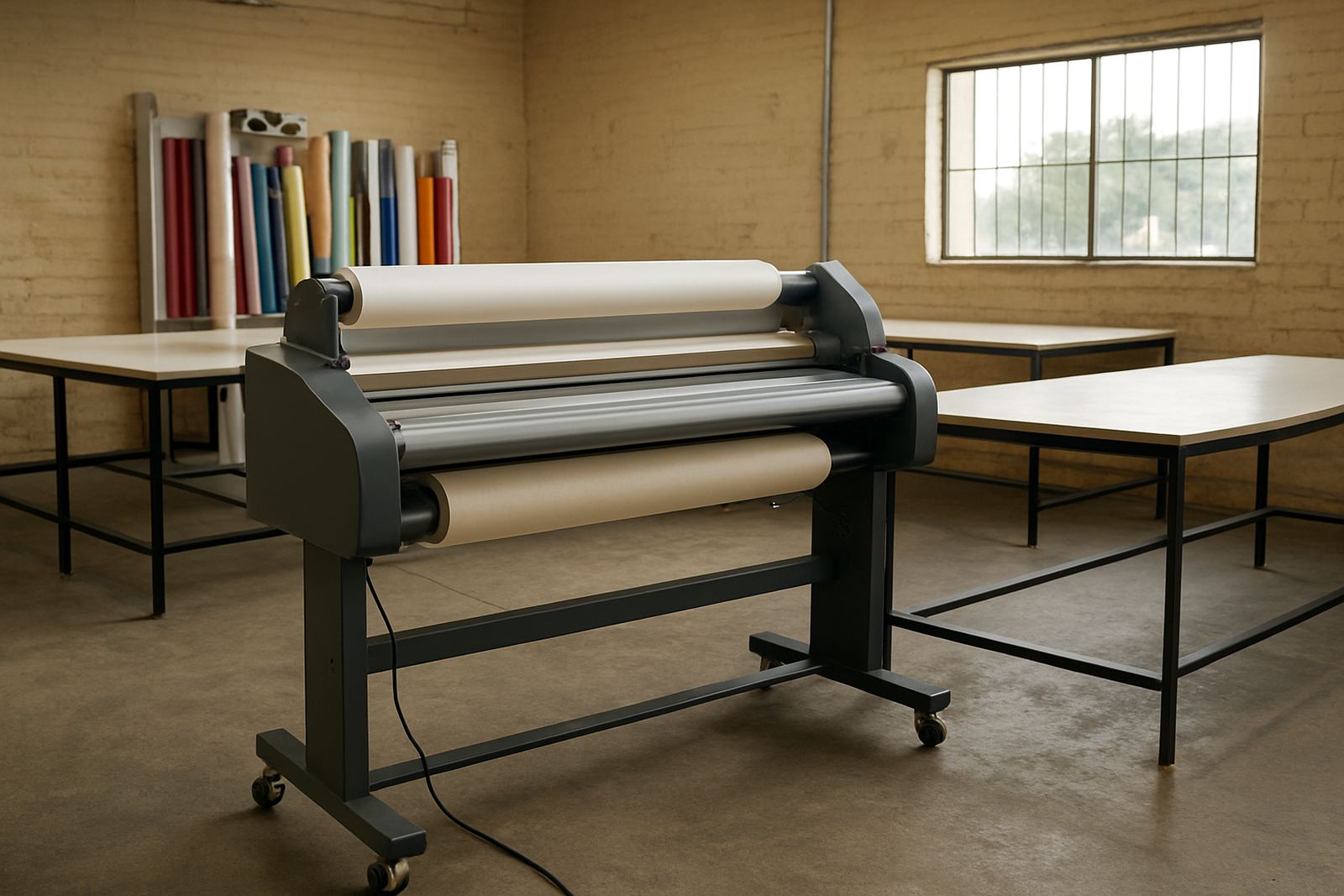
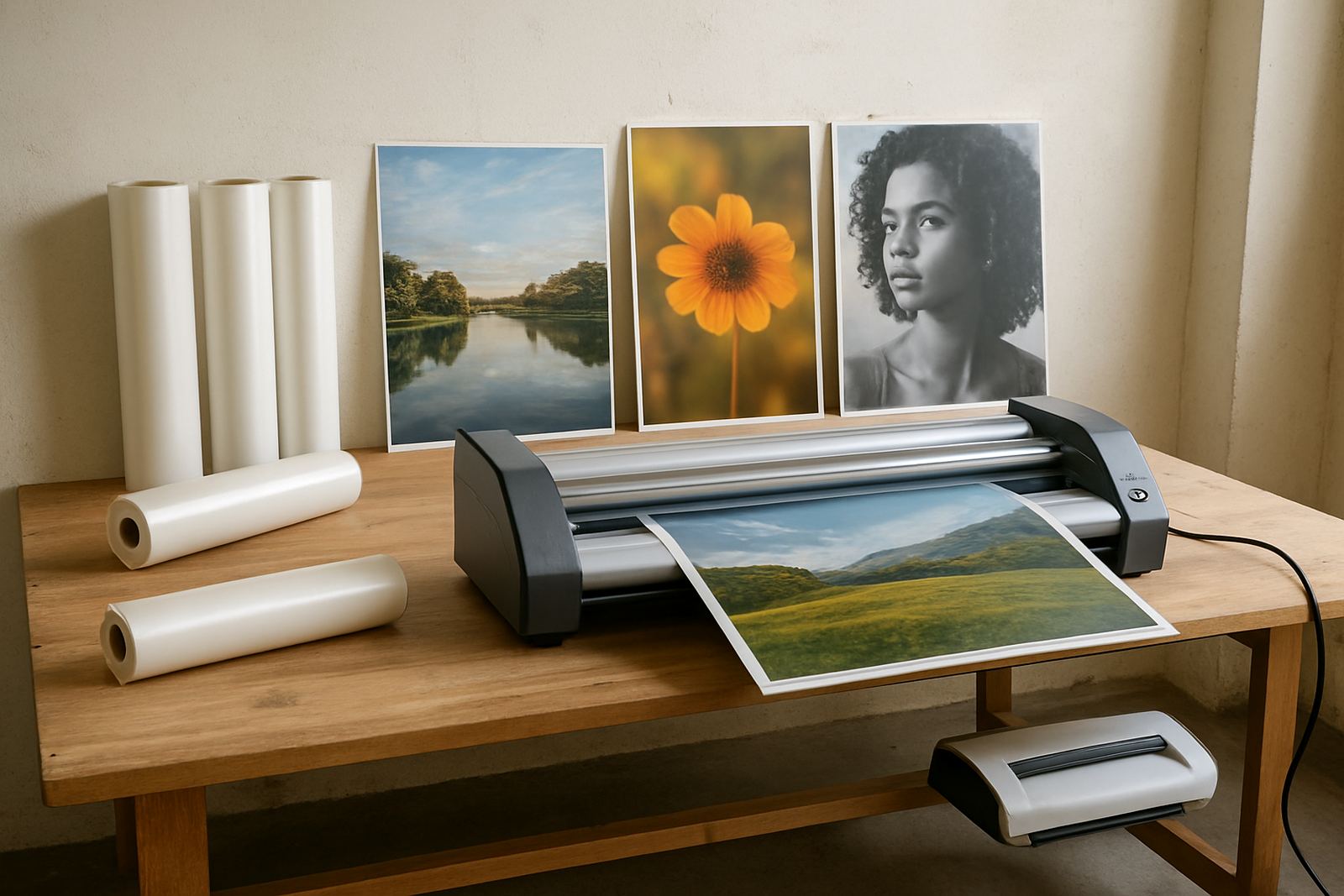
We supplied a wide-format roll laminating setup suitable for both cold and hot finishing, with the ability to run gloss and matte film depending on the job spec. The machine was sized for commercial studio work, giving enough width for exhibition prints and presentation boards while still being manageable for day-to-day use. Key settings were covered during commissioning, including roller pressure calibration, heat system checks and feed alignment.
Along with the machine installation, we supplied the consumables and initial setup materials needed to get the studio into production quickly. That included film options in gloss and matte, guidance on suitable paper weights and advice on running mounted prints without marking the surface. The installation technician also checked the electrical supply, start-up behaviour and operator safety points before handover.
- Wide-format roll laminator for cold and hot finishing
- Gloss and matte film capability
- Commissioning included pressure calibration and heat checks
- Operator handover with media and setup guidance
Installation timeline in practical stages
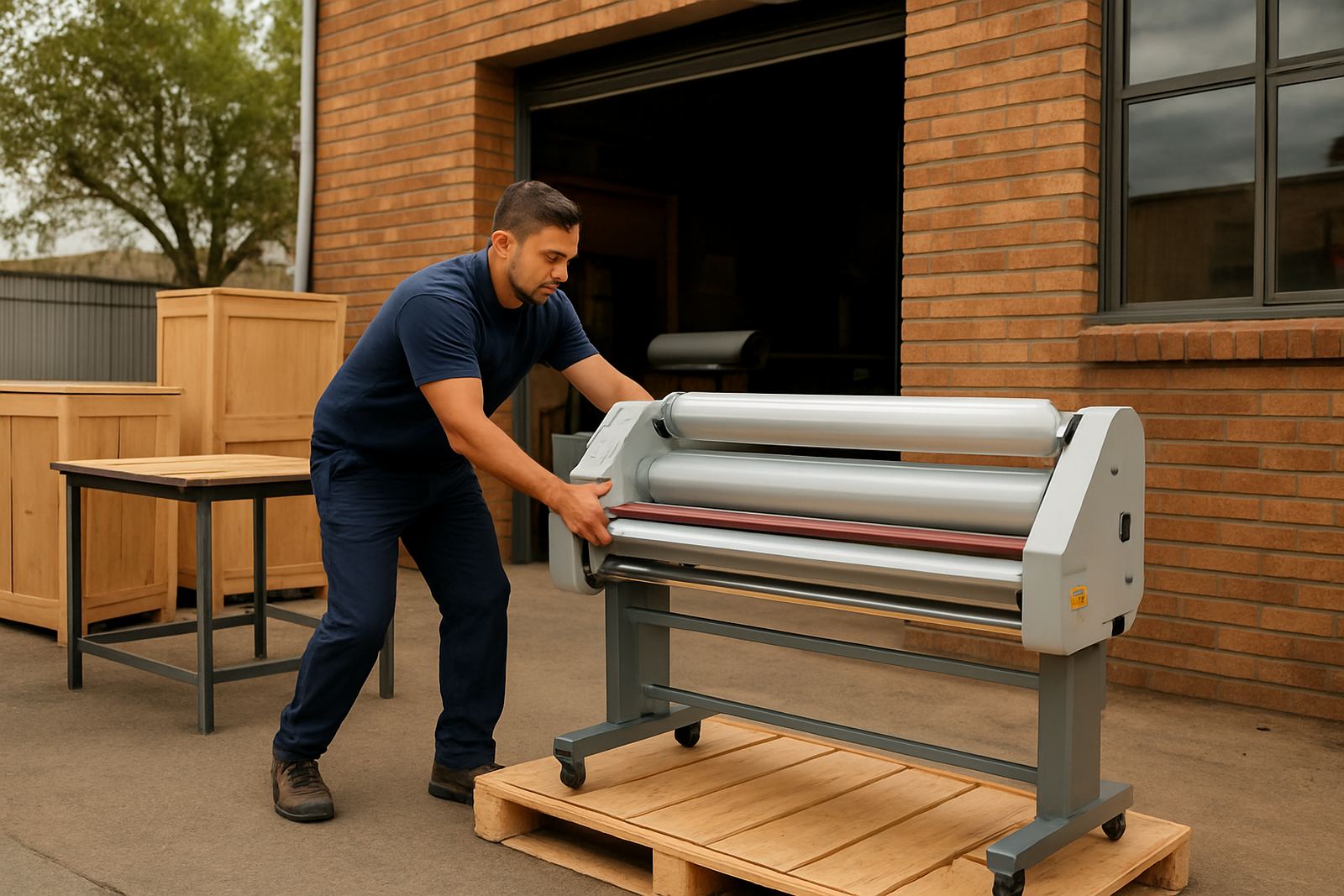
The job ran over three weeks from first site assessment to final handover. Week one covered the technical brief, measurements and confirming the output mix. Week two was used for supply coordination and pre-install checks. Week three covered delivery, positioning, calibration and test runs with the studio team. That sequence kept the changeover controlled and allowed the client to continue with ordinary print work while the new finishing line was brought online.
We also scheduled time for a short operator refresher session so the team could run gloss and matte jobs without trial and error. A few test sheets were used to confirm pressure, tension and surface finish before the machine was released for live work. The handover was completed with service contact details and a clear support path if anything needed attention after launch.
- Week 1: site assessment and job specification
- Week 2: supply coordination and pre-install checks
- Week 3: delivery, setup, test runs and handover
- Operator refresher training completed on site
Results seen on premium print output
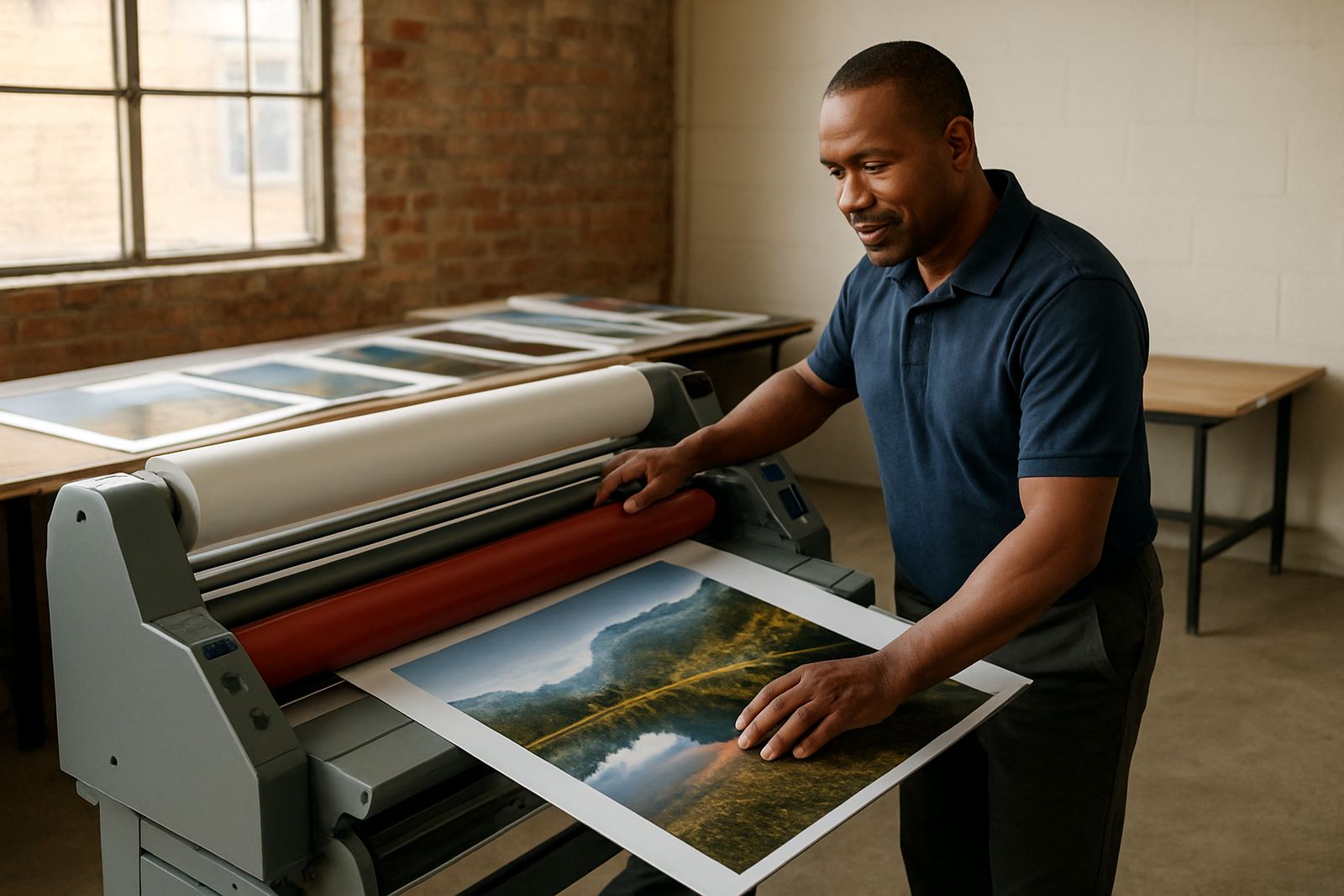
The biggest change was the improvement in finish quality across premium jobs. Gloss runs gave stronger colour depth on photographic prints, while matte runs reduced glare for display pieces and presentation boards. The studio could now match finish to purpose instead of sending work out for finishing, which saved time and gave them better control over turnaround.
They also gained more consistency from job to job. Once the pressure settings and heat profile were dialled in, the output became repeatable, which matters when a customer orders the same look across a batch. The team reported cleaner edges, fewer handling marks and less rework, especially on work that needed to move from printing to framing on the same day. That has helped them take on more premium jobs without adding another supplier into the chain.
- Cleaner gloss and matte presentation options
- Less handling damage on finished prints
- Faster turnaround because finishing stayed in-house
- Better repeatability across short production runs
What we would repeat on another studio project
We would approach a similar studio in the same way again: first confirm the print mix, then match the laminator to the actual output rather than guessing. A lot of finishing problems come from using a machine that is either too small, too slow or too awkward for the room it sits in. Getting the width, pressure range and operator workflow right at the start avoids that.
We would also repeat the same commissioning steps, especially roller cleaning, pressure calibration and a proper test sequence on both gloss and matte film. In Johannesburg, where power interruptions and busy production days are common, that upfront setup makes a big difference. It means the team can keep working with fewer interruptions, and the machine stays easier to service over time.
- Match the machine to the real job mix, not a rough estimate
- Test both film types before live production starts
- Train operators on pressure, temperature and restart checks
- Plan servicing access from day one
Key facts
| Project | Fourways Photo Studio |
|---|---|
| Town | Fourways, Johannesburg |
| Solution | Wide-format cold and hot roll laminating setup |
| Finish types | Gloss and matte |
| Timeline | 3 weeks from assessment to handover |
| Scope | Supply, installation, calibration, training and support |