Regional Signage Brief For Polokwane
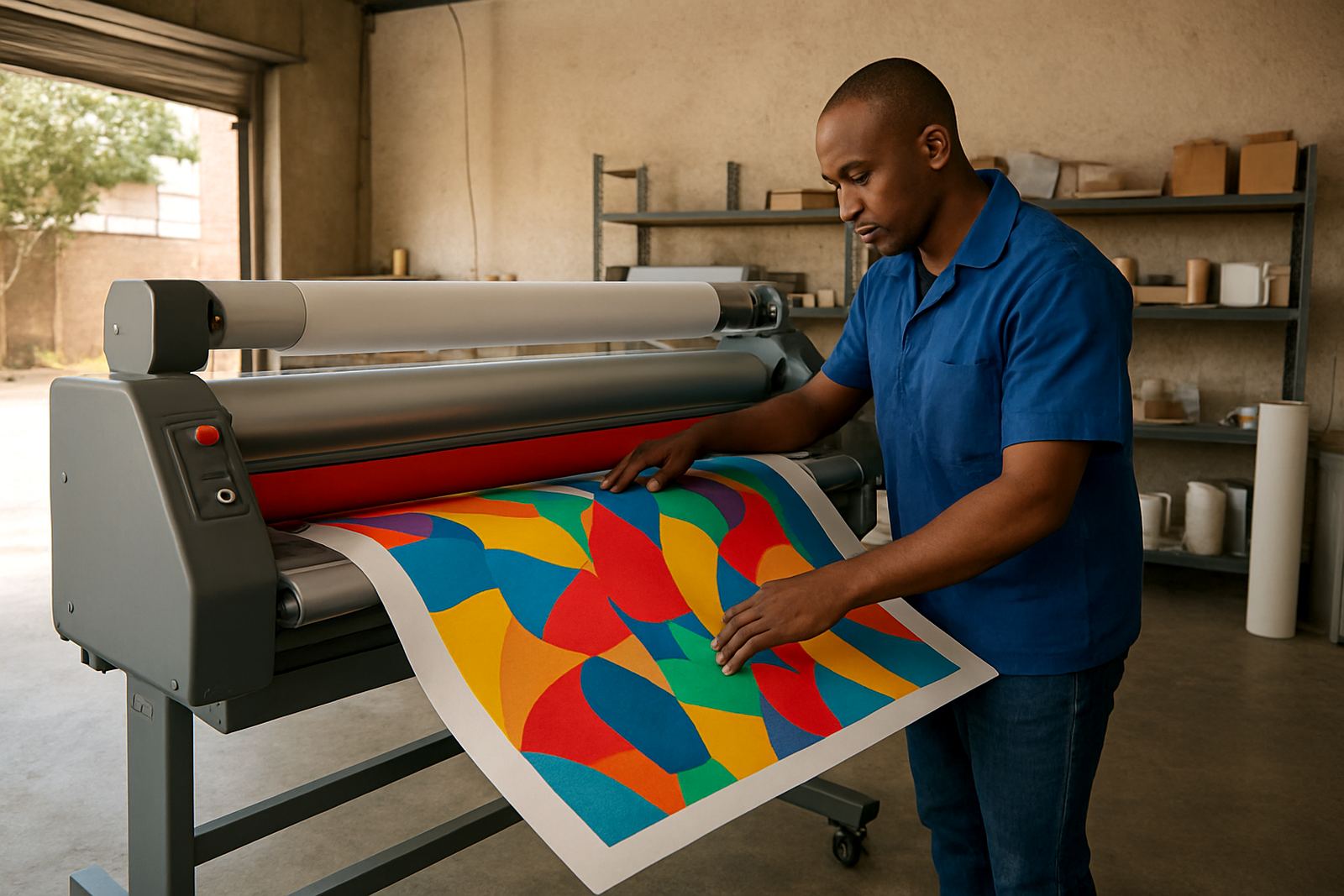
The client was a busy sign room in Polokwane serving retail, corporate and municipal work across Limpopo. Their team needed a wide-format laminating solution that could handle print protection, mounting prep and consistent finishing for posters, vinyl graphics and presentation boards.
The brief was straightforward but the working conditions were not. The site had limited floor space, regular power interruptions, and a mixed workload that changed from week to week. They needed a machine that could handle repeated use, not just one or two jobs a day, and they wanted a supplier who could install on site and talk through settings with operators on the day.
- Location: Polokwane, Limpopo
- Client type: Regional signage and print room
- Application: Wide-format print finishing and protection
- Requirement: On-site commissioning with operator handover
Why The Site Needed A Practical Setup
The room was used for short turnaround signage and larger display work, so the laminator had to be easy to load, predictable in temperature and stable under pressure. With jobs coming in from multiple branches, the team could not afford wrinkling, silvering or inconsistent edge seal on full-width material.
The Polokwane site conditions also had to be taken into account. Polokwane can be dry and dusty, and the site had to cope with power dips without upsetting the finishing quality. The client wanted a unit that would stay accurate after repeated runs, with clean nip pressure and even heat across the full width. That meant proper setup, not just drop-off and go.
- Constraint: Dust and temperature variation in the work area
- Constraint: Load-shedding and voltage fluctuations
- Constraint: Mixed media, from print film to mounted boards
- Constraint: Limited room for operator movement around the machine
What We Supplied And Set Up
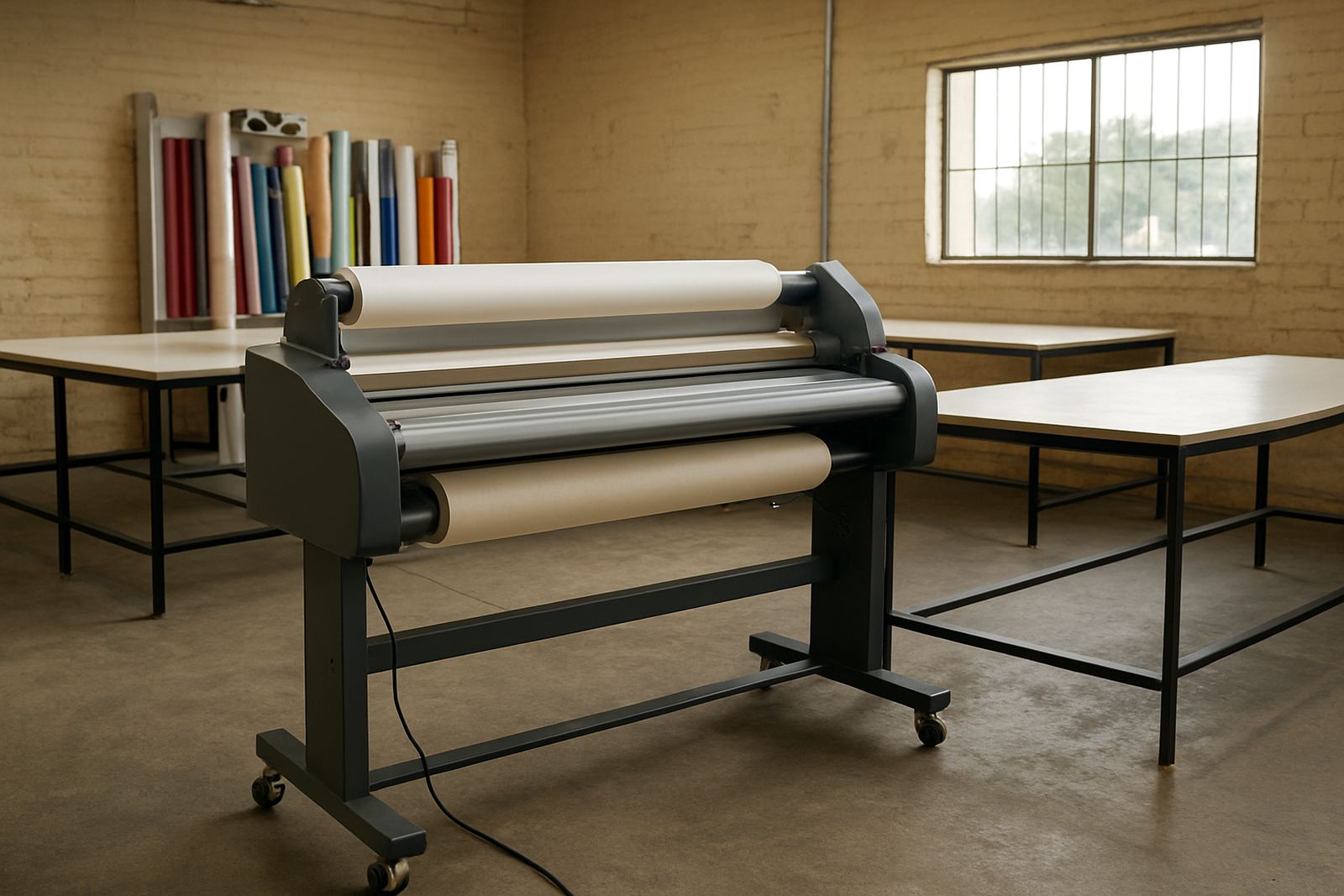
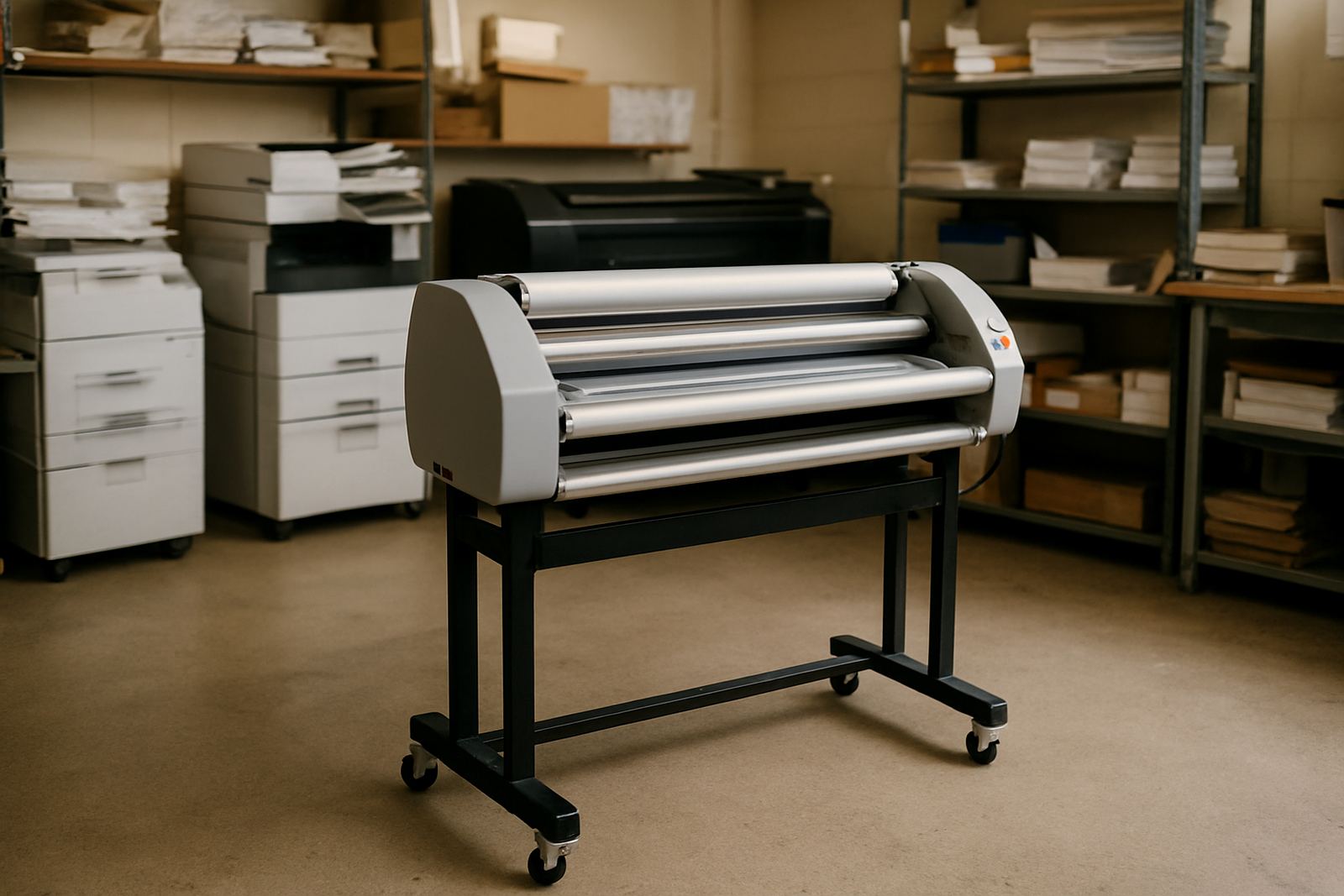
We supplied a wide-format roll laminator suited to both cold and heat-assisted work, with a working width of 1600 mm and adjustable pressure control for different material thicknesses. The unit was paired with heated rollers for consistent film activation where needed, plus variable speed control for accurate finishing on larger panels.
During installation, we levelled the machine, checked roller alignment, tested the feed path and verified heat system performance across the width. We also checked the drive system and electrical connections before starting live jobs. Once the unit was running, the team was shown how to set pressure, temperature and speed for common signage applications.
- Working width: 1600 mm
- Roll format: Cold and hot roll capability
- Control set: Variable speed, pressure adjustment, heat control
- Use case: Vinyl, poster stock, printed boards and display graphics
Installation Timeline And Commissioning
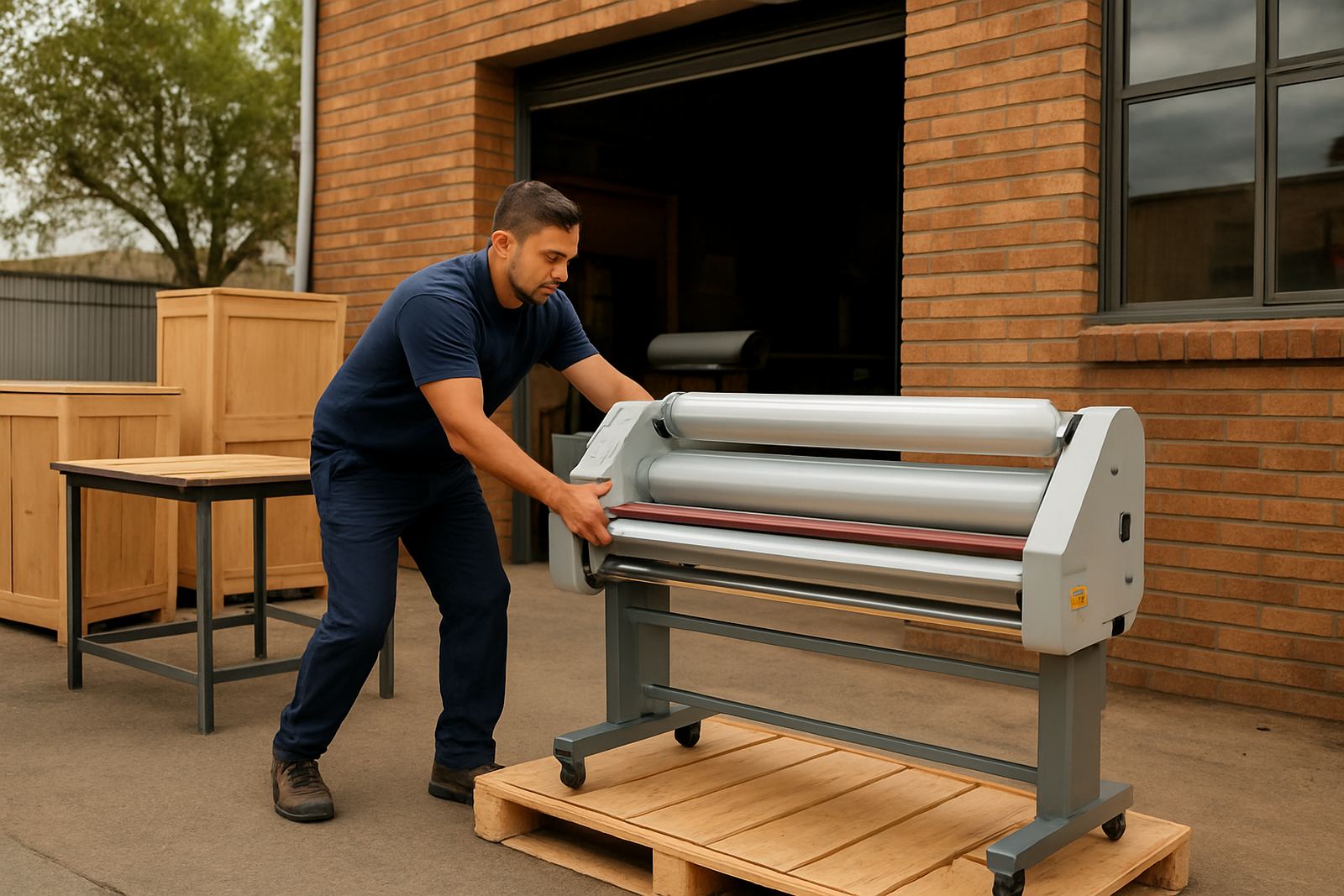
The project ran over two weeks from final confirmation to sign-off. Week one covered load planning, delivery co-ordination and pre-install checks. Week two covered positioning, commissioning, test runs and operator handover. The client had a clear window for setup, so we could work without disrupting active production.
Once the machine was in place, we ran several test sheets to confirm traction, tension and edge finish. Small adjustments were made to pressure and heat settings, then repeated until the output matched the client’s expected standard. The installation was signed off only after the team was comfortable with day-to-day operation. No drama, just proper setup.
- Week 1: Planning, logistics and pre-install review
- Week 2: Installation, testing and operator handover
- Completion: Commissioned and ready for live signage work
Training For Operators And Supervisors
Supplying the laminator was only one part of what the site needed. The client also needed practical training for the people who would run it every day. We covered loading roll material, trimming film, checking tension, setting temperature for different substrates, and spotting the warning signs of bad alignment before it became waste.
That training was useful because the team handled a mixed production load. One hour could be short-run point-of-sale graphics, the next could be larger panel work for branch rollouts. We showed them how to keep a simple pre-run routine so output stayed consistent even when staff rotated between shifts.
- Operator refresher training on loading and tension control
- Guidance on heat settings for different films and boards
- Daily cleaning routine for rollers and feed areas
- Basic fault checks before calling for service support
Results For The Sign Room
After commissioning, the client had a laminating setup that reduced rework and improved the finish on daily jobs. Prints came through with cleaner edges, better surface protection and more consistent pressure across full-width material. That mattered because their work goes out to regional sites where first impressions count and there is not much room for failure.
The team also gained a better handle on throughput. With the machine tuned properly, they could move from one job to the next without constant resetting. That saved time during busy weeks and gave them confidence to take on more outdoor-grade signage work. It was a proper fit for a sign room that needs speed and repeatability.
- Cleaner finish on laminated signage and display work
- Less waste from pressure and feed issues
- Faster setup between job types
- Better control for multi-branch production demands
What Worked Well On Another Sign-Room Install
On another sign-room install like this, we would keep the same approach: pre-check the space, confirm the power supply, plan the delivery route and spend enough time on operator training. Those steps save a lot of trouble later, especially where the site is busy and the machine must start earning quickly.
For a Polokwane sign room, we would again recommend a wide-format unit with easy pressure adjustment, dependable heat control and support for both cold and hot work. That gives the client flexibility when print volumes shift, and it helps the team handle everything from short-run artwork to larger signage panels without chasing settings all day.
- Confirm floor space and power supply before delivery
- Allow time for calibration and test jobs on site
- Keep simple maintenance routines for rollers and drive parts
- Match the laminator to the widest regular job, not the smallest
Key facts
| Project | Polokwane Sign Room |
|---|---|
| Town | Polokwane, Limpopo |
| Install type | Nationwide on-site supply, commissioning and handover |
| Machine type | Wide-format cold and hot roll laminator |
| Working width | 1600 mm |
| Timeline | 2 weeks from confirmation to sign-off |