What the client in Alberton needed
The client was a retail print operation in Alberton serving local stores, franchise outlets and short-run campaign work. Their team needed a practical way to laminate posters, protect promotional graphics, and mount rigid boards for in-store display work. The work had to look neat at close range because most jobs were going straight onto counters, windows and aisle signage.
The brief was to configure a line that could handle point-of-sale posters from A3 through to wide-format sheets, plus mounted boards for regular retail campaigns. They also wanted a system that would be straightforward for operators on shift, with clear settings and fewer stops for rework. The site was running close to capacity, so any new equipment had to fit into an existing production flow without causing a bottleneck.
The constraints on site
Alberton sites often deal with mixed power quality and tight workshop space, so the installation had to be planned around available floor area, cable routes and safe operator access. The client also needed equipment that could handle daily use in a warm production room, with temperatures climbing during peak summer and extra dust from nearby loading activity. In this kind of setting, film tracking and roller pressure need to stay consistent or you start seeing curl, bubbles and edge lift.
- Limited floor space beside the finishing bench
- Daily production running from early morning to late afternoon
- Mixed job sizes, from small retail notices to wider POS boards
- Need for clean edges and repeatable alignment on every run
- Operator training for staff who had not used a roll laminator before
There was also a practical concern around load-shedding and restart behaviour. The client wanted controls that would not confuse operators after an interruption, and a setup that could be checked quickly before restarting a job. That meant more focus on correct calibration and an easy service routine.
What we supplied and configured
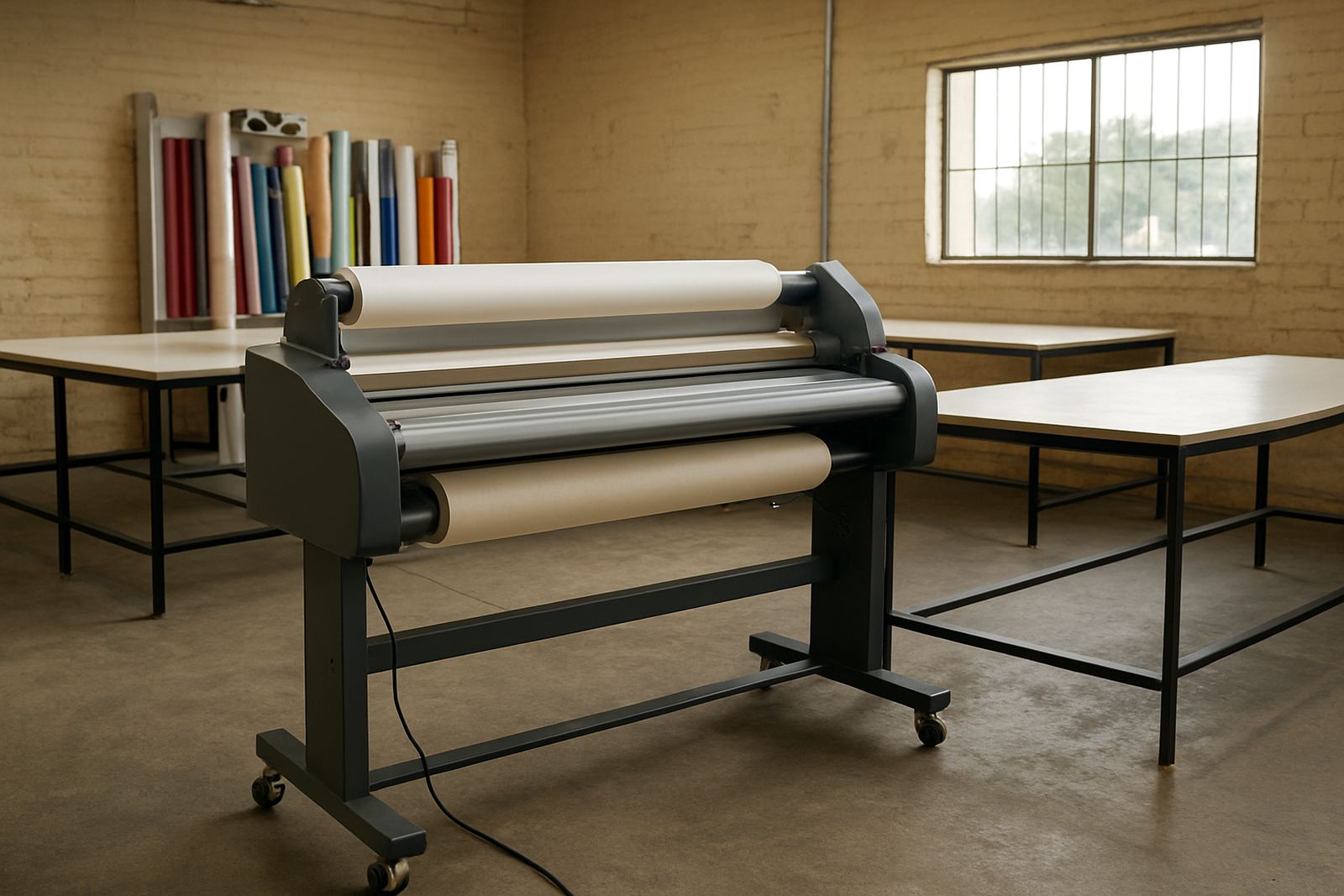
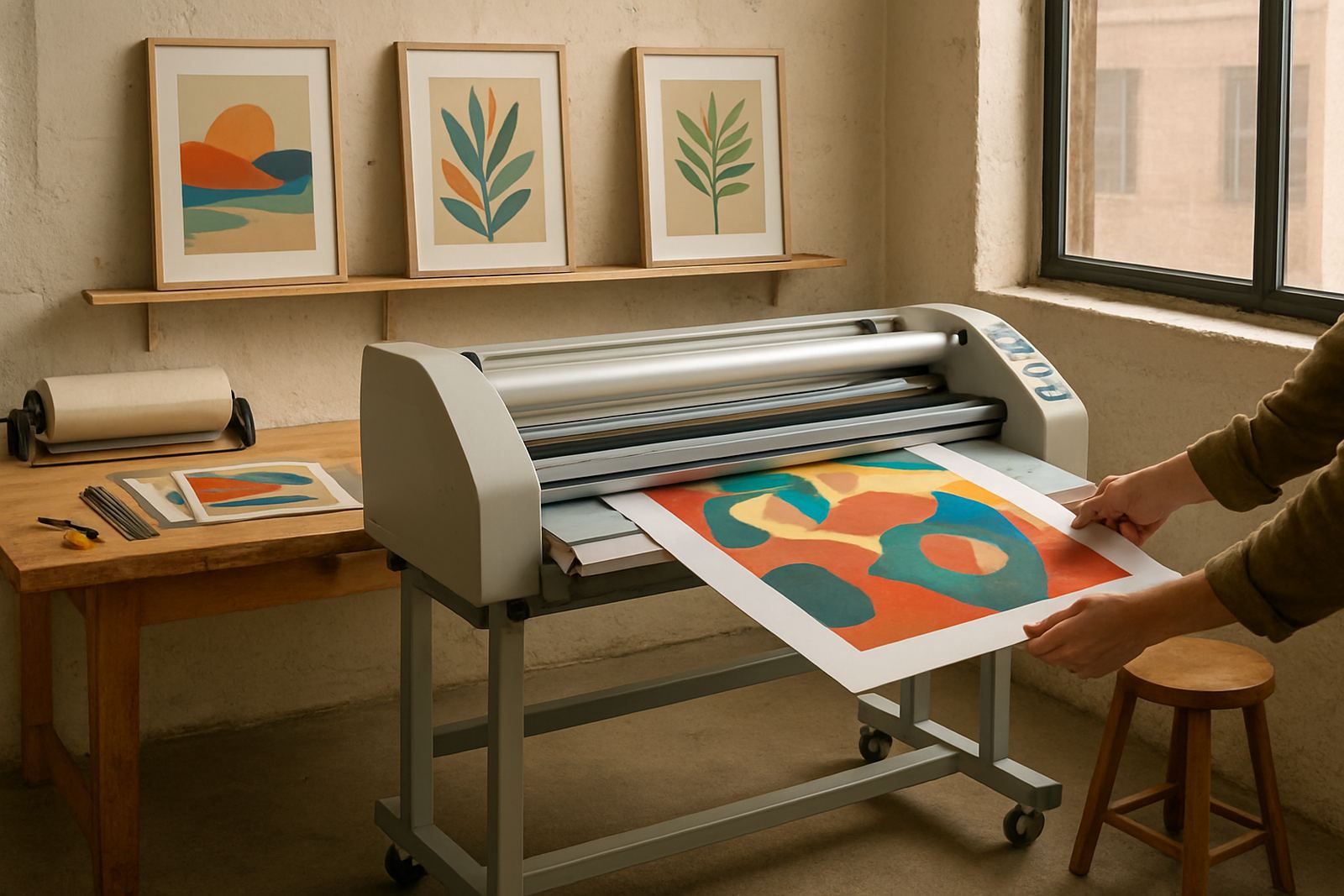
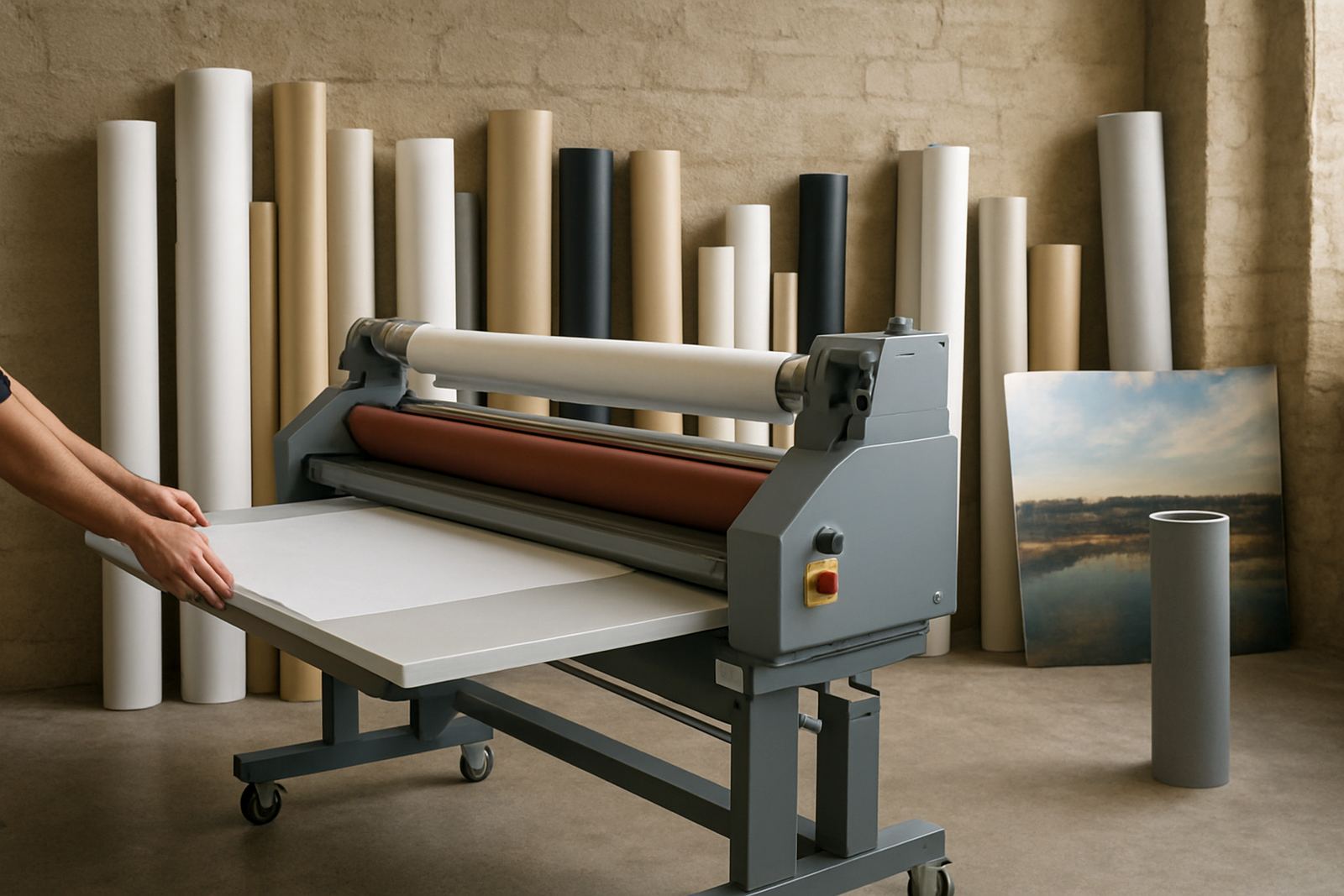
We supplied and configured a wide-format hot and cold roll laminator suited to production print finishing. The unit was set up for laminating point-of-sale posters, encapsulation style protection where needed, and mounting onto board substrates for retail display work. We also supplied the support items needed for clean operation, including film set-up, roller cleaning guidance, pressure calibration, and a basic maintenance schedule for the team.
- Wide-format roll laminator with heated upper section for controlled film flow
- Adjustable nip pressure for poster film and board mounting work
- Forward and reverse control for safe film correction
- Temperature control for hot lamination jobs
- Guide settings for repeat work on standard retail sizes
- Operator refresher training on setup, threading and shutdown
The install included alignment checks, test runs on common poster stock and a few heavier board samples to confirm feed stability. We also checked the electrical supply, isolator position and access around the machine so the team could work around it without crowding the output path. One small but important point was making sure the first operator could follow the setup steps from memory, not just from notes pinned to the wall.
Installation timeline and handover
This Alberton laminator install moved from site assessment to handover across two planned stages. In week one we visited the Alberton site, measured the available space, reviewed the power point locations and confirmed the main job types. In week two we completed delivery, positioning, mechanical checks and live testing. The whole process was kept tight because the client could not afford a long interruption in their finishing line.
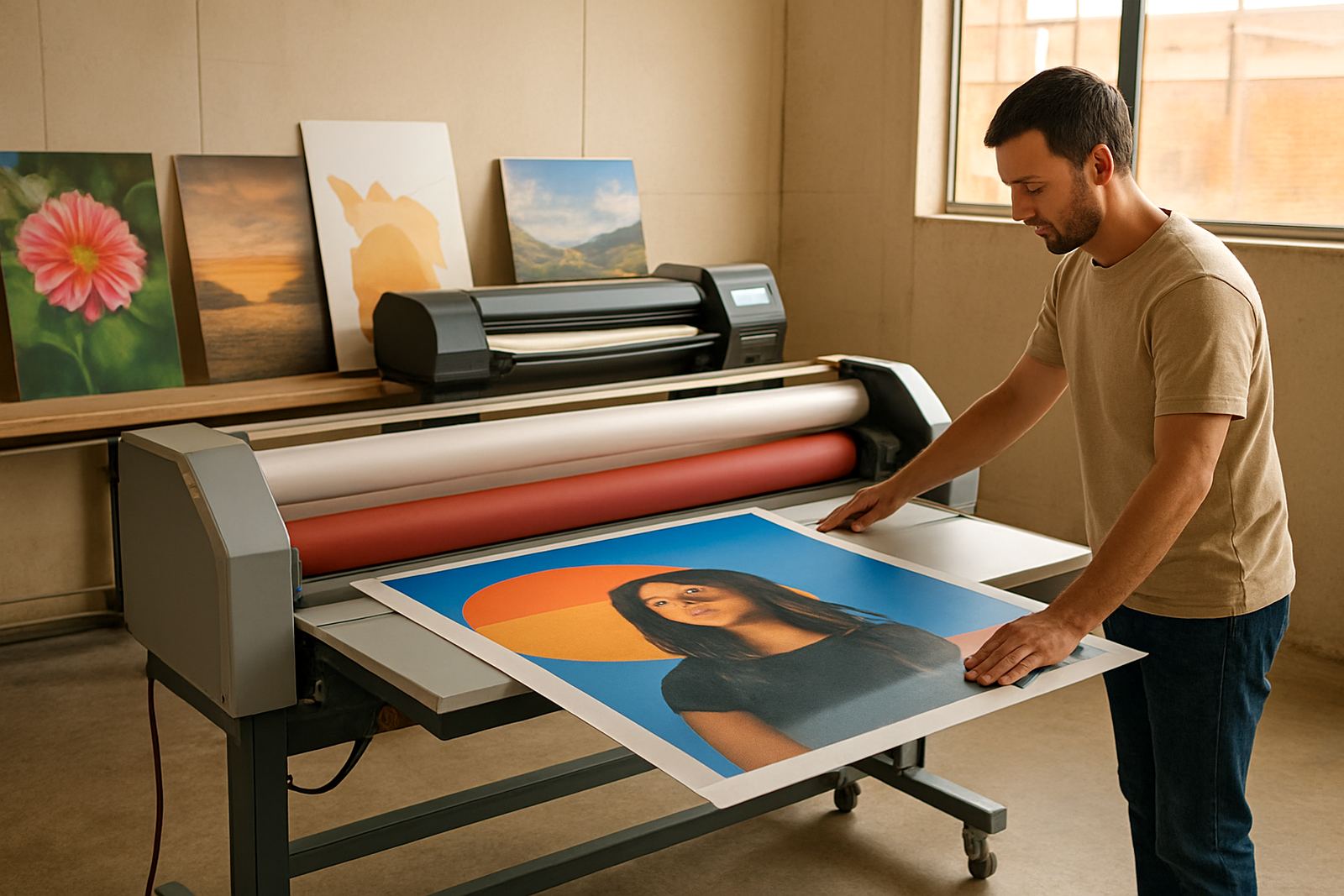
After the machine was in place, we carried out pressure calibration, heat system checks and a full test on laminated poster runs. We also tested board mounting so the operators could see the difference between a standard poster pass and a heavier media pass. Once the results were consistent, the team went through basic fault spotting, roller cleaning and daily startup checks. The training was practical and focused on the real jobs they do every week, not a big classroom session.
Results on the production floor
The new setup gave the client a steadier output for retail posters and mounted boards, with less spoilage on the first pass and cleaner edges on finished jobs. Their team could now run repeat promotional work with the same settings for common sizes, which cut down on trial and error. They also found it easier to move between lighter poster stock and thicker board without stopping to rework every second job.
- More consistent laminate finish across repeated retail runs
- Fewer edge problems on mounted board jobs
- Shorter setup time for common poster sizes
- Better operator confidence during busy shifts
- Less downtime from avoidable threading and pressure mistakes
The client told us the biggest benefit was not just the machine itself but the way the line was set up around it. When finishing equipment sits in the right place and the team understands the settings, production becomes easier to manage. That mattered because retail work is time sensitive and late deliveries can mean missed in-store changeovers.
What we would carry through on a similar retail print site
For a retail printer in Alberton, we would take the same approach again: inspect the site first, match the laminator to the actual workload, and spend time on calibration before pushing volume through the line. That saves trouble later. We would also keep the training practical, with real media samples from the client’s own jobs so the operators can see how the settings behave under pressure.
If the site is in a coastal area we would add extra emphasis on roller care and storage conditions, but even inland locations still need regular cleaning and temperature checks. A finishing line like this works best when servicing is planned, not left until there is a breakdown. That includes roller cleaning, pressure calibration, heat checks and electrical fault finding when needed. It is a simple rule really, keep the machine clean and the output stays more predictable.
Key facts
| Project type | Retail print finishing line for point-of-sale posters and mounted boards |
|---|---|
| Client location | Alberton, Gauteng |
| Install timeline | 2 weeks from assessment to handover |
| Machine type | Wide-format hot and cold roll laminator |
| Typical media | Poster film, printed graphics, board mounting substrates |
| Support provided | Training, calibration, servicing guidance and on-site commissioning |