Why glass graphics need protection in real workplaces
Window graphics look sharp when they are first installed, but glass areas are some of the hardest working surfaces in a shopfront, office or showroom. People brush past them, cleaners wipe them down, and sunlight can fade inks or weaken adhesive over time. In Johannesburg and Pretoria, strong UV exposure and dusty traffic corridors can be just as hard on a printed panel as coastal humidity is in Durban.
Protection is not only about keeping the print looking nice. It also helps reduce scratches, scuff marks and edge lifting. For businesses that rely on window displays to promote offers, operating hours or branding, a protected finish means less rework and fewer early replacements.
- Reduces scratching from daily cleaning
- Helps printed colour stay sharper for longer
- Makes graphics easier to wipe down
- Improves the look of clear and printed films
Choosing the right finish for clear or printed graphics
Not every glass graphic needs the same protection. A clear window film used for privacy or decorative frosting has different needs from a printed shopfront promotion. The choice depends on where the graphic is going, how long it needs to stay up, and how much handling it will get.
For short-run promos, a lighter laminate is often enough. For long term signage, a tougher lamination can keep the surface cleaner and protect the print from fading. In high traffic entrances, schools, clinics and retail counters, it is usually worth choosing a finish that can handle frequent wiping and sunlight better than standard film alone.
- Short term promo windows: lighter protection, easier removal
- Long term branding: tougher protection for extended use
- Privacy films: protection that keeps edges tidy and clean
- Directional graphics: finish that resists marks near door handles
Hot and cold roll laminating for display graphics
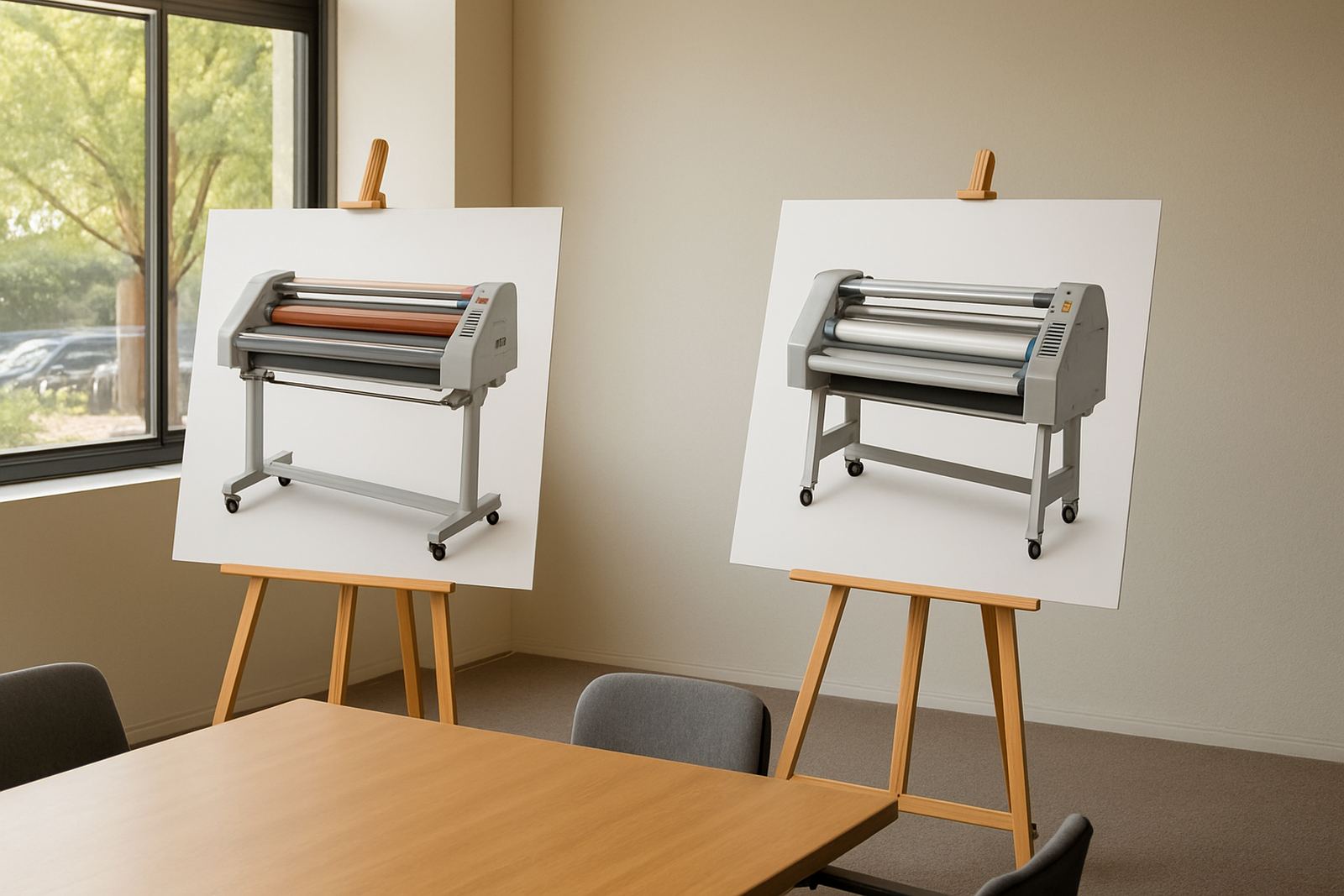
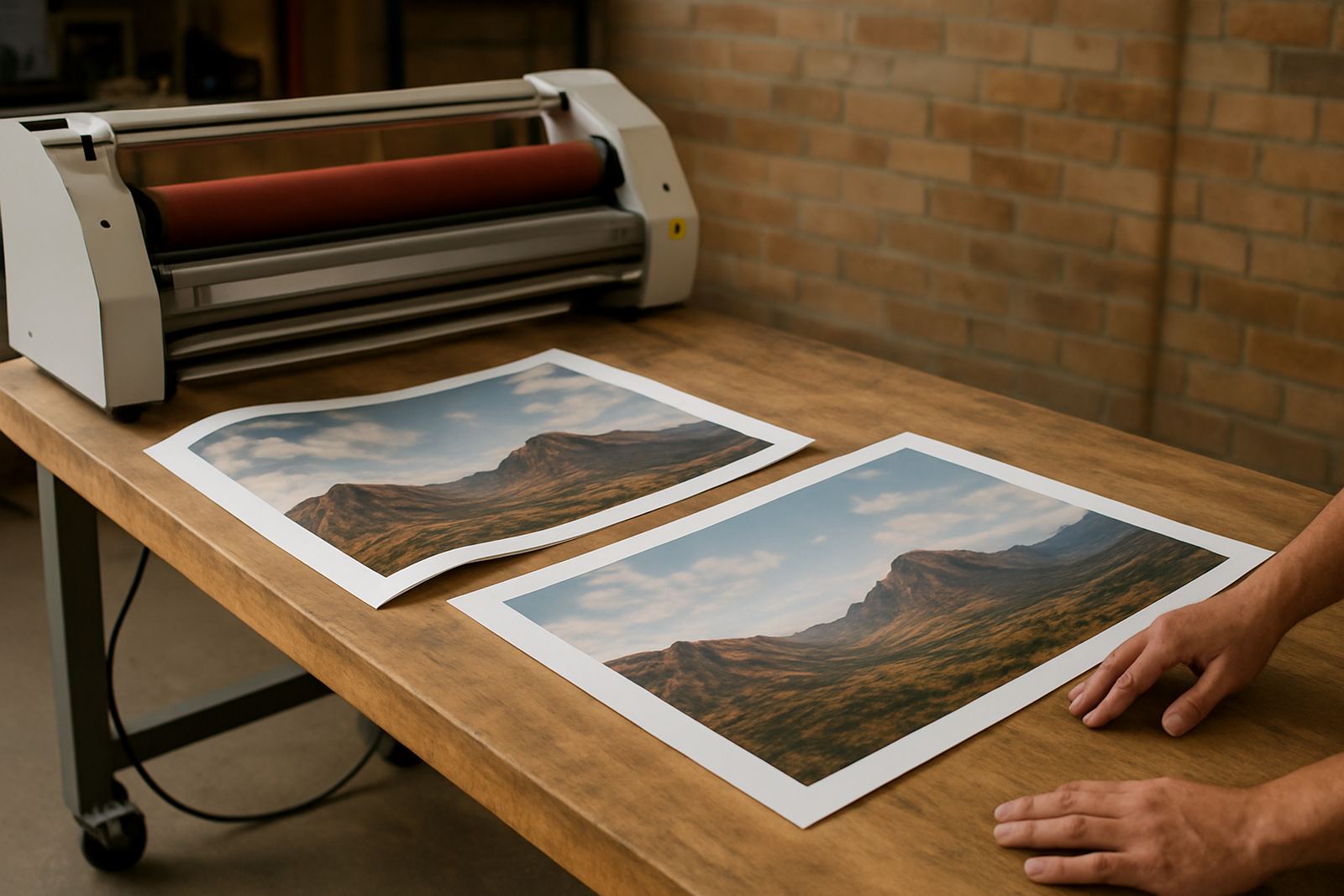
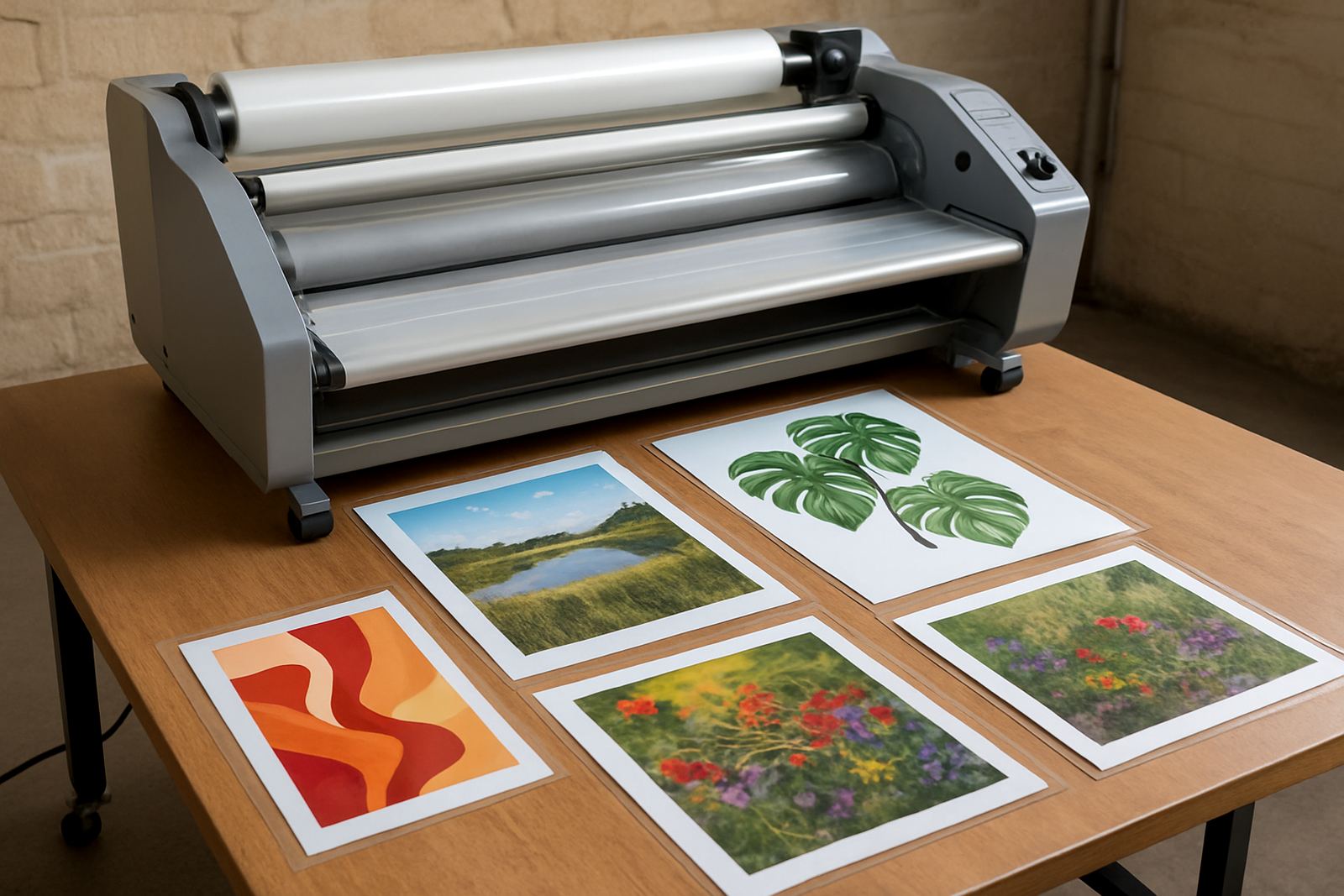
Wide format laminating is used to bond a protective layer over printed or clear graphics. Cold roll laminating is often chosen for pressure sensitive films and materials that should not be exposed to heat. Hot roll laminating is useful where a heat activated process gives a firm, even result and a cleaner final look.
For shops in Sandton malls, busy office foyers in Midrand, or vehicle related display areas in the East Rand, the best option depends on the print material and the finish required. A proper machine with even roller pressure matters because trapped air, uneven feed or poor alignment can spoil the job. That is why pressure calibration and roller condition need regular attention, not just the print quality itself.
Wide format sheets can be handled in metres, and the working width should suit the actual panel size so you are not trimming too much after the fact. If a graphic will be mounted close to windows or glazed partitions, a flatter finish is usually better than one that shows excessive texture under light.
What to look for before you send graphics for lamination
Good results start before the material goes into the laminator. The print must be fully cured, the edges trimmed neatly, and the surface free from dust. Even a tiny particle can show through on a light coloured graphic or create a bump under the finish.
For sign shops and designers, the practical checks below can save time and waste:
- Make sure inks or toner are fully dry before finishing
- Check the print size against the glazing area exactly
- Leave enough margin for trimming and fitting
- Match the film thickness to the job, not just the price
- Keep the work area clean before feeding sheets
- Test one sample if the graphic has special colours or textures
A careful pre-check matters even more when you are producing batches for multiple branches or seasonal promotions. One error in sizing can affect every panel, and that gets expensive quickly.
Local example from a busy Kya Sand install
A retail client in Kya Sand needed clear window panels with printed branding for a front entrance that got strong afternoon sun and regular cleaning. The first version looked fine on day one, but after a few weeks the edges started to pick up dirt and the gloss surface showed marks from handling. The replacement job used a more suitable protective finish and a better fitting sequence, which gave the panels a cleaner look and made them easier to maintain.
That kind of job is common across Randburg, Sandton and Midrand. Window graphics often sit close to doors, promotional stands and security gates, so the finish has to cope with people moving past all day. For businesses that open early and close late, a cleaner surface also helps the front of the premises look cared for, even when the rest of the day has been hectic.
It also helps when load-shedding interrupts production and install schedules. If graphics must be stored for a few days before fitting, a protected finish is less likely to suffer from handling and dust. That gives teams a bit more room to plan.
Keeping protected window graphics in service for longer
Once installed, protected glass graphics still need sensible care. Harsh chemicals, rough cloths and stiff scrubbing pads can damage even a good finish. Staff should know what can be cleaned safely, especially in customer facing areas where the glass gets wiped often.
Routine servicing and operator refresher training can help print teams keep standards consistent. If the equipment starts producing poor pressure, uneven heat or feed marks, the quality of the final finish drops quickly. It is easier to prevent faults than to reprint and replace a full set of panels.
- Use mild cleaners and soft cloths only
- Avoid scraping at adhesive edges
- Check window seals and frames for dust build-up
- Store spare graphics flat and dry
- Book servicing before problems affect production
With the right approach, window graphic protection becomes part of normal signage planning, not an afterthought. That keeps print work looking tidy, and it helps protect the money already spent on design and production.