Why transport is harder on prints than display is
Most print damage happens between the finishing table and the customer, not on the wall or counter. A poster, menu, artwork or branded board may look fine when it leaves your shop, then pick up scuffs, curled edges, fingerprints and moisture marks in the van, at a courier depot or during unpacking. That is where lamination earns its place.
For transport work, the aim is not only a neat finish. It is physical protection. A laminated print can slide against cardboard, plastic wrap or another board with less chance of ink rub, edge lift or surface scratching. It also gives the print more body, which helps when it is moved through busy print rooms, loading bays and sites where people are unpacking in a hurry.
In Johannesburg, where deliveries move daily between Kya Sand, Randburg, Sandton, Midrand and Pretoria, the route matters. A parcel may go from a clean office to a courier cage, then into a truck that sits in summer heat or damp winter conditions. If the print is not finished properly, the customer sees the damage first and the supplier gets the phone call second. That call is never a good one.
Cold or hot roll lamination for delivery jobs
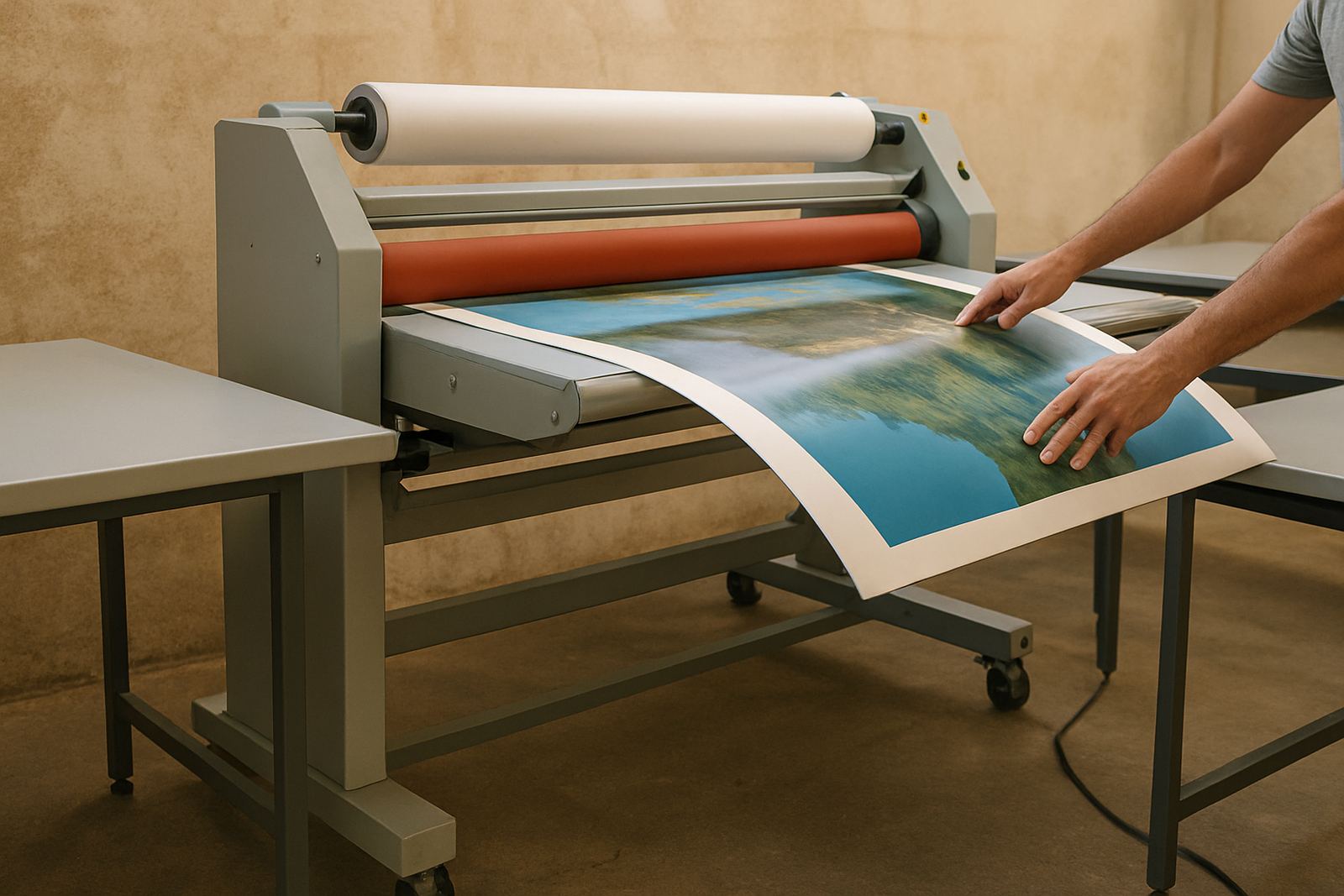
The right process depends on the print, the ink set and the end use. Cold roll lamination is often the first choice for heat-sensitive work, digital prints and jobs that must be turned around quickly. Hot roll lamination is useful where the print and film combination can take the heat and where a firmer bond is needed. For transport, both can work well if the settings are right and the operator checks the pressure, alignment and edge finish.
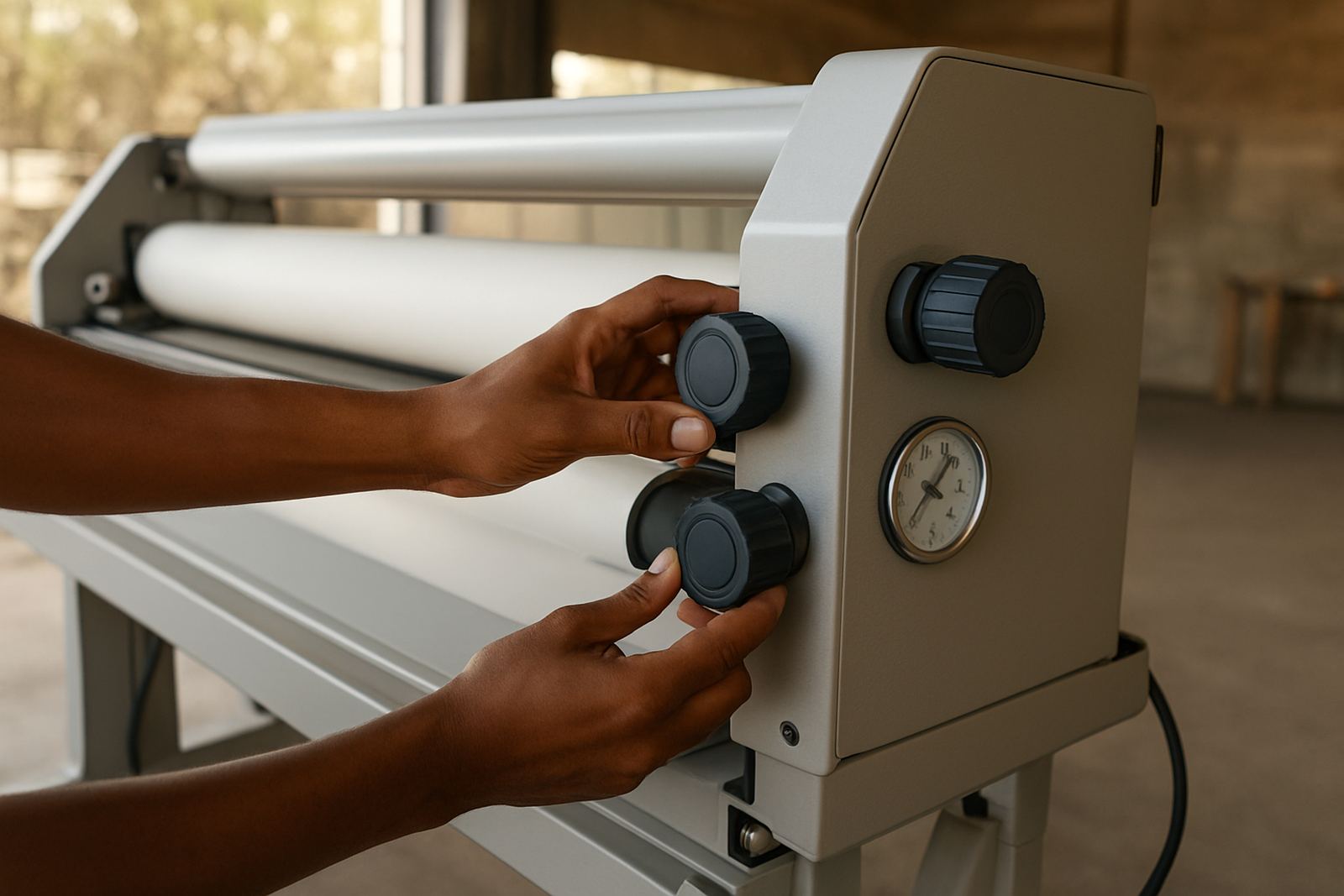
For couriered items, a clean seal across the full width matters more than a glossy look. Uneven pressure can leave pockets that lift at the corners. Too much heat can distort the print. Too little pressure can let dust and air sit under the film. A wide-format roll laminator that is set up properly gives a consistent result on posters, maps, presentation boards and artwork that must arrive ready to use.
- Use cold lamination for heat-sensitive prints, quick turnaround work and items that may already have moisture-sensitive media.
- Use hot lamination when the material can handle heat and you need a stronger, more set finish.
- Check that the roller pressure is even across the full width before running a batch.
- Keep the film aligned so the edges do not peel during packing or transit.
The transport risks lamination helps reduce
Transport is rough on finishes in ways that are easy to underestimate. A package gets stacked under heavier parcels. A driver straps it down a bit too tight. A box sits in a warehouse where humidity rises after rain. If the print is unprotected, small damage becomes obvious very quickly. Lamination does not make a print indestructible, but it does give the surface a far better chance.
It is especially useful for work that passes through more than one pair of hands. Think of shop posters sent from a printer in Kya Sand to a franchise store in Midrand, or training charts from Sandton heading to a site office in the East Rand. Each transfer adds risk. A laminated finish helps resist rubbing, light spills, dust and handling marks when the parcel is opened and repacked on the other end.
For outdoor or semi-outdoor deliveries, the benefit is even clearer. Condensation in the early morning, a wet tailgate, or a client leaving the package near an entrance can all spoil an unprotected print. On coastal routes, salt air and moisture are tougher on exposed stock as well. Good finishing is cheaper than reprinting, and far less awkward than explaining why a job arrived looking tired.
Choose the finish that suits packing and presentation
Not every transport job needs the same finish. Some deliveries are all about protection, while others must also look clean when the client opens the box. The surface, thickness and edge detail should match how the item will be handled. A glossy finish can make colours look strong, while a matt finish can reduce glare and hide light marks from handling. Textured films can help artwork and presentation pieces feel more refined, but they also need careful pressure control.
Before you choose a film, ask how the item will travel and who will unpack it. A board that goes straight onto a shop wall may need different treatment from one that will be moved from vehicle to vehicle before installation. If the print is going into a frame, folder or presentation pack, the finish should work with the rest of the package and not fight it. A poor match can cause curling, silvering or trapped dust that shows up immediately in bright light.
- For posters and point-of-sale material, choose a finish that resists scuffs and fingerprints.
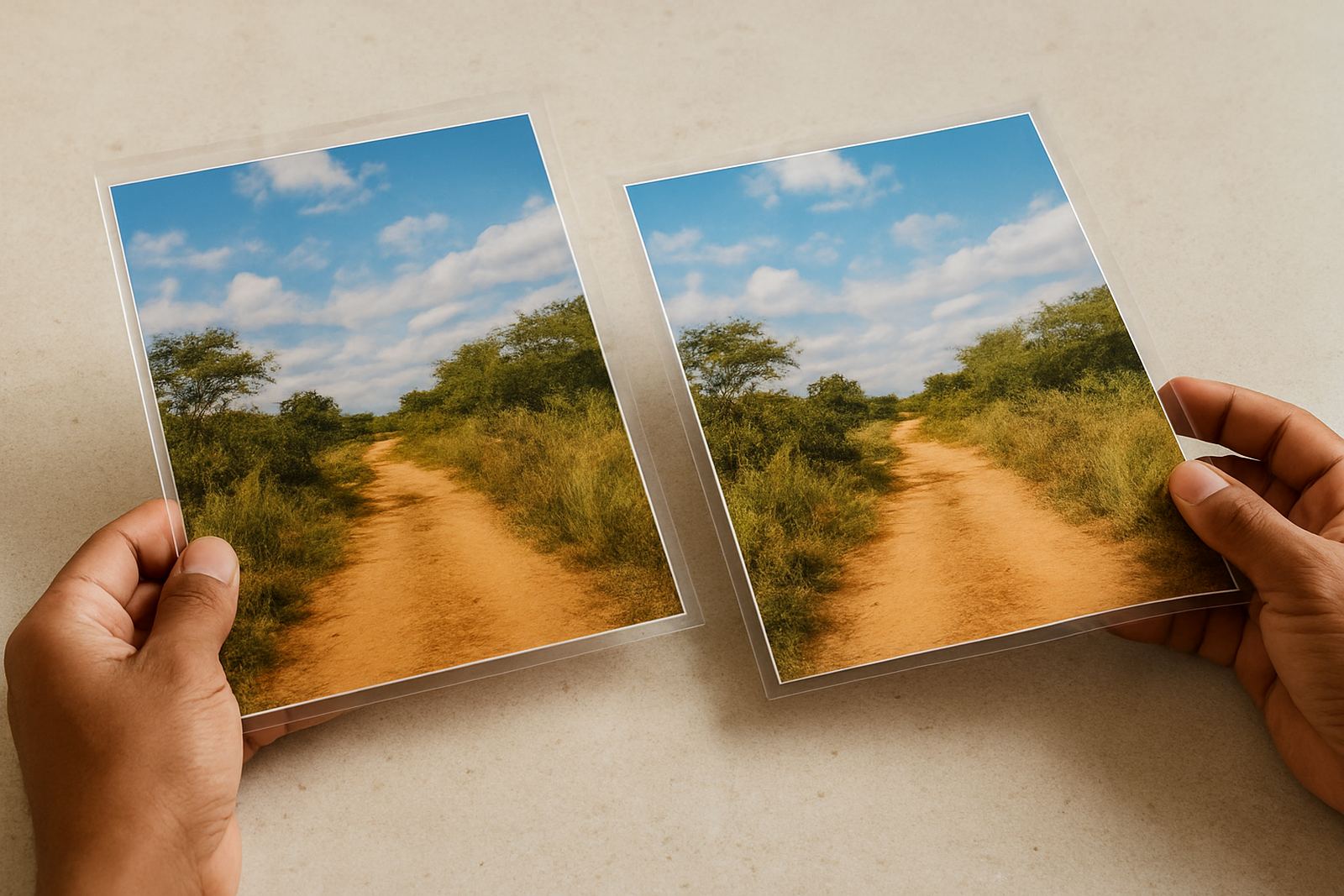
- For artwork and photography, select a film that protects colour without changing the look too much.
- For maps, training sheets and reference boards, use a finish that allows repeated handling.
- For packed items in humid conditions, seal the edges well and let the print cool before boxing.
A local example from a busy Johannesburg dispatch run
A print shop in Kya Sand sends out mixed jobs every week, from menus for Sandton restaurants to site boards for Pretoria contractors. The biggest problem was not production time. It was damage in the last mile. Corners got knocked, edges marked, and a few boards arrived with cloudy patches where moisture had crept in during transit. The shop had to replace work that was already paid for, which ate into margin very fast.
By tightening the lamination process before packing, the team reduced complaints. They shifted more of the transport-sensitive work to roll lamination, checked roller pressure before each batch and left more cooling time before boxing. They also changed how items were wrapped so the finished surface did not rub against rough cardboard. The result was simple enough: fewer returns, cleaner handovers and less time spent fixing jobs that should have been right the first time.
That kind of change matters across Johannesburg and beyond. Whether you are delivering to a design studio in Sandton, a retail fit-out in Midrand or a municipal office in Pretoria, the client judges the job by how it arrives. If the print is scratched, warped or dirty on arrival, the finish has failed, no matter how good it looked on the production table.
Keep the laminator ready for repeat delivery work
Transport-friendly finishing depends on the machine being maintained, not just switched on. Roller cleaning helps avoid dust lines and adhesive build-up. Pressure calibration keeps the bond even across the full width. Heat system checks are important on hot units, especially when power interruptions and load-shedding can affect start-up behaviour. If the drive system is not running properly, feed consistency suffers and that shows up at the edges of the film.
For shops that do a lot of delivery work, a scheduled service is worth more than emergency repairs. A pre-purchase inspection can also help when you are adding capacity for more couriered jobs. If the machine is already in place, operator refresher training can reduce waste, especially on wider rolls where a small misfeed becomes an expensive mistake. Spare parts support matters too, because a dead day in the finishing room quickly turns into missed dispatches.
Laminator works with businesses across Kya Sand, Randburg, Sandton, Midrand, Pretoria and the East Rand, with installs nationwide from Johannesburg base. If your work moves through packing tables, courier depots and client sites, the finishing equipment has to keep up. For advice on the right setup or support on an existing machine, use our contact form.