Why temperature changes how film behaves on the rollers
Laminating film is sensitive to the workshop around it. A colder room makes the film stiffer, which can affect layflat, tracking and how quickly the adhesive layer responds. A warmer room makes film softer and more pliable, but it can also increase stretch and make the web harder to control on wider machines.
That matters on cold and hot roll laminators alike. Even on a cold laminator, temperature still changes the way the material feeds through the nip. On hot systems, the room and the machine heat work together, so a workshop that starts at 14 degrees in winter and climbs to 28 degrees by midday may need small setting changes to keep the finish consistent.
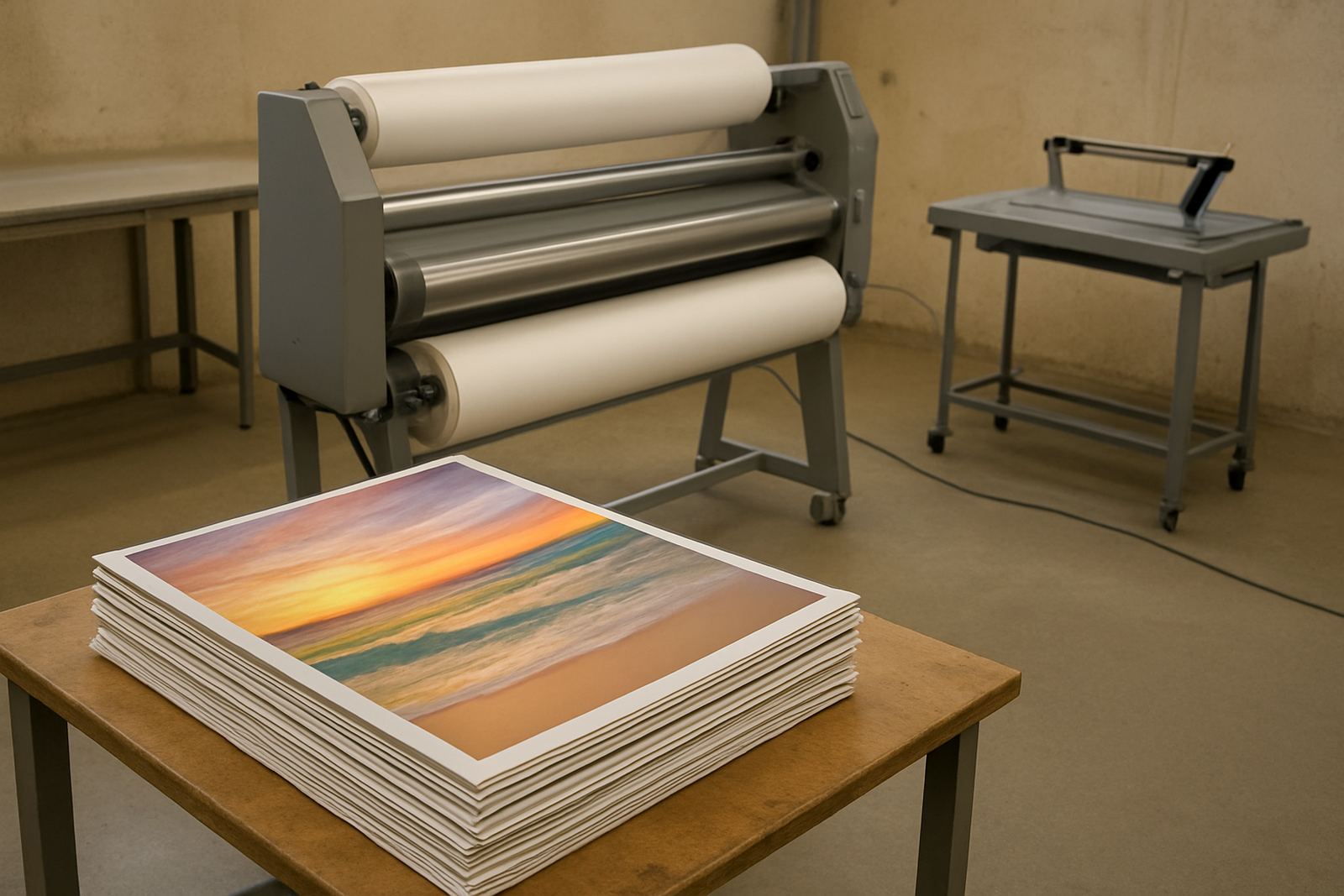
In Kya Sand, many workshops are large, open spaces with roller doors that stay open for deliveries. That is normal, but it means the room can swing quickly when the sun hits the roof or a gust comes in. If the machine is set for a stable environment and the room changes, the film may start lifting at the edges or show a slight ripple across the width.
The room itself can shift pressure and heat results
Operators often blame the film first, but room temperature can change how the machine feels under load. Rubber rollers, shafts and idler parts all react to heat and cold. A machine that has been sitting in a cool store room can behave differently once it is running in a hot production floor for two hours.
- Cold rooms can make rollers feel slightly harder, which affects pressure transfer on thicker boards and digital prints.
- Warm rooms can soften some film types and make the nip feel more forgiving, but too much heat may create bubbles or a hazy finish.
- Dusty, dry rooms can increase static, especially on winter mornings in Pretoria and Midrand.
- Coastal humidity is a different issue, but many inland teams still see moisture problems when stock comes in overnight from Durban or East London.
Pressure calibration should be checked if the finish changes from job to job without any clear reason. If one side of the laminate comes out tighter than the other, the answer may be a machine alignment issue, but a cold workshop can exaggerate the problem and make it look worse than it is.
How to set up the workshop before a run
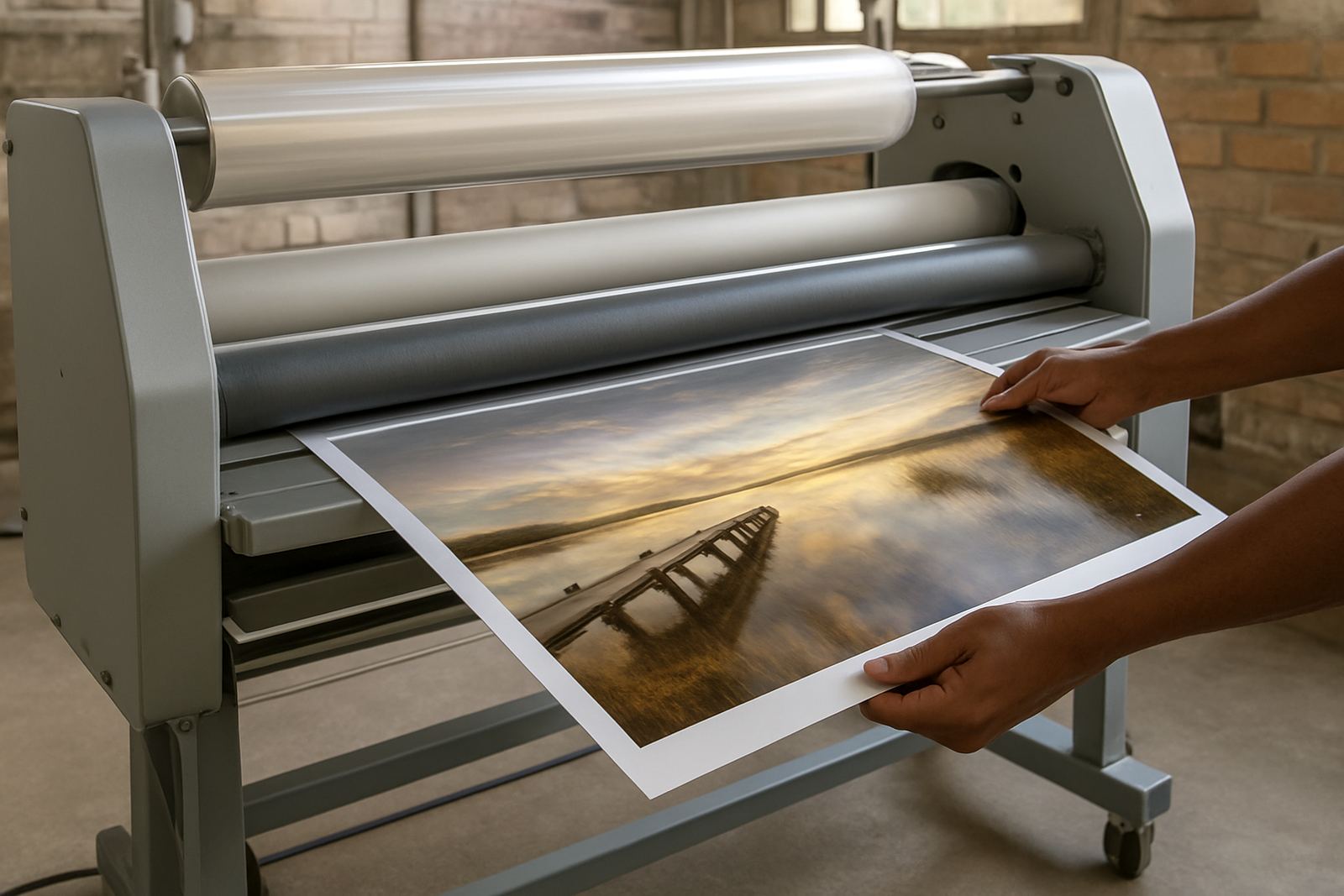
Before starting a wide-format job, let the machine and material settle in the same room for a while. This is especially important when stock has been stored in a different area, such as a cooler warehouse or a sunlit pallet near the loading bay. Film that is too cold when loaded can feed unevenly and may trap air at the edges.
Keep the area clean and free of direct sunlight on the feed side. A beam of hot afternoon sun on one roll can change the behaviour of the outer wraps. If your workshop has strong extract fans or air conditioning, do not point them straight at the machine. A constant draft across the web can shift tension and make registration harder to hold.
- Store film and prints in the same room for at least 12 to 24 hours where possible.
- Keep the floor dry and clear, especially near the unwind and rewind sides.
- Check that the machine is level before long production runs.
- Close roller doors during the actual lamination run if outside air is extreme.
For teams in Randburg or Sandton working through winter, a simple pre-start routine can save a lot of rework. It is cheaper to wait an hour than to scrap a full print because the film puckered halfway through the sheet. I have seen that happen on a busy Monday when the workshop was still cold and everyone wanted to get moving.
Signs the workshop is too cold or too hot
There are usually clear clues when the room is the problem. If the film feels brittle, the edges snap back and the web does not sit flat, the workshop may be too cold. If the film feels tacky, stretches too easily or starts to haze, the room and machine heat may be too high for the material grade.
Watch the output, not only the settings. A good operator can hear and see the difference. Changes in roller sound, a light squeak at the nip or a sudden need to increase pressure are often early warning signs. On some jobs, the first sign is a slight silvering on the edge, which is easy to miss until the whole sheet is already processed.
- Too cold: poor layflat, brittle handling, tension spikes and edge curl.
- Too hot: stretching, adhesive softening, bubble formation and gloss changes.
- Mixed conditions: one side of the sheet behaves differently from the other, especially near open doors.
If your room changes through the day, make notes against the time, weather and setting. After a few weeks, patterns start to show. That record is useful for both routine servicing and operator refresher training because it links the result to real site conditions, not guesswork.
Winter mornings, load-shedding and local workshop realities
South African workshops rarely run in ideal conditions all day. In Johannesburg, winter mornings can be sharp and dry, then warm up quickly by lunchtime. Add load-shedding and the room may cool down again after the machine stops. When power returns, heaters need time to stabilise and the first few metres may not match the rest of the run.
That is why many print shops in Kya Sand, Midrand and Pretoria build a short start-up procedure. They check the room temperature, power state and the condition of the rollers before committing to a large batch. A machine that has sat idle through an outage may need a quick inspection of the drive system and heat system before production begins.
In coastal areas the issue can be moisture rather than cold. Inland workshops often underestimate humidity after a rainy spell, and the stock can absorb just enough moisture to affect the finish. The fix is not complicated, but it does require discipline. Keep materials sealed where possible, watch the weather and adjust the machine in small steps instead of chasing the result with big changes.
When to call for servicing or a site check
If temperature adjustments no longer solve the problem, the machine may need attention. Rollers that are glazed, pressure that is uneven, a heater that drifts off target or an electrical fault can all mimic a room temperature issue. That is why a proper inspection matters before replacing film batches or changing workflow.
Our team handles routine servicing, roller cleaning, pressure calibration, heat system checks, drive system repairs, electrical fault finding, on-site breakdowns, spare parts support, operator refresher training and pre-purchase inspections. For businesses in Randburg, Sandton, Midrand, Pretoria and the East Rand, an on-site visit can save time when production is already behind. It also helps in smaller print shops where the same person is loading, running and finishing jobs all day.
If a laminator is fighting you every morning and behaving better by afternoon, do not assume it is just the weather. Sometimes it is, but a worn roller or drifting sensor can show the same pattern. A proper check brings the problem into focus and keeps the workshop moving without unnecessary trial and error.