Why storage matters before the roll even reaches the machine
Laminate film can pick up problems long before it is loaded onto a laminator. Heat, moisture, sunlight and poor handling all affect the way the film feeds, bonds and finishes. A roll that has been standing in a hot storeroom or leaning against a wall for months can look fine from the outside yet still cause tension issues, edge lift or a cloudy finish during use.
For print shops in Kya Sand, Randburg or Midrand, storage is not just housekeeping. It is part of quality control. When rolls are kept in the right conditions, the adhesive or coating stays stable, the core stays true and the roll winds off evenly. That means fewer interruptions on busy days and less material lost to test runs. It also helps with stock rotation, so older film gets used first instead of sitting for too long.
- Keep rolls in a cool, dry room with steady temperature.
- Store them away from direct sun and heaters.
- Do not stack heavy items on top of rolls.
- Label each roll clearly with size, finish and arrival date.
The right room conditions for South African workshops
South African conditions vary a lot from one site to the next. In Johannesburg you may deal with dry air and dust, while coastal areas such as Durban or Gqeberha bring higher humidity. Both can cause trouble if rolls are stored badly. Excess moisture can affect some films and create handling issues, while very dry air can encourage static on certain materials. The aim is not a perfect laboratory, but a stable room with sensible control.
A store room near a loading bay is often a bad choice if the door stays open all day. Dust gets into the edges of the wrap, moisture can creep in during rain and temperature swings can make rolls hard to handle. If your premises use backup power during load-shedding, avoid parking rolls beside generators or hot electrical boards. Heat build-up in small rooms is one of the quickest ways to shorten the usable life of film.
- Target a clean indoor space, not a passageway or outside lean-to.
- Avoid areas next to windows, skylights and roof sheets that get hot.
- Keep rolls away from chemicals, inks and cleaning solvents.
- Do not store rolls directly on concrete floors if the room gets damp.
How to stack, stand and move rolls without damaging them
How rolls are positioned matters just as much as where they are kept. Many teams leave rolls standing on end because it seems neat, but tall rolls can fall, dent the cores or pick up flat spots if they are knocked repeatedly. Very large rolls should be supported properly and not left where fork lift traffic or trolleys can bump them. The outer wrap should stay on until the roll is needed, because it protects the edges from dust and handling damage.
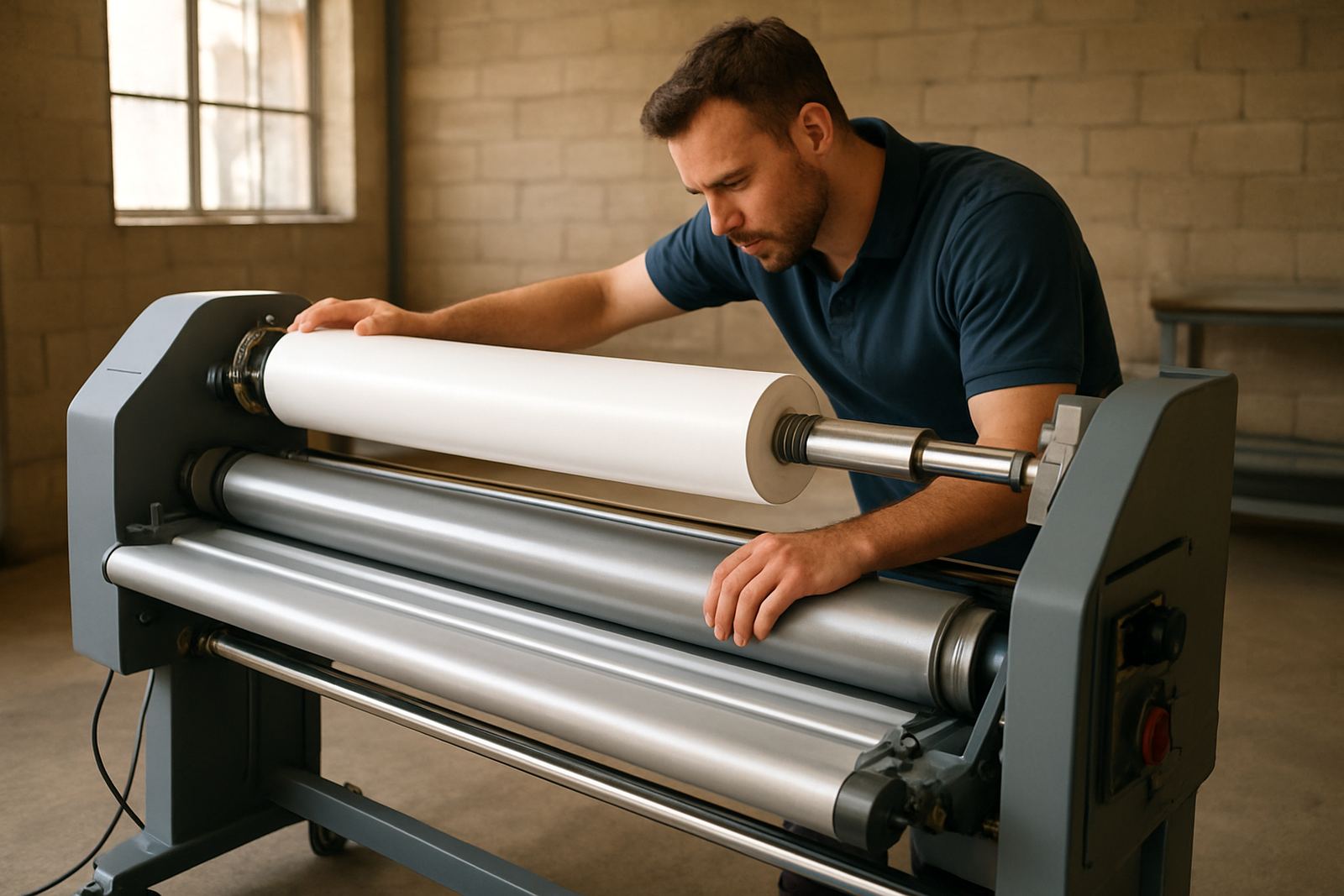
When moving rolls, lift from the core or use a proper handling method for the weight involved. Dragging a roll across a rough floor can scratch the film and damage the edge, which then shows up later as tracking problems during lamination. If a roll has been opened, reseal it neatly so the leading edge stays clean. Small habits save time, and they save material too.
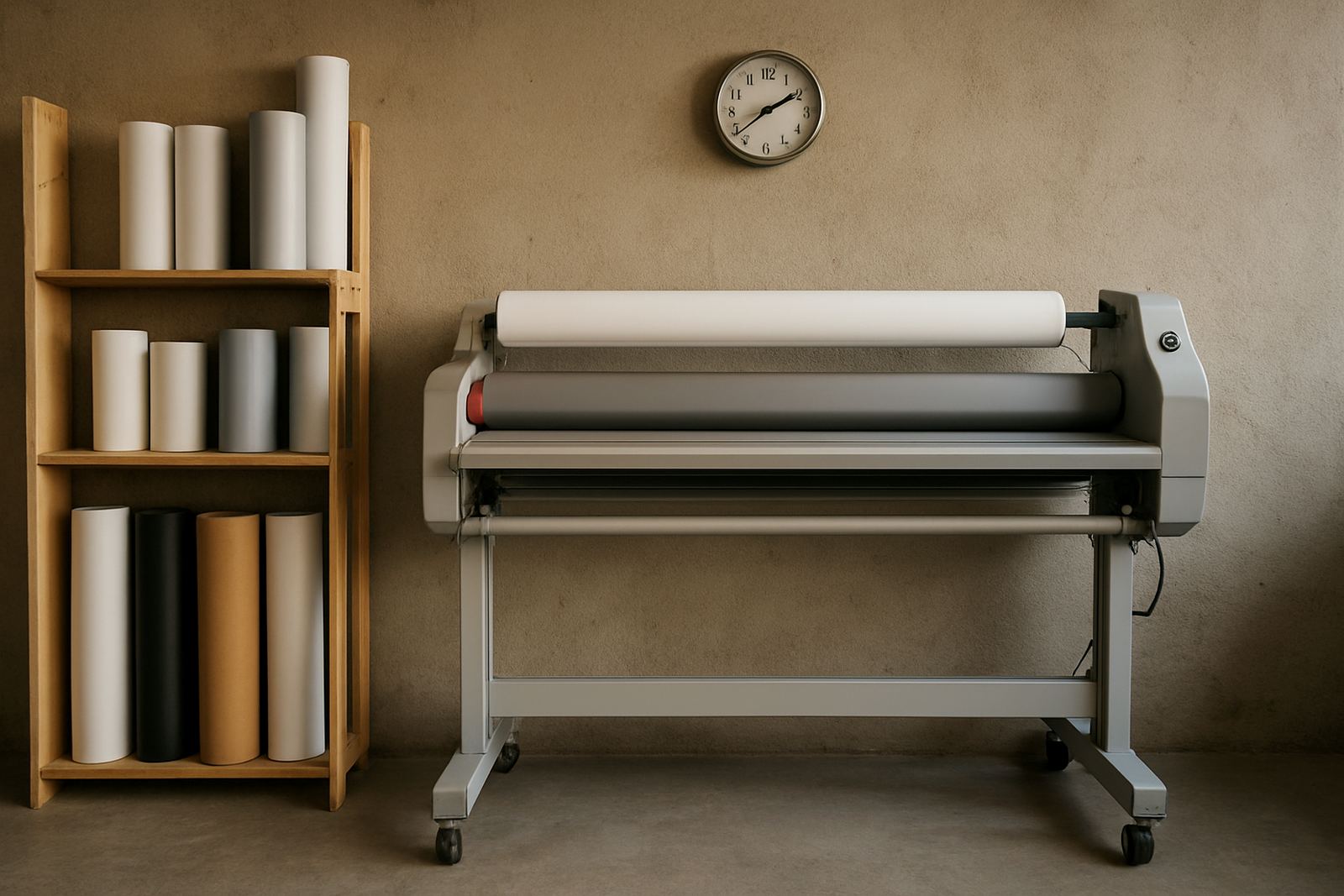
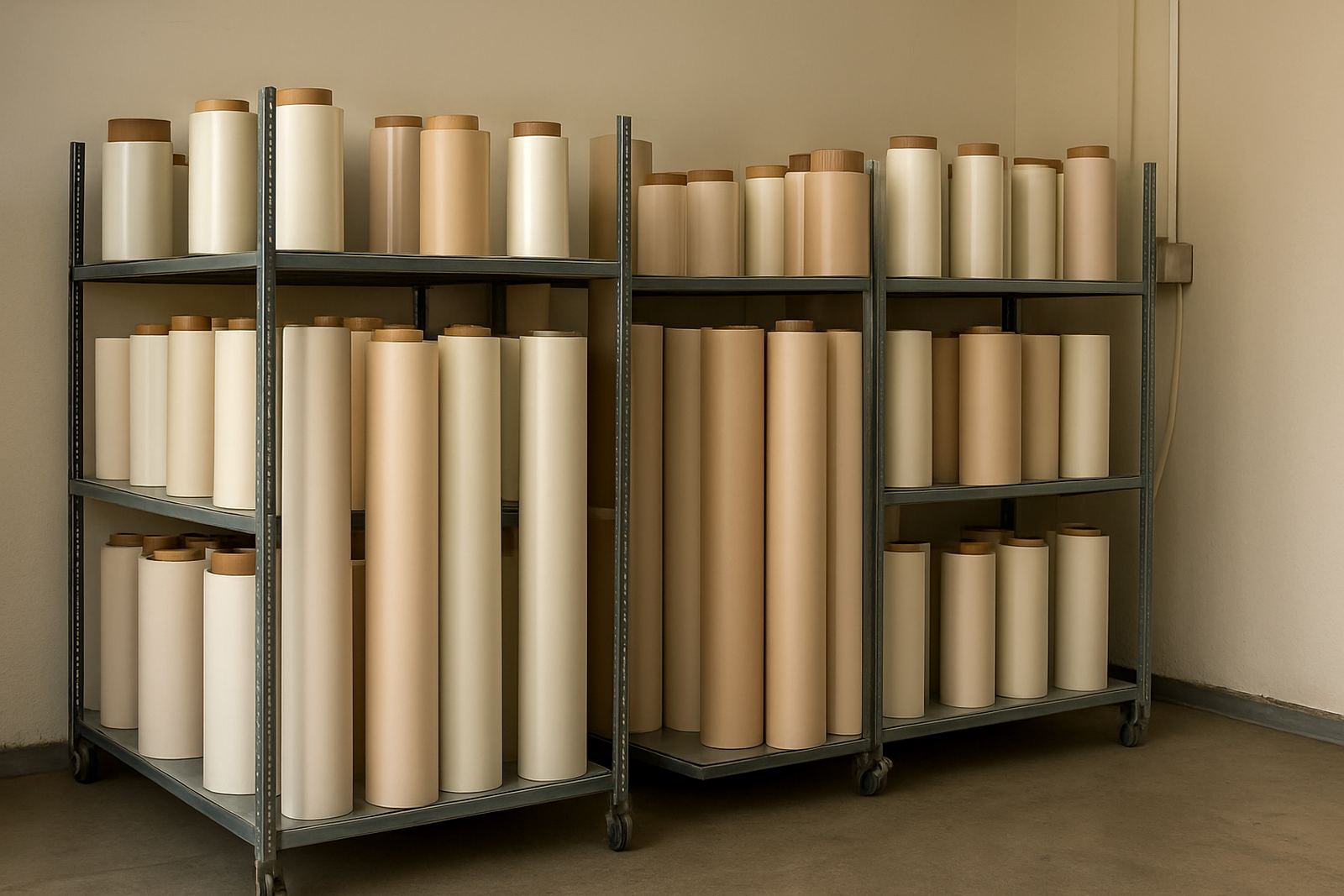
- Use racks or support rails sized for the roll diameter.
- Keep rolls level so the core does not distort.
- Move one roll at a time where possible, especially wide formats.
- Protect open rolls with a clean cover or sleeve when not in use.
First in, first out keeps film fresher and stock easier to control
Good storage is not only about physical space. It also depends on stock control. A simple first in, first out system helps shops use older rolls before newer deliveries, which reduces the chance of film sitting too long on the shelf. This is especially useful when you carry multiple widths and finishes for different jobs. If stock is not tracked properly, the same size roll can be forgotten at the back of the room while newer stock gets used first.
Many smaller print businesses in Sandton or Pretoria can improve this with a basic shelf label, batch note or spreadsheet. Write down the date each roll arrived, its width, finish and where it is stored. That is enough to avoid most stock confusion. It also helps when a customer asks for a rush job and you need to know exactly what is available without opening every roll in the store room.
- Mark each roll as it arrives.
- Separate matte, gloss and special finishes.
- Keep narrow and wide rolls in different zones.
- Check older stock before placing a new order.
A Kya Sand example: fewer failures start in the storeroom
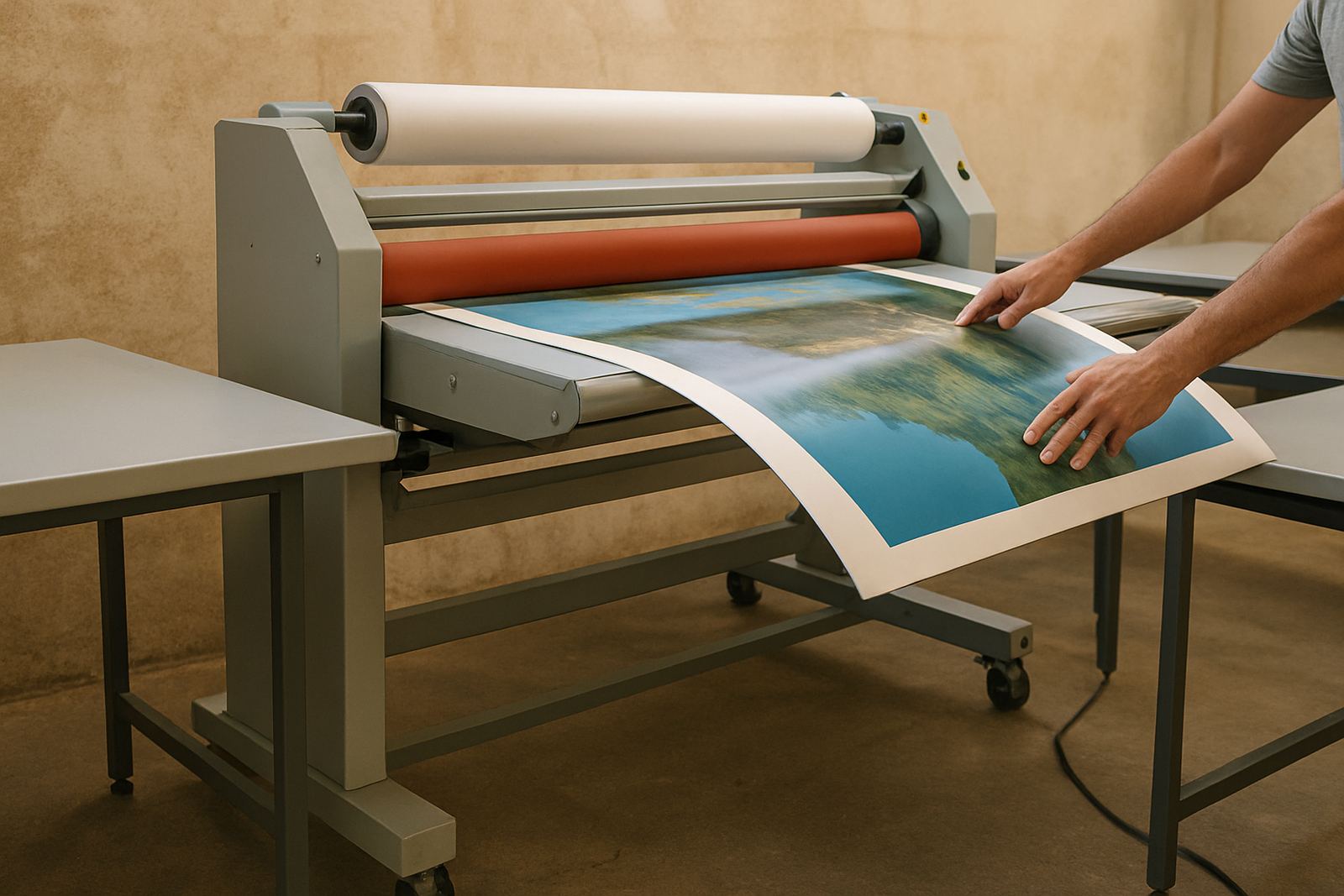
We often see the same pattern in Johannesburg workshops. A customer in Kya Sand phones because a roll is feeding poorly, but the real issue started weeks earlier in storage. The roll may have been kept near a sunny roller door, stacked under board cartons or left in a warm corner during load-shedding. By the time it reaches the machine, the film is already difficult to work with and the operator is left troubleshooting pressure, heat and tracking when the root cause is storage.
A better routine is simple. Store the rolls on a clean rack, keep the room closed during the day, and inspect the wrap before opening. If a roll looks damaged, out of round or contaminated, set it aside rather than forcing it through a production run. That one decision can save a reprint, a customer complaint and a wasted afternoon. For busy teams, especially in areas like Randburg, Midrand and the East Rand, that is money well kept.
If your operation needs help with roller cleaning, pressure calibration, heat system checks or a pre-purchase inspection, it is worth getting advice before stock starts causing repeat faults. Proper storage and a well set machine work together, and both matter if you want consistent results.