Why satin often works better than a full gloss
Satin finish sits between matte and gloss, which is why it gets used so often on work that must look neat in a shop, office, gallery or showroom. It gives prints a soft surface sheen without the mirror effect you can get from gloss. That matters in places with strong daylight, strip lighting, and glass fronts where glare can hide detail.
For print shops in Johannesburg, this middle ground is useful because customers often want colour that looks rich but still readable. A satin surface keeps dark areas from looking flat, while reducing the sharp reflections that can make text or fine artwork harder to view. That balance is useful on menus, promotional boards and framed pieces where the viewing angle changes through the day.
It also helps when work is handled often. Gloss can show fingerprints and scuffs quite quickly, while matte can mark more easily if the surface is rubbed. Satin gives a more forgiving finish for pieces that move from counter to boardroom to display wall.
Where satin finish gives the best result
Satin finish is a good fit for applications where people need to see colour clearly, but do not want high glare. It is especially useful on items that are viewed at close range or under varied lighting. In Sandton offices, for example, presentation prints can look too shiny under downlights if they are fully gloss, while matte can sometimes dull the image too much. Satin usually lands in the middle nicely.
- Retail point of sale graphics that need clean colour and less reflection
- Artwork reproductions where detail matters and the surface must stay easy on the eye
- Certificates, menus and signage handled often by staff or clients
- Photo panels for reception areas, showrooms and waiting rooms
- Posters and display boards used in schools, clinics and municipal spaces
For businesses near coastal areas, satin can also be practical because it hides some surface handling better than high gloss. It is not a cure for poor storage, but it gives the final piece a better chance of staying presentable between installations.
The difference satin makes to colour and detail
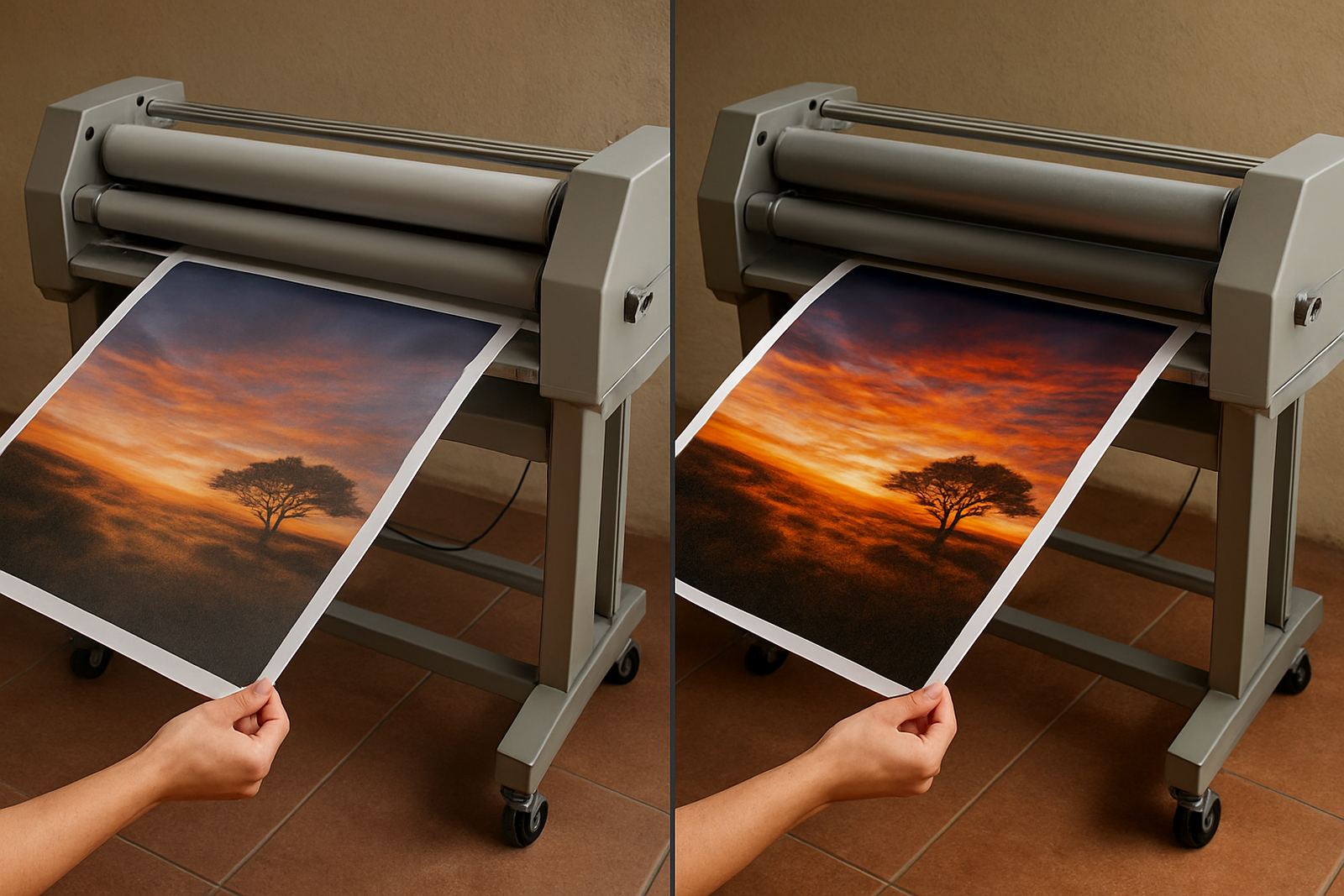
People often assume gloss always makes colour look stronger. That is not always true. Gloss can make certain reds, blues and blacks appear deeper, but the reflected light can reduce legibility. Satin usually keeps the colour punch while allowing the viewer to read detail more easily.
That is one reason graphic designers and artists ask for satin when they are printing exhibition work or client proofs. Fine lines, gradients and skin tones can look more controlled because the surface is not throwing back as much light. On large-format prints this matters even more, because a bright patch from a window or tube light can interrupt the whole image.
In a Kya Sand print shop, a satin-laminated sample board can often look more balanced than the same image finished in full gloss. The colours still have life, but the viewer does not have to move around so much to avoid reflections. For product displays and branded graphics, that is a real advantage.
Handling, cleaning and everyday wear
Satin surfaces are usually easier to live with in busy environments because they do not show every mark straight away. That makes them useful for reception counters, sample boards and training material that gets passed around. They are also easier to clean than untreated printed surfaces, provided the right cleaning method is used.
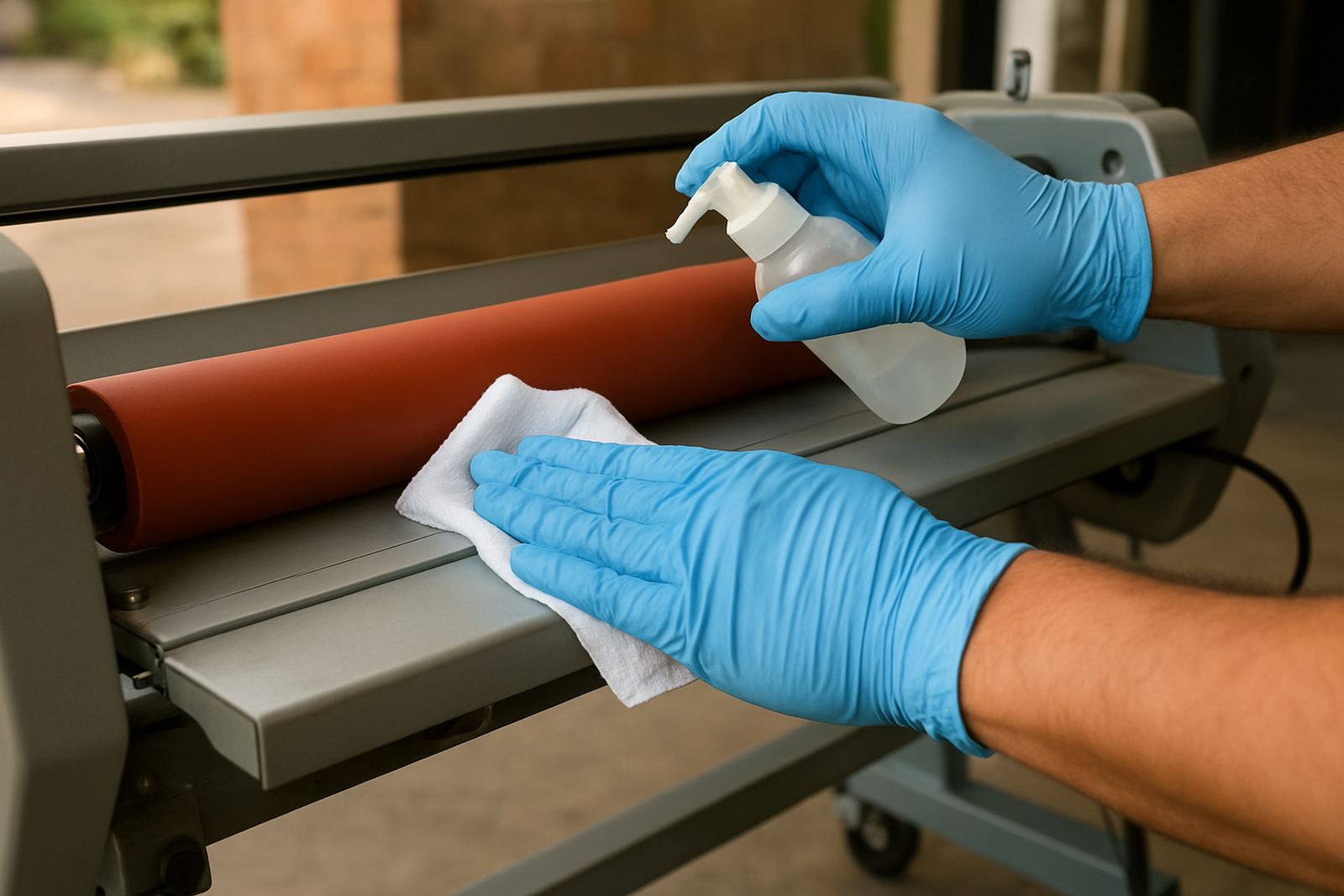
For most applications, a soft dry cloth or lightly damp microfibre cloth is enough. Harsh chemicals, rough pads and repeated wet cleaning can still damage the surface, so staff training matters. If the print will be handled daily, it is worth matching the laminate type to the amount of use it will see.
- Use soft cloths only, not abrasive paper or scouring pads
- Avoid solvent-heavy cleaners unless the surface is rated for them
- Store sheets flat and away from heat sources
- Allow enough curing time before stacking or packing
These small habits make a proper difference. A satin finish will last longer if the operator understands how to handle the print after lamination, and not just during the job itself.
Why satin can save time for installers and sign writers
Installers often prefer satin because it hides minor surface imperfections better than gloss. That can help where walls are not perfectly even or where the viewing distance is short. It is also easier on the eye in locations with lots of natural light, which is common in office parks and retail corridors around Gauteng.
For sign writers and finishing teams, satin can reduce call-backs about glare or shiny patches. If a client stands in front of a window and complains that they cannot read the print, that becomes an extra site visit and extra cost. Choosing satin from the start can avoid that problem.
It is also a sensible choice for installations near busy roads or shopfronts where dust builds up quickly. The finish does not look overly shiny after a few days of cleaning and handling, so the work keeps a more even appearance.
Picking the right laminator for satin work
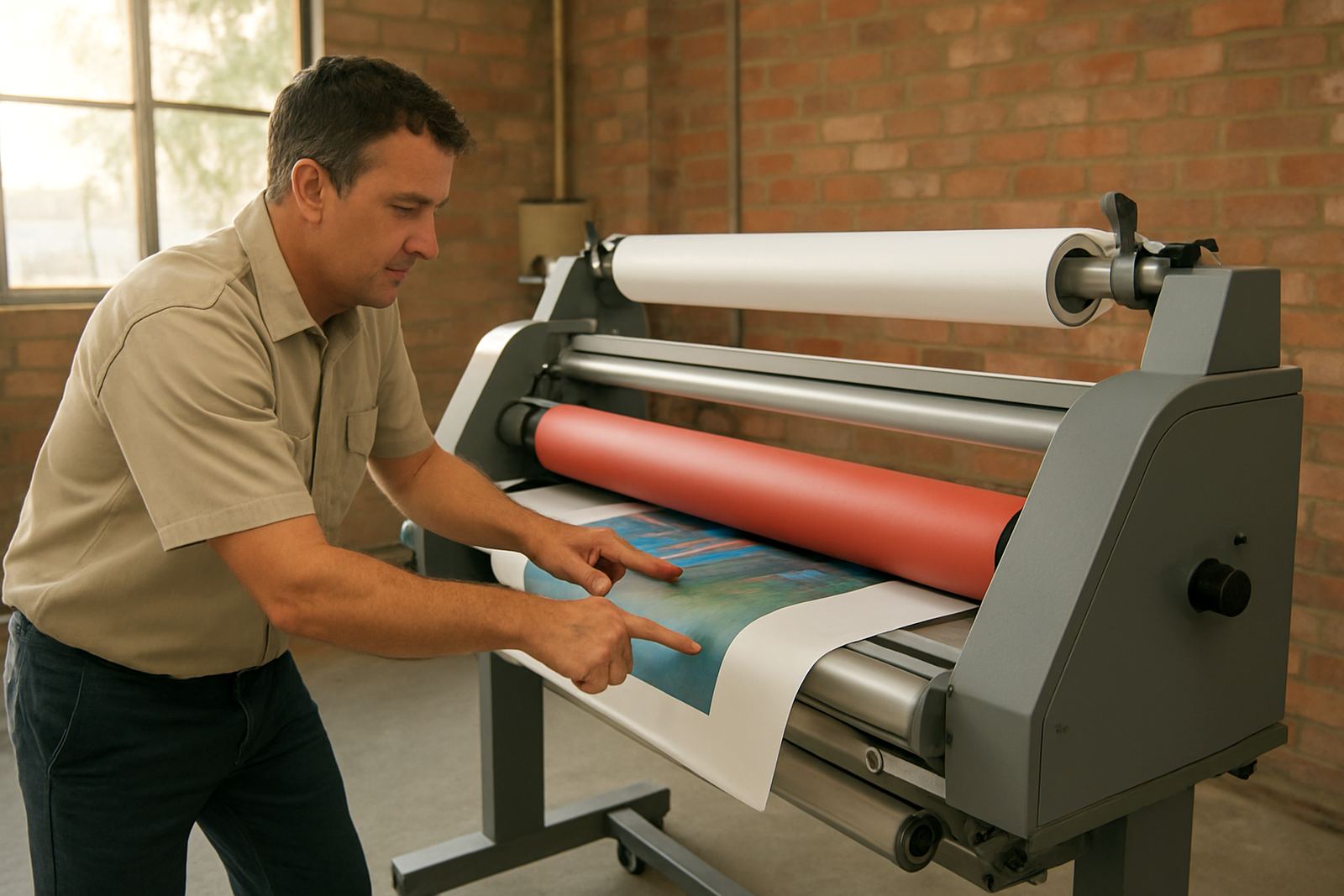
Getting a good satin result is not only about film choice. The laminator must apply even pressure and stable heat where required, with clean rollers and accurate tension control. If pressure is uneven, satin surfaces can show waves, silvering or inconsistent sheen across the width of the sheet.
For wide-format work, print shops should pay attention to roller condition, heat system checks and drive alignment. This is especially important in South Africa where power interruptions and load-shedding can affect machine settings and workflow. A machine that comes back on with poor calibration can waste material fast.
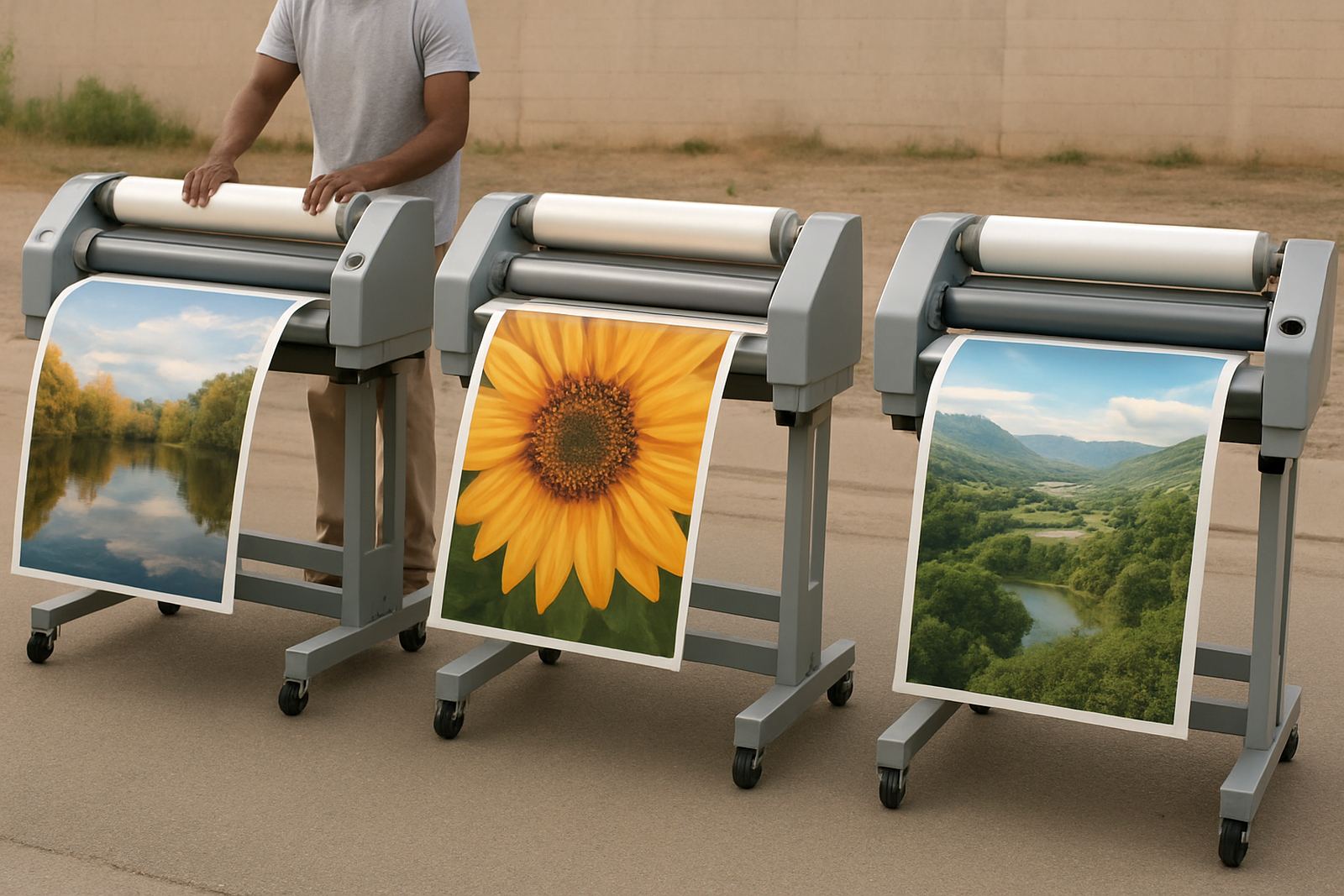
If you are running jobs in Kya Sand, Randburg or Midrand, it helps to choose equipment that suits the mix of work you actually do. Short-run artwork, signage and presentation boards may need different settings from high-volume roll work. A proper pre-purchase inspection can save a lot of trouble later on.
- Check whether the machine handles both cold and hot laminating needs
- Confirm roller width matches your most common print size
- Ask about spare parts support and routine servicing intervals
- Make sure your team can do basic operator checks between jobs