
Where Film Waste Usually Starts in a Print Shop
Most film waste is not a machine problem on its own. It comes from small habits that add up during the day: loading the wrong width, running short test pieces for no reason, trimming before the job is fully cooled, or setting up each print as if it is a one-off. In busy shops around Kya Sand, Randburg and Sandton, those mistakes can mean a whole roll disappears faster than planned.
Wide-format laminating is often judged on the final finish, but the real savings come from what happens before the sheet goes in. If operators do not standardise job sizes, they leave too much border for trimming. If rolls are stored badly, dust and humidity can damage edges and create rejects. And if the machine is not checked for pressure or heat consistency, the operator starts chasing problems with extra film.
- Use the correct roll width for the job instead of oversizing by habit.
- Keep common print sizes grouped together for better nesting and trimming.
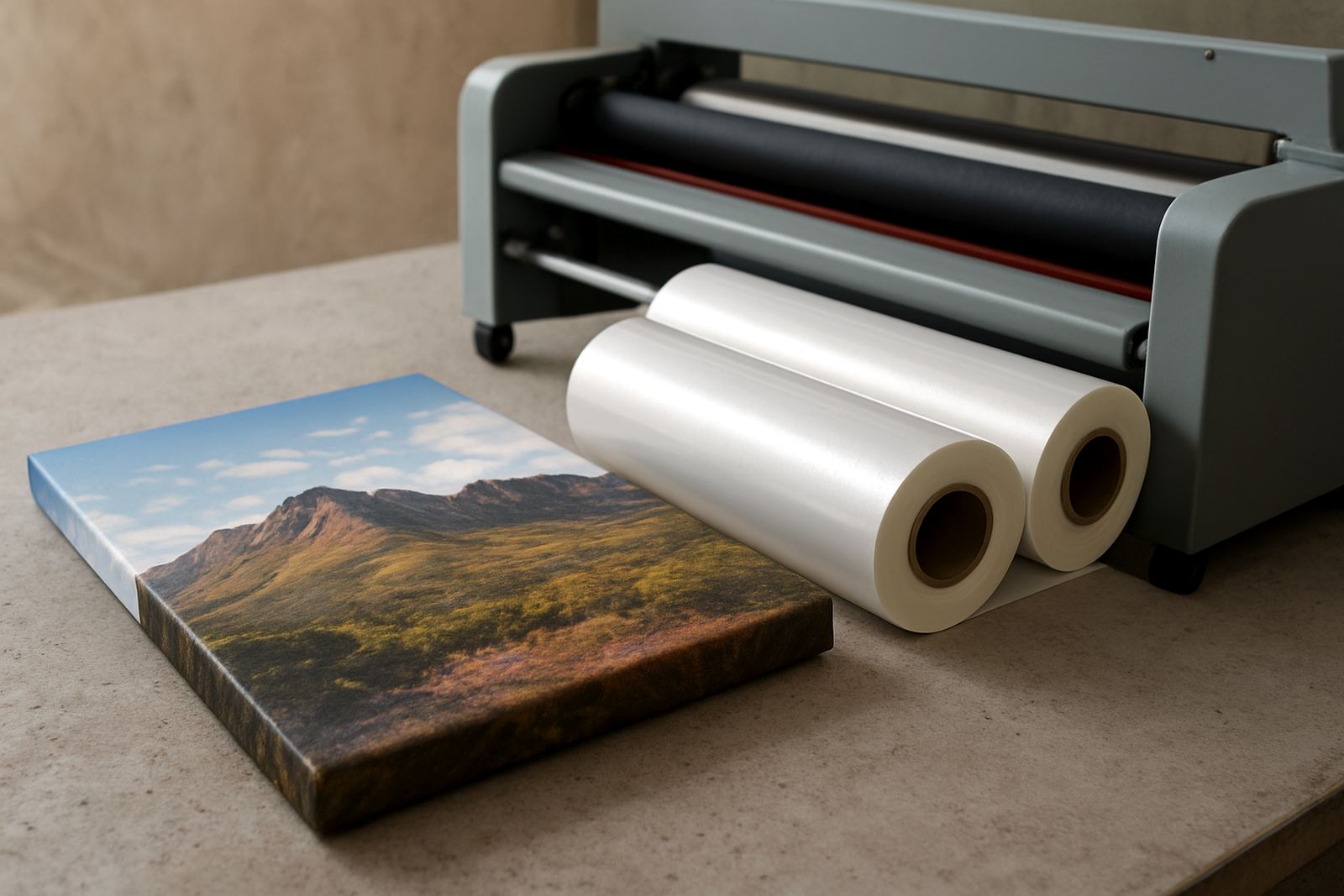
- Store rolls flat or properly supported to prevent edge damage.
- Train operators to spot setup errors before the full run starts.
Plan Jobs Around Standard Sizes and Nesting
One of the easiest ways to reduce film waste is to plan work around standard sizes. If your shop regularly handles A1 posters, pull-up graphics, directional signage and artwork mounts, it helps to keep a fixed list of common sheet sizes. That makes it easier to position jobs on the roll with less dead space between pieces.
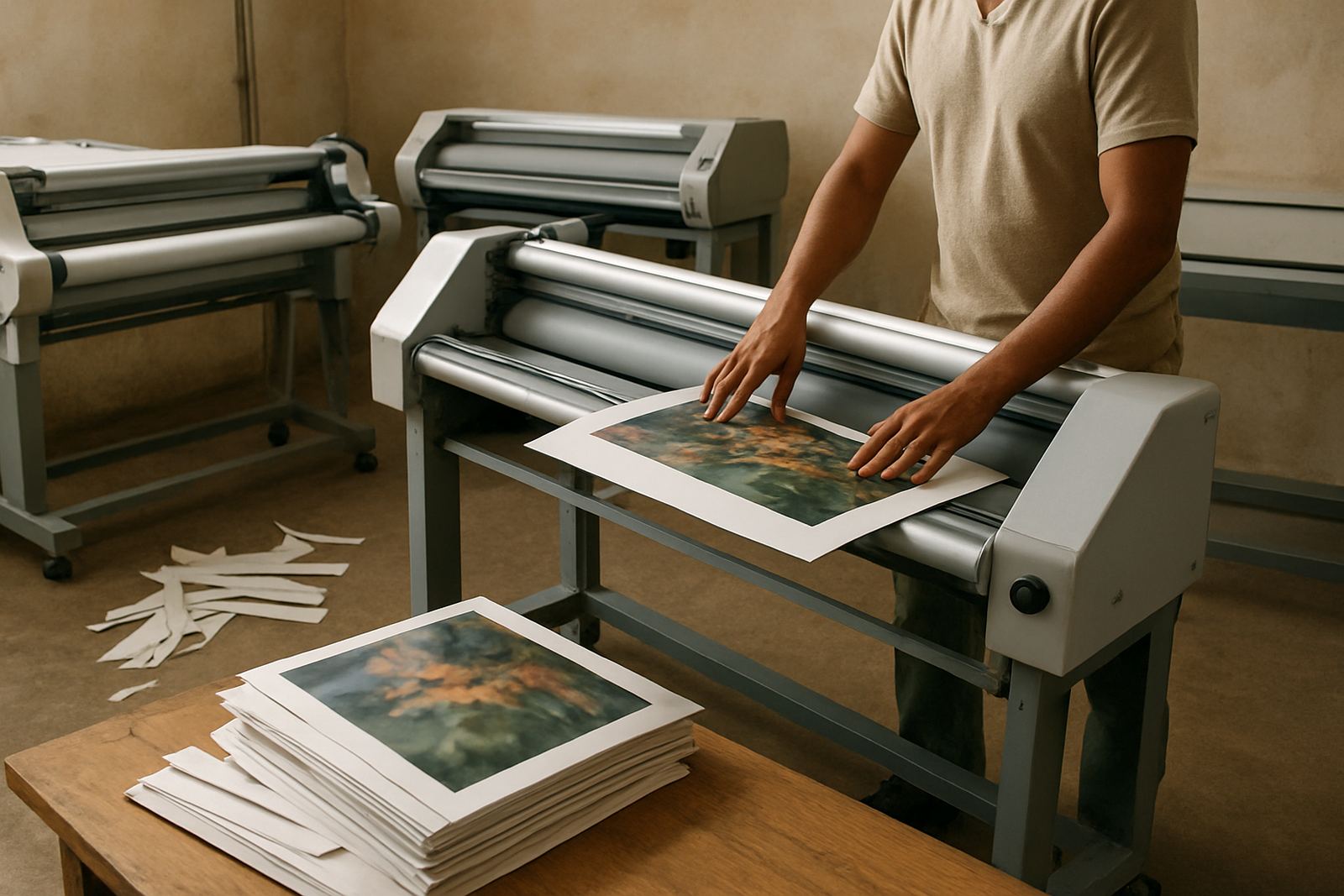
When artwork is laid out without thought for nesting, the operator often ends up trimming away usable film. A better approach is to group similar jobs together, especially when the print width allows two narrow panels to run side by side. This is practical in commercial print rooms in Midrand and Pretoria, where daily volumes can change quickly and every metre counts.
- Group narrow jobs together before starting the laminating run.
- Leave only the trim margin you actually need for finishing.
- Record the most used job widths for faster planning.
- Match roll width to the average job mix, not just the biggest job.
Match Film Type to the Real Job, Not the Worst Case
Another source of waste is using a heavier or wider film than the job needs. Shops sometimes default to the same consumable for every print, even when the artwork will live indoors and does not need the same level of protection as outdoor graphics. That pushes up cost per square metre and leaves more offcut than necessary.
For short-life promotions, presentation boards or indoor artwork, a lighter film may be enough. For high-touch items, event signage or work that will travel between venues, a tougher film makes more sense. The trick is to set a simple internal rule so staff are not guessing on the floor. This helps the customer too, because they are not paying for excess film they do not need.
In coastal areas, especially when work is sent to Durban or the South Coast, moisture can affect storage and edge quality. In Johannesburg, dust is often the bigger issue. The point is to use the correct film for the actual environment, not the most expensive option by default.
Keep the Machine Set Correctly Before Every Run
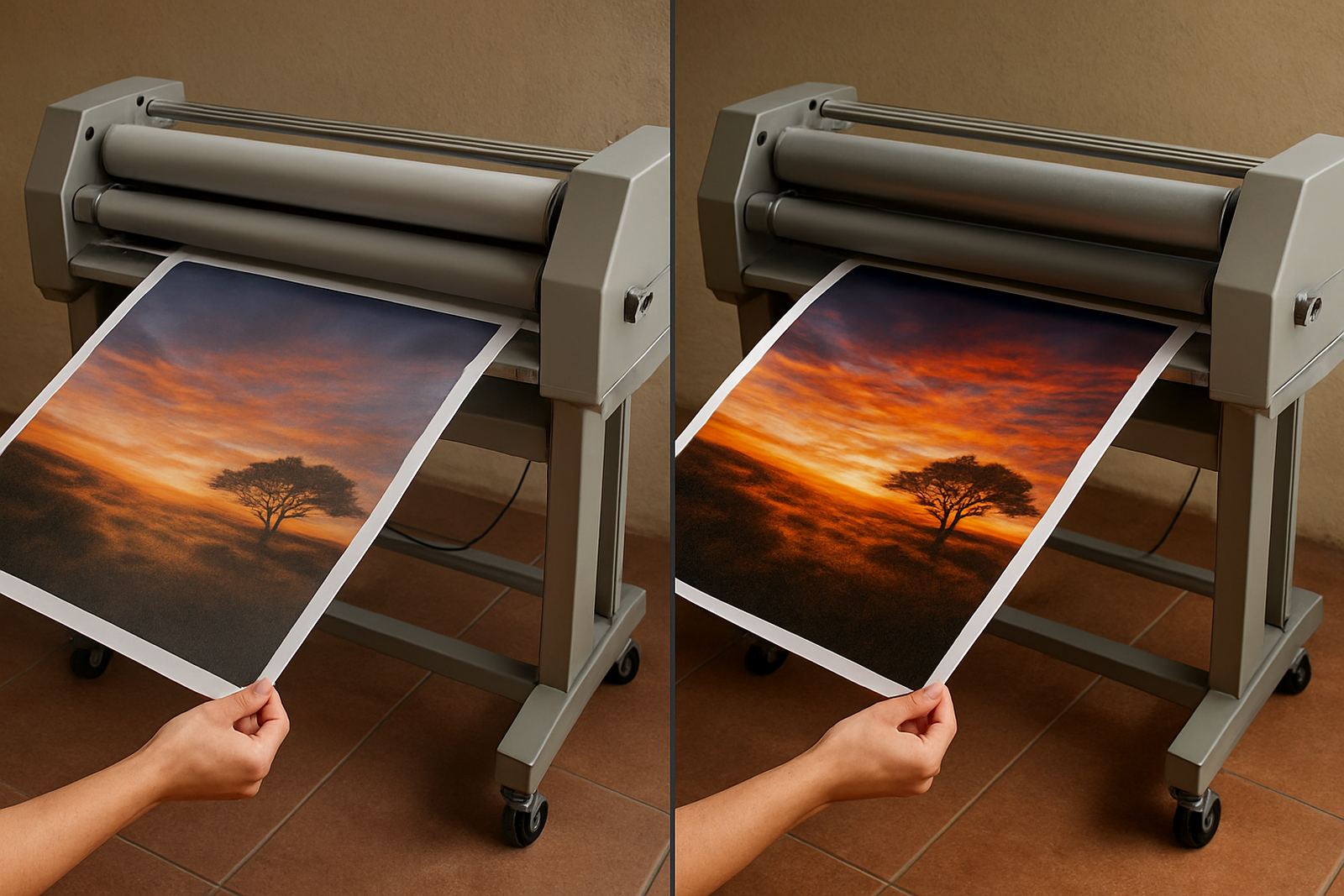
Waste rises fast when pressure and heat are not consistent. A film that is too hot can curl, mark or stretch. Too little pressure can leave bubbles or patchy adhesion. Operators then re-run sheets, trim more aggressively, or scrap the job entirely. That is why routine servicing matters, even when the laminator still looks fine from the outside.
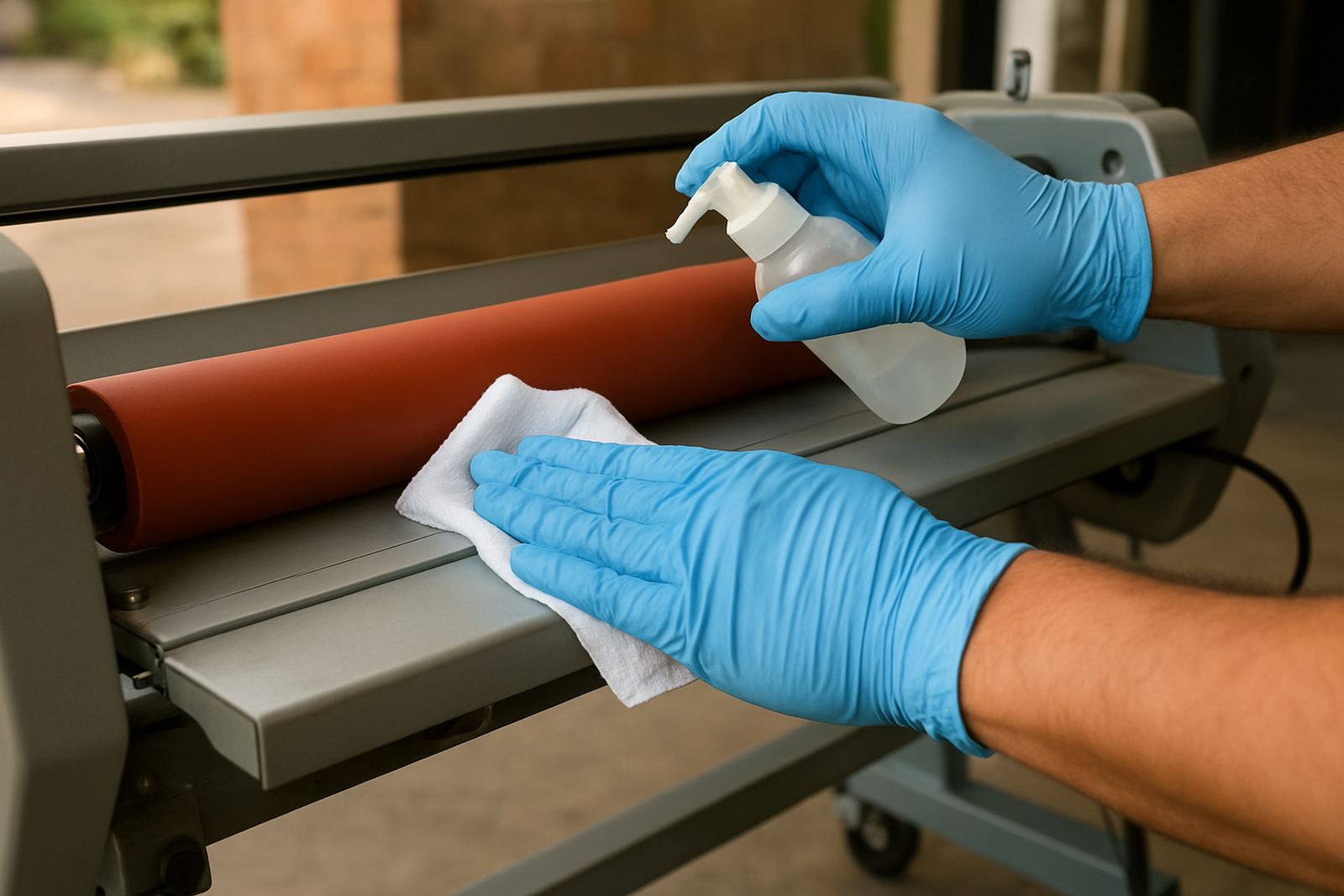
Simple checks before a run can prevent a costly batch of offcuts. Roller cleaning removes residue that affects finish. Pressure calibration helps the laminate lay down evenly. Heat system checks catch uneven temperature across the width. Drive system repairs stop feeding issues that pull the film off line. These are not extras, they are part of keeping consumable use under control.
- Clean rollers before long runs and after sticky media.
- Check heat settings against the film type being used.
- Test pressure on a short sample before starting full production.
- Watch for uneven feed marks, wrinkling or edge lift early.
Train Operators to Reduce Trial-and-Error
Good operators waste less material because they know what to look for before something goes wrong. A refresher session can save more than a costly new roll. Staff should know how to load film square, how to align artwork, how to read surface tension and when to stop a run instead of pushing through a fault.
In smaller print shops, one person often handles setup, trimming and packing. In larger premises across Sandton, East Rand or Pretoria, different team members may handle each stage. That makes operator training even more important because the person loading the film may not be the one who notices the problem at the end. A short refresher every few months keeps everyone sharp and reduces scrap from simple handling errors.
It also helps to keep a basic log of waste reasons. If you see the same fault coming up, such as edge lift on one machine or wrinkles after lunch breaks, you can fix the cause instead of just cutting around it.
Keep Spare Parts and Checks Close to the Floor
Film waste often rises when a machine sits idle waiting for a minor repair. A worn roller, weak sensor or unstable electrical supply can turn a full production day into a recovery day. In Gauteng, where load-shedding and electrical fluctuations still affect planning, shops need machines that are checked properly and kept ready for use.
Having spare parts support and on-site breakdown help reduces the chances of finishing a job by guesswork. It also protects stock already opened for a run. If a problem is identified early, you can save the film, finish the sheet cleanly and avoid opening another roll just to cover a fault. For shops in Kya Sand and nearby industrial areas, that is a direct saving on both material and labour.
- Keep commonly replaced parts available before they fail.
- Book pre-purchase inspections before adding a second machine.
- Use service visits to check both mechanical and electrical wear.
- Do not ignore small feed or temperature changes, they usually grow.
A Kya Sand Example: Less Waste, Better Daily Output
A local print shop in Kya Sand handling retail graphics and short-run posters was losing film through repeated trimming and a few bad starts each week. The team was using the same setup for every job, even when the print width was narrow. After changing the workflow, they grouped similar jobs, tightened trim allowances and started checking pressure before each batch. They also cleaned the rollers more often and logged recurring faults.
The result was not dramatic in one day, but over a month the shop used fewer offcuts and spent less time re-running sheets. The operator also stopped opening new rolls as often, which helped during busy periods when stock had to last until the next delivery. Small changes made the difference, not one big fix.
That is usually how film waste gets under control. You do not need complicated systems. You need a sensible layout, the right machine settings and a habit of checking the obvious things before the roll is committed.