Why canvas needs a different approach to flat artwork
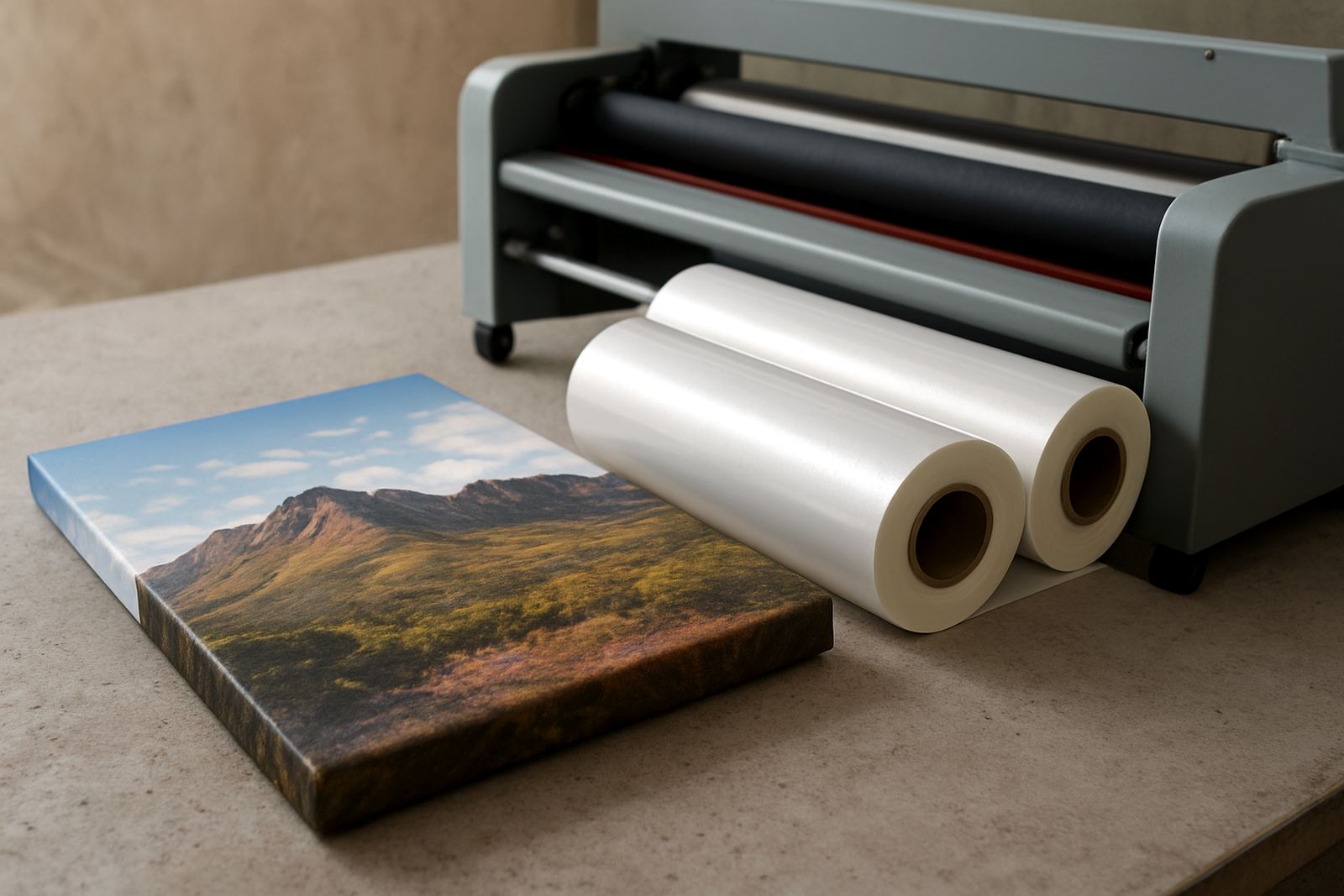
Canvas is not the same as a board-mounted poster or a vinyl graphic on glass. The woven texture creates tiny peaks and valleys, so a film has to bridge that surface without trapping air or muting the print too much. If the canvas is stretched on a frame, there is also movement to think about, especially when the fabric tightens or relaxes with changes in temperature and humidity.
For print shops in Johannesburg, Randburg or Midrand, that movement matters more than many people expect. A canvas that looks perfect in the morning can behave differently by the afternoon if it has been near an open loading bay or a sunny window. Protective film should support the print, not fight the material underneath it.
- Canvas texture can show through a film if the adhesive is too stiff.
- Latex, solvent and pigment inks each react differently to pressure and heat.
- Framed canvas may need edge care so the film does not lift at the wrap.
Choosing between cold and hot roll film
For most printed canvas work, cold application is the safer first choice. It avoids unnecessary heat, which can soften some inks or change the tension in the canvas. Hot roll laminating has its place, but it must be matched carefully to the print and the canvas weight. On lighter decorative pieces, too much heat can leave the surface looking slightly wavy, or cause the canvas to pull unevenly at the corners.
In practical terms, the decision depends on the finish required and the print process used. A gallery piece in Sandton might need a softer, low-glare surface, while retail artwork destined for a busy office in Pretoria may benefit from a tougher, easy-clean layer. Either way, test a short sample before running a full batch. That small step saves time and avoids reprints.
- Cold film suits heat-sensitive work and many stretched canvases.
- Hot roll film can help on heavier, well-cured prints where added flattening is acceptable.
- Always check drying or curing time before applying any protective layer.
Finish, gloss level and how the image will actually look
Protective film changes how a canvas print is seen. Gloss can deepen colour and make dark areas look richer, but it also shows reflections from lights, windows and display spots. Matte reduces glare and is often preferred for artwork, yet it can slightly soften contrast. Satin is a useful middle ground for many commercial prints.
For customer-facing work, it helps to look at the print under real lighting. A piece intended for a reception area in Kya Sand may face LED downlights all day, while a home interior in the East Rand could have natural light from one side only. If you test only under workshop lighting, the result can be a surprise on site.
- Gloss gives stronger colour but shows fingerprints and reflections more easily.
- Matte hides glare, though very fine detail may look less crisp.
- Satin is often the safest choice when the final room is not yet known.
Surface prep before the film goes down
Canvas prints need proper curing and clean handling before protection is applied. Dust, loose fibres and moisture can all show through once the film is on. If the print was handled with bare hands, skin oils can affect adhesion at the edges and around high-ink areas. Let the piece settle on a clean, flat surface and inspect it under bright light before starting.
South African workshops know the effect of dust and dry air, especially in areas close to open yards or active machine rooms. In summer, a canvas can pick up static and small particles very quickly. That is why many installers keep the work area swept, the rollers cleaned, and the film stored away from direct sunlight. It sounds basic, but it makes a real difference.
- Allow ink to dry fully before laminating or coating.
- Wipe down the work area and use lint-free handling where possible.
- Check for loose threads, raised fibres and corner damage before film is applied.
Common failure points after installation
Most problems appear after the piece has left the workshop. Edge lift is common when the canvas wrap is tight or uneven. Silvering can happen if the adhesive does not settle well into the texture. Bubbles may appear later if the print had hidden moisture, or if the film was applied too quickly on a cold morning. On larger work, even a small alignment error can become obvious across a metre-wide panel.
We often see this on jobs where a print was prepared for installation in a space with no temperature control. A canvas heading out to a restaurant in Durban or a school corridor in Pretoria can experience quite different conditions during transport. If the film and canvas are not matched properly, the work may look fine in the shop and then fail once it warms up on site.
- Edge lift often starts at corners or wrapped sides.
- Silvering is more visible on darker artwork and textured canvas.
- Heat, moisture and pressure must be controlled together, not one at a time.
A local example from workshop to wall
A print shop in Midrand recently asked for help with a set of large canvas panels for a corporate reception area. The artwork looked sharp, but the team wanted better protection against dust and handling because the pieces would be mounted near a busy entrance. The first step was checking the cure time on the prints and confirming the canvas weight. After that, a small sample was run with a low-glare protective film and inspected under the same lighting used in the office.
The sample showed that a high-gloss finish would have reflected too much from the overhead fittings, while a flat matte finish dulled the darker sections too much. Satin gave the right balance. The final panels held their colour, looked clean from normal viewing distance and could be wiped down without stressing the surface. That is the sort of decision that saves rework and keeps the end customer happy.
If you are working on similar jobs around Kya Sand, Sandton, or Pretoria, it helps to think beyond the film itself. Transport, curing, dust, humidity and the final display location all matter. Good protection is not only about making a print tougher, it is about matching the right process to the right canvas.