
Why humidity matters before the first sheet goes in
Most laminating problems start before the print reaches the rollers. Film, adhesive, paper and artwork all respond to moisture in the air, and that matters whether you are running a busy print shop in Kya Sand or finishing posters for a client in Pretoria. When the air is damp, the film can pick up moisture at the edges. When conditions are very dry, static becomes the bigger issue and sheets may cling, misfeed or attract dust.
In practical terms, humidity changes how the film lays flat and how cleanly it bonds. A print stored in a humid room can feel slightly soft or wavy. If you laminate it immediately, trapped moisture can show up as bubbling, hazing or a patchy finish. On the other hand, if the room is too dry, especially during load-shedding when aircon and extraction fans are off, static can pull in grit and give you a rough finish that needs rework.
For operators, the message is simple: do not treat film handling as a separate step from print storage. Keep stock, output and the laminator in conditions that are as stable as possible. That small bit of control often saves more time than any adjustment at the machine.
What Johannesburg weather does to film and prints
Johannesburg is not coastal, but Kya Sand, Randburg and Sandton all see enough seasonal change to affect finishing. Summer storms can push indoor humidity up quickly, especially in workshops with roller shutter doors opening and closing all day. In winter, the air is drier and static becomes a regular complaint. Midrand and the East Rand can also see wide swings in temperature between early morning and late afternoon, which is hard on stacked materials.
Coastal humidity is a different story. If you are sending jobs to Durban, Gqeberha or coastal clients from a Gauteng base, the film may travel from dry storage into a far damper environment. Prints that looked perfect in a dry room can start to curl by the time they reach a humid site. That is why installers and print shops serving nationwide need to think beyond the machine room and consider where the finished job is going.
- Store film in sealed packaging until use.
- Let prints acclimatise to the room for a few hours.
- Avoid laminating straight after inkjet or toner output if the surface still feels cold or damp.
- Keep boxes off the floor in case of condensation after a rainy night.
Signs that moisture is affecting your finish
If humidity is the problem, the laminator usually tells you before a full failure happens. Operators in busy shops often spot the same clues again and again. The film may look slightly cloudy after application. Edges can lift on one side. Sheets may take on a ripple pattern, or the finished piece may curl as it cools. Sometimes the result looks fine at first, then shows defects once it is trimmed and stacked.
Another common issue is silvering, where tiny pockets of air or moisture give the laminate a dull, speckled look. This is especially frustrating on dark artwork, vehicle graphics mock-ups, presentation boards and photographic prints. If the print has absorbed moisture, the laminate may not bond evenly, and the finish can lose that clean, professional look clients expect.
- Cloudy or milky patches after lamination
- Edge lift or lifting corners
- Print curl after cooling
- Fine bubbles or silvering in dark areas
- Uneven adhesion across the width of the sheet
If these symptoms show up often, do not only chase the operator setting. Check storage, room humidity and the condition of the rollers. A roller with residue or uneven pressure can make a climate issue look worse than it is.
Handling film properly in humid and dry rooms
Good film handling is mostly about consistency. Keep rolls in their packaging until needed, and store them away from open doors, direct sun and concrete floors that hold moisture. In Kya Sand industrial units, mornings can be cool and damp inside while the sun bakes the roof later in the day, so it helps to give film and prints time to settle before a run.
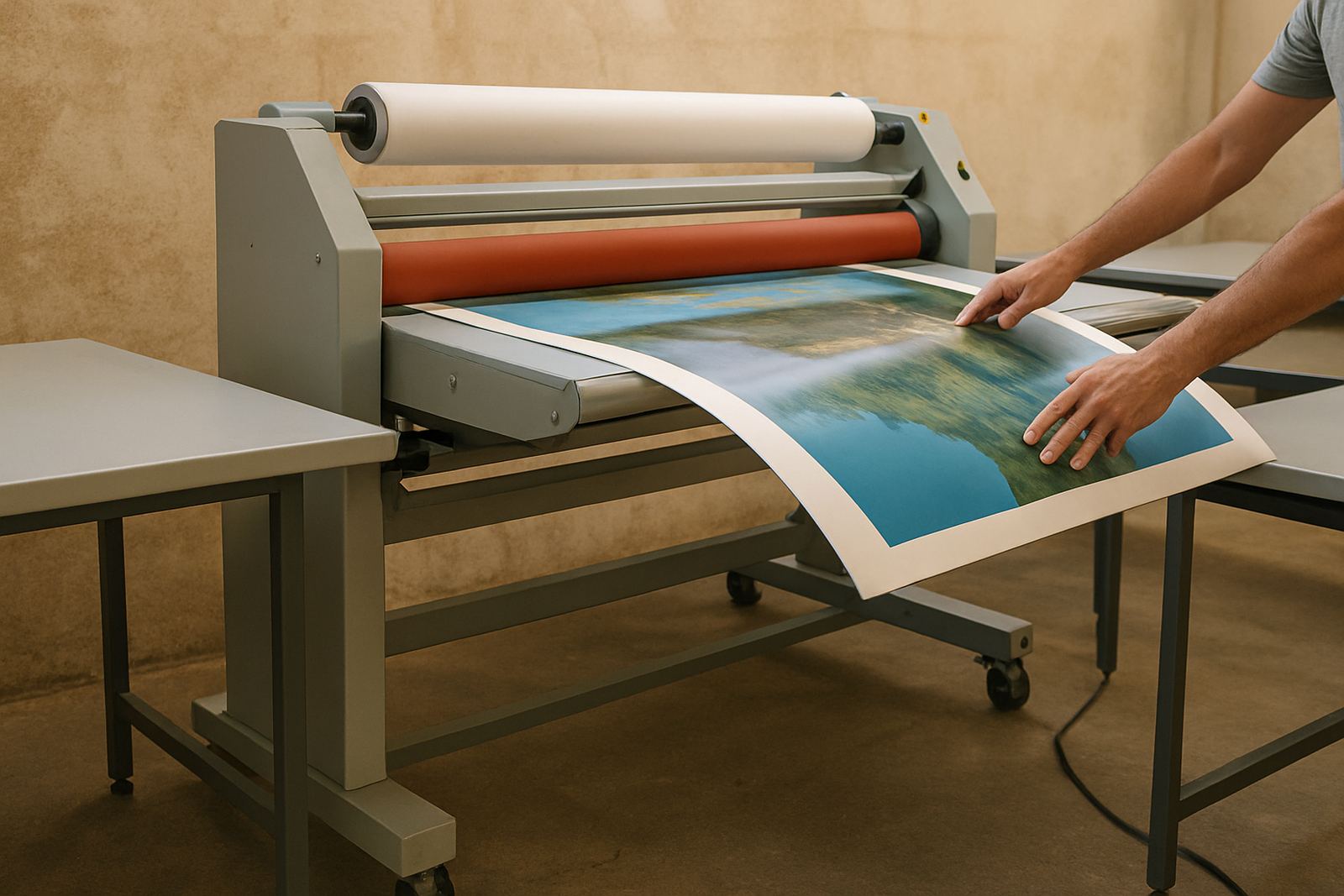
When you load film, avoid touching the adhesive side more than necessary. Oils from hands, dust from the cutting table and moisture from the air all work against you. If the room is very humid, wipe down work surfaces and check that fans are moving air without blowing debris straight at the feed path. In dry conditions, use antistatic control where possible and keep paper stacks neatly covered between jobs.
A useful habit is to check the room before a large run rather than waiting for a fault. If a shop is laminating school signage after lunch, then opening the roller shutter and bringing in wet air from outside can change the result in minutes. The job may still finish, but the finish may not be as clean as the first ten sheets.
Machine settings that help when the weather changes
Humidity is not a reason to stop work, but it is a reason to pay attention to settings. Temperature, pressure and feed speed need to match the film type and the state of the print. Hot roll laminators are more sensitive to room conditions because the adhesive must activate evenly, while cold systems depend heavily on clean pressure and careful feed alignment. If the rollers are dirty or the pressure is uneven, damp air makes the problem show up faster.
It is worth checking the machine more often during seasonal change. In summer, heat from the room plus humidity can make film soften too quickly. In winter, low humidity can make static and edge curl worse. That means regular roller cleaning, pressure calibration and heat system checks are not just maintenance tasks, they are part of climate control in a practical sense.
- Confirm roller pressure before long production runs
- Check heat consistency across the full width
- Reduce feed speed if the print is curling
- Clean rollers before moisture-sensitive jobs
- Inspect drive systems if feeding becomes irregular
A practical Johannesburg example from the work floor
A common case in Johannesburg is a print shop preparing a batch of display graphics on a humid afternoon after a short thunderstorm. The prints were stored properly, but the roller door stayed open while stacks moved between cutting and finishing. The first few sheets looked acceptable, then the shop started seeing mild silvering and a faint wave at the edges. The cause was not one single fault. It was a mix of damp air, warmer room temperature and a laminator that needed a routine roller clean and pressure check.
After the shop closed the door, allowed the prints to acclimatise and ran a quick service check, the next batch came out cleaner. No major repairs were needed, only better control of the room and a small machine adjustment. That is the real point with humidity. It often works with other factors, rather than on its own.
For shops serving Randburg, Sandton, Midrand, Pretoria and the East Rand, this is where on-site breakdown support and pre-purchase inspections become valuable. A machine may look fine on paper, but local conditions tell a fuller story once it is working in a real production room.
When to call for servicing or an inspection
If humidity-linked problems keep returning, it is time to look beyond day-to-day handling. Routine servicing can pick up worn rollers, calibration drift, heater faults, drive issues and electrical problems that become more visible when the weather changes. If a laminator is struggling in a busy print room, a technician can check whether the issue is environmental, mechanical or both.
For businesses buying used equipment or adding a second machine, a pre-purchase inspection can save a lot of trouble. You want to know if the rollers are even, whether the heat system responds properly and if the machine will hold settings through long production days. That matters in Johannesburg where one week can be dry and the next full of summer rain.
Humidity cannot be removed from the job, but it can be managed. With proper storage, steady room conditions and regular support, laminating results stay cleaner and more consistent, even when the weather is doing its best to interfere.