Why width matching matters before the roll goes on
When a print is narrower than the laminating film, the operator must manage excess film on both sides. That extra width may seem harmless, but it can pull unevenly, trap dust at the edges and make trimming slower after the job comes off the laminator. On long production runs, those small issues add up fast.
Correct width matching keeps the media under better control from the start. It also reduces the chance of the print drifting to one side, which is common when a sheet or roll is fed with too much unsupported film around it. For shops handling posters, decals, presentation graphics and artwork, the right width often means fewer corrections and cleaner results.
In practical terms, you want the laminate to cover the print with only the margin needed for edge protection or trimming, not a large overhang that has to be fought with at the end of the run. That is one of the simplest ways to cut waste without changing the machine itself.
Choosing film width for common job sizes
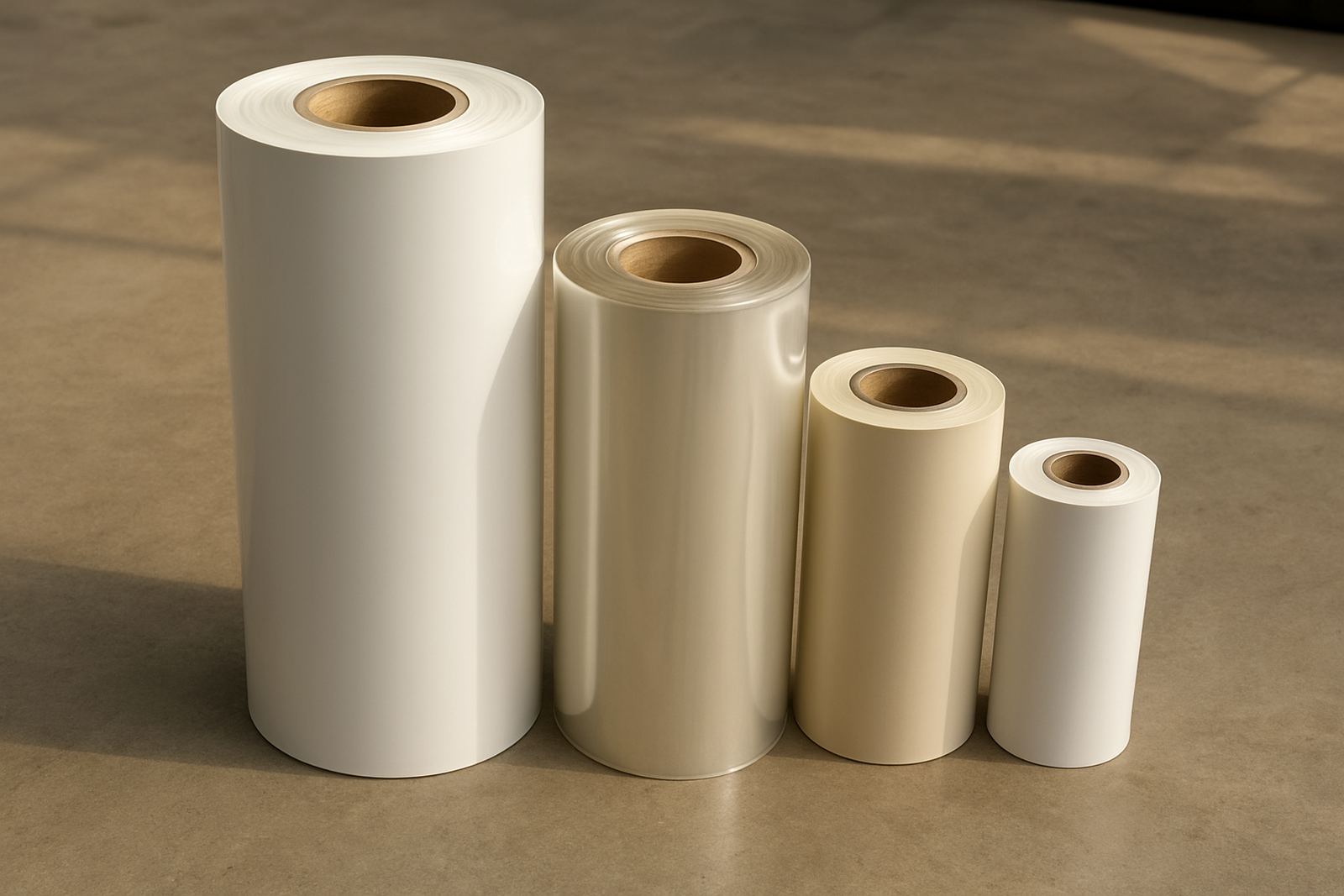
Most laminating problems start with the wrong roll size for the job list. A shop that mainly runs A1 posters does not need to force those jobs through a width that is too tight, and a shop doing mixed signage needs enough flexibility to handle multiple formats without constant roll changes. The aim is not to stock every size, but to keep the widths that match your daily work.
As a rule, measure the widest print size you regularly produce, then allow for a small working margin. That margin depends on whether the job is being trimmed after lamination, mounted, or cut to final size on the laminator. For some work, 10 to 20 mm each side is enough. For other jobs, especially when the print has delicate edges, a wider border is safer.
- A3 and smaller artwork often suits narrower rolls, provided the feed is steady.
- A2 and A1 posters usually need a width that gives a useful side margin for trimming.
- Signage panels and long graphics may require wider media so the print sits flat and feeds straight.
How width affects handling, waste and operator strain
Wide rolls are heavier, harder to align and more tiring to move around the shop. That matters in studios where one person is loading media, answering the phone and clearing finished work at the same time. If the roll is wider than needed for the job, the operator spends more time guiding edges and less time keeping pace with production.
The waste is not only in the offcut. Extra width can also mean more spoil from misfeeds, edge curl, bubbles near the sides and re-runs after a mistake. In many cases the film itself is not the expensive part, the handling time is. If the operator has to slow down to keep a broad roll straight, your throughput drops and the laminator is tied up longer than it should be.
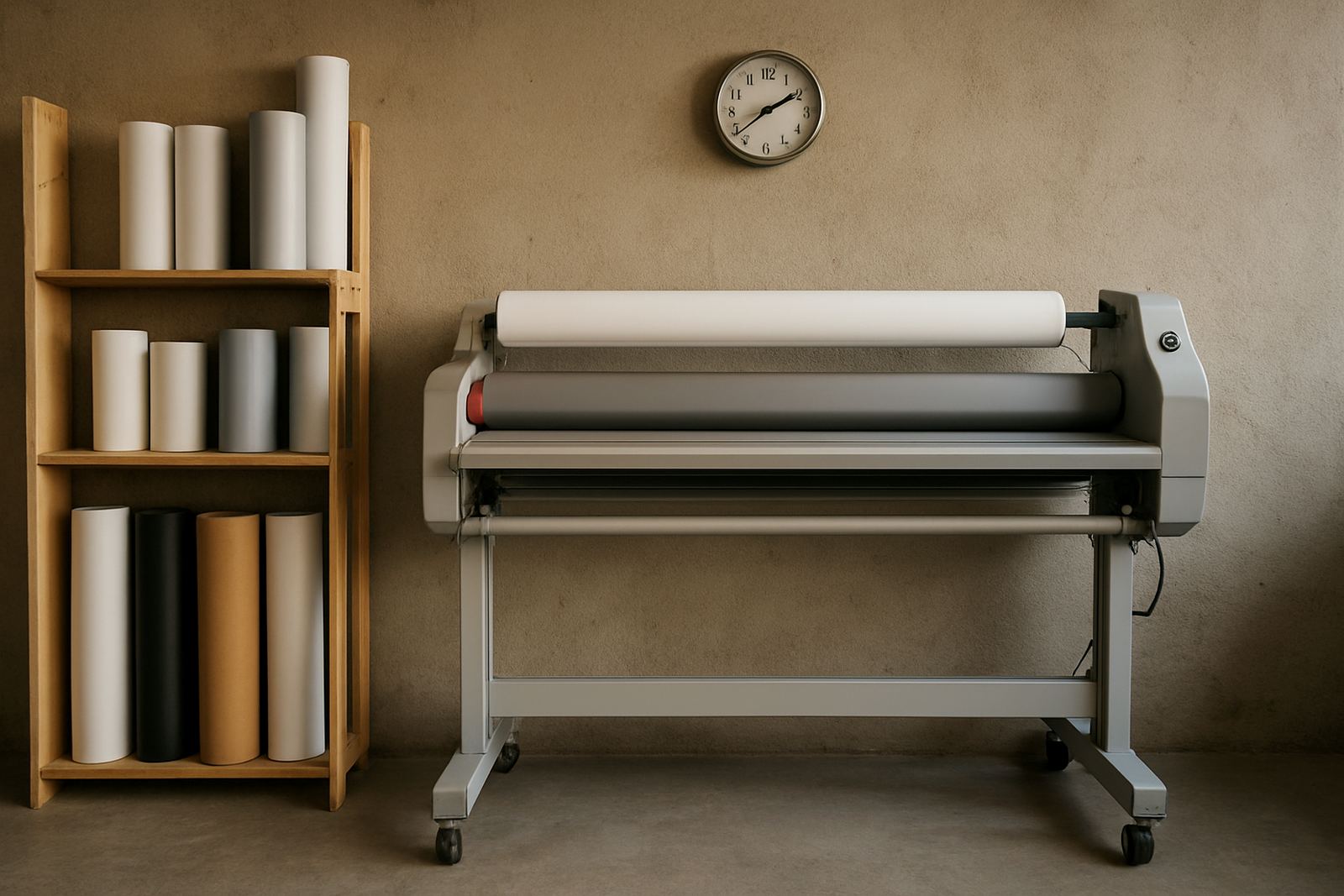
Matching widths properly is also better for storage. Shorter or narrower rolls take up less racking space and are easier to keep clean in a dusty shop. In places with coastal humidity or workshop dust, a roll left exposed too long can collect grit that shows up later on the print surface. A careful width plan helps the whole job flow.
A Kya Sand example from a mixed-job print shop
One Kya Sand print shop was running a mix of point-of-sale posters, school graphics and short-run display work. They were using one broad roll for almost everything, even when the print size was much smaller. The team kept trimming large side strips and occasionally had to stop a run because the film walked off line. It was not a machine fault, just a poor width match.
After reviewing their job sizes, they changed to two more suitable widths and kept the broader roll for only the larger pieces. The result was less offcut, quicker loading and fewer edge issues on the smaller jobs. The staff also found it easier to train new operators because each roll had a clear purpose. That saved time during busy weeks and reduced pressure when load-shedding interrupted production and jobs had to be restarted later.
For shops in Johannesburg, Sandton, Midrand and Pretoria, this kind of adjustment is often the fastest win. You do not always need new equipment. Sometimes you just need the media width to match the work coming through the door.
Questions to ask before you load a roll
Before loading any laminate or film, it helps to check a few practical points. These questions are simple, but they prevent most of the mistakes that cause waste on the floor.
- What is the finished width of the print after trimming?
- Will the job be cut after lamination or left with a border?
- Is the print rigid enough to stay flat, or does it need more side support?
- Will the job run straight through, or does it need pauses for repositioning?
- Does the media width suit the operator’s level of experience?
If the answer to any of those raises doubt, choose the width that gives a safer margin. A slightly wider roll is often fine, but a roll that is too wide for the job usually creates more handling trouble than it solves.
Keeping width choices practical for South African conditions
South African print rooms do best with a simple width range that matches the work, the team and the available floor space. That means planning for the realities of local production: power cuts, rush jobs, hot afternoons in metal workshops and the kind of dust that gets into rollers if equipment is left uncovered. A width plan that works in theory may fail on a busy Wednesday afternoon.
It also helps to keep the laminator in good condition so width matching actually delivers the result you expect. Roller cleaning, pressure calibration and heat system checks all play a part, especially on hot roll machines. If the rollers are not aligned or pressure is uneven, even the correct width can feed poorly. On-site breakdown support and spare parts help too when a job is booked for collection and there is no room for delay.
For print shops and studios across Kya Sand, Randburg, Sandton, Midrand, Pretoria and the East Rand, the lesson is the same: match the media width to the job before you start. It lowers waste, keeps the work moving and makes the whole laminating process easier to manage.