
What edge lift actually is on a laminated job
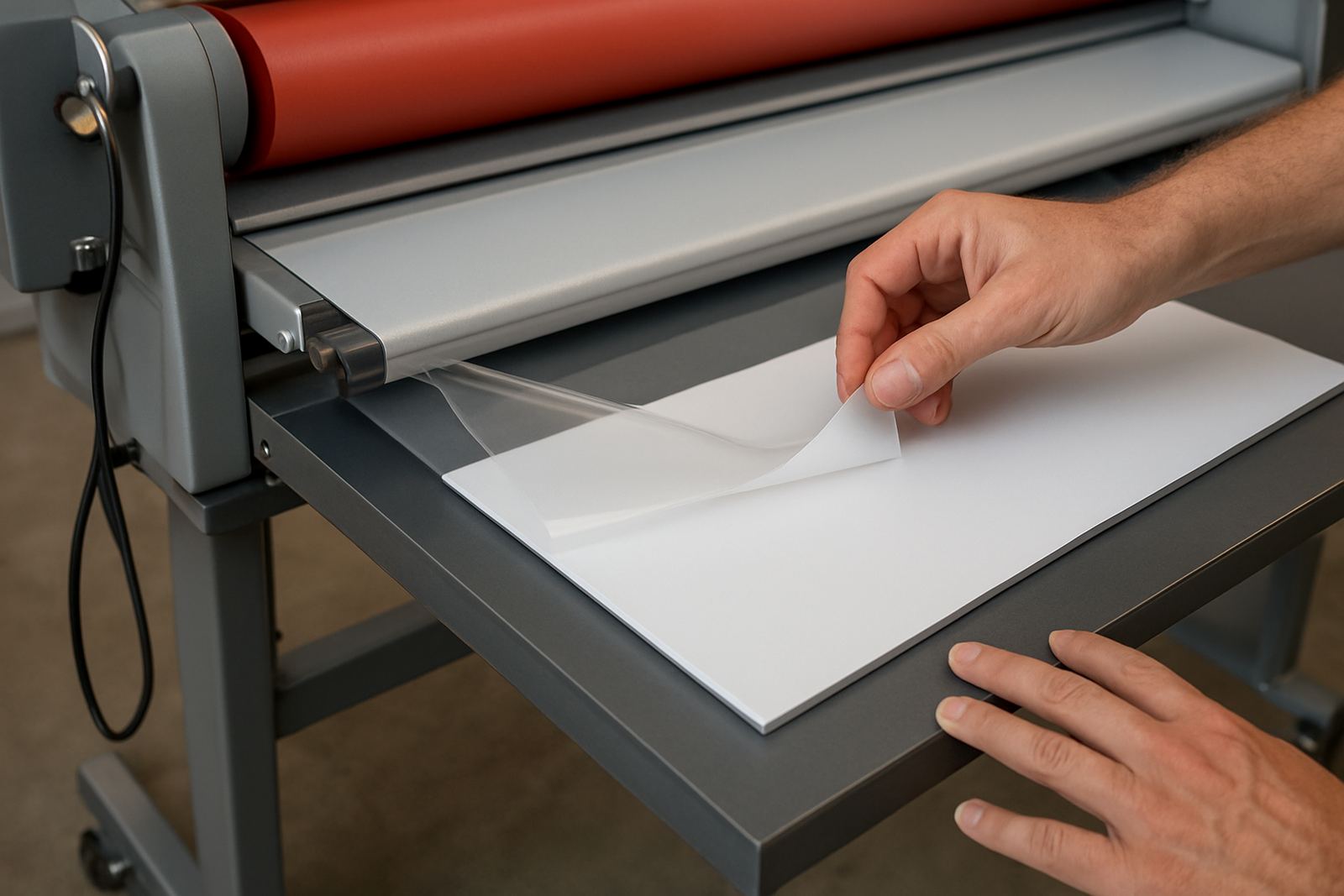
Edge lift happens when the laminate film starts to release from the print at the edges first, then works inward over time. You may see a fine white line, a slight curl, or a corner that starts to peel after trimming, stacking or shipping. On glossy work it can show up fast, while on matt jobs it may only be noticed once the piece has been handled a few times.
In Johannesburg and other inland areas, the air is often dry, but that does not mean laminating is easier. Static, dust and temperature changes between a cool storeroom and a warm vehicle can all affect how well the adhesive bonds. Near the coast, high humidity can also change how paper and film behave, so the same setting may work one week and fail the next.
- Common signs include lifted corners, bubbling near the edge, and a narrow silver line at the trim.
- Edge lift can affect posters, menus, point of sale boards and artwork meant for framing.
- Once the film starts to lift, handling usually makes it worse.
Heat that is too low or uneven across the rollers
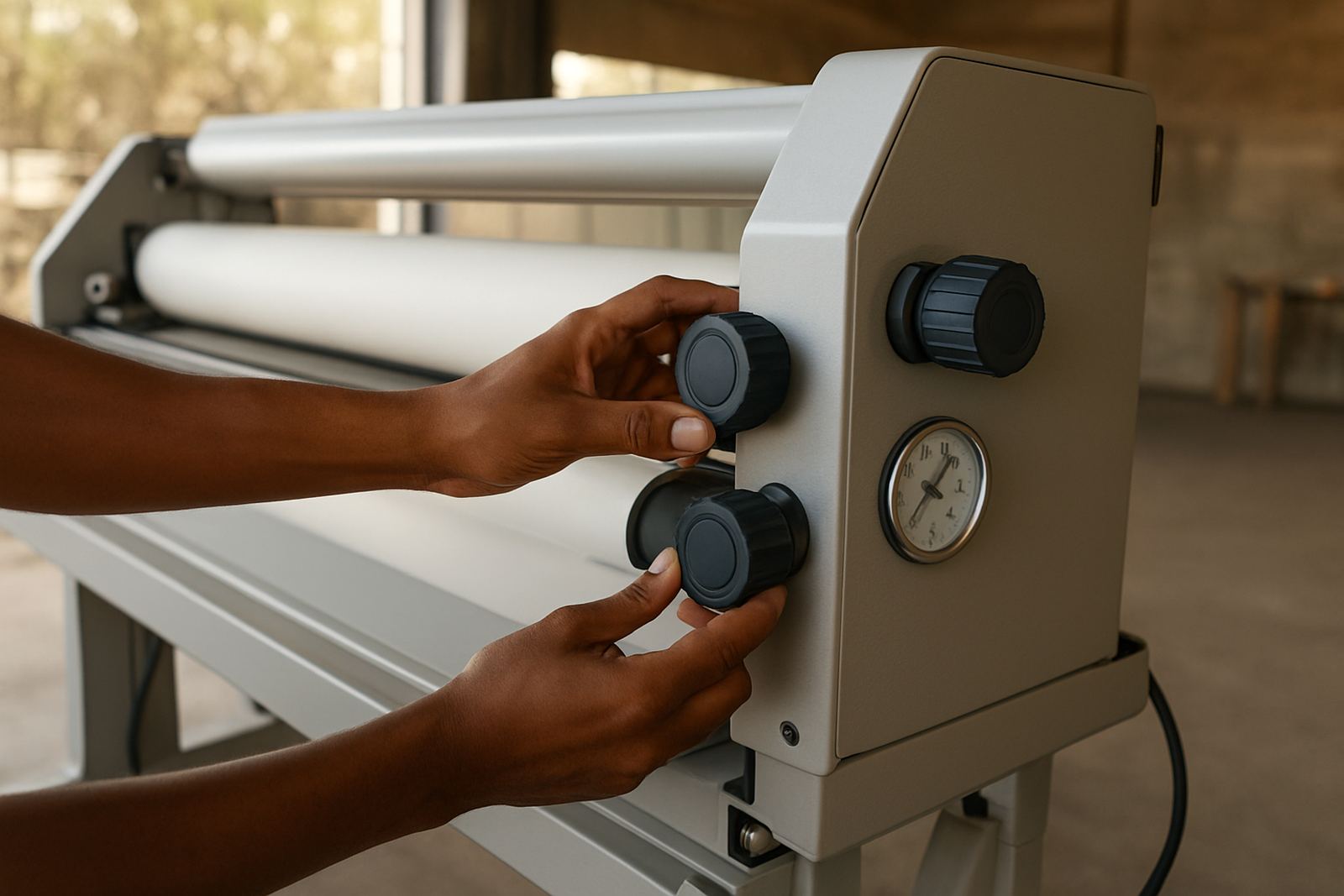
For hot roll work, the first thing to check is the heat system. If the rollers are not reaching the right temperature, the adhesive may soften but not fully bond at the edges. Uneven heat is just as troublesome. One side may seal properly while the other side stays loose, especially on wider sheets and long runs.
Cold laminating can also suffer when the film and print are not compatible, or when the pressure is set too light for the material thickness. Operators sometimes chase speed when the real issue is a small setting error. A few degrees or a slight pressure change can make the difference between a clean seal and lifting later on.
- Check roller temperature with regular service, not just the panel reading.
- Watch for hot spots, cool ends or delayed warm-up after load-shedding.
- Re-test settings after maintenance, roller cleaning or spare parts replacement.
Pressure, roller condition and dirty surfaces
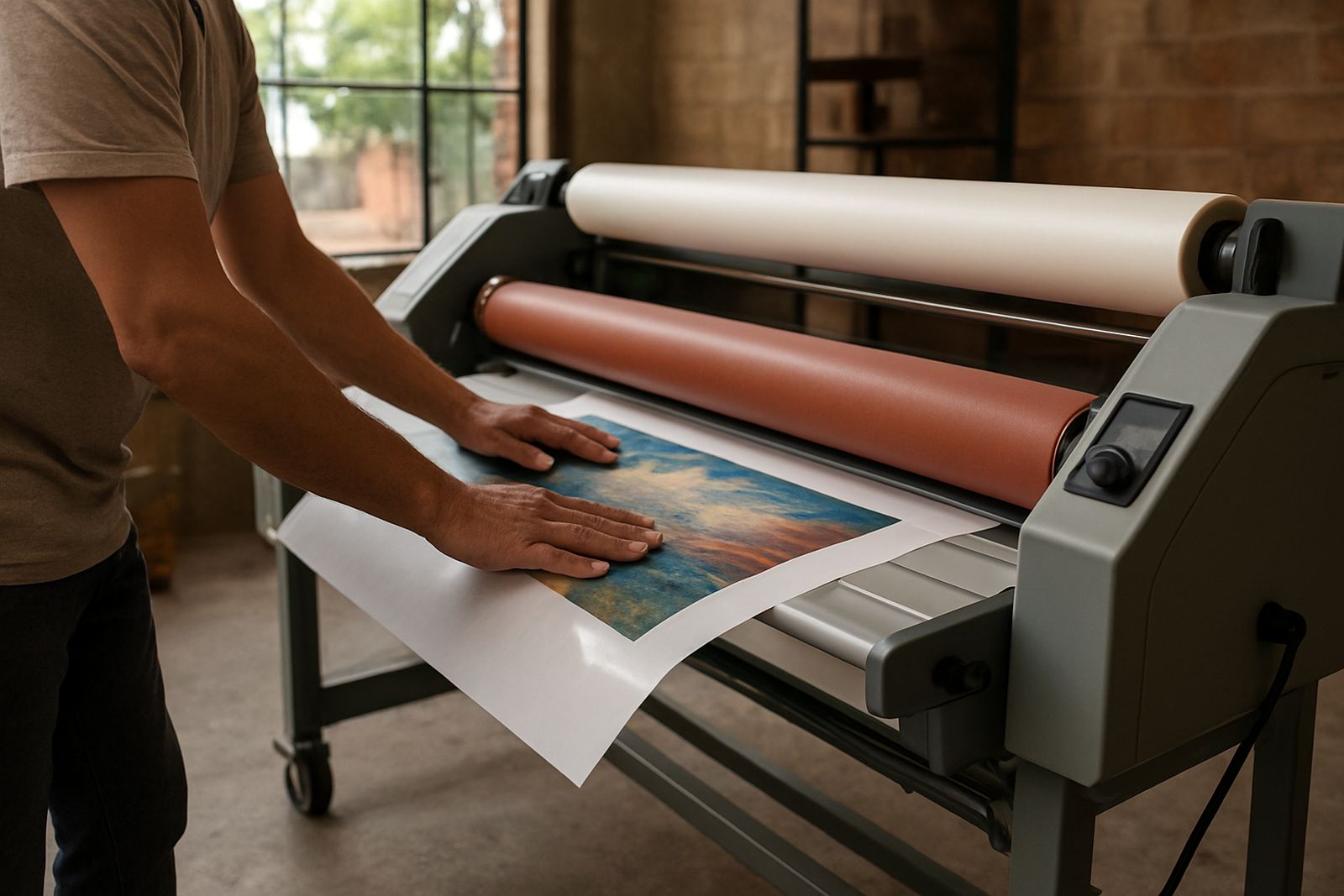
Pressure does the hard work of pushing the film into full contact with the print. If the pressure is too low, air stays near the edges and the bond is weak. If it is uneven, the film may grip well in the centre but miss the outer margin. Worn rollers, glazed surfaces and adhesive build-up make the problem harder to spot because the machine can still appear to be running normally.
Dust is another big factor. A small amount of grit at the edge of the sheet can stop the laminate from sitting flush. In busy print shops, paper trimmings, board dust and loose fibres can build up around feed areas quickly. A proper roller cleaning schedule matters, because even a thin layer of residue changes how the material moves through the machine.
- Clean rollers before adhesive build-up becomes visible.
- Inspect roller alignment if one edge fails more often than the other.
- Keep print surfaces free from dust, fingerprints and spray residue.
Paper, ink and film all need to match the job
Edge lift is often blamed on the laminator, but the print itself plays a major role. Heavy ink coverage, textured stocks and certain coated papers can make bonding harder. If the ink has not cured properly, the laminate may stick at first and then release as solvents move out of the print. This is common on fast turnaround work where the job goes straight from printer to laminator.
Film thickness also matters. A very thin film may not give enough stiffness for wide pieces, while a thicker film can need more pressure and better feed control. For artwork, menus and outdoor signage, the wrong combination can cause the edges to curl long before the main panel shows any fault.
- Allow printed jobs to cure fully before laminating where possible.
- Match film type to the print stock, ink set and final use.
- Test a small sample before running a full batch of expensive work.
Handling after lamination can undo a good finish
Even when a job leaves the machine looking perfect, poor handling can start edge lift later. If sheets are stacked while still warm, the film can relax and shift slightly. Sharp trimming too close to the image can expose the seal line and make corners easier to catch. Rolling finished work too tight for transport is another common mistake, especially on delivery runs from Kya Sand to Sandton, Midrand or Pretoria.
Storage also matters. A laminated poster left against a hot vehicle panel or near a damp wall can start to move at the edges. Shops that do a lot of courier work should give clients simple handling guidance, because a neat finish at collection can still fail by the time it reaches the end user.
- Let laminated sheets cool flat before stacking.
- Trim with care so the seal is not cut back too far.
- Store finished work flat, dry and away from direct heat.
A practical way to reduce edge lift in everyday South African jobs
The best way to reduce edge lift is to treat it as a process issue, not a single machine fault. Start with routine servicing, then check roller cleaning, pressure calibration and heat system performance. Keep notes on which media types lift more often, because patterns usually show up after a few repeat jobs. A small print shop in Randburg may find that one board stock performs well in winter but fails in summer, while a sign shop in the East Rand sees more issues after power interruptions and rushed restarts.
For teams running wide-format laminators daily, operator refresher training is worth the time. Many lifting problems come from setting the wrong pressure, loading film off-centre, or sending a job through before the rollers are fully ready. If a machine has already started to show symptoms, a pre-purchase inspection, electrical fault finding or on-site breakdown call can save more than one bad run. The point is simple: stable settings, clean rollers and the right material choice keep edges down and jobs looking proper.
- Book regular servicing before the machine starts missing on the edges.
- Track repeat faults by material, operator and time of day.
- Get spare parts support early if rollers, heaters or drive components show wear.