1. Sticky edges and cloudy finish are early warnings
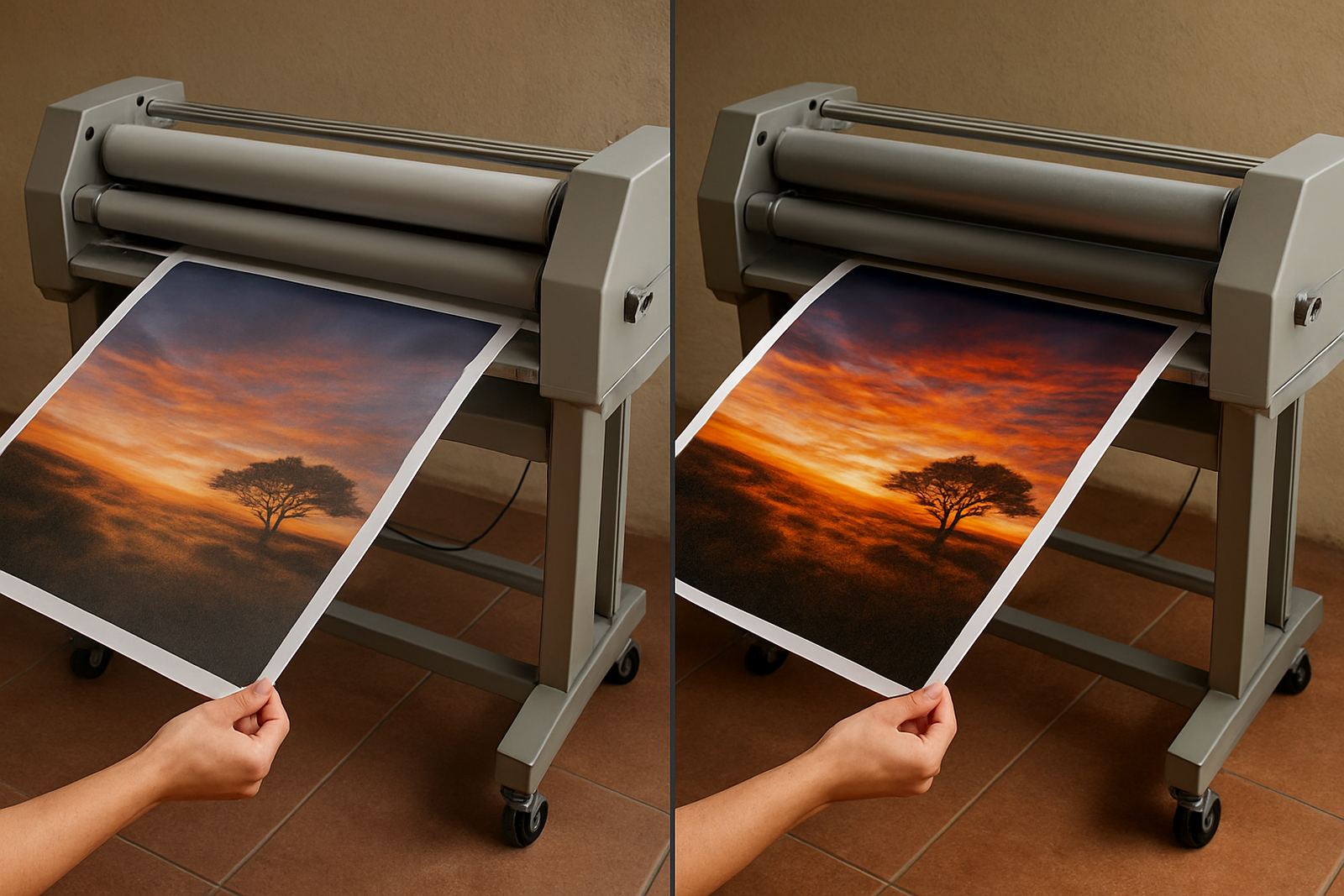
The first signs of adhesive build-up are often visible on the finished sheet. You may notice a sticky edge on the laminate, a cloudy patch near the roller contact line, or areas where the film no longer lies flat. In some jobs the print still looks acceptable from a distance, but when you run your hand across it the surface feels uneven.
That build-up usually starts when adhesive residue, dust, paper fibres and heat combine on the roller surface. Once that layer starts to thicken, it can transfer back onto the next job. On high-volume runs in Sandton or Midrand, this can happen faster than many teams expect, especially when short turnaround jobs keep the machine running for most of the day.
2. Uneven pressure marks point to roller contamination
When a roller picks up residue, pressure stops being even across the full width. You may see faint bands, shiny tracks or small ripples in the laminated sheet. These marks often appear on repeated jobs of the same width, which is why operators sometimes miss the pattern at first.
- Look for lines that repeat in the same place across different prints.
- Check whether the mark is heavier on one side of the sheet.
- Watch for a change in finish from one batch to the next.
- Feel for a slight drag as the material enters the rollers.
If the pressure roller is carrying residue, the machine can still feed but the result will not be consistent. That is where a pressure calibration check and proper roller cleaning becomes important, not just a quick wipe.
3. Slower feeding and extra tension often mean the rollers need attention
Another warning sign is a change in how the machine pulls material through. If sheets begin to feed slower than usual, or if the film seems to tug and then release, there may be build-up affecting grip. Operators often describe it as the machine sounding busier than normal, even on standard work.
This matters in Johannesburg during load-shedding recovery periods, when teams want to restart work fast and clear a backlog. A roller that is already carrying adhesive residue can struggle after a cold restart or after the heater cycles back on. Add dust from nearby cutting or finishing areas and the problem can get worse quite quickly.
- Watch for slipping at the nip point.
- Listen for unusual squeaks or rubbing sounds.
- Check whether the feed path needs more force than before.
- Note any smell of warmed residue or burnt film.
4. Heat changes can make residue show up faster
Hot roll laminators are sensitive to heat balance. If the heat system is running too high, adhesive can soften more than intended and smear onto the rollers. If the temperature is too low, the film may not bond cleanly and fragments can stick to the surface instead of passing through. Either way, the build-up gets worse with time.
In coastal humidity, or in stores where the machine sits near an open loading bay, moisture can also affect how the film behaves. That is why a heat system check should go hand in hand with cleaning. If the temperature reading is off, cleaning alone will not solve the problem. The machine may look fine after one or two jobs then start leaving marks again.
5. What to inspect before the problem spreads
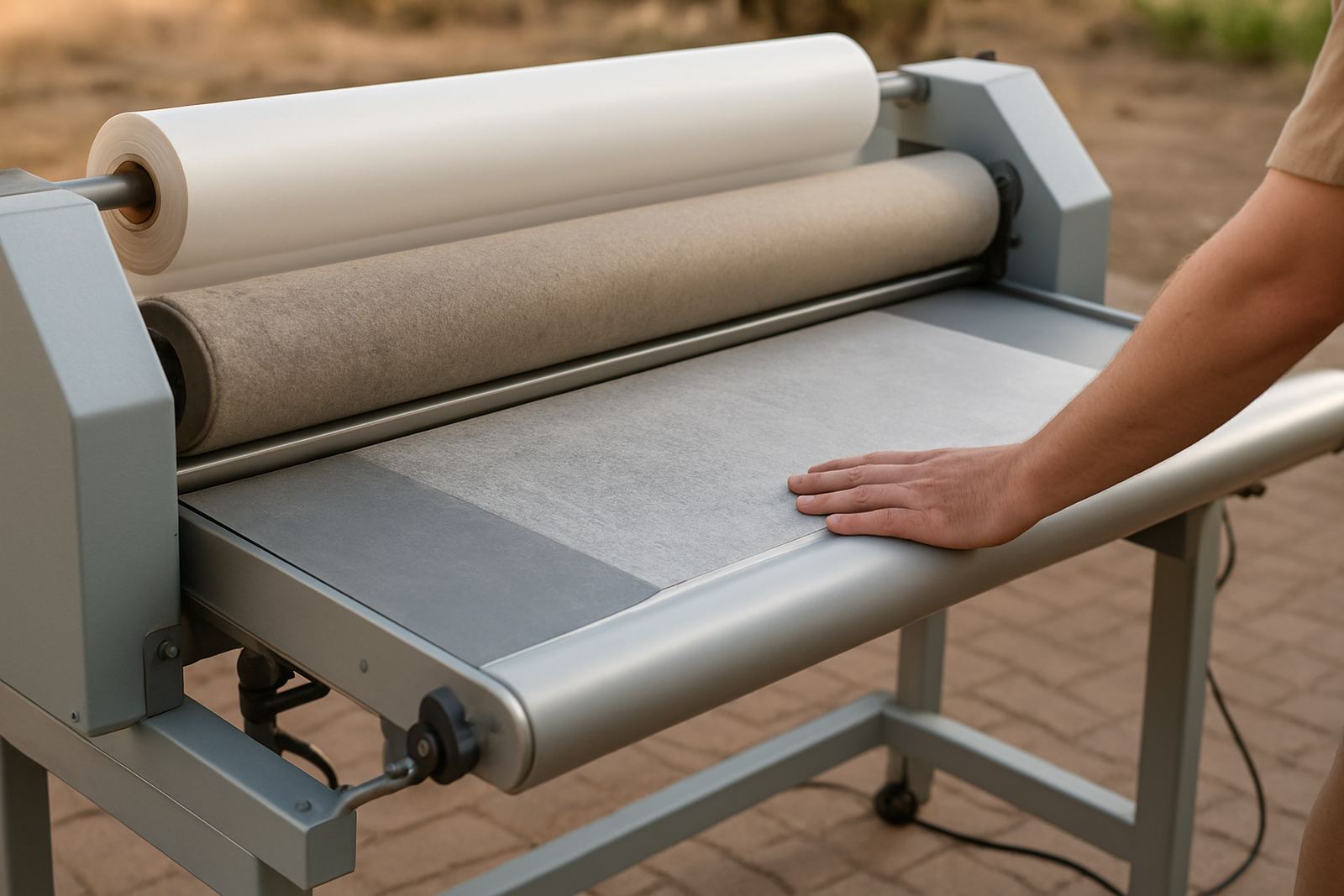
A quick visual check can save a day of downtime. Before the build-up causes a jam or damages a job, inspect the rollers, feed path and the edges of the film rolls. Adhesive residue often collects where operators do not look first, especially near the ends of the rollers and close to the guide points.
Use this simple checklist when the first signs appear:
- Check both rollers for a dull, tacky layer.
- Look for paper dust stuck to the adhesive film.
- Inspect the drive system for any hesitation or noise.
- Confirm the pressure setting has not drifted.
- Review whether the operator has changed film type or thickness recently.
If a job has been running with mixed media or artwork boards, residue can build faster than on plain print work. A small amount of contamination one day can become a proper service issue by the next shift.
6. When to call for servicing instead of cleaning again
Some build-up can be managed on site, but there is a point where repeated cleaning is only masking the fault. If the machine keeps marking the same area, if the rollers feel rough, or if the laminate finish changes from one side to the other, the unit may need a service attention. Electrical faults, worn pressure parts or drive issues can sit behind what looks like a simple sticky problem.
For shops in Kya Sand, Randburg, Sandton, Midrand, Pretoria and the East Rand, on-site breakdown support can be the fastest way to avoid missed deadlines. A technician can check the rollers, drive system, electrical supply and heat control together, then advise whether spare parts or a deeper repair is needed. That is usually better than losing another batch of prints and hoping the residue clears on its own.
7. Preventive habits that keep adhesive build-up under control
Good maintenance habits reduce the chance of repeat build-up and help the laminator stay ready for daily work. This is especially useful for print shops that run different media types, or for studios that only use the machine in bursts during busy periods.
- Clean rollers on a set schedule, not only when problems appear.
- Keep the work area free of trimming dust and loose film offcuts.
- Train operators to spot early signs before they become faults.
- Check machine settings after film changes or long shutdowns.
- Book routine servicing so pressure and heat remain in range.
With the right checks, adhesive build-up stays manageable instead of turning into damage. That keeps output cleaner, reduces stoppages and helps the machine deliver a professional finish day after day.