When signage work needs a cleaner, tougher finish
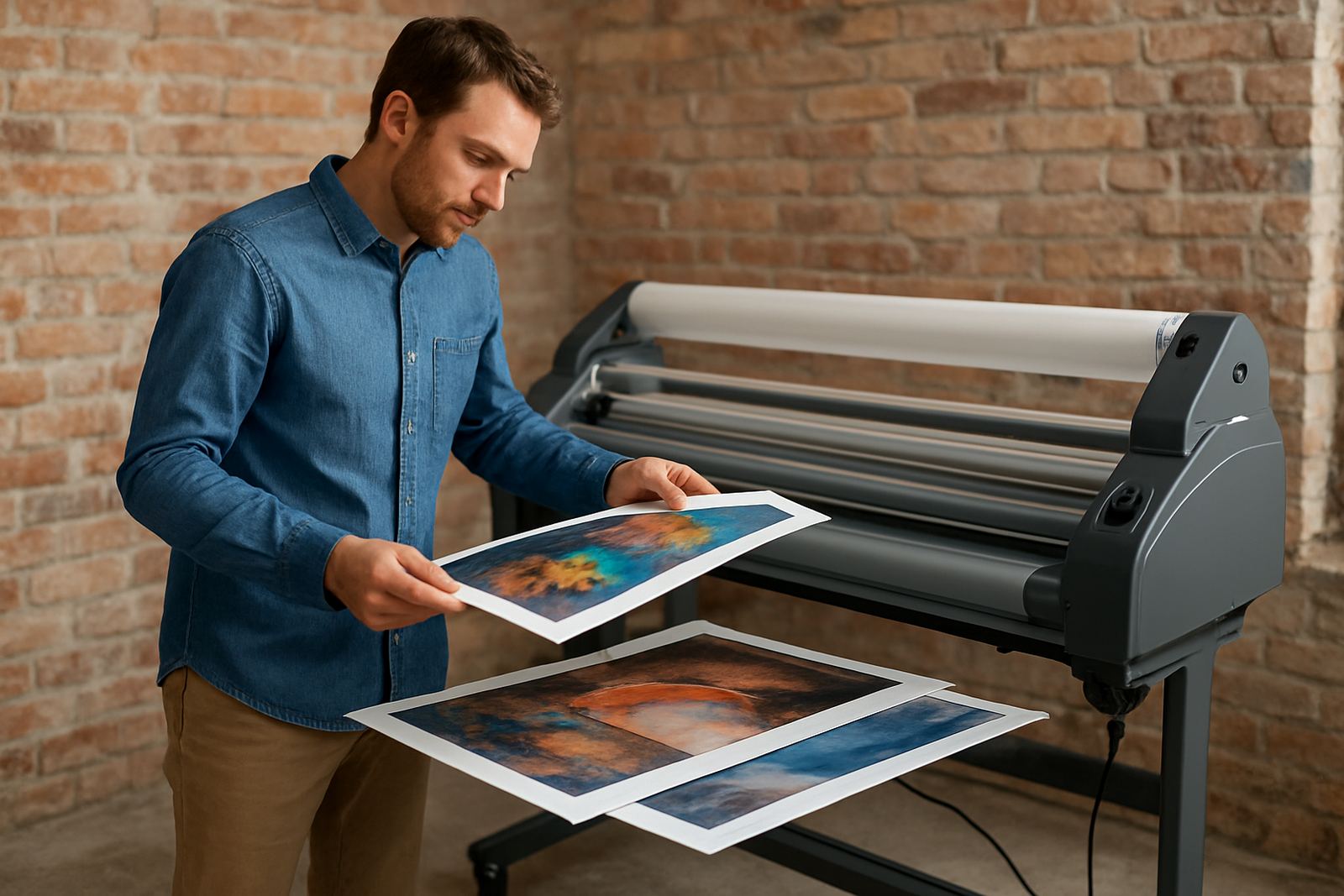
Signage producers usually come to us when prints are looking good but still need protection before they go out to clients. That can be wall graphics for an office in Sandton, retail decals for a Randburg store, or short-term promotional boards for an event in Midrand. A good laminate helps with scuff resistance, handling, light moisture and the constant finger marks that come with installation day.
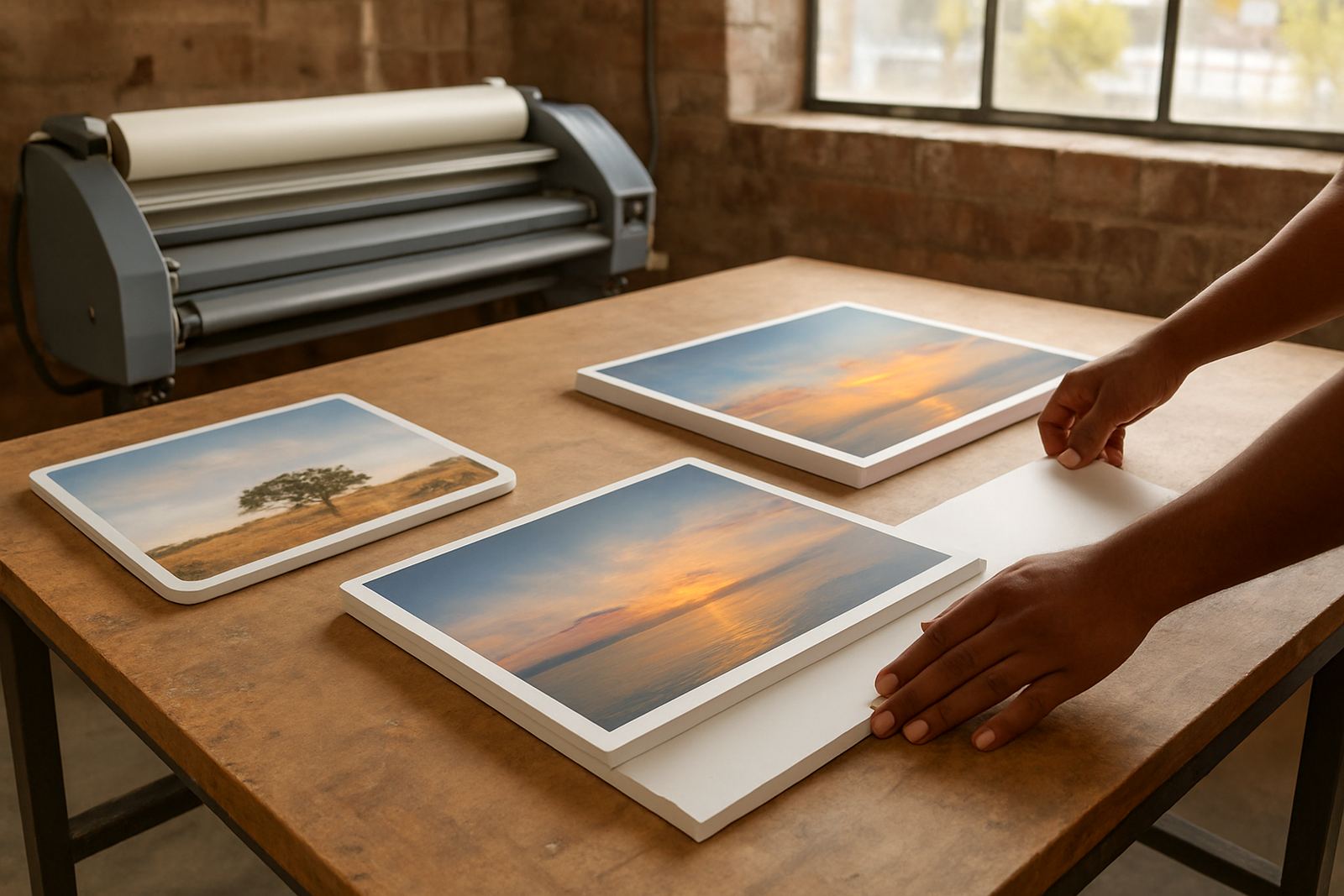
In Johannesburg and other inland centres, the big concern is usually dust and repeated handling during fitting. In coastal areas, humidity can also affect adhesive behaviour and edge lifting if the media is not managed properly. For this reason, signage teams often use laminators for mounted graphics, printed vinyl, floor signs, posters and presentation panels that need a neater finish before dispatch.
We work with print shops, sign makers and in-house marketing teams that need consistent pressure, controlled heat and dependable roller alignment. For short runs it may be a matter of saving time. For larger batches, it is about keeping the same finish across every panel so the install team is not stuck fixing bubbles and lifting edges later on.
Typical equipment set for a signage production line
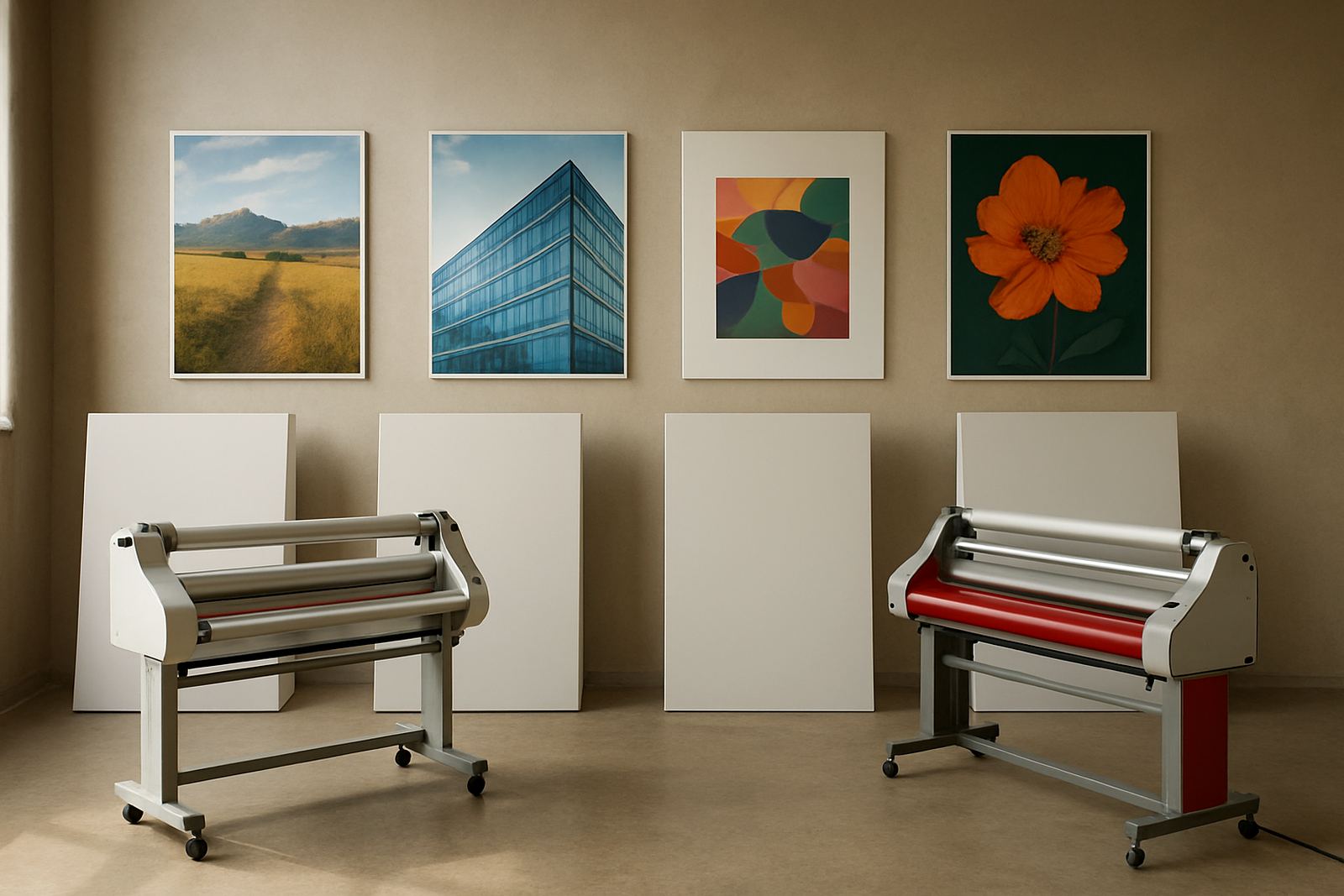
Most signage businesses choose between cold roll laminators and hot roll laminators depending on the media and the result required. Cold systems are common for pressure-sensitive films, mounted graphics and heat-sensitive prints. Hot systems suit more demanding finishing where a controlled heated process helps the laminate bond cleanly and flatten the work.
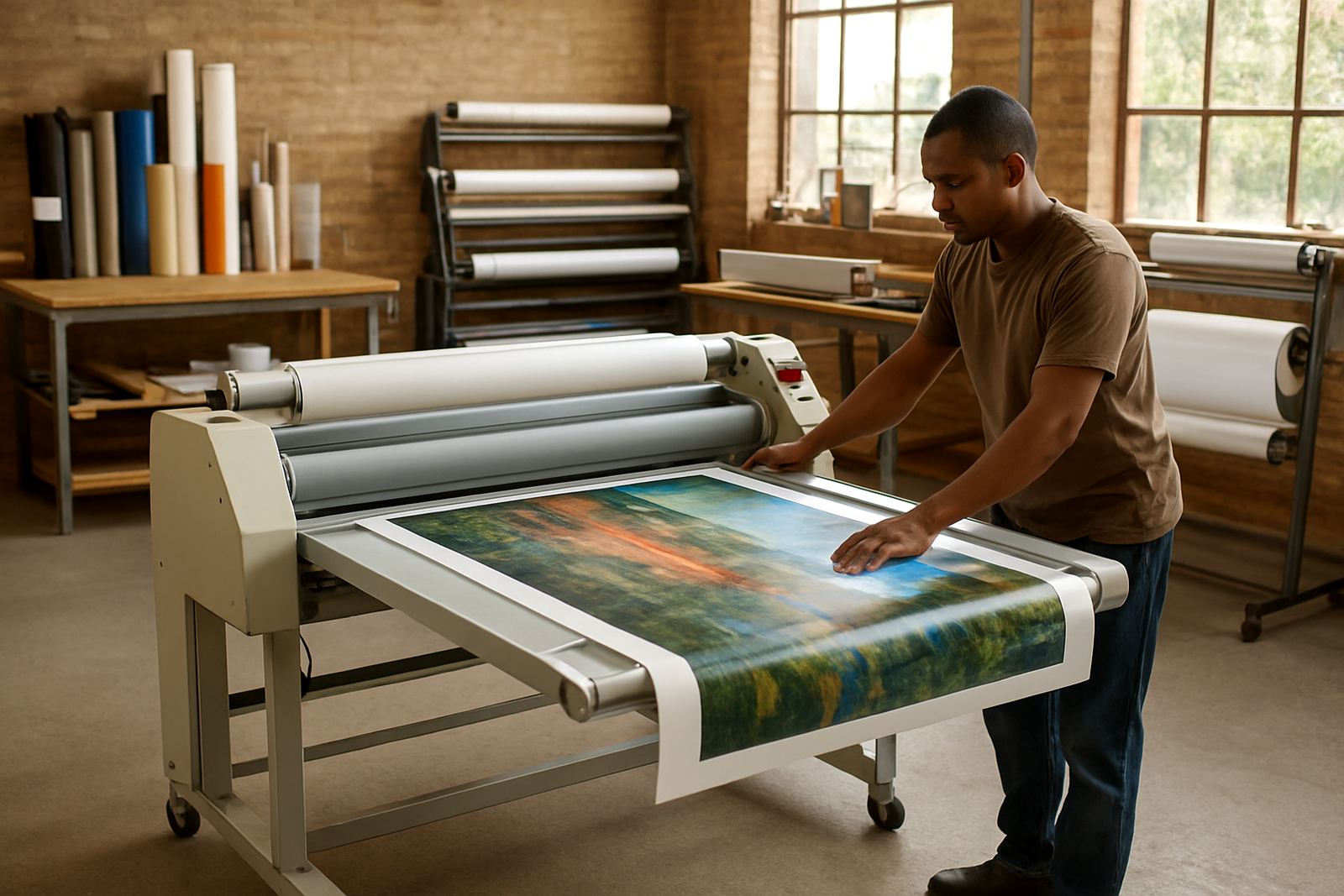
A practical setup often includes a wide-format machine, take-up or feed management, a solid working table and enough space for rolling, trimming and stacking. If the shop handles bigger boards, the operator also needs room to move around the machine without bending corners or scratching finished faces.
- Cold roll laminator for decals, posters and most signage graphics
- Hot roll laminator for heavier finishing jobs and controlled bonding
- Trimming tools for clean edges after lamination
- Flat storage or racking so finished panels do not bow
- Dust control and a clean feed area to reduce contamination
For a shop in Kya Sand or near Pretoria East, the best choice is often the machine that matches the most common job, not the most expensive one. If the bulk of the work is indoor display and short-term outdoor signage, a reliable cold roll unit is often the better fit.
Layout and planning advice before you buy
Before buying, measure the largest sheet size you expect to process, not only the day to day jobs. A 1.6 metre machine may suit many sign jobs, but if you regularly finish 1.2 by 2.4 metre panels you need to plan for input and outfeed space as well. This is where many teams get caught out. The machine may fit, but the workflow does not.
Allow clear access for loading rolls, feeding prints and removing finished work. If the shop has limited floor space in Randburg or a shared production area in Sandton, think through operator movement too. A machine placed too close to the wall can slow production and make roller checks harder.
Power supply matters as well. During load-shedding, some shops are trying to manage printing, cutting and finishing on backup power. Heat systems in particular need attention because a drop in supply can interrupt a job and waste material. It is worth checking your electrical load before installation rather than discovering the limit after the first batch.
- Measure the widest and longest graphics you finish regularly
- Leave space for feed, outfeed and trimming
- Check whether your power backup can carry the machine
- Plan where rolls, liners and finished sheets will be stored
Common mistakes that cost signage shops money
One of the most common mistakes is choosing a laminator only by price. A cheap unit may seem fine for a few weeks, then start giving uneven pressure, roller marks or inconsistent heat. In signage production that leads to rework, wasted laminate and unhappy clients who notice every flaw under bright office lighting.
Another mistake is poor roller cleaning. Dust, adhesive build-up and trimming waste can all transfer into the finish. If the machine is used daily, routine cleaning should be part of the close-down process not something done once a month when the operator has time.
Operators also sometimes push jobs through too fast. That causes edge curl, trapped air and misalignment. Short-term outdoor signage still needs care because a poor finish can fail before the campaign is over, especially in windy or damp conditions. We see this often with event graphics and temporary retail work.
It also helps to keep pressure calibration and heat system checks up to date. If the settings drift, the same settings can give different results on different days. That is the sort of problem that looks minor in the workshop and becomes expensive on site.
Budget ranges for signage production laminators
Budget depends on width, whether the machine is cold or hot, and how much daily throughput you need. For a smaller signage operation doing entry-level finishing, a more basic wide-format laminator may start around R35 000 to R65 000. That can suit a studio handling light print volumes and mainly indoor work.
For a busier sign shop or print production floor, a mid-range machine is often more appropriate. These are commonly in the R75 000 to R160 000 range, depending on width and controls. They are better suited to repeated daily use and more consistent signage batches.
Heavier duty equipment for higher output, larger widths or more controlled hot finishing can range from about R180 000 to R350 000 plus. Installation, training and any site preparation should also be budgeted for, especially if electrical changes or extra floor space are needed.
- Entry level: about R35 000 to R65 000
- Mid-range production use: about R75 000 to R160 000
- Higher output or advanced heating: about R180 000 to R350 000+
- Allow for setup, transport and operator training
Support that keeps the shop moving after installation
Signage work does not stop when the machine is delivered. The team still needs operator support, servicing and fast help when something goes wrong. That is why our customers in Johannesburg, Pretoria, the East Rand and further afield rely on routine servicing, on-site breakdown assistance and spare parts support when turnaround times are tight.
Our technical work covers roller cleaning, pressure calibration, heat system checks, drive system repairs and electrical fault finding. If a business is buying a machine for a new contract or replacing an older unit, we can also carry out pre-purchase inspections so the decision is based on the real condition of the equipment.
For signage teams that are training new staff or bringing in seasonal help, operator refresher training is worth doing. A machine that is used correctly lasts longer, wastes less material and gives the same finish across every job. For a business in Kya Sand, that is usually what makes the difference between a busy week and a messy one.
If you need a laminator for signage production and want practical guidance on the right width, duty cycle and setup, our team in Kya Sand can help you match the machine to the work you actually do.