
When school print jobs need to last through the term
School printing is hard on finished work. Classroom charts are handled by learners, corridor notices get corners bent, and event posters often go up and down more than once. A good laminate finish keeps colour cleaner, protects against dust and moisture, and makes it easier to wipe down pieces that move between rooms.
For schools in Johannesburg, Pretoria and coastal areas like Durban or Gqeberha, humidity and frequent cleaning are the main issues. In inland areas, dry heat and load-shedding interruptions can still affect production, especially when multiple jobs are being run for back-to-school or term-end events. Planning the finish early avoids reprints later, and saves money when a class set or campus notice board needs matching sizes.
- Teaching aids for classrooms and libraries
- Directional signs for halls, sports fields and admin blocks
- Event posters for open days, prize-givings and fundraisers
Typical laminator setups for schools and campus print rooms
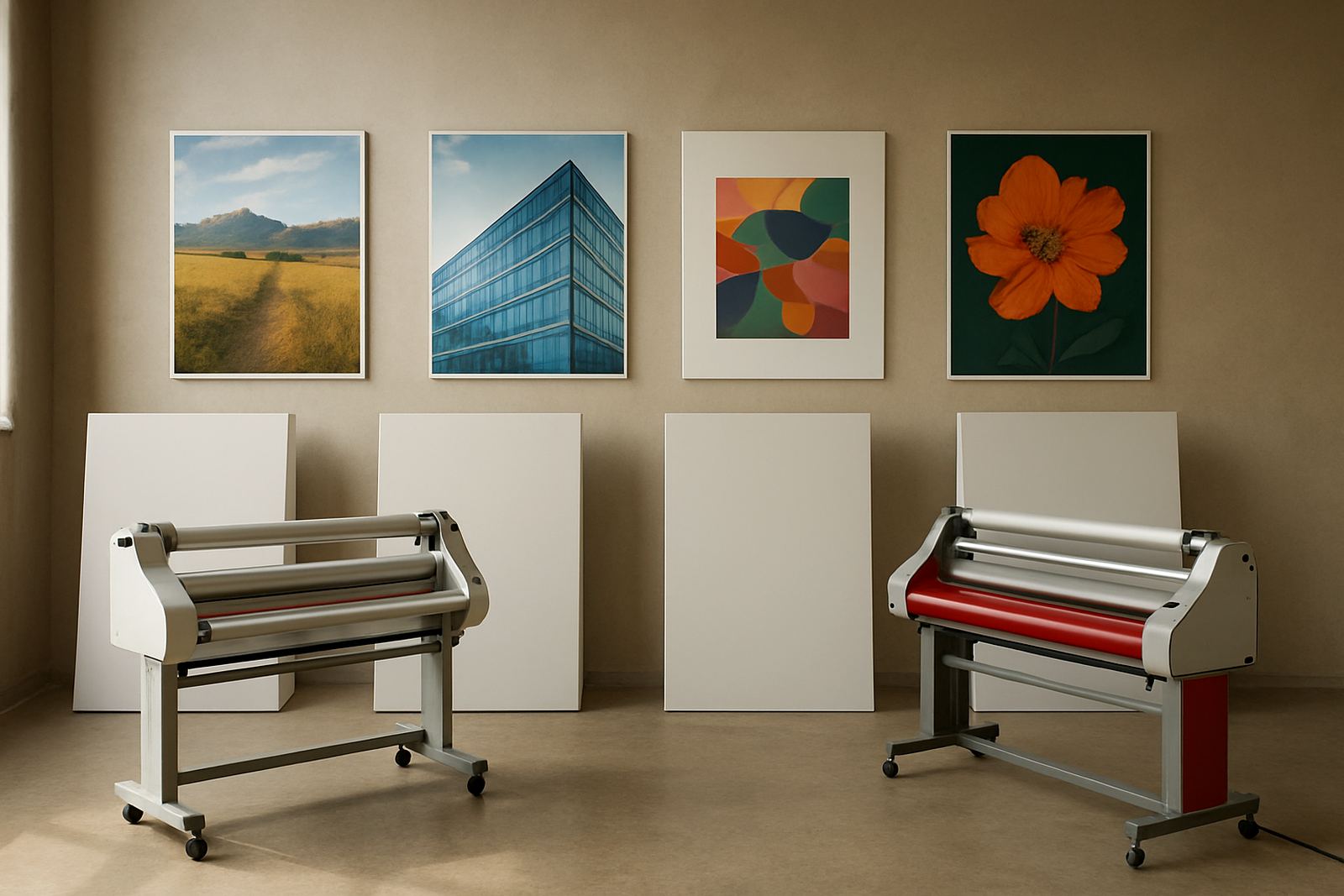
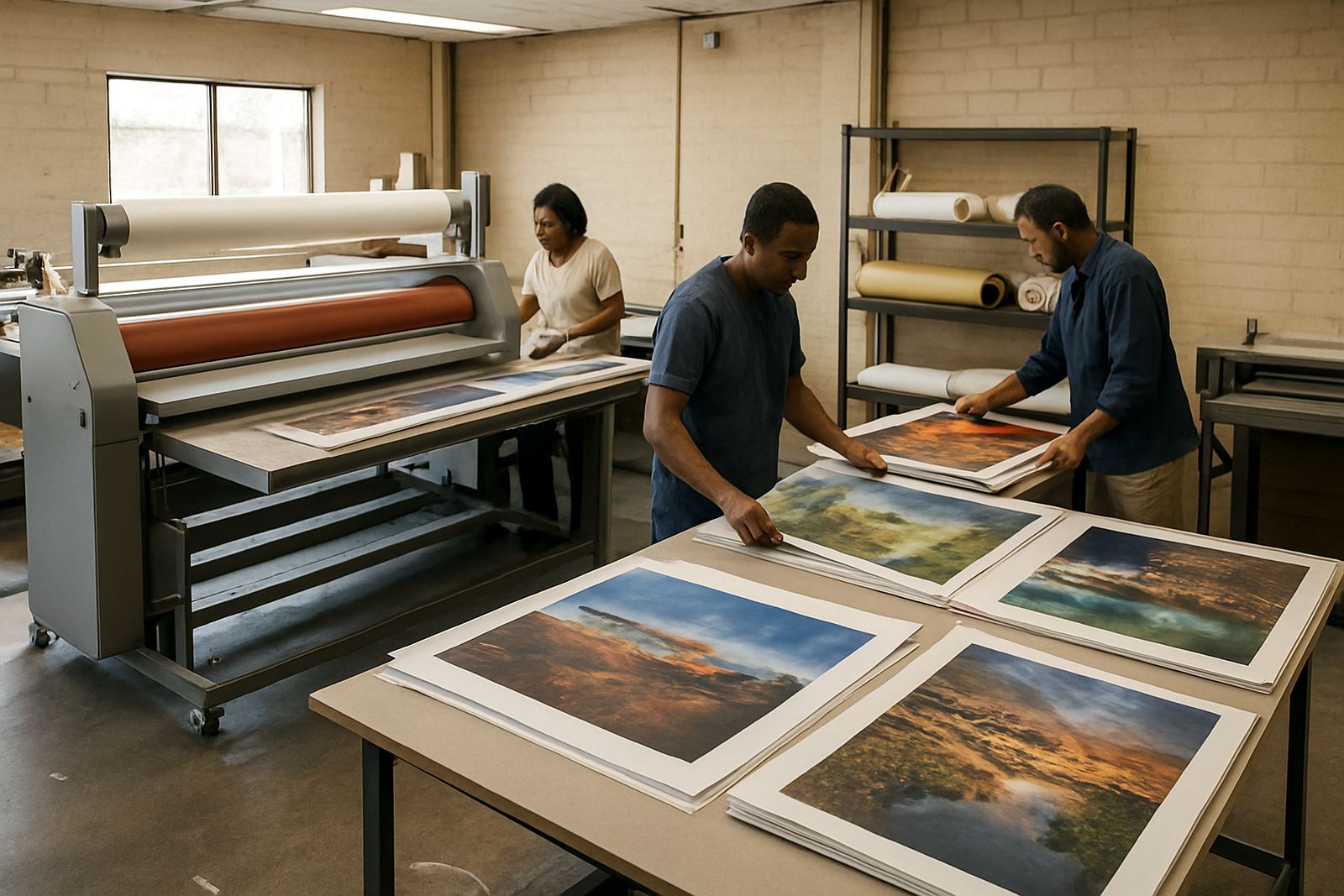
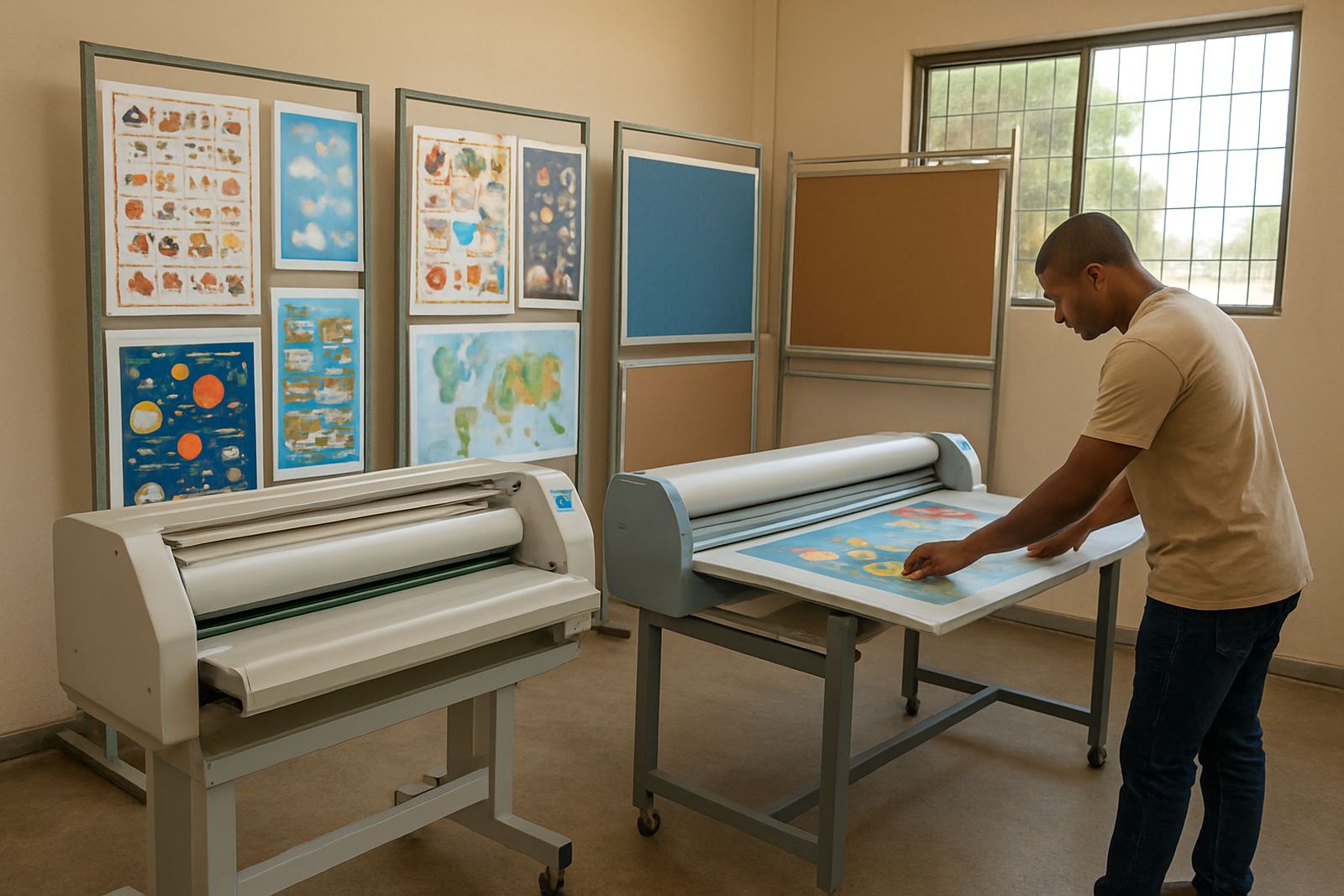
Most school print rooms do well with a wide-format roll laminator that can handle posters, signage and teaching charts up to 1 000 mm or 1 600 mm wide. Cold roll units are useful for pressure-sensitive films and heat-sensitive prints, while hot roll machines suit tougher finishes and heavier duty output. If your workload includes both, a mixed setup may be more practical than buying one machine and hoping it covers everything.
For smaller schools, a compact machine with steady speed and reliable pressure settings is often enough. Larger campuses, district offices and print centres normally want a unit with better roller control, stronger drive systems and easier temperature adjustment. If staff change regularly, choose a machine that is simple to learn and easy to keep in calibration. That way your outputs stay consistent, even during busy registration weeks.
- Cold roll laminator for charts, signage and posters
- Hot roll laminator for durable noticeboard and display work
- Spare film rolls sized for common school poster formats
- Basic trimming tools and storage racks for completed work
Layout and planning advice for teaching aids and notices
Good school printing starts with the room, not just the artwork. Measure where the piece will be used, then choose the size and finish to suit the wall, board or stand. A4 and A3 pieces are common for notices, but teaching aids and directional signage often work better at A2 or A1, especially in busy passages where learners need to read quickly.
Leave enough white space around text so the laminate edge does not crowd the message. For classroom charts, use high contrast colours and simple icons. For event posters, keep dates, times and venues in one block so the important details are readable from a distance. If a sign will be handled often, round off the corners and avoid fine text at the outer edge, because that area takes the most wear.
- Match size to viewing distance, not just available paper
- Allow trim space so the laminate seals cleanly
- Use clear headings for departments, blocks and hall notices
- Plan a repeatable template for termly updates
Common mistakes schools make with laminated work
One common mistake is choosing the wrong finish for the job. Gloss can look neat on posters, but it can reflect too much light in bright corridors or under classroom fluorescents. Matt finishes are easier on the eye for reading, while heavier films are better where the print is touched often. Another issue is sending damp or curled prints into the machine, which can trap air and spoil the edge seal.
Schools also underestimate how often machines are used in short bursts. A laminator that works on Monday may drift by Thursday if rollers are dirty or the heat system is not checked. That is where routine servicing helps. Roller cleaning, pressure calibration and heat system checks keep the machine ready for term starts, sports days and exam periods. Electrical fault finding and drive system repairs are also worth sorting early, before a full stop causes a backlog.
- Using the wrong film thickness for high-handling items
- Feeding prints before ink or toner has cured
- Ignoring small curl, bubbles or uneven tension
- Waiting until the machine fails during a deadline week
Budget ranges for school laminating equipment and upkeep
Budget depends on output size, speed and how often the machine runs. For a small school office or modest print room, entry-level wide-format roll laminators usually start around R18 000 to R35 000. Mid-range models for regular campus work tend to sit between R45 000 and R95 000. Heavier duty machines for larger schools, colleges or district print rooms can reach R120 000 to R250 000, especially where precise temperature control and stronger rollers are needed.
Do not forget the running costs. Film rolls, spare parts and scheduled servicing all matter over a year. A pre-purchase inspection can help avoid buying a machine that looks fine but has worn rollers or a tired drive system. For schools outside Johannesburg, on-site breakdown support can save time and courier costs, particularly during peak periods when a stopped machine causes missed notices and reprints.
- Entry-level school use: R18 000 to R35 000
- Regular campus printing: R45 000 to R95 000
- Higher output print rooms: R120 000 to R250 000
- Allow extra budget for servicing, operator training and spare parts