Laminators That Keep Print Shops Moving
In a busy print shop, laminating is rarely a once-off job. It sits in the same production flow as trimming, mounting, dispatch and client collections, so the machine has to handle varied media without slowing the line down. Posters for retail, directional signs, menu boards and exhibition graphics all need a clean finish that protects against scuffing, moisture and handling marks.
South African print shops also deal with practical issues that affect output. In Gauteng, dust can build up fast on rollers and heating elements. Along the coast, humidity can affect storage and finished stock. During load-shedding, stable start-up and shutdown matter because rushed resets can shift pressure settings or leave films wrinkled. A laminator should fit the work mix, not force the team to work around it.
Typical equipment set for a print shop floor
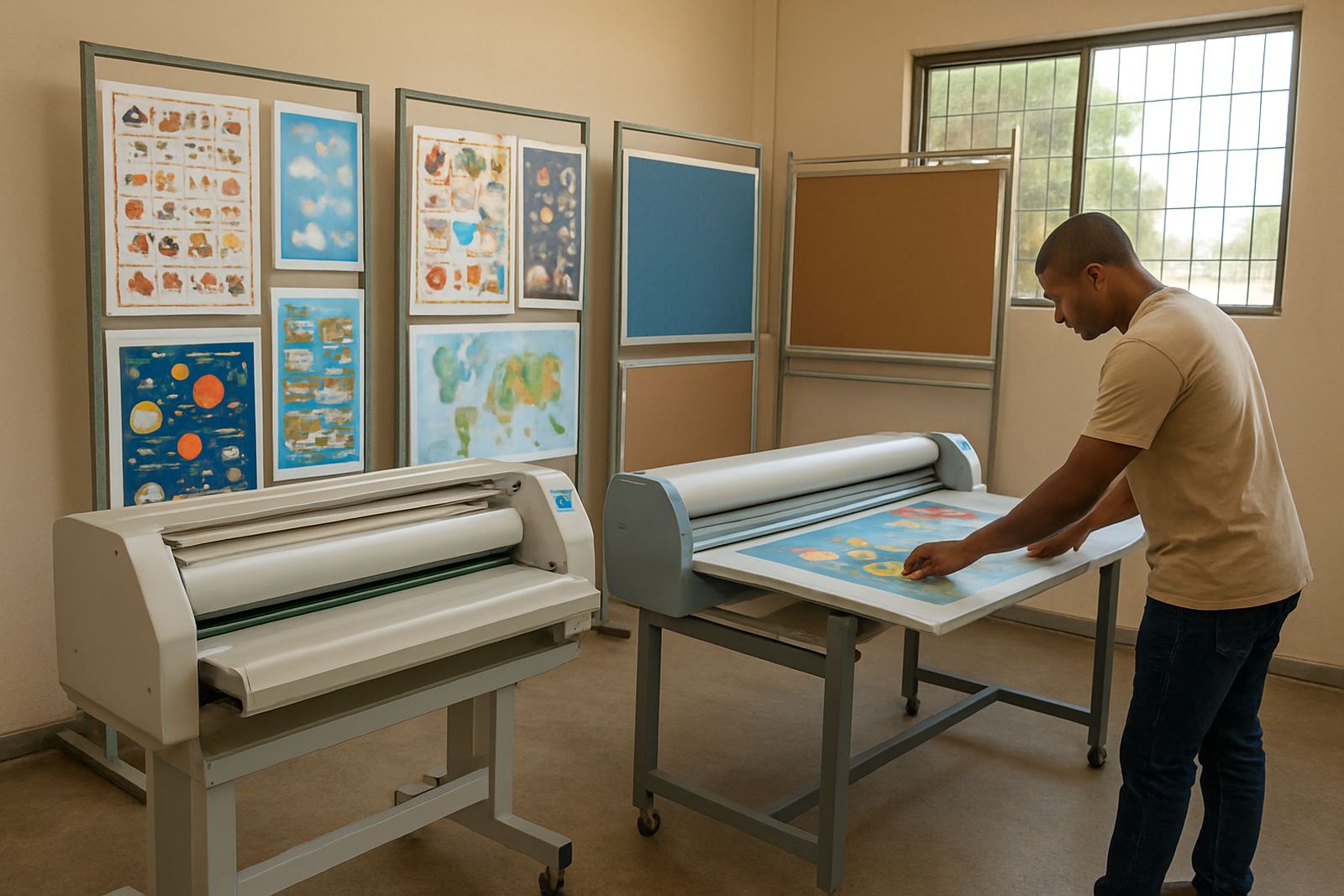
Most print shops use one main roll laminator for daily production, then a smaller unit or finishing bench for urgent short runs. The right setup depends on sheet width, output volume and whether you work mostly with cold films, hot films, or both. A shop producing A3 posters all week has different needs to a studio finishing mounted boards for corporate clients in Sandton or Pretoria.
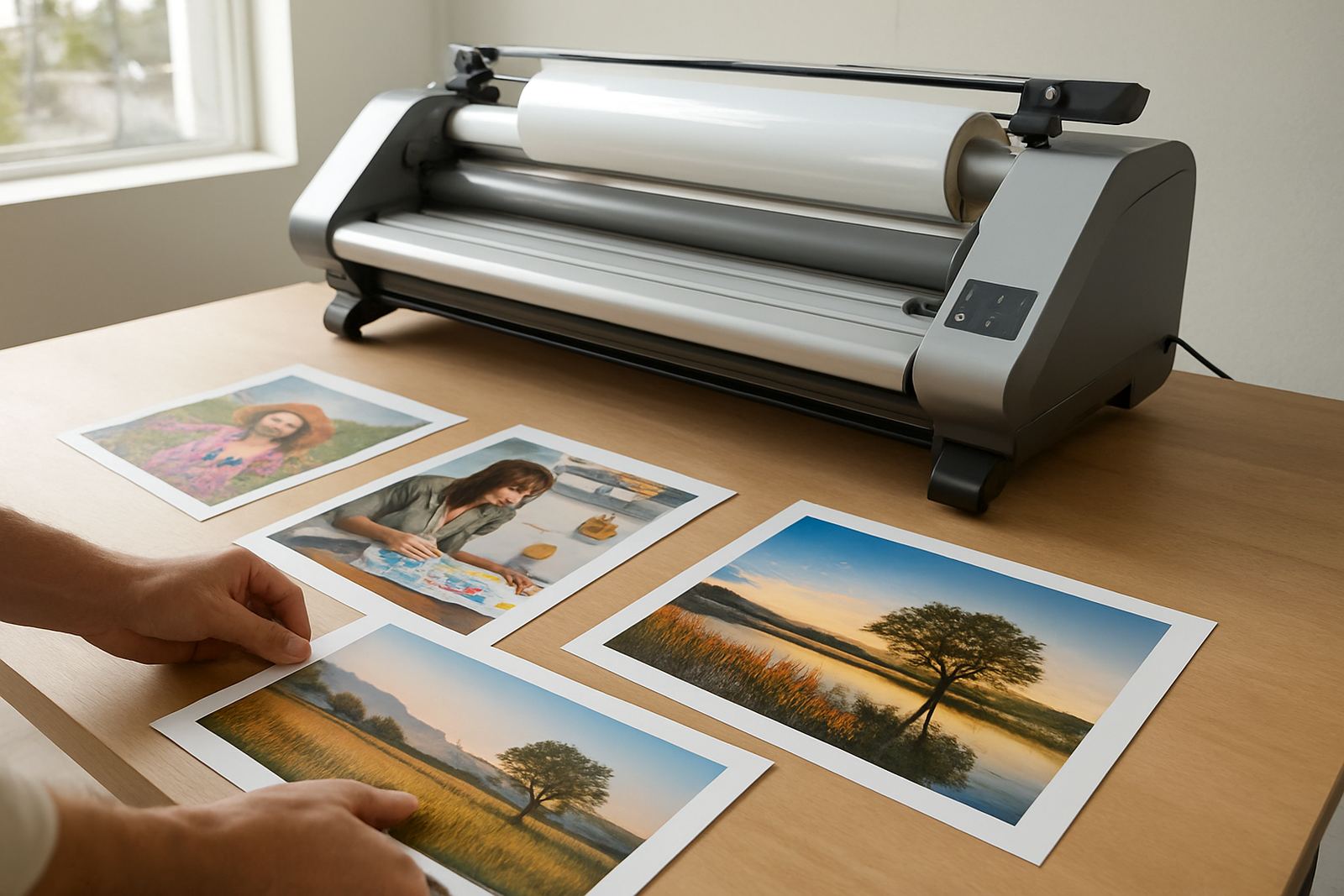
- Wide-format cold roll laminator for digitally printed posters, self-adhesive graphics and heat-sensitive stock
- Hot roll laminator for films that need added bonding or extra surface protection
- Receiving table or outfeed space for boards and long banners
- Trimming tools, edge guards and a clean storage area for rolls and film cores
- Basic cleaning kit for rollers, dust removal and daily wipe-downs
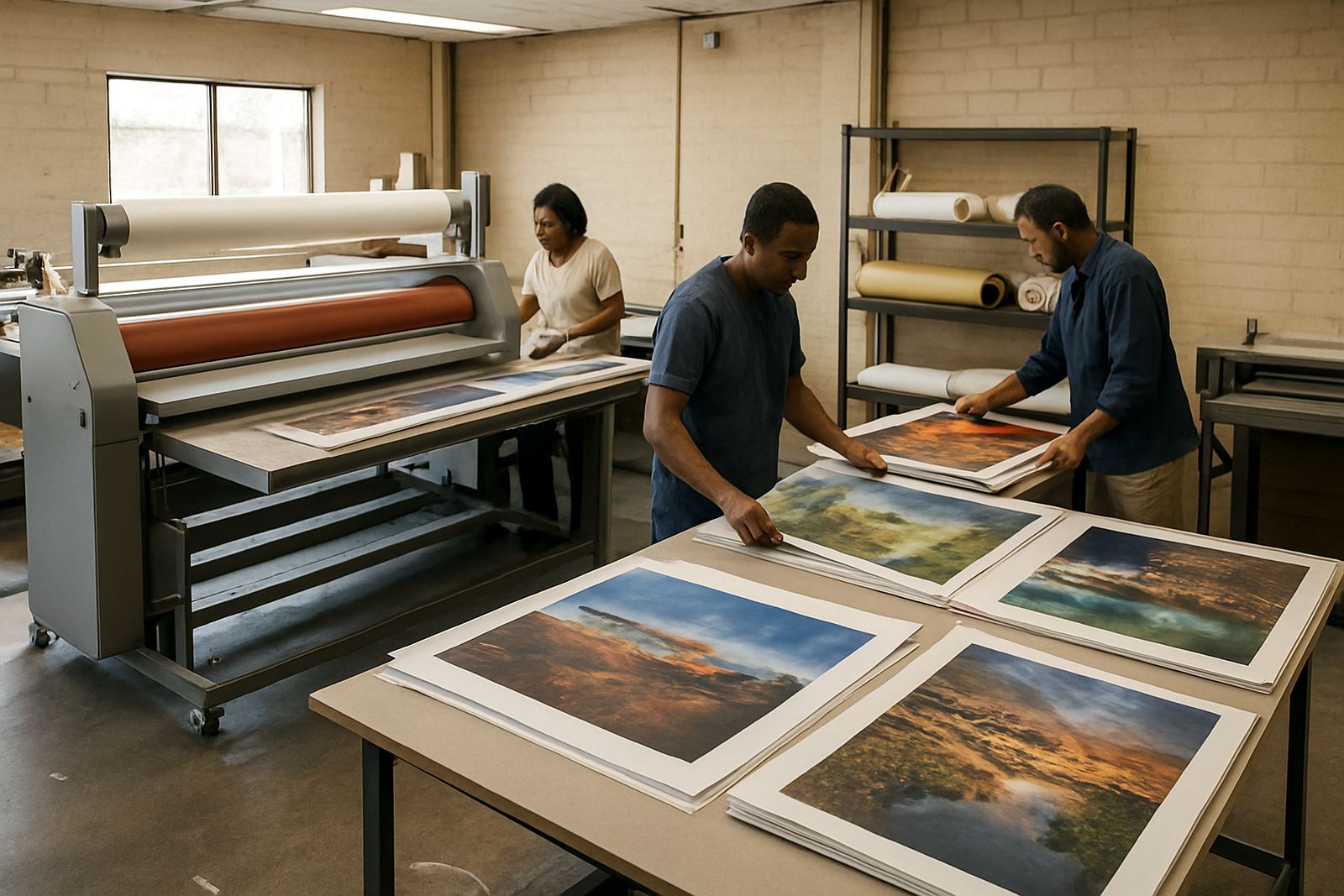
A good production line keeps printing, laminating and cutting close together so the team does not carry fragile work across the shop floor. That reduces marks and rework, especially on larger jobs where one crease can spoil a full run.
Layout and planning advice for Kya Sand and beyond
If your shop is based in Kya Sand, Randburg, Sandton, Midrand, Pretoria or the East Rand, plan the machine position around both workflow and service access. Leave clear space on the infeed and outfeed sides, and keep enough room for a technician to reach the drive side, heating area and electrical controls. Tight corners make roller cleaning and alignment work harder than it should be.
Place the laminator where the floor is level and the power supply is properly protected. A dedicated circuit is often the better option for larger machines, especially where the shop uses multiple presses, cutters and compressors. It is also worth planning for a simple staging area nearby for prints to rest before lamination, because cold stock that has not settled can curl and shift under pressure.
- Allow at least 1 metre of clear working space around the operator side where possible
- Keep film rolls in a dry cupboard or sealed storage away from direct sun
- Separate lamination from dusty cutting or sanding areas
- Check plug points, circuit protection and cable routing before installation
Common mistakes that slow production and waste film
One of the biggest mistakes is choosing a machine that is too small for the real workload. A shop may think it only needs a modest unit, then land a run of 500 A2 posters or a batch of mounted boards for a school group and find the queue building up. Under-sizing often leads to overtime, extra handling and more pressure on staff.
Another common problem is poor roller maintenance. Dust, adhesive build-up and worn pressure settings cause bubbles, silvering and uneven adhesion. That means reprints or manual touch-ups, which are expensive and time consuming. Electrical faults and tired drive systems also show up when a machine is used hard without routine servicing. We see this a lot after a few months of heavy use, especially where operator changes are frequent.
Training is part of the fix. A machine can only perform well if the operator knows film tension, heat settings, feed speed and how to stop a sheet from skewing. Even a good team can waste material if one person is guessing settings from job to job.
Budget ranges for South African print shops
Budget depends on width, heat capability, build quality and whether you need on-site installation. As a guide, entry-level cold roll laminators for smaller print rooms can start around R25 000 to R45 000. Mid-range wide-format machines used for regular poster and board work often sit between R55 000 and R120 000. Larger hot and cold units with stronger drive systems, higher output capacity and better control features can reach R150 000 to R280 000 or more.
It is wise to factor in delivery, commissioning and the first service visit, because the real cost is not only the machine itself. If a shop is replacing an older unit, add allowance for roller cleaning, pressure calibration and any electrical checks needed before production restarts. A pre-purchase inspection can save a bad buy, especially on used equipment where the rollers may look fine but the heat system or feed drive is already tired.
Support for daily work, breakdowns and servicing
For print shops, the best machine is the one that keeps working when the week gets busy. Laminator supports businesses across South Africa from our base in Kya Sand, Johannesburg, with installs nationwide and direct help for routine servicing, roller cleaning, pressure calibration, heat system checks, drive system repairs and electrical fault finding. We also handle on-site breakdowns, spare parts support, operator refresher training and pre-purchase inspections.
That support matters when a shop has a delivery due in the morning and a machine that will not heat properly or feed straight. A quick technical response can protect the schedule and keep client work moving. For shops in Randburg, Sandton, Midrand, Pretoria and the East Rand, local access helps reduce downtime, and for out-of-town sites we plan the job properly so the visit is practical, not drawn out.
If your print shop needs a laminator that can carry daily production without drama, speak to our team and match the machine to the work you actually do, not the work you hope will arrive one day.