When presentation boards have to look ready for review
Architects, interior designers, town planners and student teams often need drawings and renders presented on foam board, mount board or rigid sheets that travel from the office to a client meeting, then on to council or a tender room. The challenge is not only making the print look good, but keeping it flat, clean and free of bubbles, silvering or edge lift. In Johannesburg and Pretoria, where work often moves fast between consultants, a board that curls in the car or scuffs on the way into a meeting can waste hours.
Wide-format laminating is used for final presentation sets, elevation boards, artist impressions and competition entries. Cold laminating suits most print work because it protects colour without heat stress, while hot roll laminators are useful for certain poster finishes and repeat production. For firms in Sandton, Randburg and Midrand, a dependable machine helps keep presentation work in-house instead of sending it out each time a project changes.
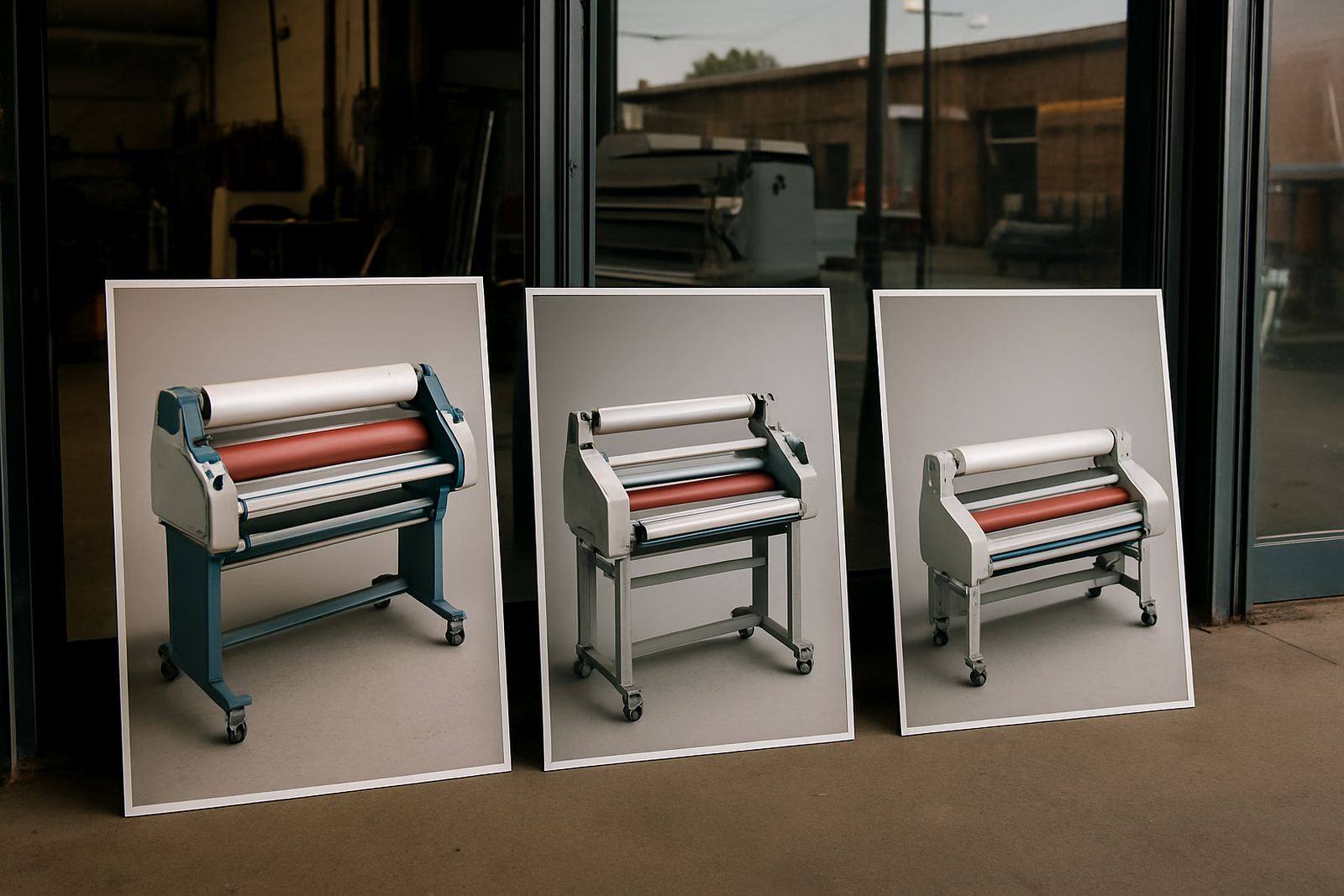
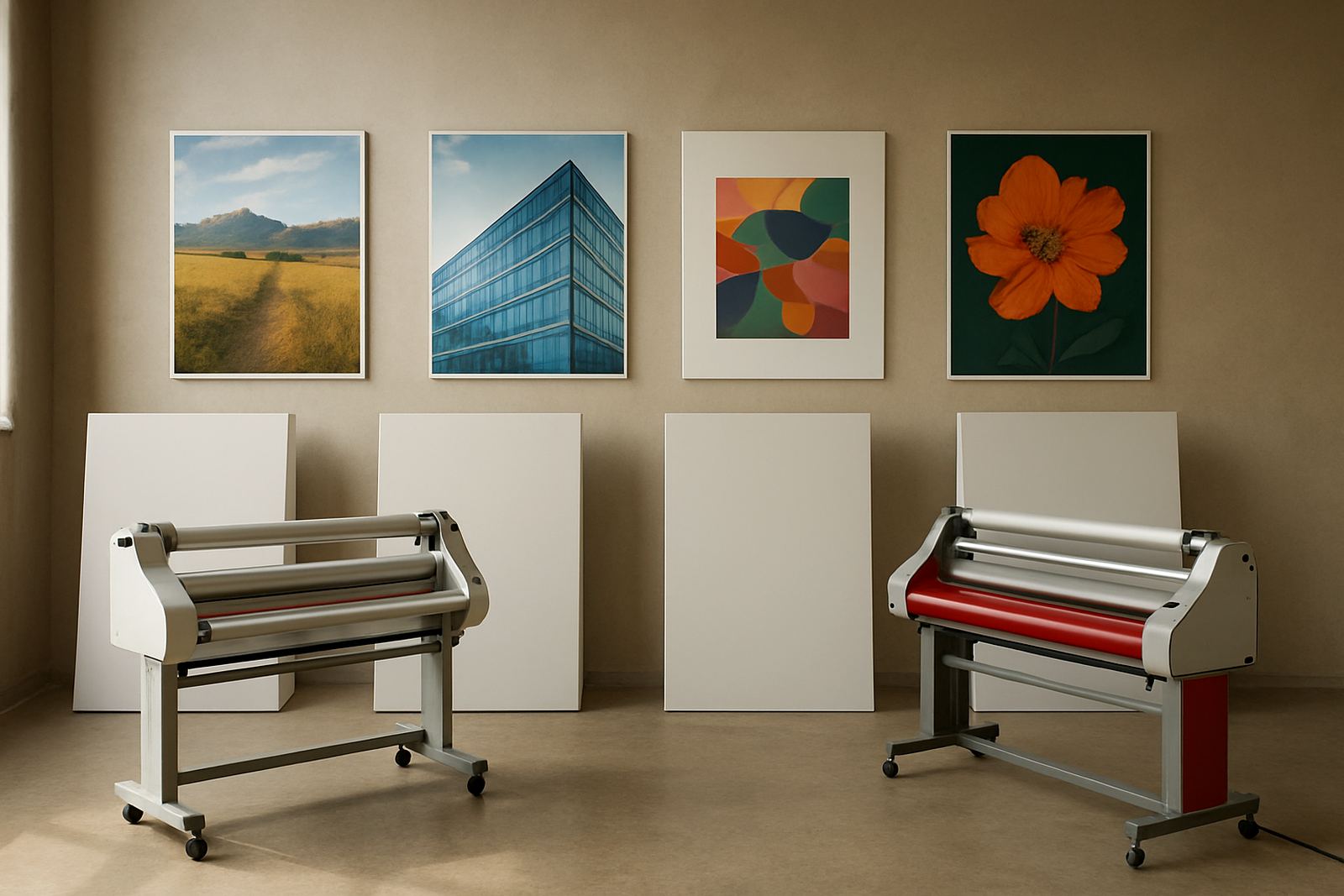
Typical equipment set for architectural work
The right machine depends on board size, monthly volume and the type of finish you need. Some studios only need a compact unit for A2 and A1 outputs, while others need a wide-format laminator that can handle 914 mm, 1 100 mm or larger boards for full presentation runs. In many offices, the laminator sits with a trim table, cutting tools and a storage area for rolls and backing materials.
- Cold roll laminator for renders, plans and colour boards
- Hot roll laminator for selected presentation finishes
- Wide-format feed suitable for A1, A0 and custom board sizes
- Adjustable rollers for pressure and alignment control
- Heated system where required for film activation and smoother finish
- Stable stand or worktable to support long sheets
- Spare film rolls, tension tubes and cleaning supplies on hand
We often recommend checking whether the unit will also handle mounting work. If your team prepares competition boards, lease pack submissions or developer presentations, a machine with steady feed and accurate pressure settings will save a lot of rework.
Layout planning that prevents curled edges and wasted boards
Good board layout starts before the print goes through the laminator. Leave enough border around plans and renders so the film seals properly, and keep text away from the outer edge where trimming may catch it. For boards that need to travel, a slightly thicker mounting board can help maintain flatness, especially in summer humidity along the coast or during the dry winter in Gauteng when materials can move.
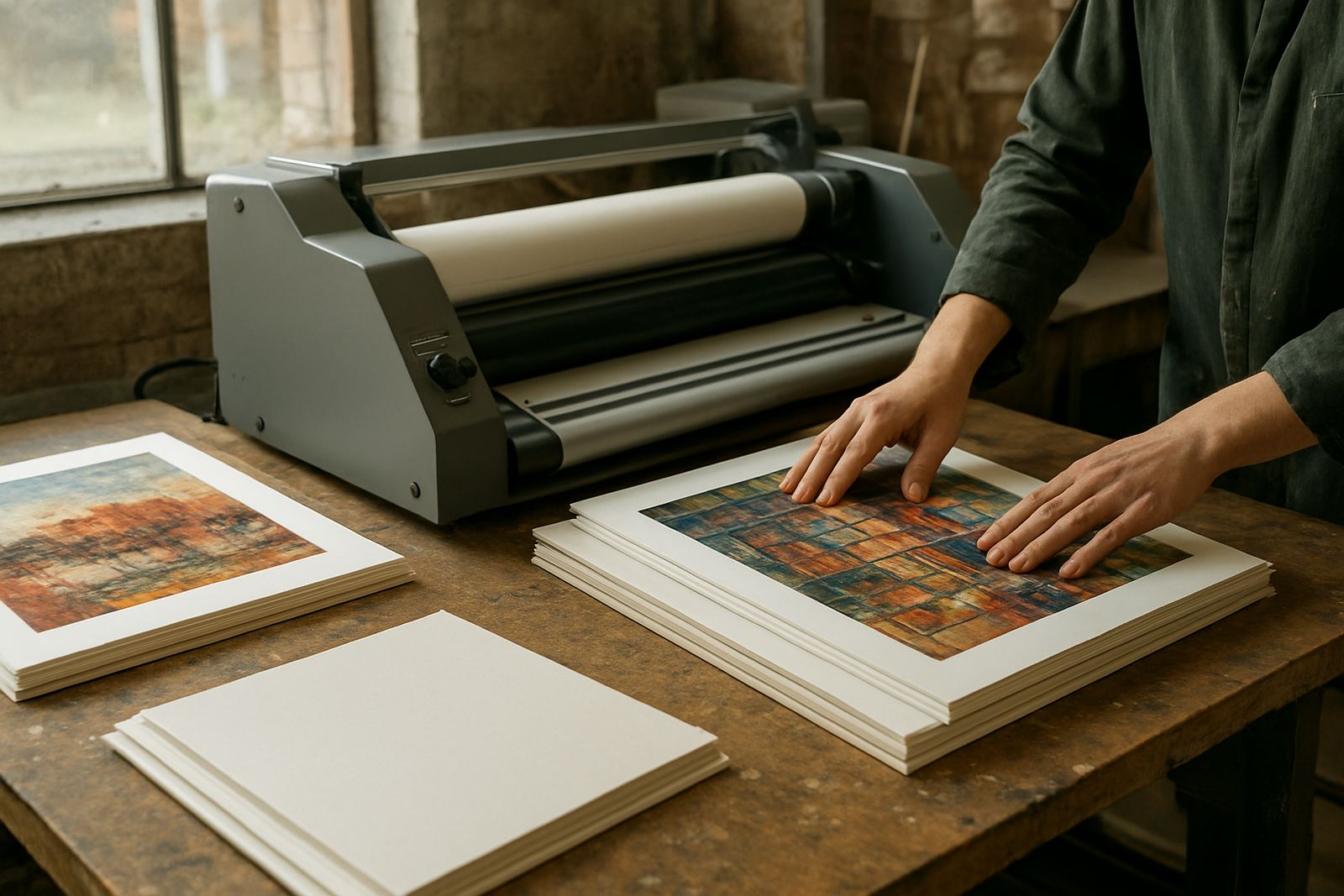
Think through the full job flow: print, dry time, trimming, laminating, mounting and final cutting. If you work with multiple sizes, group jobs by sheet type so operators do not keep changing settings. In smaller studios around Kya Sand or East Rand, this reduces mistakes and keeps the finish consistent from one submission to the next. A little planning also helps when load-shedding interrupts production and you need to restart without wasting film.
- Measure the finished board size before printing
- Keep at least 10 to 15 mm safe margin where trimming will happen
- Allow extra drying time for heavy ink coverage
- Store rolls flat and away from direct sun
- Label board sets by project and issue number
Common mistakes that show up on presentation day
The most common problems are easy to avoid once the machine is set correctly. Too much pressure can mark delicate stock, while too little pressure leaves haze or lifting at the edges. Dirty rollers can show lines across a finished render. Film that is not matched to the board thickness can cause ripple or a slight bow that becomes obvious under meeting-room lights.
Another issue is rushing the first sheet after a break in production. Operators sometimes forget to test on a scrap board, especially after an electrical outage or when switching from a narrow plan to a large presentation board. Moisture is another factor. In humid areas such as Durban or along the coast, boards should be stored in a dry room before laminating. If you are preparing multiple client sets, keep the stack covered so dust does not settle on the surface.
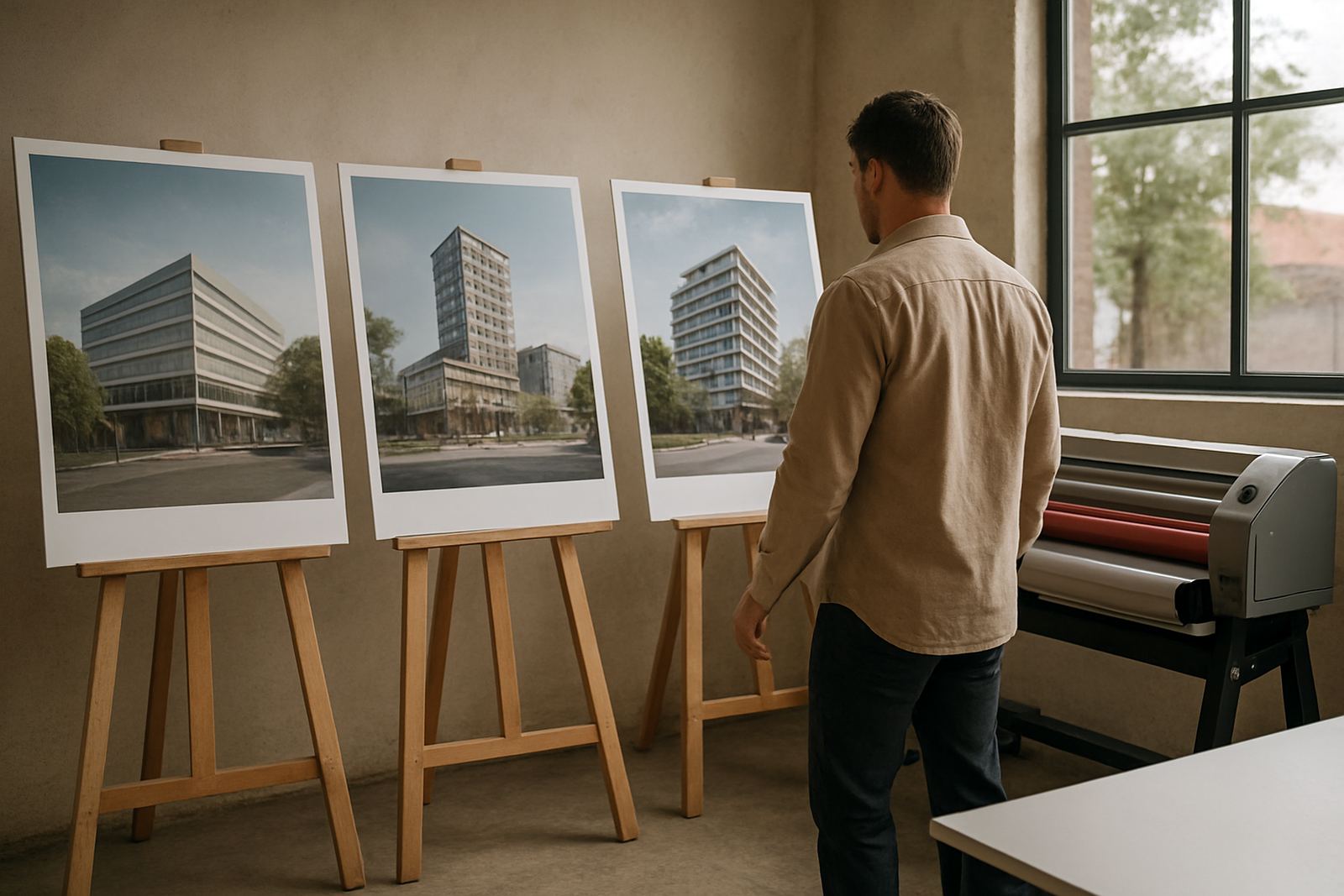
For firms submitting to municipalities, universities or private developers, a neat board matters. A clean edge, true colour and flat finish can help a proposal look organised and ready for review.
Budget ranges for studios, print rooms and project teams
Pricing depends on width, heated or unheated operation, output speed and the level of control you need. Entry-level wide-format cold laminators are often suitable for smaller architectural studios and student labs, while heavier duty hot and cold machines are better for print rooms handling frequent board production. As a practical guide, budget planning usually falls into these bands.
- R25,000 to R55,000 for compact units suited to lower volume board work
- R55,000 to R120,000 for mid-range wide-format machines with better feed control
- R120,000 to R250,000 plus for higher output systems and specialist presentation work
It is worth including installation, training and ongoing service in the total. A machine that is cheaper upfront but needs constant adjustment can cost more over a year. For busy teams in Johannesburg, Sandton and Pretoria, uptime matters more than a small saving at purchase.
Support, servicing and installs across South Africa
Laminator is based in Kya Sand, Johannesburg and supports installs nationwide. We work with print shops, graphic designers, architects and artists who need a machine that keeps producing clean boards week after week. Our team can help with routine servicing, roller cleaning, pressure calibration, heat system checks, drive system repairs, electrical fault finding, on-site breakdowns, spare parts support, operator refresher training and pre-purchase inspections.
Offices in Randburg, Midrand, Sandton and the East Rand can be supported from our Kya Sand base. Regional projects are also covered, including advice needed ahead of a tender submission or a large batch of board presentations. Lunga Tshabangu oversees the business, supported by Lethabo Hlungwani, Herman Snyman, Naledi Moeketsi, Yusuf Ismail and Leshni Dookhi. Sales queries can come through our contact form with your board sizes, monthly volume and the setup you need for architectural presentation work.
When a presentation deadline is close, the right laminator and the right support make a practical difference, not a cosmetic one. That means fewer retries, less waste and a better finish on the boards that carry your work into the room.