When window graphics must work in daylight
Window poster displays are often the first thing a customer sees from the pavement, parking lot or mall walkway. If the print wrinkles, lifts at the edges or goes dull in afternoon sun, the message is lost before anyone steps inside. For retailers, agents, salons, pharmacies and showrooms, the display has to stay neat through heat, cleaning and daily handling.
In Johannesburg and Pretoria the biggest issue is dust and dry air. On the coast, humidity can make cheap films curl or lose grip. We help clients choose a setup that suits the window, the viewing distance and how often the graphics will be changed. That keeps the finish tidy and the replacement cycle sensible.
Typical laminating equipment for poster window work
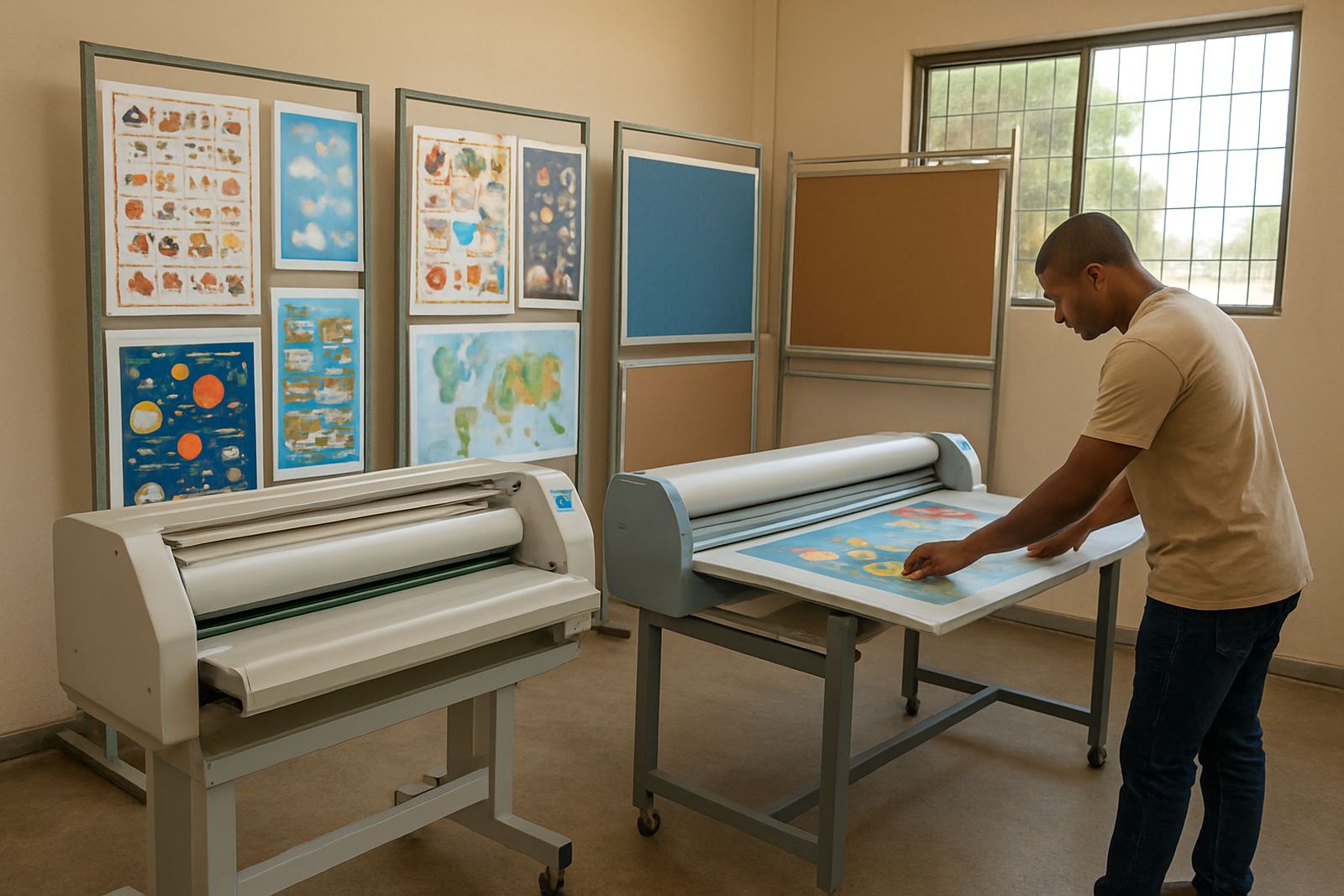
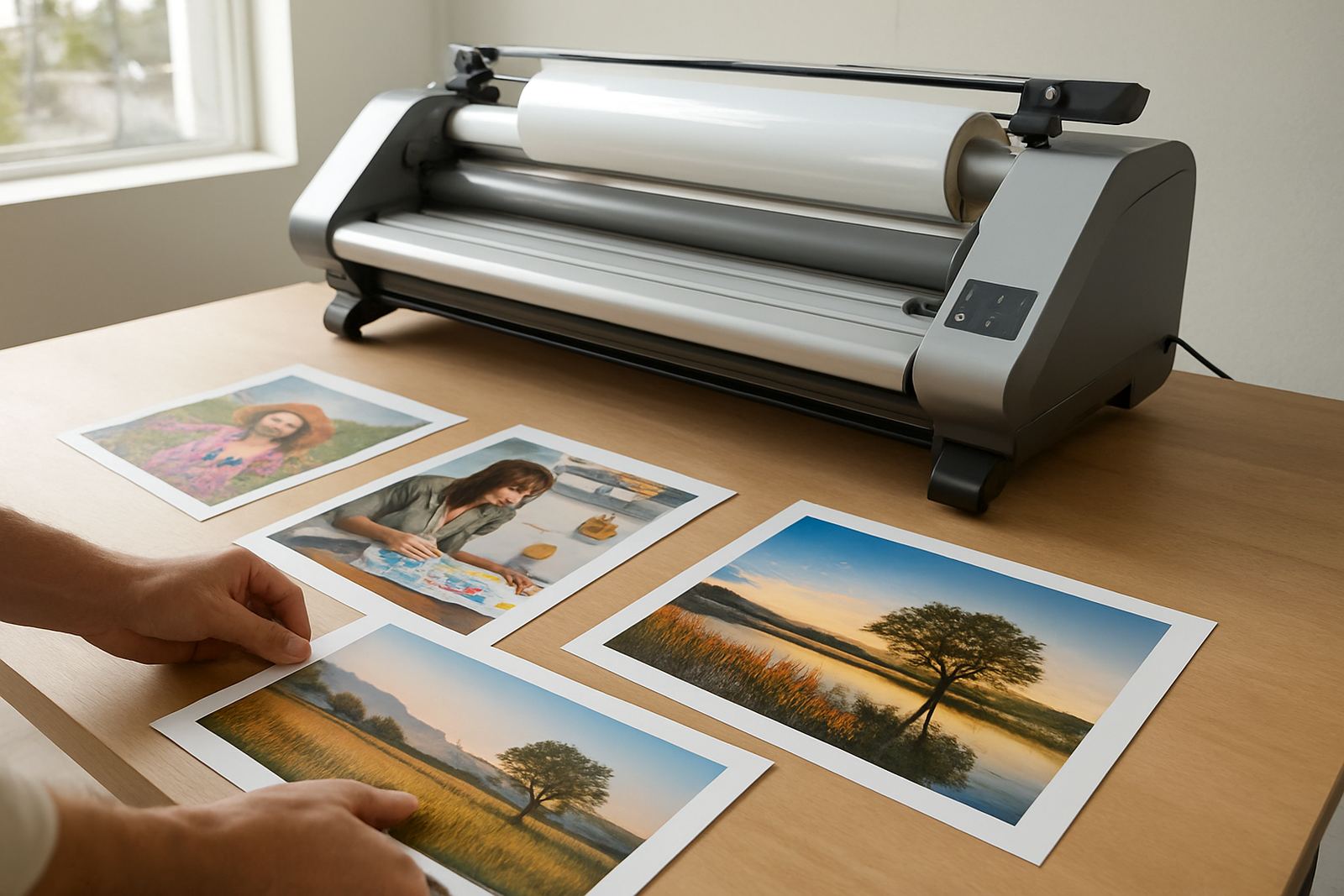
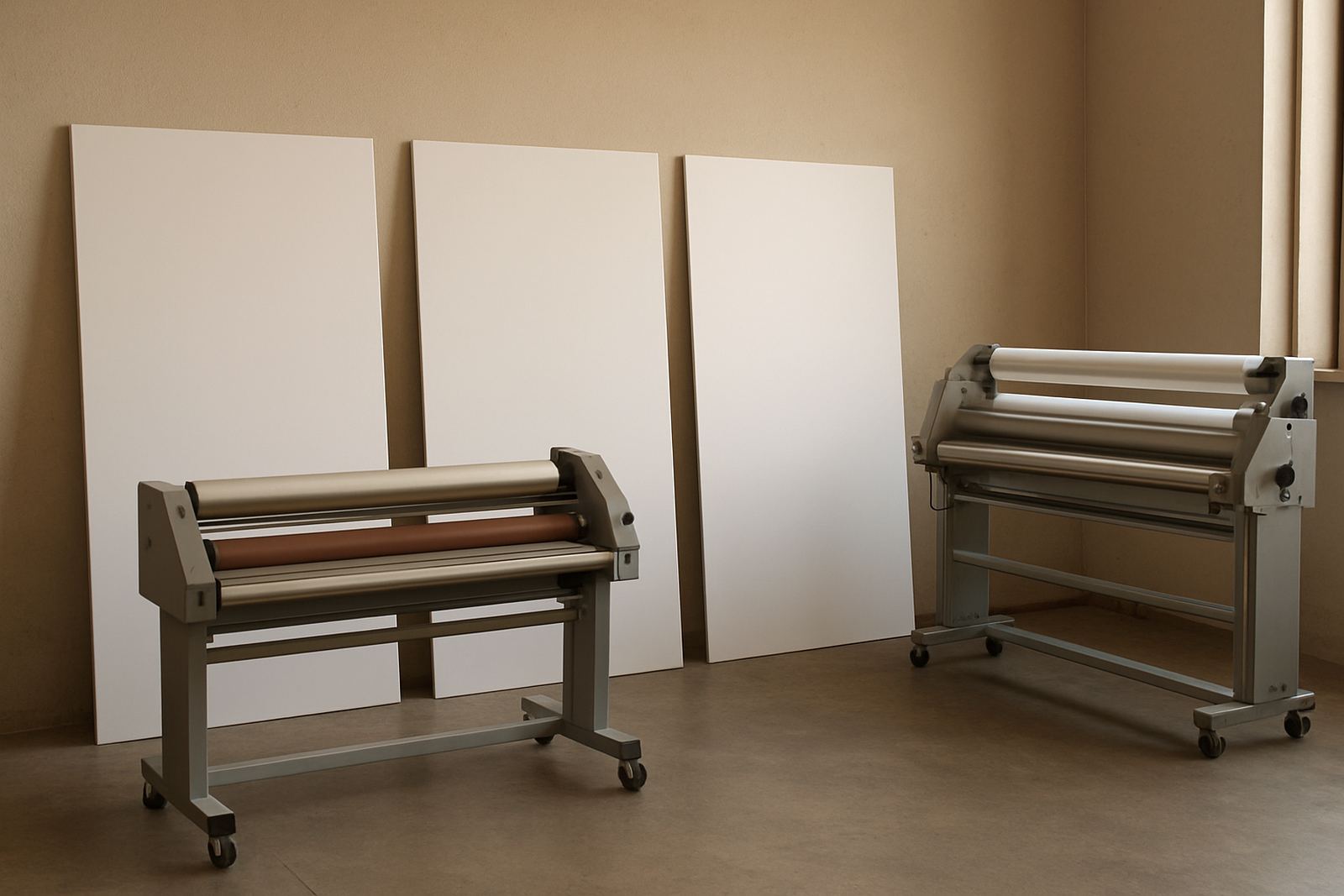
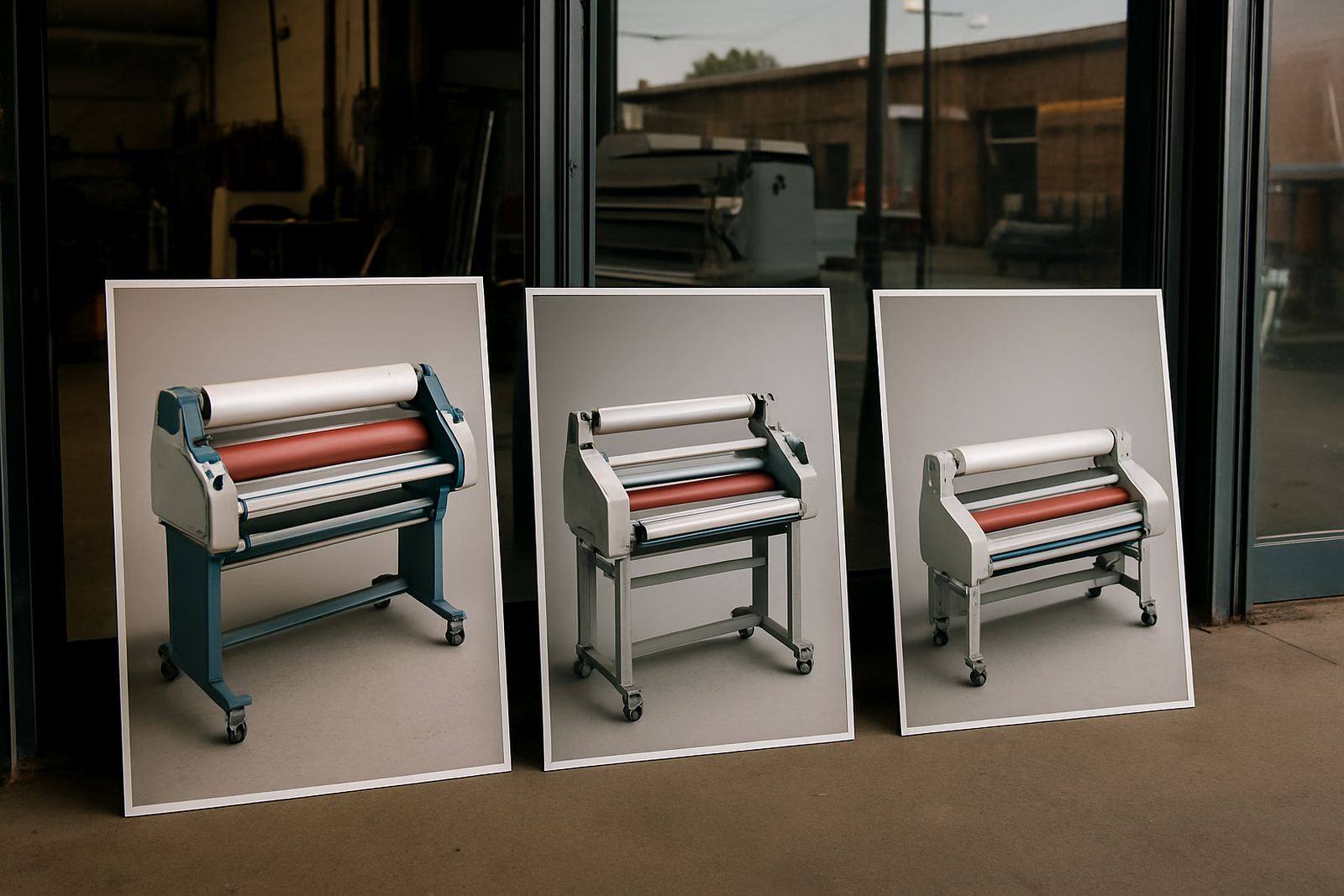
For window posters, the usual kit is a wide-format cold or hot roll laminator matched to the print size and media type. Cold roll units are common for pressure-sensitive films, while hot roll systems suit work that needs added heat for bonding or a tougher finish. The right machine depends on whether you are laminating single posters, mounted panels or larger promotional runs.
- Wide-format roll laminator for A0, 1 000 mm or 1 300 mm media widths
- Cold laminating film for quick turnaround and heat-sensitive prints
- Hot laminating system for higher adhesion on selected applications
- Trimming and alignment tools for clean edges and repeatable sizing
- Spare rollers, pressure parts and basic cleaning supplies
We also look at feed stability, roller evenness and whether your team needs a machine with simple controls. A complicated unit slows production, especially when the printer is busy and the window install is due the same afternoon.
Planning the layout before anything is laminated
A good window poster starts with the measurements, not the print. Measure the visible glass area, check for handles, frames, security film and decals already in place, then allow for trim and overlap. If the poster will sit behind glass, glare and reflections need to be considered as well.
In malls or shopfronts with strict landlord rules, the display size may be limited and the finish may need to stay within branded window bands. For street-facing glass in Sandton or Randburg, visibility from across the road matters more than close-up detail. That changes the font sizes, image density and where the most important line sits.
- Confirm the exact window size in millimetres before print output
- Leave margin for trimming, frame covers and safe mounting
- Decide whether the display will be static or changed monthly
- Choose gloss or matte film based on glare and light levels
Common mistakes that shorten poster life
Many window displays fail because the print side is treated as an afterthought. If the laminate is too thin, the poster can buckle near the sunlit edge. If pressure is uneven, small bubbles show up once the glass heats up in the morning. And if the roller settings are off by even a little, the panel may track crooked and waste material.
Another common problem is cleaning. Harsh glass sprays and rough cloths can mark the surface, especially on softer films. In busy stores this happens fast, because staff often wipe the windows without checking the finish. A short operator refresher can save a lot of remakes later, and it keeps your team confident on the machine.
We also see posters cut too close to the edge. That leaves no room for handling and makes corner lift more likely. If the window is in direct sun, edge seal and installation method matter as much as the print itself.
Service support that keeps the line moving
When a laminator goes out of spec, the whole print schedule can stall. Our support team handles routine servicing, roller cleaning, pressure calibration, heat system checks, drive system repairs, electrical fault finding and on-site breakdowns. We also supply spare parts and do pre-purchase inspections if you are adding another machine to your shop.
For Kya Sand, Sandton, Midrand, the East Rand and Pretoria, we can plan service visits around production windows. For clients elsewhere in South Africa, we arrange nationwide installs and practical after-sales support. That matters when a rollout includes several branches and each site needs the same finish.
- Routine servicing for steady day-to-day output
- On-site breakdown response where the job cannot wait
- Installation and setup advice for new or relocated equipment
- Operator training so the team can run jobs consistently
Budget ranges for window poster displays in Rand
Budgets vary depending on size, speed, finish quality and how often the display changes. A smaller shop doing occasional window posters will spend less than a print shop producing daily promotional runs. As a guide, entry-level wide-format laminating equipment can start from around R45 000, while heavier-duty units for larger volumes and wider media can move into the R90 000 to R180 000 range. Larger production systems and specialist configurations can sit higher.
It is worth setting aside budget for installation, training and spare consumables as well. A well-chosen machine should reduce reprints, improve turnaround and keep the display looking consistent from one job to the next. In our experience, the cheapest option often ends up costing more once repairs, downtime and wasted film are counted.
If you are comparing machines for a new window display workflow, ask for a pre-purchase inspection and a clear view of the service plan. That gives you a better sense of running cost than the sticker price alone.
Choosing the right setup for your site
The best window poster display setup depends on the location, the print volume and the finish you want customers to see. A fashion store in Sandton may need crisp seasonal graphics with quick changeovers, while a pharmacy in Midrand may need clear health messaging that stays up for months. A showroom in Kya Sand may want larger posters that hold up against bright daylight and frequent window cleaning.
We help clients match the laminator to the work they actually do, not just the work they plan to do next year. That includes checking media widths, power supply needs, operator skill and how the machine fits into the print room. If load-shedding is part of your daily schedule, we also consider restart time and whether your team needs a machine that behaves predictably after power interruptions.
For advice, sales support or an on-site inspection, speak to the Laminator team in Johannesburg. Lunga Tshabangu and the team support clients across South Africa from our Kya Sand base, with a practical approach that keeps poster work moving.