Start With The Finished Use Of The Print
Before you order film, decide where the finished piece will be used. A menu board in a café, a school chart in Pretoria or a poster in a humid coastal office all need different protection. If the print is handled often, a thicker film usually gives better stiffness and scuff resistance. For display pieces, clarity and a neat edge matter more than heavy build.
As a rule, use lighter film for short-term indoor work and heavier film where the print must stay flat, survive frequent handling or be mounted for longer periods. In Johannesburg and the East Rand, dust and handling wear are common issues. In coastal areas moisture can affect curl and edge lift if the wrong film is chosen.
- Short-term signs: lighter film, lower cost per metre.
- Frequent handling: medium to heavy film for better protection.
- Display artwork: opt for film with high clarity and low haze.
Match The Film Type To The Machine
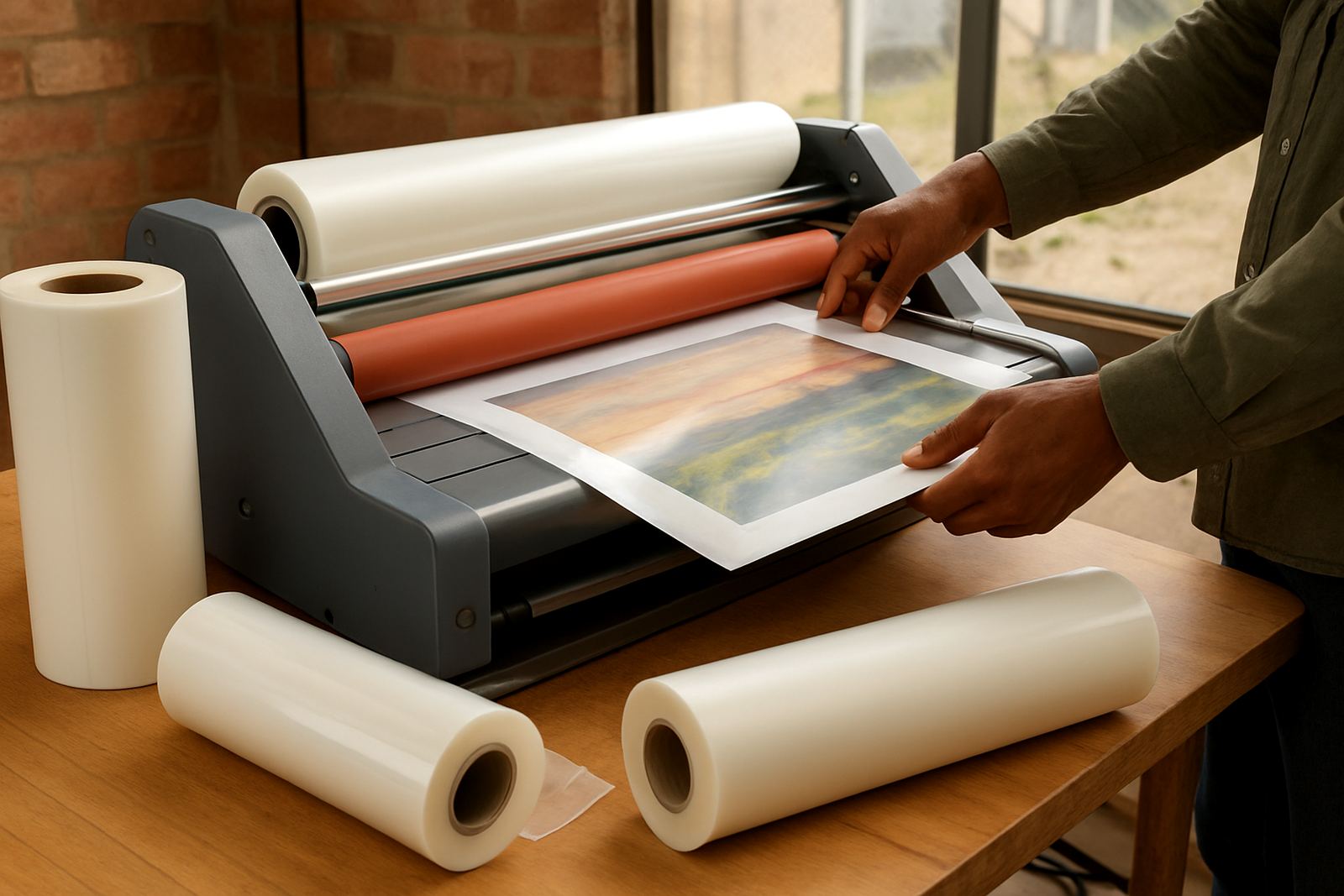
Cold roll film suits heat-sensitive prints, digital work and items that must not be exposed to higher temperatures. Hot roll film is better when the machine is set up for heat activation and a stronger bond is needed. The wrong match can cause bubbling, tunnel lines or poor adhesion at the edges.
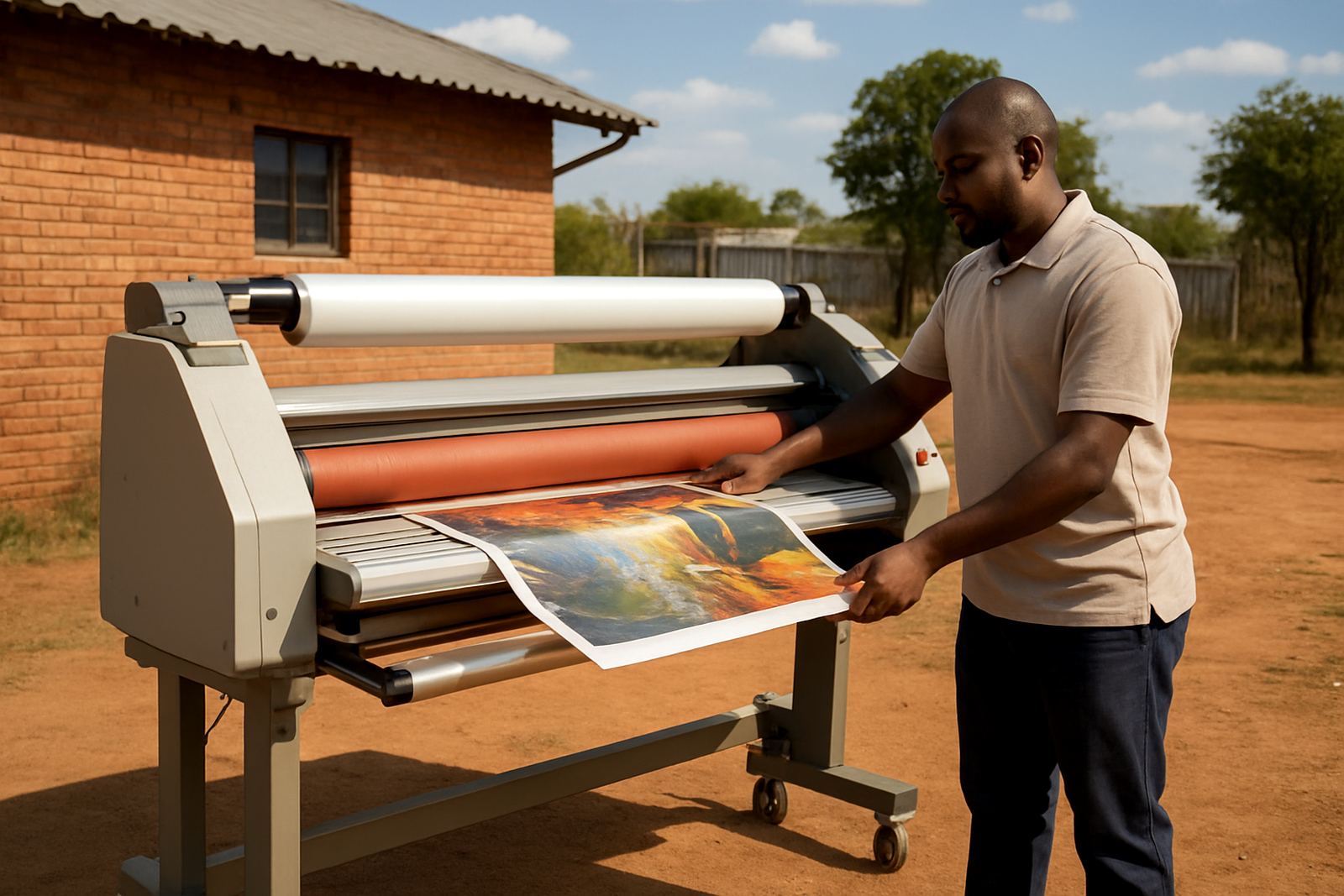
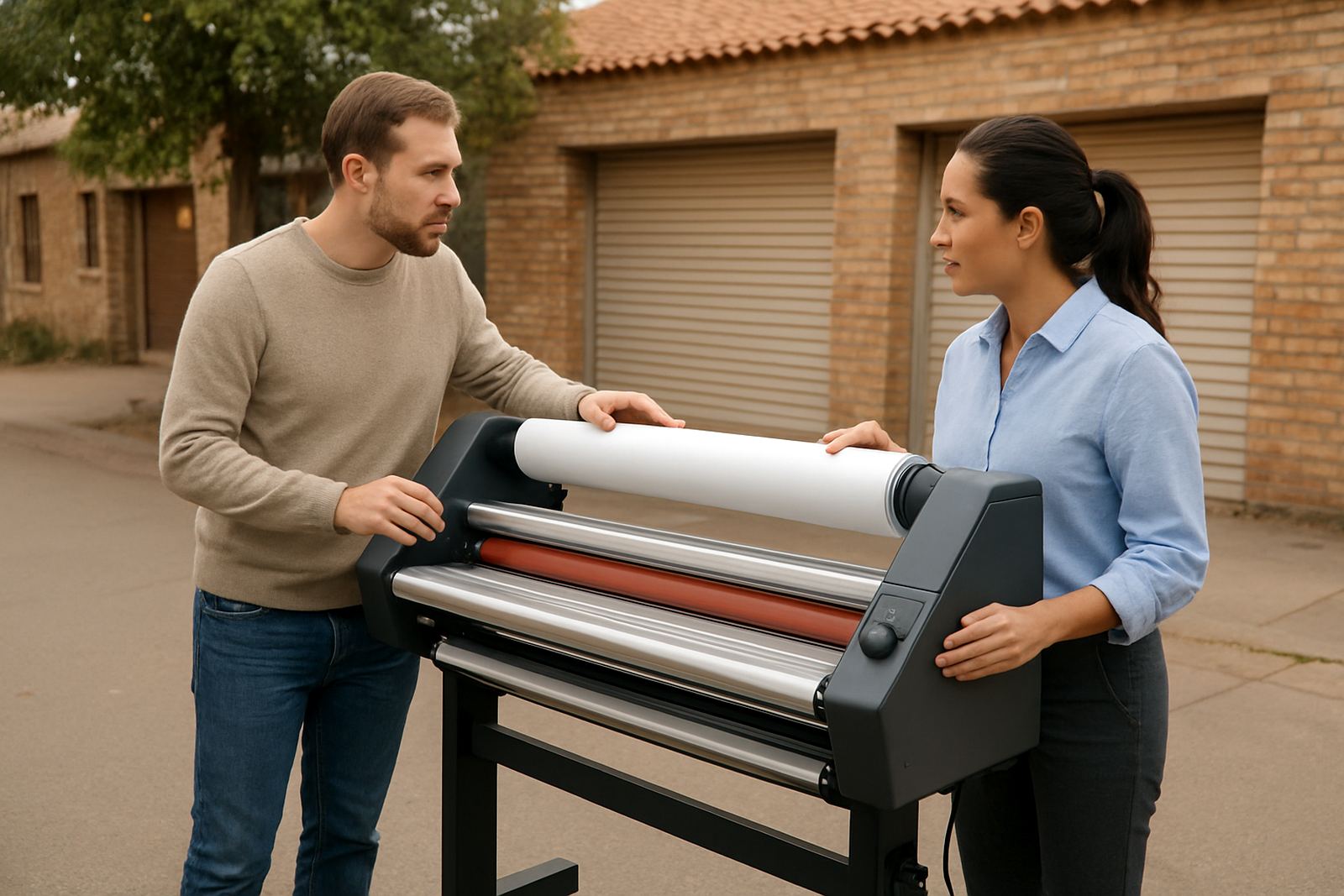
Check the laminator width, core size and maximum temperature before ordering. A 1 600 mm machine needs film supplied on the correct roll width and core, otherwise downtime follows. If you are unsure, send us the machine model, the job size and the substrate type and we can help you avoid costly mismatch.
- Cold film for heat-sensitive prints and safer day-to-day use.
- Hot film for strong bonding on the right machine setup.
- Always confirm roll width, core size and microns before buying.
Choose The Right Finish For The Job
Finish changes the look of the print and how it is handled. Gloss film gives colour more punch and works well on retail graphics and photography. Matt film reduces glare and is often better for reading, especially under strong office lighting. Satin sits in between and is useful where you want a clean look without too much shine.
If a print will be photographed, viewed under spotlights or hung near windows, glare control matters. In schools and offices, matt is often easier on the eye. For product boards and presentation pieces gloss can make colours appear sharper. There is no single best option, only the right option for the application.
- Gloss: strong colour pop and a brighter finish.
- Matt: low glare for reading and indoor viewing.
- Satin: a balanced finish for mixed use.
Use The Right Thickness And Adhesive Strength
Thickness is usually measured in microns. Thinner film is easier to work with on simple jobs, while thicker film adds stiffness and surface protection. If the print must be folded, cut close to edges or mounted on foam board, the film choice affects the final handling. Too thick can make trimming harder, too thin can feel flimsy.
Adhesive strength also matters. Some films are better for paper prints, while others are suited to coated stocks, synthetic media or board. In humid places and during load-shedding related stops and starts, a stable adhesive helps reduce silvering and edge issues. If you are laminating in a busy shop, keep film sealed and stored flat so it does not pick up dirt or curl.
- Thin film: lighter jobs, easier trimming.
- Medium film: everyday print finishing.
- Thicker film: better protection for handling and mounting.
Related Consumables That Keep Jobs Clean
Film is only part of the finishing setup. Clean rollers, proper cleaning sheets, release liners and cutter blades all affect the end result. If dust builds up on rollers, small marks show through the film and you waste material. If the blades are blunt, edges fray and the finished job looks untidy.
We also recommend keeping spare consumables on hand so a full day of work does not stop because of one worn item. That includes cleaning cloths, pressure adjustment parts, replacement cores and service items for routine maintenance. A small stock room in Kya Sand or Randburg can save a missed deadline when a rush order comes in.
- Roller cleaning items for dust and adhesive build-up.
- Blades and trimming parts for neat finishing.
- Spare cores, liners and service consumables for less downtime.
A Simple Order Checklist Before You Buy
Use this checklist before placing an order so the film fits your machine and your customer’s brief. First, confirm the machine width and core size. Second, check whether the job needs cold or hot lamination. Third, choose gloss, matt or satin based on the viewing conditions. Fourth, confirm the thickness and whether the substrate can handle the adhesive. Last, make sure you have enough spare consumables for the run.
If you are working on a new project, send through a sample or a clear description of the print and finishing goal. Our team in Johannesburg supports installs nationwide, including Pretoria, Midrand, Sandton, Randburg and the East Rand. We can help with film selection, spare parts support and practical advice for print rooms that need to keep moving.
- Machine width and core size.
- Cold or hot process.
- Finish, thickness and quantity.
- Storage and handling conditions.