A practical roll laminator for studio work
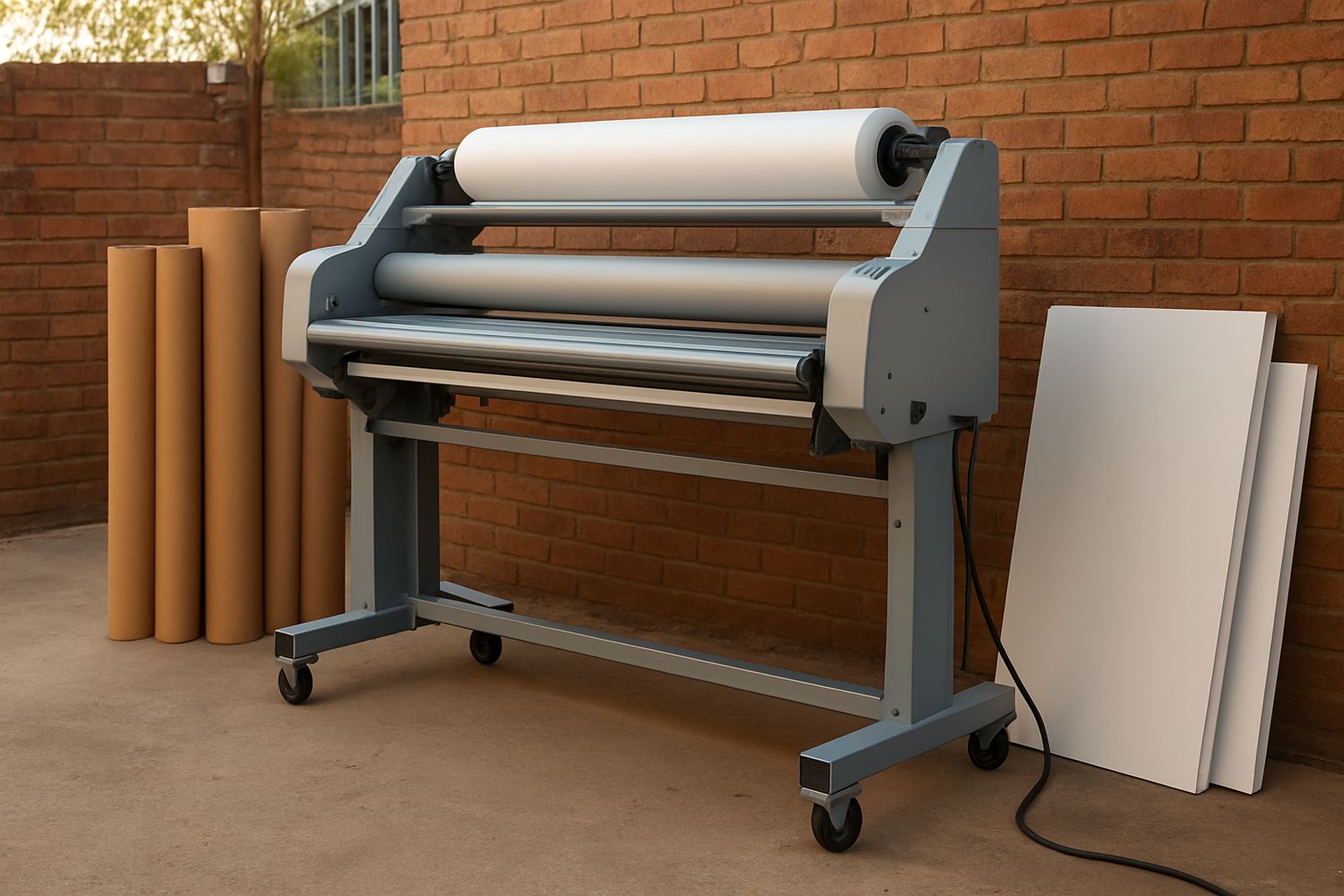
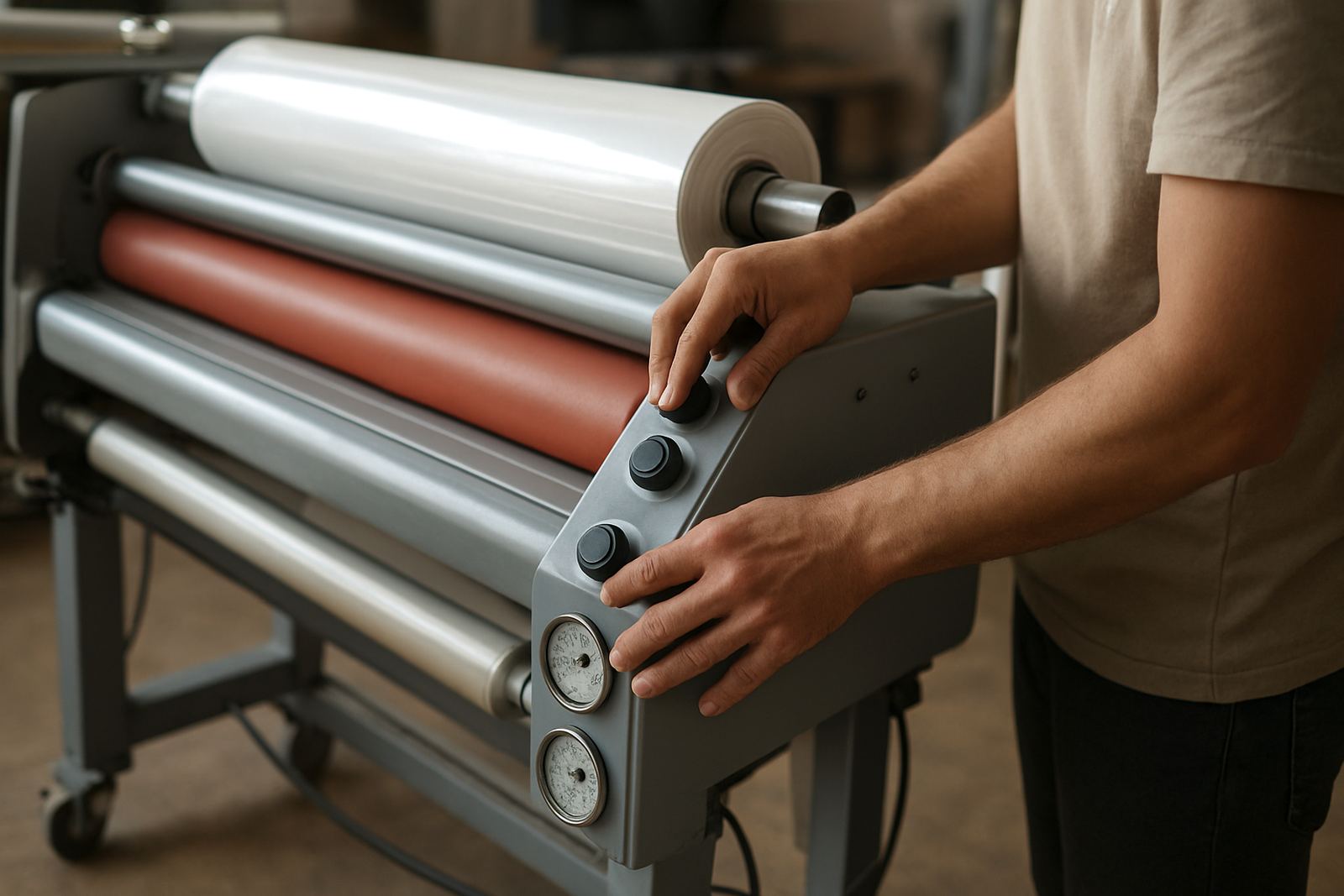
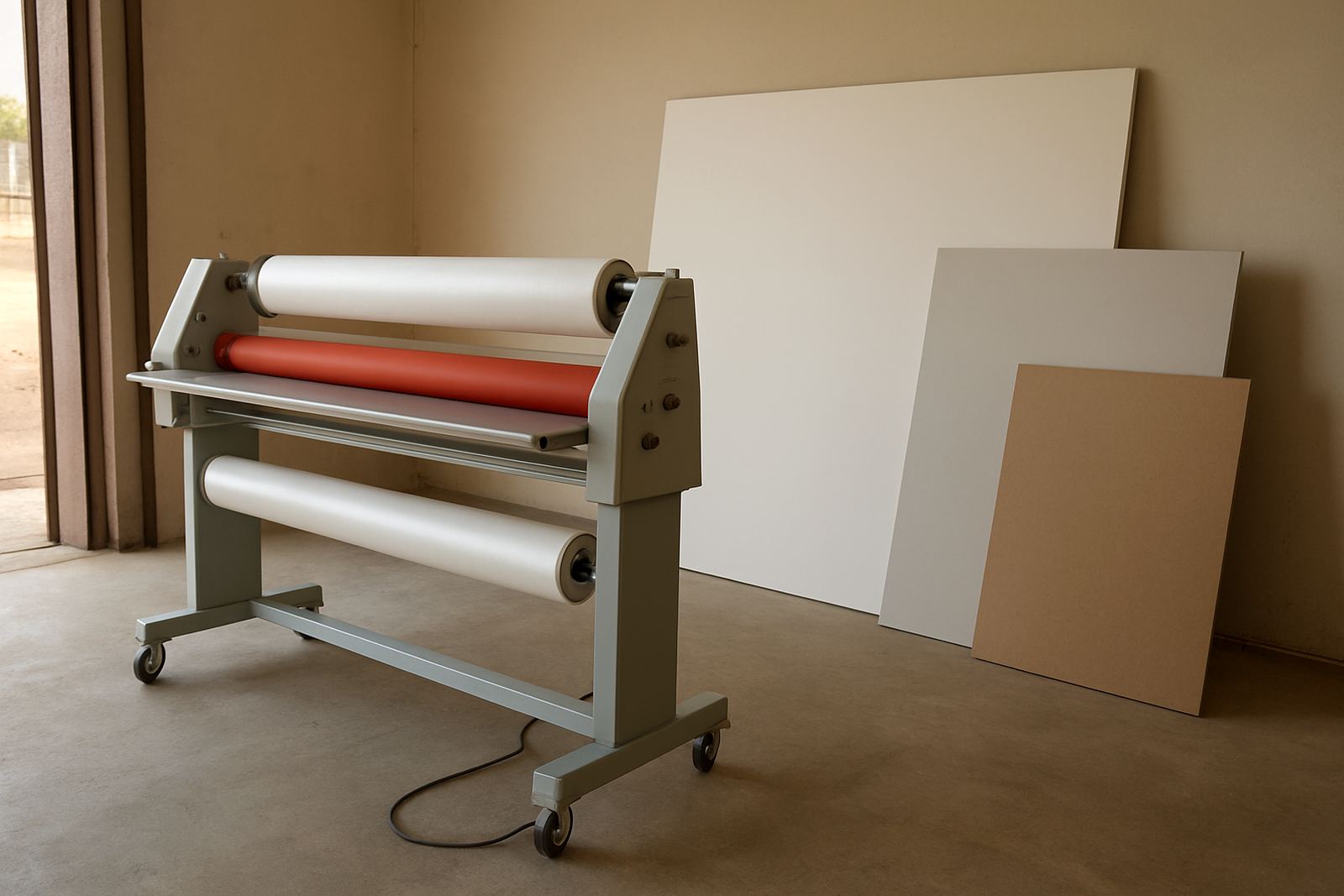
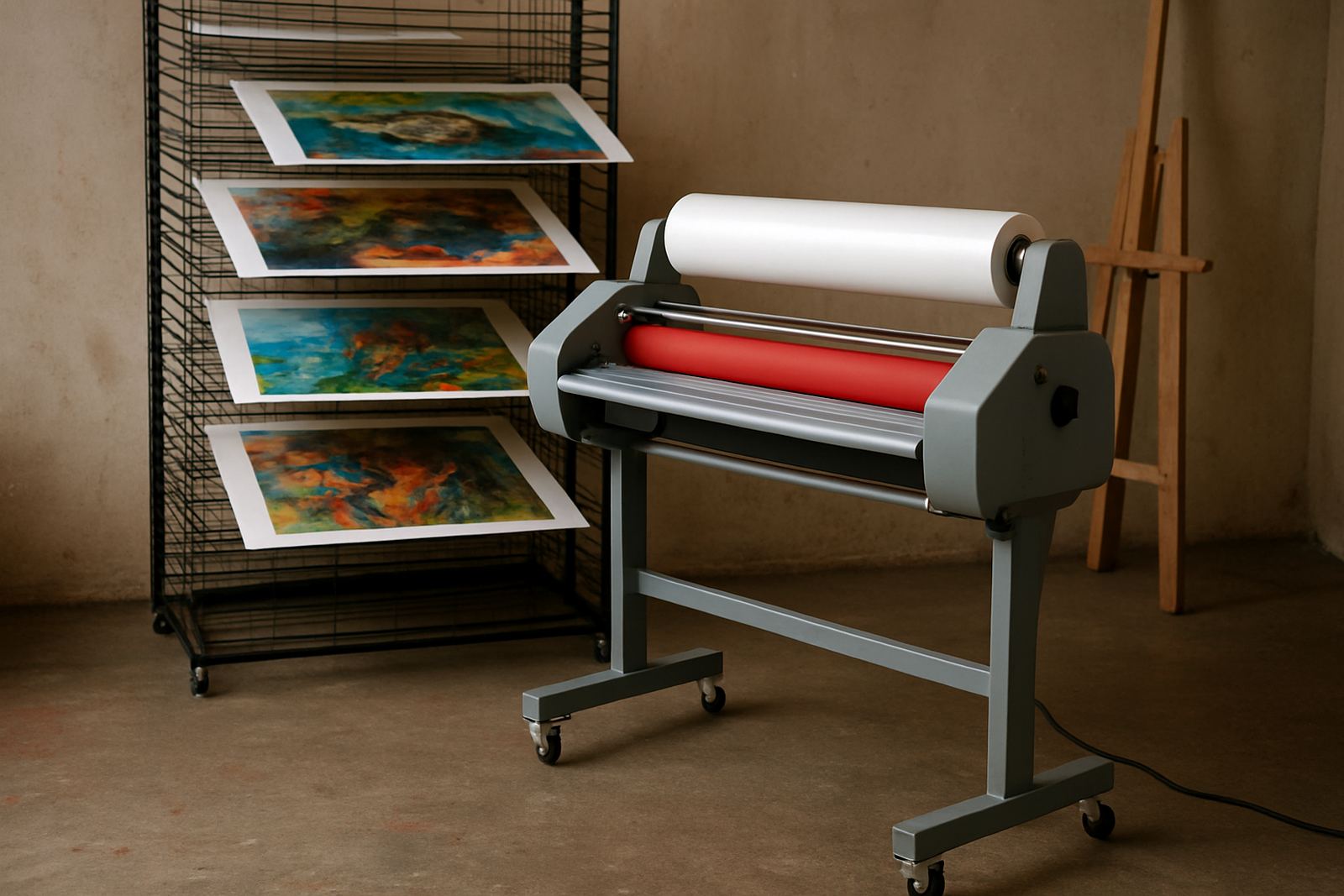
The Studio Roll 1300 is built for users who handle prints, artwork, photographic output and presentation boards on a regular basis. It applies hot or cold film through powered rollers, giving a straight even finish across widths up to 1 300 mm. For a studio in Kya Sand, a print room in Sandton, or a photographer working from Midrand, it is a useful size because it covers common sheet formats without taking over the whole workspace.
This model suits smaller production needs better than a wide industrial line. You can run mounted pieces, posters, classroom material and short exhibition batches with less handling and fewer marks on the surface. It is also a good fit where finish quality is important, because pressure and heat can be controlled more closely than with hand-applied film. The result is cleaner edges, less bubbling and better consistency from job to job.
Sizes, film options and working width
Studio Roll 1300 is intended for material up to 1 300 mm wide, which covers many popular studio and gallery sizes. It is commonly used with 38 mm, 51 mm and 76 mm core films, depending on the feed system fitted and the type of work being done. That gives flexibility for lightweight artwork and heavier display material, so you can choose the film that suits the job instead of forcing one setting for every run.
Hot and cold options are important. Cold lamination is preferred for heat-sensitive prints, vinyl graphics and some photographic media, while hot lamination helps with mounting films and protective finishes that need heat activation. If you work in coastal humidity or in a room where paper curls after load-shedding, the correct film choice makes a noticeable difference. A good setup also helps keep the sheet flat, which saves rework later on.
- Maximum working width: 1 300 mm
- Suitable for rolls and sheets used in studio finishing
- Compatible with hot and cold film applications
- Useful for posters, art prints, photo enlargements and signage panels
Where the Studio Roll 1300 fits best
This laminator is most useful in businesses that need careful finishing rather than high-volume industrial throughput. It suits graphic design studios, photography labs, framing workshops, art printers, schools, university departments and boutique sign shops. It also works well for artists who produce limited editions and want better protection against scuffing, handling and moisture.
In Johannesburg and Pretoria, we often see this size chosen by teams that need a reliable everyday machine but do not have the floor space for a much larger unit. It can sit in a prep room or finishing area with enough access around it for feeding and trimming. If you are in Sandton, Randburg, East Rand or Midrand, it is a practical choice for businesses that want a neat output without over buying. For coastal towns, the film helps protect against damp air, salt and general wear.
- Print shops doing short to medium finishing runs
- Photographers protecting mounted and unmounted work
- Artists preparing sale pieces or exhibition sets
- Studios that need a tidy, space-conscious laminating setup
Installation, power and site readiness
Before installation, check that the floor is level and that there is enough room to load material from the back or feed side. A clear working area matters because wide-format rolls are easier to handle when the operator is not fighting walls, shelves or pallets. For on-site installs nationwide, we look at access, power supply and where finished sheets will be trimmed or stacked.
The electrical load should be confirmed before delivery. Many small studios forget that a heated laminator draws more current than ordinary office equipment, especially when the rollers warm up after a power interruption. If your premises are affected by load-shedding, surge protection and a stable supply are worth sorting out early. Some sites may need a dedicated circuit, and in older units around Randburg or central Pretoria the board should be checked before the machine arrives. Gas is not required for this machine, so no gas line or bottle setup is needed.
- Allow a level floor and clear feed space
- Confirm voltage and current with the site electrician
- Plan for power interruptions and restart delays
- No gas supply required
Keeping the rollers clean and consistent
Roll laminators last longer when the rollers are kept clean and the pressure is checked regularly. Dust, adhesive residue and paper fibres can affect finish quality, especially in busy studios where boards and prints move through every day. A basic cleaning routine also helps reduce wrinkling and tracking problems. If you are operating near the coast or in a workshop with open doors, do not let grit build up around the feed area.
Routine servicing should include roller cleaning, pressure calibration, heat system checks and drive system inspection. Electrical fault finding is also worth doing early if the machine starts heating unevenly or stops mid cycle. We also recommend operator refresher training when staff change or when a site starts processing a new film type. A little upkeep prevents avoidable downtime, and it is cheaper than waiting for a breakdown then trying to recover the week.
What to confirm before you order
When ordering the Studio Roll 1300, check the exact width you need, the type of film you plan to use and the kind of work you do most often. A machine that suits art prints may not be the best match for mounted presentation boards or thicker display pieces. It helps to know whether your team wants hot, cold or both, and whether the operator is experienced with roll feed alignment.
It is also worth checking the space available for installation, the site power supply and whether the machine must move between rooms. If you are buying for a business in Kya Sand, Sandton or East Rand, confirm access for delivery and whether the unit will need to pass through narrow doors or lifts. Ask about spare parts support, on-site breakdown response and pre-purchase inspections if you want a proper check before committing. We can also assist with operator refresher training so the first few runs go smoothly and the finish stays consistent.
- Required working width and film core size
- Hot, cold or combined operating need
- Electrical supply and site access
- Training, servicing and parts support
Key facts
| Working width | 1 300 mm |
|---|---|
| Operation | Hot and cold roll laminating options |
| Application | Prints, artwork, photographs and presentation boards |
| Use case | Artists, photographers, boutique studios and print shops |
| Installation | On-site setup available nationwide from Kya Sand, Johannesburg |
| Support | Routine servicing, parts support and operator training |