What retail teams usually need laminated
Most retail clients come to us with a simple brief: the print must stay flat, the colours must look sharp, and the board must survive store handling for the full promotion period. In Johannesburg, Sandton and Midrand we often see seasonal signage for mall fronts, shelf talkers, aisle headers, window posters and till-point boards. These pieces are handled by staff, touched by customers and sometimes moved from one branch to another, so a thin, rushed finish does not last.
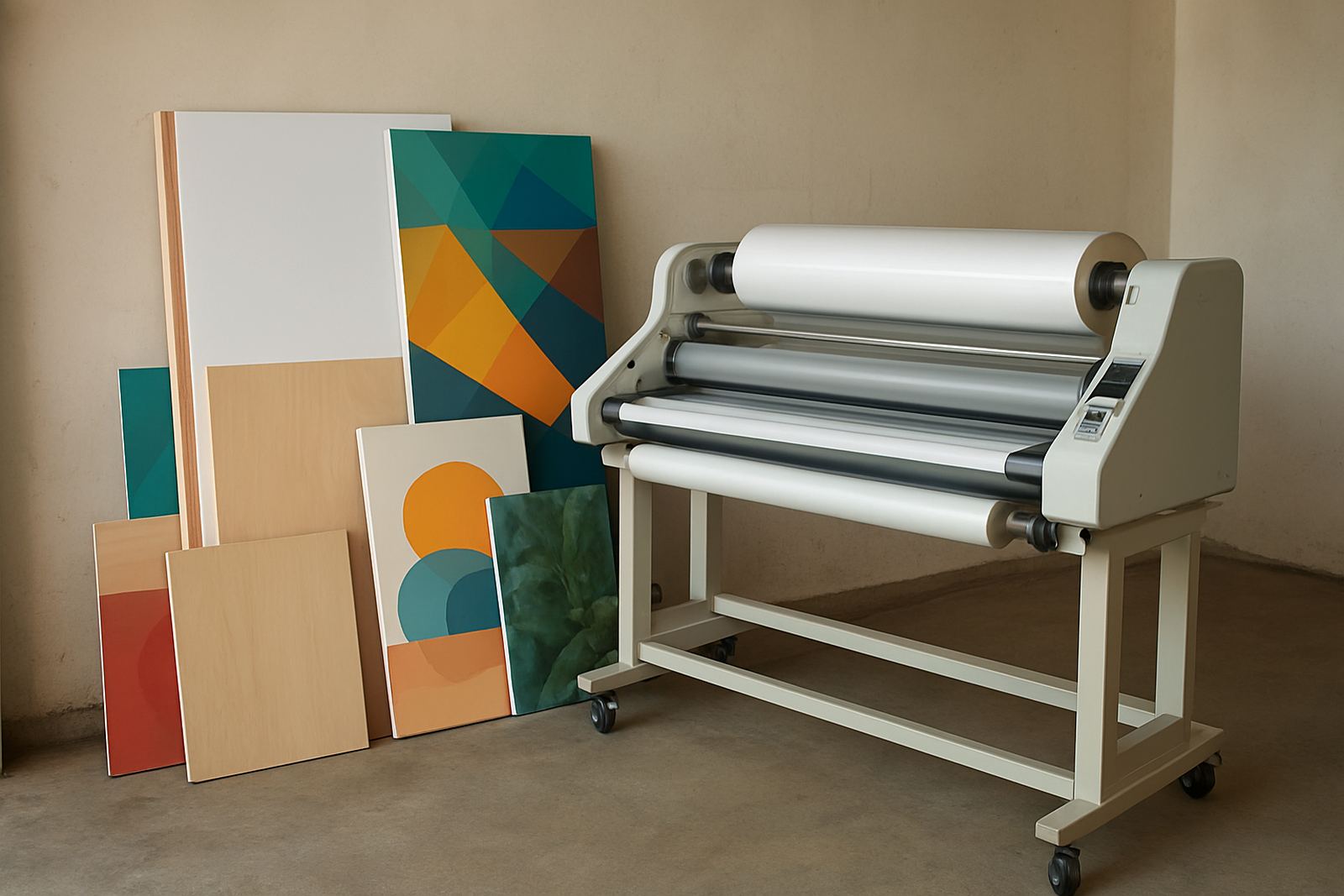
For retail use, laminating is not only about gloss. It is about scuff resistance, cleaner wipe-downs and better protection against moisture, especially in coastal branches or stores with open entrances. For mounting, many customers use foam board, PVC board or rigid display board. The right choice depends on size, weight and whether the sign will sit in a stand, hang from a ceiling rail, or be fixed to a wall.
Typical equipment set for point-of-sale work
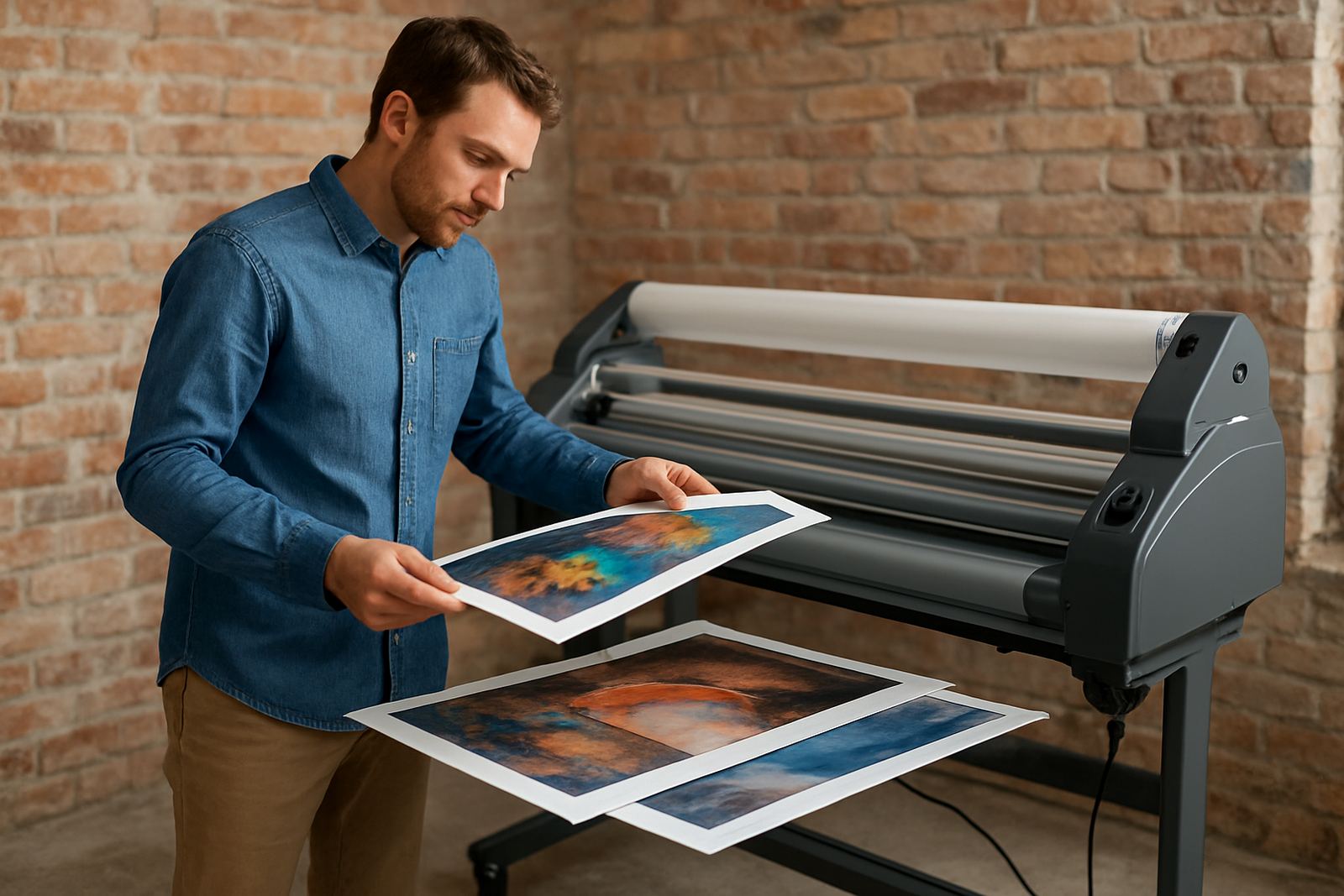
Retail display work usually calls for a wide-format cold or hot roll laminator that can handle posters, promotional boards and short-run campaign sets. Cold systems are popular for pressure-sensitive films and heat-sensitive prints, while hot roll systems are better suited to some heavier duty finishing jobs. For many print shops in Kya Sand, Randburg and the East Rand, a machine with stable pressure control and even roller heat makes the biggest difference to daily output.
- Wide-format roll laminator for A1, A0 and custom retail panels
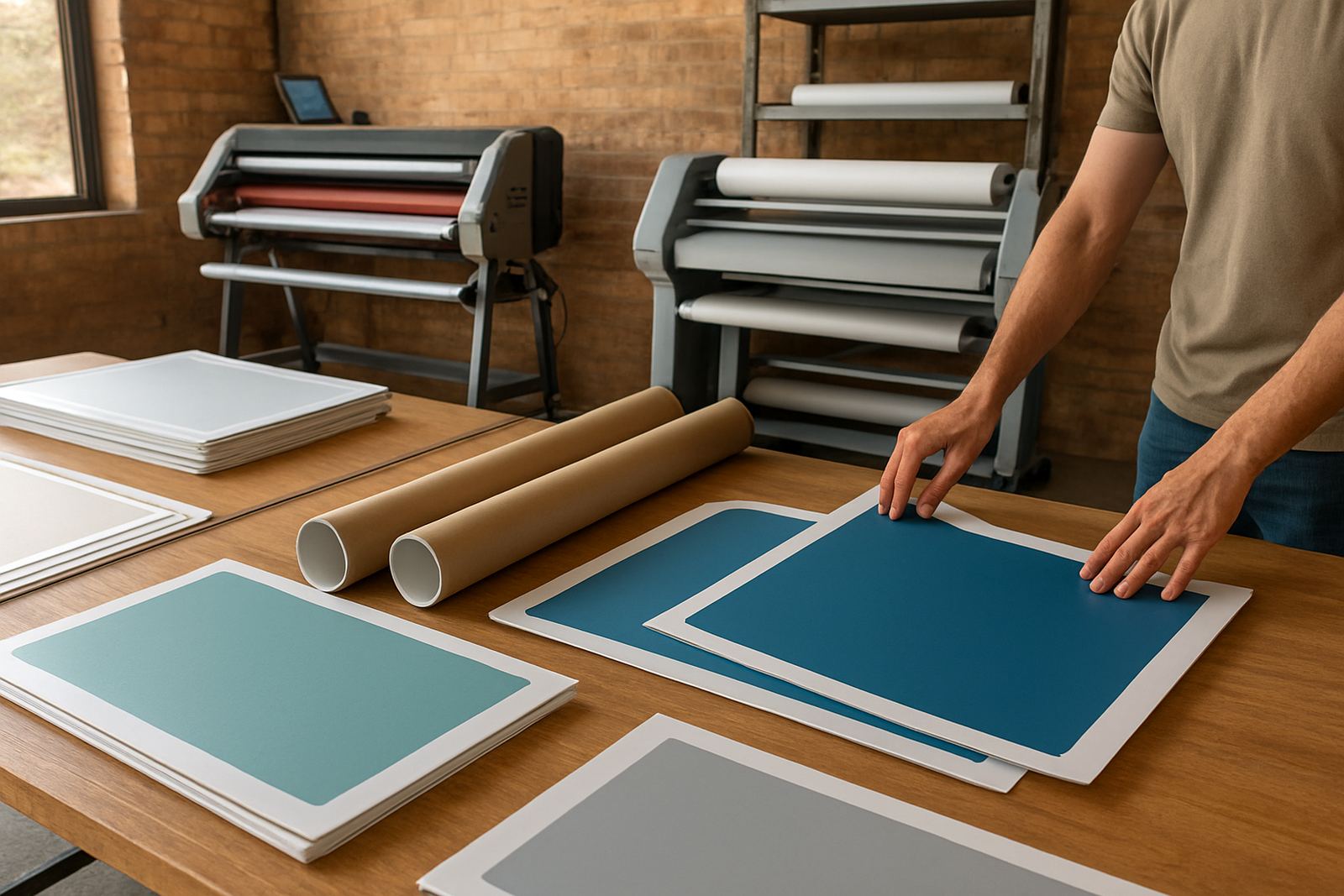
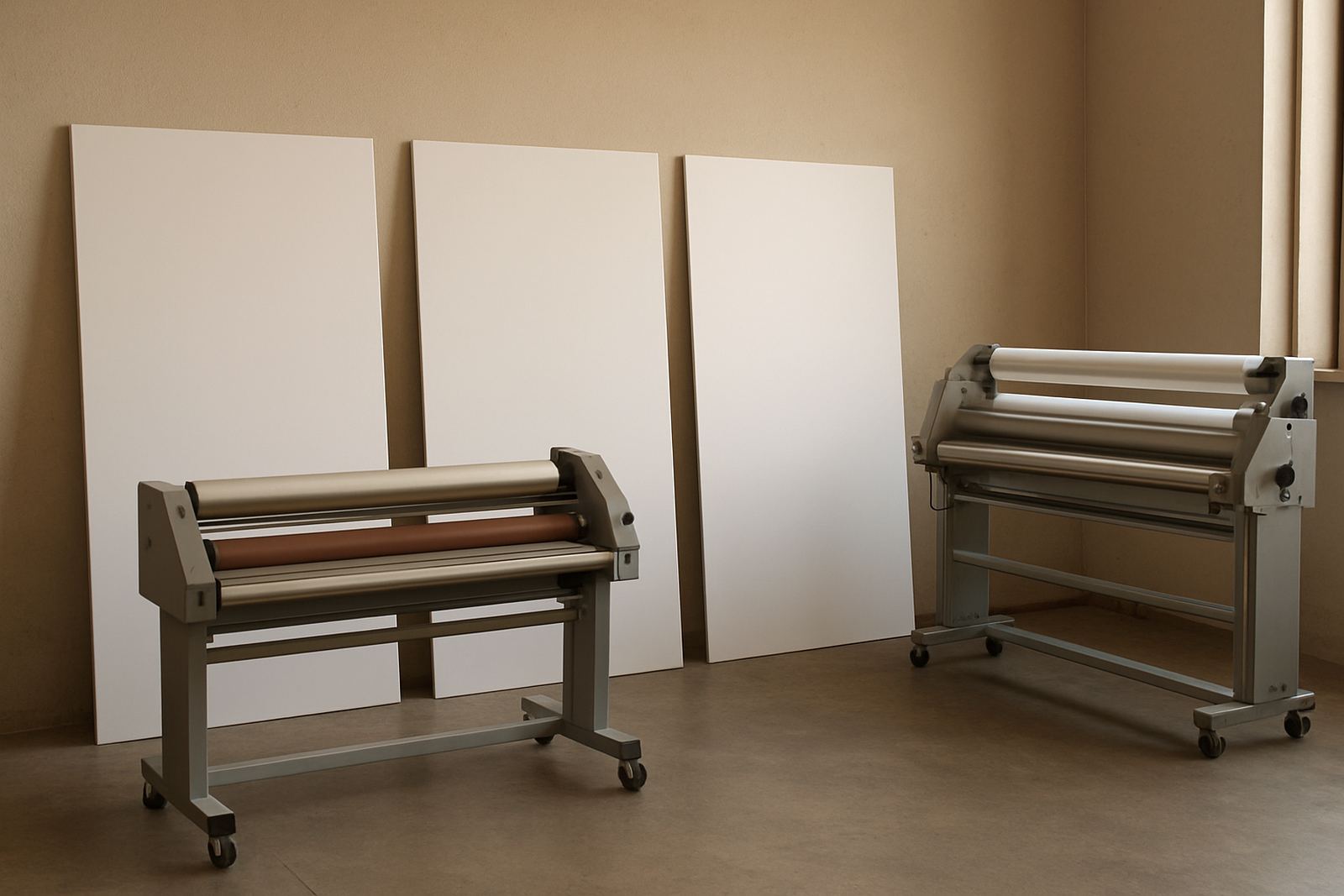
- Mounting board in common retail sizes such as 600 x 900 mm, 900 x 1200 mm and 1 200 x 1 800 mm
- Protective over-laminate for gloss, matte or satin finish
- Cutting table or straight-edge trimming station
- Drying space for prints before mounting
- Basic cleaning kit for rollers and surface prep
We also see shops benefit from an operator who understands heat settings, nip pressure and film tension. A machine can be capable on paper, but if it is not set correctly you get silvering, curl or feed marks, and that costs time on a busy Friday afternoon.
Layout and planning advice before the job starts
Good retail display work starts with the store layout, not the laminator. Check where the board will sit, how far customers stand back, and whether the sign will face direct sunlight or strong indoor lighting. A poster that looks fine at arm’s length may show banding or dust once it hangs in a bright window. For mall sites, it is worth confirming the size limits with the centre management team before the job is printed because some centres are strict on hanging methods and flame ratings.
We advise planning the full path from print to install. Leave space for trimming, curing and packing. If a campaign must move to branches in Pretoria, Sandton and Midrand on the same day, label every panel clearly and keep the sets in order. A simple numbering system saves hours on site. For larger rollouts, it also helps to do a pre-install check on the mounting method, fixings and wall surface so the team does not arrive with the wrong clips or tape.
Common mistakes that shorten display life
The biggest issue we see is poor prep before lamination. Dust, damp paper and uneven trimming all show up later as bubbles or lift on the edges. Another mistake is using a finish that fights the retail lighting. High gloss can look good in a showroom, but on a window-facing board it may reflect too much light and make text hard to read.
- Laminating prints before they are fully dry
- Using the wrong heat for the film or board
- Skipping roller cleaning, which leaves marks on later jobs
- Mounting a large board without checking flatness first
- Choosing a finish that creates glare under spotlights
- Ignoring store rules for hanging points and safety
In coastal areas, humidity can also cause boards to warp if they are stored flat against a cool floor or loaded too early after printing. In winter, especially around Pretoria and Johannesburg, static can pull dust onto the film during finishing. These are small issues, but they add up quickly when a retailer wants twenty stores done by Monday morning.
Budget ranges for retail display work
For clients budgeting around retail campaigns, it helps to split costs into equipment, consumables and service. A small print shop looking at entry-level wide-format finishing equipment may budget from about R95 000 to R180 000, depending on width, heat control and build quality. Mid-range commercial machines often sit between R180 000 and R380 000. For larger production lines, prices can move above R400 000 when you need wider capacity, better pressure control and faster output.
On the job side, a laminated and mounted A1 retail board can cost from about R180 to R450 per unit depending on print size, board type and finish. Larger campaign boards for window or floor display can range from R650 to R2 500 each, especially if the job needs special mounting, rigid board or same-day turnaround. We always suggest budgeting a little extra for spare film, edge trimming and on-site replacements because retail timelines change fast.
Support for stores, printers and rollout teams
Laminator works from Kya Sand, Johannesburg and supports customers across South Africa with installs nationwide. We regularly help print shops, designers and retail rollout teams in Randburg, Sandton, Midrand, Pretoria and the East Rand with routine servicing, roller cleaning, pressure calibration, heat system checks, drive system repairs, electrical fault finding, on-site breakdowns, spare parts support, operator refresher training and pre-purchase inspections. That kind of support matters when a store opening cannot wait for a machine fault.
If you are setting up retail display production or trying to improve your current finish, it helps to speak to someone who understands both the machine and the pressure of live campaign work. Lunga Tshabangu and the team can help match the right laminator to the size of the work, the print volumes and the daily conditions in your shop. For enquiries, use our contact form.